Orecchiette with Broccoli Rabe

Orecchiette with Broccoli Rabe

Quick answer

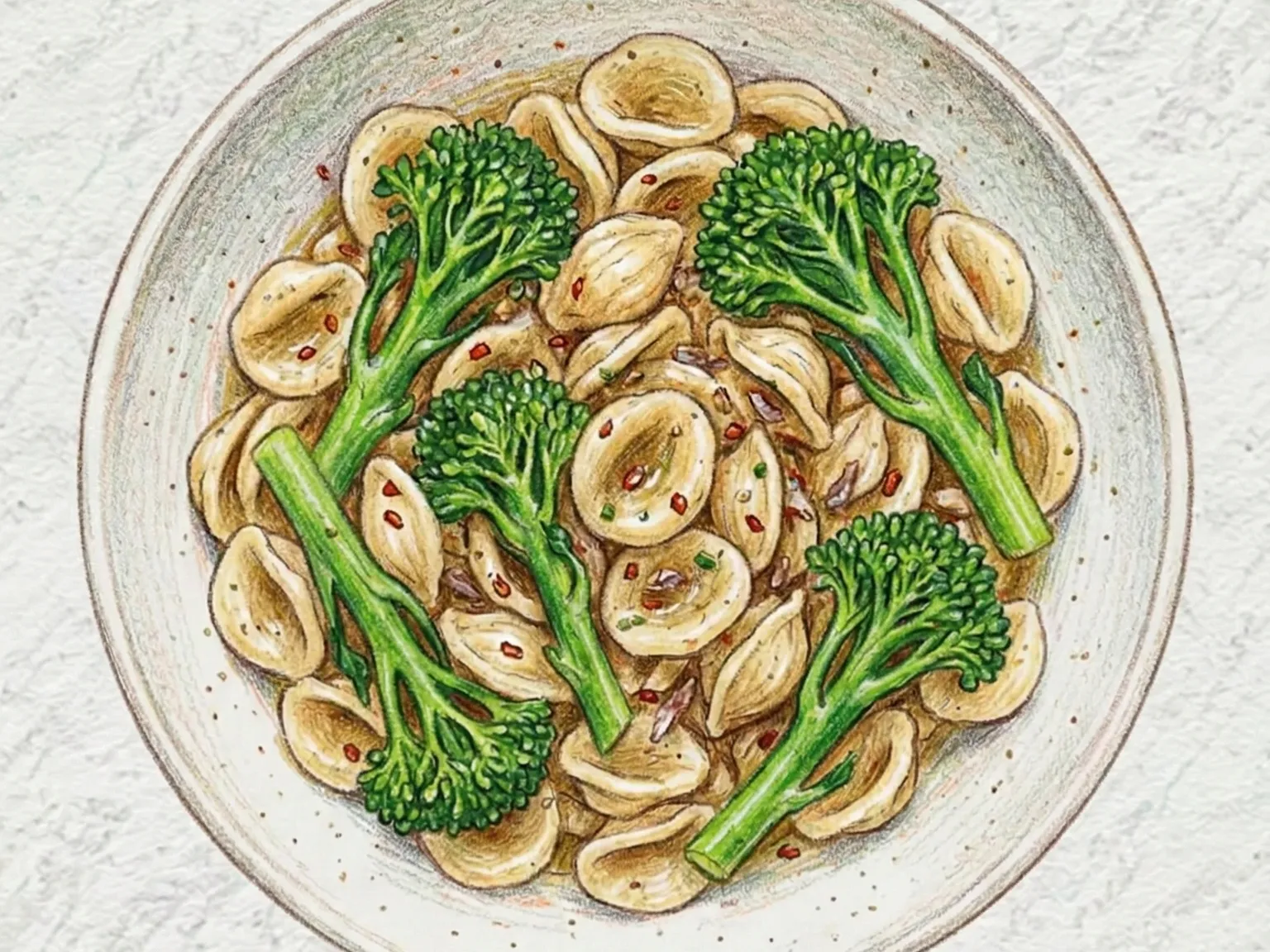
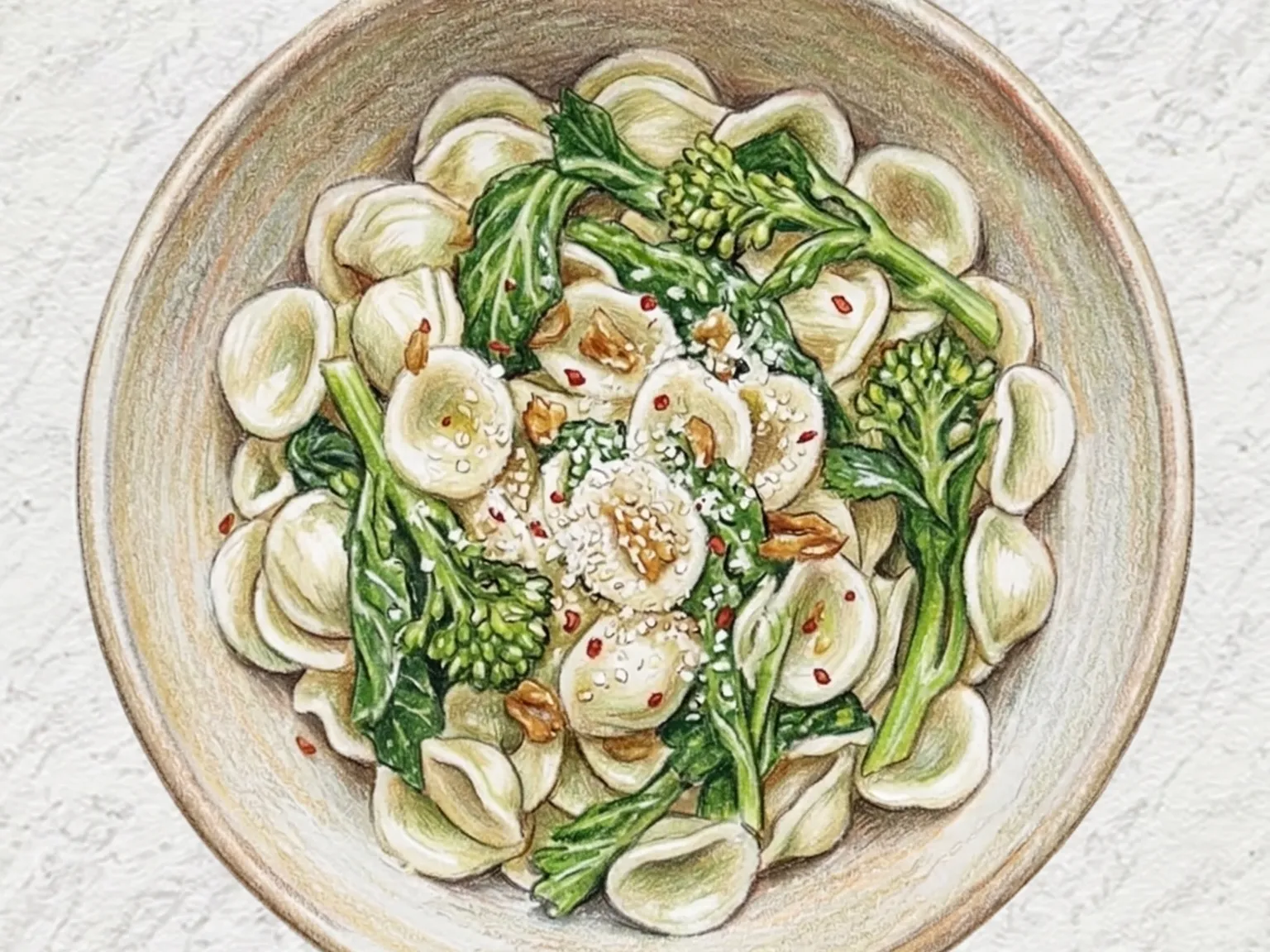
Orecchiette with broccoli rabe is a Southern Italian pasta from Puglia that pairs ear-shaped pasta with blanched broccoli rabe, garlic, anchovy, and dried chili in olive oil.

What makes this special

  • Ear-shaped pasta paired with blanched broccoli rabe, garlic, and savory anchovy in olive oil.
  • Pasta cooked in the broccoli rabe blanching water to absorb vegetable flavor
  • Anchovies melted slowly in olive oil at low heat create saltless umami sauce
Total time
27 min
Level
Easy
Servings
2 servings
Ingredients
7
Calories
610 kcal
Protein
20 g

Key ingredients

orecchiette pastabroccoli rabegarlicanchovy filletsolive oil

Core cooking flow

  1. 1 Trim any tough stem ends from 200 g broccoli rabe and rinse well.
  2. 2 Bring the same water back to a boil and add 220 g orecchiette.
  3. 3 Add 2 tablespoons olive oil, 1 tablespoon garlic, and 4 anchovy fillets to a pan.

Orecchiette with broccoli rabe is a Southern Italian pasta from Puglia that pairs ear-shaped pasta with blanched broccoli rabe, garlic, anchovy, and dried chili in olive oil. Blanching the broccoli rabe for one to two minutes tames its bitterness, and cooking the pasta in the same water infuses it with the green's flavor. Garlic and anchovy fillets are warmed slowly in olive oil until the anchovy dissolves into a savory paste, providing salt and umami without needing additional seasoning. Dried chili flakes contribute a gentle background heat. Tossing the drained pasta and greens in the pan with a splash of pasta water emulsifies the oil into a light coating on every piece. Grated parmesan scattered on top adds a salty, nutty finish that balances the vegetal bitterness.

Prep 12min Cook 15min 2 servings
Recipes by ingredient → garlic olive oil

Instructions

Read the steps as a cooking flow: prep, heat, seasoning, doneness control, and finish.

6 steps
  1. 1
    Heat

    Trim any tough stem ends from 200 g broccoli rabe and rinse well.

    Blanch it in boiling water for 1 to 2 minutes to soften the bitterness, then lift it out promptly so it stays green and not mushy.

  2. 2
    Finish

    Bring the same water back to a boil and add 220 g orecchiette.

    Cook it a little less than the package time, stopping when the centers are still slightly firm because the pasta will finish in the pan.

  3. 3
    Control

    Add 2 tablespoons olive oil, 1 tablespoon garlic, and 4 anchovy fillets to a pan.

    Warm them over low heat for 2 to 3 minutes, pressing the anchovy until it dissolves before the garlic browns.

  4. 4
    Step

    Stir in 1 teaspoon dried chili flakes and warm for only 20 to 30 seconds.

    When the aroma rises, add the blanched broccoli rabe and toss until the greens are evenly coated with the savory oil.

  5. 5
    Control

    Add the cooked orecchiette and a small splash of pasta water to the pan.

    Toss briskly over medium heat for 1 to 2 minutes, until the oil looks slightly cloudy and clings to the pasta.

  6. 6
    Finish

    Turn off the heat once the pasta is moist and lightly coated, not oily or dry.

    Sprinkle 25 g parmesan over the top, check the saltiness from the anchovy and cheese, and serve while warm.

After the steps

Pick a recipe that fits this dish.

Continue with shared ingredients, meal pairings, or a similar method.

Recipes That Go Well With This

More Noodles →

Based on shared ingredients and meal pairing

Gochugaru Anchovy Broccolini Orecchiette
Shared ingredient: orecchiette Pasta

Gochugaru Anchovy Broccolini Orecchiette

Gochugaru anchovy broccolini orecchiette uses anchovy fillets dissolved in olive oil as the flavor foundation. The fillets go into the pan with garlic over low heat and are stirred continuously until they break apart and disappear into the oil, leaving behind deep salinity without any trace of fishiness. Korean red pepper flakes are added next and fried in the anchovy oil for twenty seconds so their aromatic compounds are released into the fat without scorching. The tomato sauce goes in immediately after and simmers for three minutes to cut its raw acidity against the rich oil base. Broccolini is blanched directly in the pasta cooking water during the final two minutes of boiling, which saves a separate pot and keeps the florets just crisp with a slightly bitter edge intact. Breadcrumbs toasted separately in a dry pan until golden are scattered over the plated pasta for crunch, since orecchiette's small ear shape traps sauce inside but offers a soft bite throughout. A squeeze of lemon juice is added off the heat to cut through the oil and brighten the plate. Parmesan shaved over the top adds a final layer of sharp saltiness.

Garlic Olive Oil Pasta
Shared ingredient: olive oil Noodles

Garlic Olive Oil Pasta

Aglio e olio - garlic and oil - is the pasta Italians make at midnight with nothing in the kitchen but pantry staples. It originated in Naples, where olive oil was abundant and elaborate sauces were a luxury that working-class cooks could not afford. The entire dish depends on technique: garlic must be sliced thin and toasted slowly in generous olive oil over low heat until fragrant and barely golden - a matter of seconds past that point and it turns acrid and bitter. Peperoncino flakes go in briefly to release their capsaicin into the oil before the heat is adjusted. The real transformation happens when starchy pasta water hits the hot oil: it emulsifies into a silky, clinging sauce that coats every strand of spaghetti with a thin, even film rather than pooling at the bottom of the bowl. No cream, no cheese in the traditional version - just the clean triad of garlic, chili, and good olive oil. Flat-leaf parsley scattered on at the end contributes a fresh herbal brightness that lifts the whole dish.

Mushroom Spinach Warm Salad
Serve together Salads

Mushroom Spinach Warm Salad

Button mushrooms are seared over high heat for a deep caramelized crust, then spinach is added just long enough to barely wilt in the residual heat of the pan. Garlic bloomed in olive oil at the start ensures the entire pan is fragrant before the other ingredients are added. Once the mushrooms go in, leaving them untouched for one to two minutes is the critical step: stirring immediately causes them to steam and release water, which prevents browning and dilutes the flavor. Balsamic vinegar deglazed in at the end lifts the pan with a balance of sweetness and acidity, and grated parmesan melts into the warm greens for a salty, nutty finish. The salad should be eaten immediately: the spinach holds its vivid green and the mushrooms retain their firm, springy bite only while everything is hot. The entire dish comes together in under ten minutes, making it a reliable choice for a quick weeknight side or a no-effort addition to a wine table.

Pasta Puttanesca (Neapolitan Anchovy Olive Caper Tomato Sauce)
Similar recipe Noodles

Pasta Puttanesca (Neapolitan Anchovy Olive Caper Tomato Sauce)

Pasta puttanesca is a Neapolitan pasta sauce built from anchovies melted into olive oil, crushed whole tomatoes, black olives, capers, and peperoncino. The anchovies dissolve completely during cooking, leaving behind a deep umami foundation rather than a fishy taste. Olives and capers provide enough salt that additional seasoning is rarely needed. The entire sauce comes together in under twenty minutes using shelf-stable pantry ingredients. Controlling noodle texture and sauce coating helps the ingredients cook evenly while keeping the final seasoning balanced.

Serve with this

Korean Seasoned Napa Cabbage Namul
Side dishes Easy

Korean Seasoned Napa Cabbage Namul

Boiled napa cabbage dressed with doenjang and perilla, a banchan passed through generations of Korean home cooks. The cabbage boils for two minutes so the leaves go fully soft while the white stems keep a slight bite, then it is rinsed, squeezed dry, and cut. Perilla oil takes the place of sesame oil and gives the dressing a distinctly herbal character. Perilla powder added at the end thickens the seasoning into a coating that clings to each strand. This quiet banchan pairs well with clear soups and plain steamed rice.

🏠 Everyday 🍱 Lunchbox
Prep 10min Cook 5min 4 servings
Korean Chive Clam Jeon (Garlic Chive and Clam Seafood Pancake)
Pancakes Medium

Korean Chive Clam Jeon (Garlic Chive and Clam Seafood Pancake)

Buchu-bajirak-jeon is a seafood pancake of garlic chives and clam meat, pan-fried in a batter made with a mix of all-purpose pancake flour and rice flour. The rice flour addition increases the chew and gives the finished jeon a slightly more resilient texture than plain flour batters. Clam meat releases a briny, oceanic liquid as it cooks that seeps into the batter and flavors it throughout, while the chives add a sharp, grassy counterpoint. Minced garlic and diagonally sliced cheongyang chili worked into the batter suppress any fishiness and build a layered fragrance. A generous amount of oil in the pan over medium heat produces edges that crisp and brown like the outside of a fritter. Waiting until the bottom is fully set before flipping prevents the pancake from tearing. Served with soy dipping sauce or a seasoned soy mixture, the clean salinity of the clams comes through clearly.

🍺 Bar Snacks 🏠 Everyday
Prep 25min Cook 15min 4 servings
Korean Wild Chive Kimchi (Spring Quick Gochugaru)
Kimchi Easy

Korean Wild Chive Kimchi (Spring Quick Gochugaru)

Dallae kimchi is a quick spring kimchi made by salting wild chives for just eight minutes to barely soften them, then dressing them in gochugaru, sand lance fish sauce, plum extract, and Korean pear juice. The bulb-end roots carry the most concentrated aroma, so they should not be trimmed too short, and the seasoning should be applied starting from the roots so the flavor penetrates evenly along the entire stalk. Pear juice adds natural sweetness and a little moisture that softens the heat from the chili, while sand lance fish sauce provides a lighter, more delicate umami than standard anchovy sauce. This kimchi smells fresh and bright immediately after preparation, but one day in the refrigerator allows a mild fermented depth to develop that rounds out the flavors considerably. Wild chives are best purchased between early March and mid-April, when the roots are fat and the aroma is fully developed. Salting beyond eight minutes causes the grassy fragrance to dissipate rapidly, so timing matters. The finished kimchi pairs naturally with namul side dishes and fresh vegetable salads at a spring table.

🏠 Everyday 🍱 Lunchbox
Prep 20min Cook 5min 4 servings

Similar recipes

Spaghetti alle Vongole
Noodles Medium

Spaghetti alle Vongole

Spaghetti alle vongole is an Italian pasta where clams are cooked in olive oil with sliced garlic, chili flakes, and dry white wine until they open and release their briny juices. The spaghetti is boiled one minute short of al dente, then finished in the clam pan with a few tablespoons of starchy pasta water to create an emulsified sauce. Vigorous tossing for about a minute binds the oil and clam liquid into a glossy coating around each strand. Fresh parsley is added at the end for color and herbal freshness.

🍺 Bar Snacks 🎉 Special Occasion
Prep 15min Cook 18min 2 servings
Pasta Bolognese
Noodles Medium

Pasta Bolognese

Pasta Bolognese is a slow-simmered meat ragu from Bologna in Emilia-Romagna, built on a soffritto of onion, carrot, and celery cooked down with a mixture of ground beef and ground pork. Browning the meat properly in a hot pan before any liquid is added creates a Maillard crust that contributes a depth of flavor that no amount of simmering can replicate. Red wine deglazes the pan, lifting every bit of browned fond from the bottom. Whole milk is then stirred in to soften the acidity and tenderize the proteins, which is the detail that separates a true Bolognese from a generic meat sauce. The ragu requires at least one hour of low, uncovered simmering for the fat to separate, the liquid to reduce, and the meat to break down into a cohesive sauce. Tagliatelle is the canonical pairing in the region, with the wide, egg-enriched ribbons catching the chunky sauce in every fold. Freshly grated Parmigiano-Reggiano finishes the dish. Cooking the tomato paste directly in the pan after the soffritto for two minutes caramelizes its natural sugars and removes raw bitterness before any liquid goes in.

🎉 Special Occasion 🍺 Bar Snacks
Prep 20min Cook 90min 4 servings
Buchu Vongole Spaghetti (Korean Garlic Chive and Clam Pasta)
Pasta Easy

Buchu Vongole Spaghetti (Korean Garlic Chive and Clam Pasta)

Buchu vongole spaghetti takes the Italian vongole format and finishes it with a fistful of Korean garlic chives, combining a briny shellfish sauce with the sharp, vegetal fragrance that buchu brings. Garlic slices and dried chili flakes are first infused in olive oil until fragrant, then white wine goes in and the alcohol burns off quickly, leaving only the wine's fruity character in the base. Manila clams added to the pan steam open in two to three minutes under a lid, releasing their liquor into the oil and wine. That clam broth carries enough salinity and umami to season the entire sauce - no added salt required at any point. A ladleful of pasta water stirred in while shaking the pan hard creates an emulsion that bonds the clam broth with the olive oil and coats every strand. The garlic chives are added off heat so they stay bright green and fragrant rather than going soft and losing their character. A scatter of chopped Italian parsley over the finished bowl adds a last note of herbal freshness.

🍺 Bar Snacks 🏠 Everyday
Prep 15min Cook 18min 2 servings

Tips

Blanch longer if you want less bitterness.
Use anchovy as umami seasoning instead of extra salt.

Nutrition (per serving)

Calories
610
kcal
Protein
20
g
Carbs
76
g
Fat
24
g