Korean Soy Garlic Grilled Duck
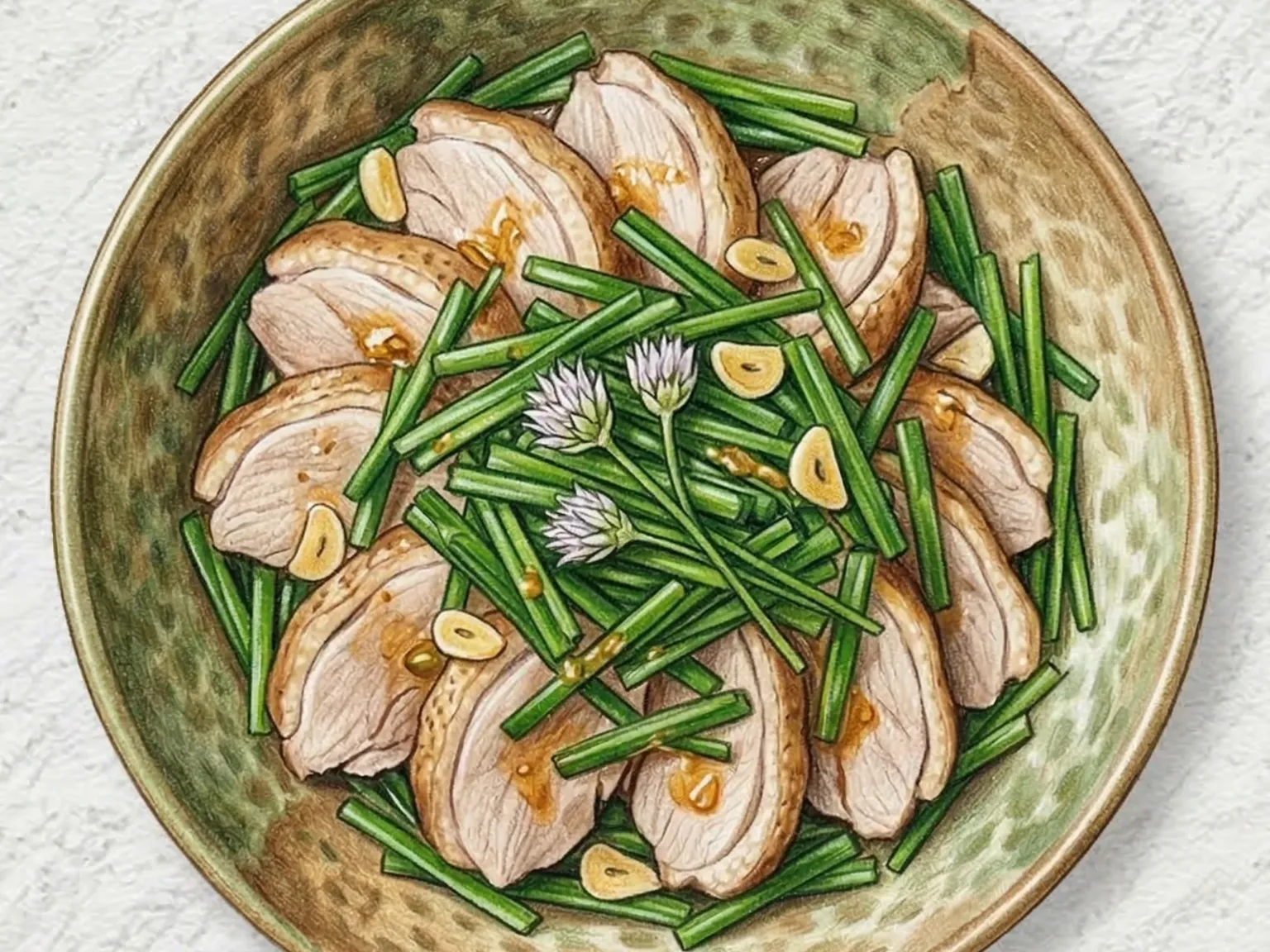
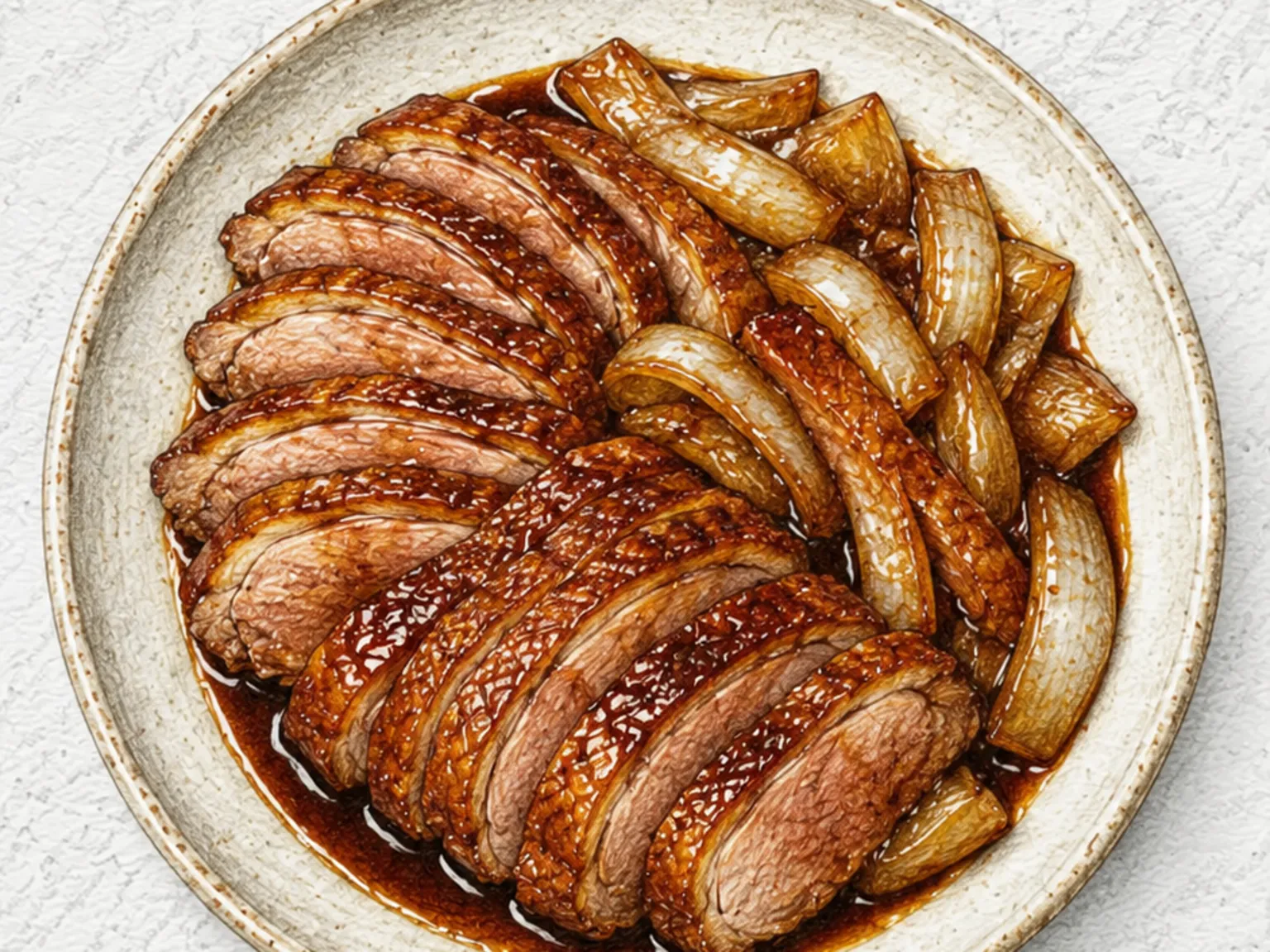
Ori-ganjang-gui is Korean soy-garlic grilled duck, where scored duck breast is marinated for twenty minutes in a blend of soy sauce, minced garlic, honey, cooking wine, ginger juice, and black pepper, then cooked skin-side down starting from a cold pan. The cold-start method slowly renders the thick subcutaneous fat layer into the pan over eight minutes, crisping the skin without burning it before the breast is flipped. Soy sauce and honey caramelize at high heat into a glossy brown glaze, while ginger juice eliminates the gamey odor that duck fat can carry. In the final two minutes, the remaining marinade is brushed on and sliced onions are tossed in to cook alongside-their natural sweetness rises and merges with the salty-sweet soy coating.
Adjust Servings
Instructions
- 1
Score duck skin and pat dry thoroughly.
- 2
Combine soy sauce, garlic, honey, wine, ginger juice, and pepper.
- 3
Marinate duck for 20 minutes and prepare sliced onion.
- 4
Start in a cold pan, skin side down, and render over medium heat for 8 minutes.
- 5
Flip, cook 5 minutes, and cook onions alongside.
- 6
Brush remaining marinade in the last 2 minutes and serve with chives.
As an Amazon Associate, we may earn from qualifying purchases.
Tips
Nutrition (per serving)
More Recipes

Korean Ori Gochujang Gui (Gochujang Grilled Duck)
Ori-gochujang-gui is spicy gochujang-grilled duck, where sliced duck is marinated for fifteen minutes in a paste of gochujang, soy sauce, Korean chili flakes, minced garlic, pear juice, and sesame oil, then grilled alongside sliced onion over medium-high heat for ten to twelve minutes with frequent turning. Pear juice tempers the aggressive salt and heat of gochujang while acting as a natural tenderizer for the duck, and sesame oil forms a thin film that slows moisture loss during grilling. As duck fat renders out and combines with the chili paste, a concentrated sweet-spicy sauce pools in the pan-basting the meat continuously with this liquid builds a glossy, lacquered surface. Wrapping each piece in a perilla leaf before eating adds an herbal fragrance that softens the chili burn.

Korean Grilled Pork Skirt Meat
Galmaegisal-gui is grilled pork skirt meat from the diaphragm, lightly seasoned with soy sauce, garlic, and black pepper, then seared fast over charcoal or a screaming-hot pan. Each pig yields only 200 to 300 grams of this cut, making it a rare find that Korean barbecue enthusiasts seek out for its coarse grain, strong chew, and distinctive porky richness similar to beef skirt steak. The meat is thin enough that each side needs less than a minute over maximum heat-just long enough for the surface to caramelize while the center stays slightly pink, since overcooking toughens the fibers and destroys the springy texture. Dipping each piece immediately into a dish of sesame oil mixed with salt layers the smoky char with a warm, nutty richness.

Korean Grilled Soy-Marinated Blue Crab
Ganjang-gejang-gui is a Korean grilled blue crab dish where the crab is halved, marinated in soy sauce with garlic, ginger juice, and sesame oil, then cooked on a grill or in an oven until the shell chars and the meat absorbs the salty-sweet seasoning. The key flavor element is the crab's hepatopancreas inside the top shell, which solidifies under heat into a thick, intensely savory paste that acts as a built-in sauce when eaten with the leg and body meat. The sugars in the soy marinade caramelize over high heat, forming a glossy glaze across the shell surface, and a final brush of sesame oil before serving adds a toasted nuttiness over the briny crab flavor. Placing the grilled crab over a bowl of rice and mixing the shell's concentrated juices and tomalley into the grains makes a complete meal without any additional side dishes.

Korean Grilled Corn with Soy Butter
Corn-gui is Korean grilled corn on the cob brushed with a glaze of soy sauce, melted butter, sugar, and minced garlic, then turned slowly over medium heat until the kernels develop a caramelized, salty-sweet crust. The corn is pre-cooked by boiling or microwaving before grilling, so the time on the grill is dedicated entirely to building flavor through the Maillard reaction between the glaze and the heat. Grilling over too-high heat burns the sugar before the corn chars evenly, so patience and repeated thin coats of glaze are important. The result layers the corn's natural starch sweetness with the richness of butter and the savoriness of fermented soy sauce.

Korean Steamed Duck with Chives
Ori-buchu-jjim is a Korean steamed duck dish where duck meat is marinated in soy sauce, cooking wine, garlic, and black pepper, then braised over a bed of onion with the lid on. During the thirty-minute cook, rendered duck fat is skimmed off to lighten the dish, and fresh garlic chives are stirred in only at the very end so they wilt just enough to release their sharp, grassy fragrance. The chive aroma cuts through the richness of the duck, keeping the overall flavor balanced. The soy-based sauce reduces to a thin glaze as the liquid evaporates, coating each piece of meat. This is a main course that delivers the nourishing qualities associated with duck while keeping the fat content in check.

Korean Dak Ganjang Jorim (Soy Braised Chicken)
Dak ganjang-jorim is chicken thigh braised with potato in a soy sauce glaze enriched with oligosaccharide syrup, garlic, and ginger juice. As the thighs simmer, the soy base works its way between the muscle fibers, leaving the meat deeply seasoned with a glossy brown finish. Potato chunks break down slightly at the edges and soak up the braising liquid, turning starchy and satisfying. A single cheongyang chili added to the pot gives a mild, lingering kick that keeps the sweet-salty profile from becoming one-note.