Korean Ori Gochujang Gui (Gochujang Grilled Duck)
Grilled Medium

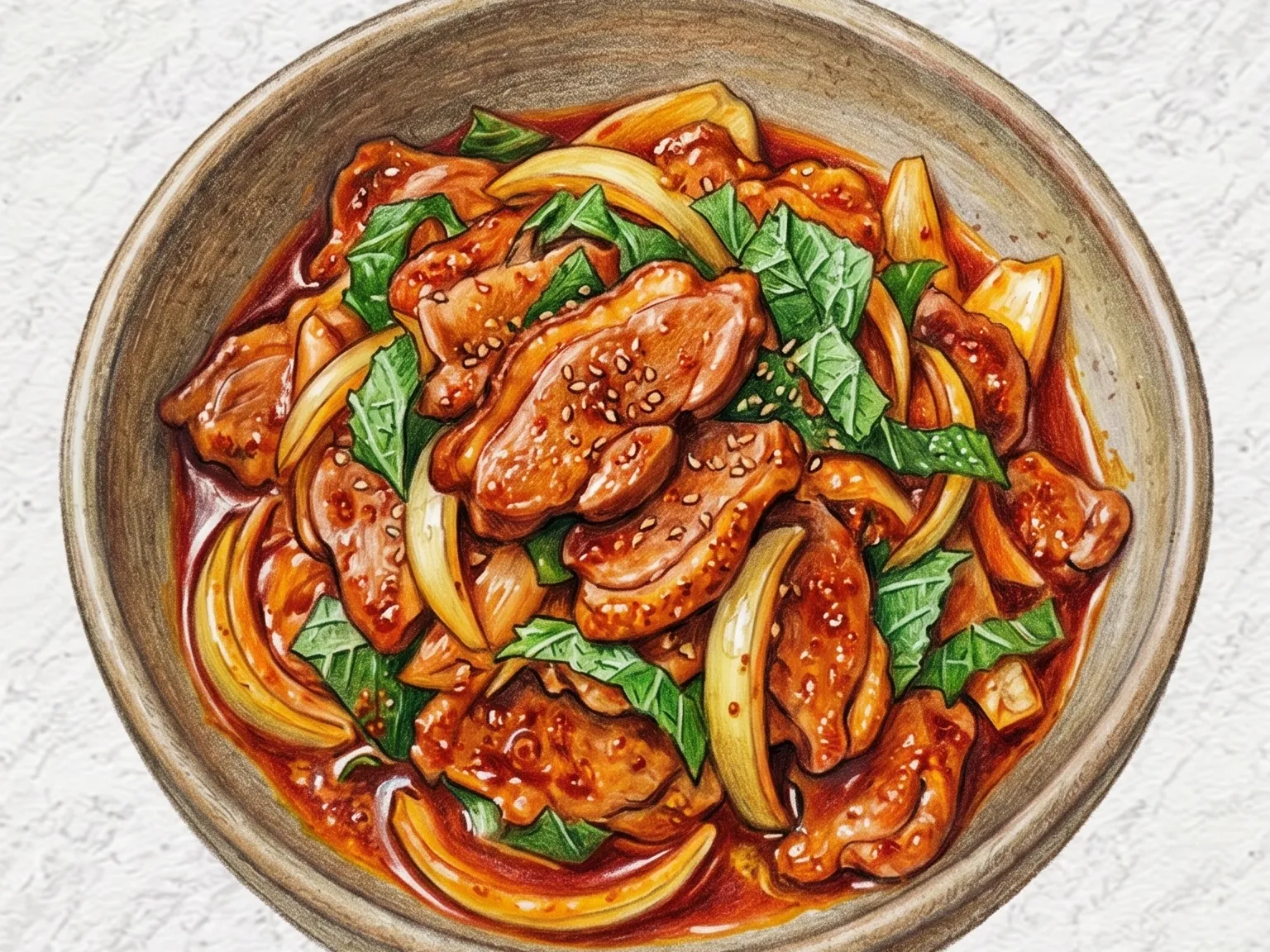
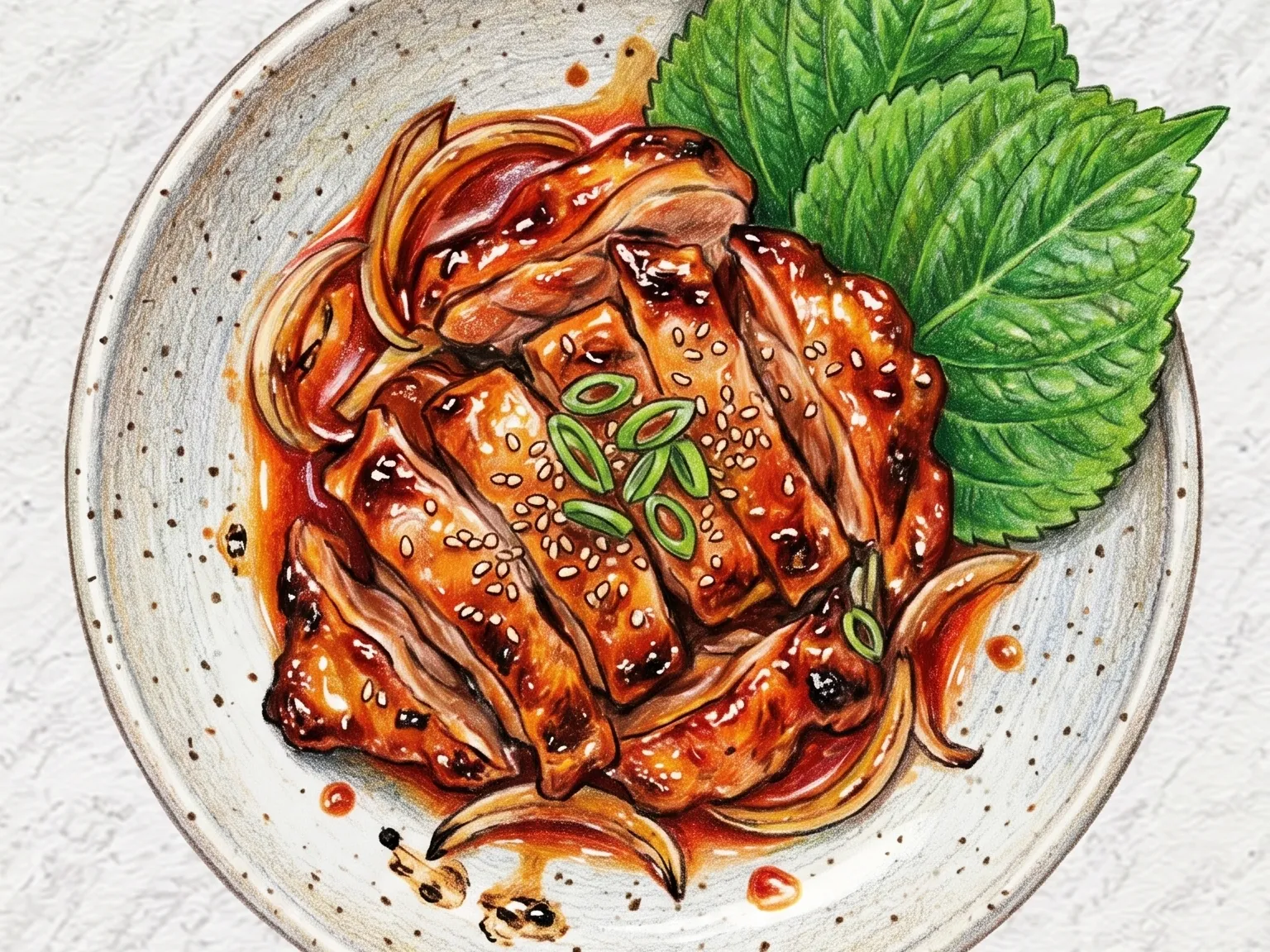
Korean Ori Gochujang Gui (Gochujang Grilled Duck)

Quick answer

Ori-gochujang-gui is spicy gochujang-grilled duck, where sliced duck is marinated for fifteen minutes in a paste of gochujang, soy sauce, Korean chili flakes, minced garl...

What makes this special

  • Pear juice tenderizes the meat while taming the saltiness of the spicy gochujang duck marinade.
  • Pear juice tames gochujang's saltiness and tenderizes the duck simultaneously
  • Rendered duck fat merges with the marinade into a spicy pan sauce
Total time
35 min
Level
Medium
Servings
4 servings
Ingredients
9
Calories
420 kcal
Protein
27 g

Key ingredients

sliced duckgochujangsoy sauceKorean chili flakesminced garlic

Core cooking flow

  1. 1 Press 800 g sliced duck firmly with paper towels to remove blood and surface moisture.
  2. 2 Mix 2 tablespoons gochujang, 1 tablespoon soy sauce, 1 tablespoon gochugaru...
  3. 3 Add the duck and 1/2 sliced onion to the marinade, then toss gently so the slices stay separate.

Ori-gochujang-gui is spicy gochujang-grilled duck, where sliced duck is marinated for fifteen minutes in a paste of gochujang, soy sauce, Korean chili flakes, minced garlic, pear juice, and sesame oil, then grilled alongside sliced onion over medium-high heat for ten to twelve minutes with frequent turning. Pear juice tempers the aggressive salt and heat of gochujang while acting as a natural tenderizer for the duck, and sesame oil forms a thin film that slows moisture loss during grilling. As duck fat renders out and combines with the chili paste, a concentrated sweet-spicy sauce pools in the pan-basting the meat continuously with this liquid builds a glossy, lacquered surface. Wrapping each piece in a perilla leaf before eating adds an herbal fragrance that softens the chili burn.

Prep 20min Cook 15min 4 servings

Instructions

Read the steps as a cooking flow: prep, heat, seasoning, doneness control, and finish.

6 steps
  1. 1
    Prep

    Press 800 g sliced duck firmly with paper towels to remove blood and surface moisture.

    If the slices stay wet, the marinade thins out and the meat steams instead of browning.

  2. 2
    Season

    Mix 2 tablespoons gochujang, 1 tablespoon soy sauce, 1 tablespoon gochugaru, 1 tablespoon minced garlic, 2 tablespoons pear juice, and 1 teaspoon sesame oil until smooth. Break up any thick paste before adding the duck.

  3. 3
    Prep

    Add the duck and 1/2 sliced onion to the marinade, then toss gently so the slices stay separate.

    Rest for 15 minutes only, since a longer rest draws out excess liquid and weakens the coating.

  4. 4
    Control

    Heat a pan or grill well over medium-high heat, then spread the duck and onion in a wide layer.

    If the pieces overlap, cook in two batches so moisture evaporates quickly and the seasoning does not boil.

  5. 5
    Season

    Cook for 10-12 minutes, turning often and spooning the gochujang sauce from the pan back over the meat.

    The duck is nearly done when the edges look glossy and the fat has rendered into the sauce.

  6. 6
    Finish

    If the sauce reduces too fast, lower the heat slightly and stir any stuck bits back into the meat before they burn.

    Serve the duck and onion hot with 8 perilla leaves for wrapping.

After the steps

Pick a recipe that fits this dish.

Continue with shared ingredients, meal pairings, or a similar method.

Recipes That Go Well With This

More Grilled →

Based on shared ingredients and meal pairing

Korean Spicy Duck Stir-fry
Shared ingredient: duck Stir-fry

Korean Spicy Duck Stir-fry

Ori-jumeulleok is a Korean spicy duck stir-fry where sliced duck is hand-massaged with a marinade of gochujang, gochugaru, soy sauce, garlic, and sesame oil, then rested for fifteen minutes before hitting a hot pan with onion. The duck renders its own fat as it cooks, creating a rich, glossy sauce without added oil. Once the meat is seared, perilla leaves go in at the very end - just long enough to release their peppery, herbal fragrance without wilting completely. The result is a dish with deep, concentrated heat from the marinade balanced by the aromatic lift of perilla, all carried on the duck's naturally rich fat.

Korean Soy Garlic Grilled Duck
Shared ingredient: onion Grilled

Korean Soy Garlic Grilled Duck

Ori-ganjang-gui is a Korean soy-braised grilled duck dish where scored duck breast is marinated for twenty minutes in a sauce of soy sauce, minced garlic, honey, cooking wine, ginger juice, and black pepper, then placed skin-side down in a cold pan to start cooking. The cold-start method slowly renders the thick subcutaneous fat layer into the pan over eight minutes, building up a pool of self-basting duck fat that eliminates the need for added oil and crisps the skin without burning it before the breast is flipped. Soy sauce and honey caramelize at high heat into a glossy dark brown glaze, while ginger juice actively breaks down the gamey odor that duck fat often carries. In the final two minutes, the remaining marinade is brushed back onto the meat and sliced onions are added to the pan, where their natural sugars rise and merge with the salty-sweet soy coating to form a deeply savory side that complements the duck. The sliced meat can be wrapped in perilla or lettuce leaves, or the rendered cooking juices can be spooned directly over rice.

Manduguk (Korean Dumpling Clear Broth Soup)
Serve together Soups

Manduguk (Korean Dumpling Clear Broth Soup)

Manduguk is a Korean dumpling soup in which hand-folded dumplings stuffed with ground pork, tofu, scallion, and garlic are dropped into a clear, simmering broth, typically anchovy-kelp stock or beef broth, and cooked until they float. As the dumplings cook, their thin wheat-flour wrappers release a subtle starch that gives the broth a barely perceptible body, while the filling leaks savory juices that enrich the liquid gradually. A thin drizzle of beaten egg stirred in near the finish creates silken wisps on the surface of the broth and gives the bowl a more finished appearance. Shredded egg strips and crumbled dried seaweed scattered on top add a pleasant contrast in color and a faint oceanic note to the flavor. Many Korean households serve manduguk on Lunar New Year as an alternative to tteokguk, and some combine the two by adding sliced rice cakes alongside the dumplings. Dumplings can be made in large batches and frozen raw, which means this soup can be pulled together quickly on weeknights without sacrificing any of the flavor that comes from homemade filling. A small dish of soy-vinegar dipping sauce served alongside lets each person adjust the seasoning at the table, and the light acidity of the sauce cuts through the mild broth in a way that makes the contrast between the two worth trying.

Korean Spicy Pork Bulgogi Grill
Similar recipe Grilled

Korean Spicy Pork Bulgogi Grill

This Korean grilled pork dish is made by marinating pork shoulder in a spicy and sweet mixture. The marinade blends gochujang, soy sauce, sugar, minced garlic, ginger juice, and sesame oil. Coating each piece individually and pressing the meat flat ensures the seasoning penetrates deeply during a thirty-minute resting period. Cooking requires a preheated grill or a heavy pan set over high heat to sear the meat quickly. Spreading the slices in a single layer prevents them from steaming. The sugars from the gochujang and sugar caramelize under high heat, creating a deep brown, flavorful crust on the pork surface. Because this coating can scorch easily, adjusting the stove to medium-high prevents burning. Serving the hot grilled pork wrapped in fresh lettuce sheets balances the smoky, seasoned meat with a crisp and hydrating vegetable texture.

Serve with this

Korean Stir-Fried Sweet Potato Stems
Side dishes Medium

Korean Stir-Fried Sweet Potato Stems

Goguma julgi - sweet potato stems - are the above-ground vines of the sweet potato plant, a byproduct that Korean cooks transform into a summer namul rather than discarding. The most labor-intensive step is peeling each stem by hand, pinching the outer skin with a fingernail and pulling it away to reveal the tender core beneath. After blanching for two minutes and rinsing in cold water, the stems are stir-fried in perilla oil with garlic and seasoned with soup soy sauce. Perilla powder stirred in at the end thickens the remaining liquid into a nutty glaze. In season during summer, the stems are harvested from sweet potato fields before the tubers themselves are dug up.

🏠 Everyday 🍱 Lunchbox
Prep 30min Cook 10min 4 servings
Korean Mountain Herb Bibimbap
Rice Easy

Korean Mountain Herb Bibimbap

Sanchae bibimbap arranges individually seasoned mountain vegetables including fernbrake, bellflower root, and chwi-namul over a bowl of rice, then brings everything together at the table with a spoonful of gochujang. Each wild green is treated separately to preserve its distinct character. Fernbrake is stir-fried in sesame oil and soy sauce until tender and lightly caramelized. Bellflower root is salted, kneaded vigorously, and rinsed to remove its characteristic bitterness before being left with a clean crunch. Chwi-namul, the young leaves of Korean mountain aster, is blanched for just a few seconds to soften it while locking in its herbal, slightly resinous fragrance. Julienned carrot or radish kimchi adds bright color contrast across the bowl. A second drizzle of sesame oil when mixing helps the greens coat evenly and carries the nutty aroma through every bite. The spicy, subtly sweet gochujang ties the earthy, grassy, and faintly bitter notes of the individual namul into one cohesive, energizing bowl. The dish traces its roots to Korean mountain temple cuisine, where foraged seasonal greens combined with plain rice formed the foundation of a simple but nourishing plant-based meal.

🏠 Everyday 🌙 Late Night
Prep 20min Cook 15min 2 servings
Korean Spicy Fermented Squid Jeotgal
Kimchi Medium

Korean Spicy Fermented Squid Jeotgal

Ojingeo jeotgal is a Korean fermented squid preserve made by salting cleaned, finely chopped squid for one hour to firm the flesh and extract moisture, then dressing it in a paste of gochugaru, minced garlic, ginger, fish sauce, and corn syrup. The salt cure intensifies the squid's natural chewiness, and cutting the pieces small accelerates seasoning absorption during the two-to-three-day cold fermentation. Chili flakes coat every surface in a deep red layer that delivers steady heat, while corn syrup adds gloss and a mild sweetness that prevents the salt from dominating. Spooned over steamed rice, each piece offers a firm, springy chew followed by a wave of fermented umami. Mixing in a touch of sesame oil before serving softens the saltiness and adds a nutty fragrance that rounds out each mouthful.

🍱 Lunchbox 🏠 Everyday
Prep 30min 4 servings

Similar recipes

Korean Gapojingeo Yangnyeom Gui (Spicy Grilled Cuttlefish)
Grilled Medium

Korean Gapojingeo Yangnyeom Gui (Spicy Grilled Cuttlefish)

Gapojingeo-yangnyeom-gui is spicy grilled cuttlefish prepared by scoring the body in a deep crosshatch pattern and coating it with a glaze of gochujang, Korean chili flakes, soy sauce, oligosaccharide syrup, and garlic. The deep scoring is critical for the thick cuttlefish body: it allows the marinade to penetrate the flesh fully and causes the scored sections to curl open under high heat, creating a flower-like shape that maximizes surface contact with the glaze. When gochujang's heat and the syrup's sticky sweetness hit high heat together, they caramelize into a glossy, deep-red coating that clings to the cuttlefish, while sesame oil folded into the marinade adds a toasted undertone beneath the spice. Chunky-cut onion and green onion grilled alongside release moisture that evaporates into sweetness, naturally tempering the intensity of the chili glaze without diluting the marinade's savory depth. Patting the cuttlefish completely dry before marinating ensures the glaze adheres evenly rather than sliding off, and keeping the cooking time short over high heat prevents the flesh from turning tough and rubbery.

🍺 Bar Snacks 🏠 Everyday
Prep 20min Cook 10min 2 servings
Korean Gochujang Grilled Pork Ribs
Grilled Hard

Korean Gochujang Grilled Pork Ribs

Gochujang dwaeji-galbi-gui is a Korean grilled pork rib dish that starts by soaking the ribs in cold water for thirty minutes to remove blood, followed by at least one hour in a marinade of gochujang, soy sauce, sugar, Asian pear juice, garlic, sesame oil, cooking wine, and black pepper. The pear juice works on two levels: its natural enzymes break down the muscle fibers to tenderize the meat, and its fructose provides a clean sweetness that tempers the fermented heat of gochujang. Because the marinade carries a high concentration of sugar, it catches and burns quickly on a hot surface. Each side is grilled four to five minutes over medium heat before the flame is reduced to finish the interior without incinerating the glaze. After cooking, resting the ribs for three minutes off the heat allows the juices to redistribute inward, so that when the pieces are sliced, every cut reveals a moist, tender interior beneath the deeply caramelized, glossy crust that is the hallmark of the dish.

🎉 Special Occasion 🍺 Bar Snacks
Prep 30min Cook 25min 4 servings
Korean Duck Perilla Seed Soup
Soups Medium

Korean Duck Perilla Seed Soup

Ori-deulkkae-tang is a Korean duck soup thickened with ground perilla seeds, producing a broth that is rich, nutty, and deeply warming. Duck fat provides a substantial body that distinguishes this soup from lighter poultry broths, and the perilla powder transforms the cooking liquid into something creamy and opaque, with an aroma reminiscent of toasted sesame but distinctly earthier. Radish starts in cold water and simmers for ten minutes, laying a foundation of clean, faintly sweet flavor before the duck is added. The pot then cooks for at least twenty minutes, during which foam and excess rendered fat must be skimmed from the surface to keep the broth clear and free of off-flavors. Perilla powder is added in the final ten minutes only: introduced too early, it turns bitter and chalky; added at the right moment, it blooms into a smooth, nutty finish. Soup soy sauce and salt bring the seasoning into balance, and a scattering of sliced green onion with black pepper completes the bowl. The result is a soup that coats the palate with a layer of fat and grain richness, eaten as a stamina-building meal during the colder months or whenever the body needs warming.

🏠 Everyday
Prep 25min Cook 50min 4 servings

Tips

Cook quickly over higher heat to keep duck tender.
Grilling onion with duck softens and balances the spice.

Nutrition (per serving)

Calories
420
kcal
Protein
27
g
Carbs
9
g
Fat
30
g