Korean Salt-Grilled Duck (Crispy Skin Duck Breast with Ginger)
Grilled Medium

Korean Salt-Grilled Duck (Crispy Skin Duck Breast with Ginger)

Quick answer

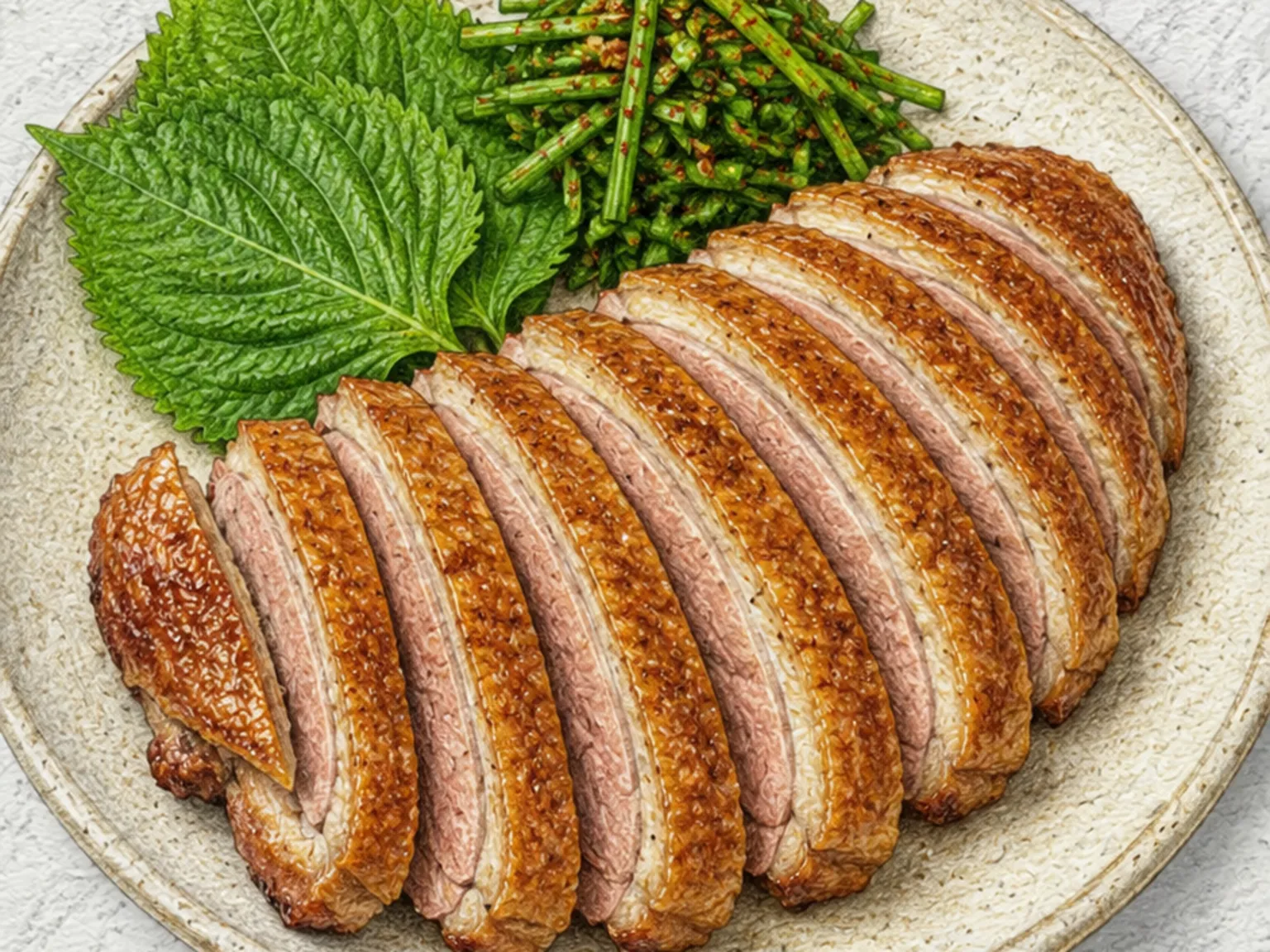
Ori-sogeum-gui is Korean salt-grilled duck breast where shallow score marks cut into the skin at one-centimeter intervals expose the fat layer without piercing through to...

What makes this special

  • Ori-sogeum-gui relies on a slow render of subcutaneous fat to achieve a crisp, salt-grilled skin.
  • 8 minutes in a cold pan melts subcutaneous fat into its own cooking oil
  • Mirin and ginger pre-treat then a thorough pat-dry locks in crispness
Total time
33 min
Level
Medium
Servings
2 servings
Ingredients
8
Calories
462 kcal
Protein
31 g

Key ingredients

duck breastcoarse saltblack pepperminced garlicginger juice

Core cooking flow

  1. 1 Score only the skin of the 450 g duck breast at 1 cm intervals, keeping the cuts shallow.
  2. 2 Rub the duck with 1 tablespoon cooking wine, 1 teaspoon ginger juice, and 1...
  3. 3 Pat the surface very dry with kitchen paper, removing excess moisture and garlic bits.

Ori-sogeum-gui is Korean salt-grilled duck breast where shallow score marks cut into the skin at one-centimeter intervals expose the fat layer without piercing through to the flesh, allowing the subcutaneous fat to render fully while the meat juices stay contained. A ten-minute pre-treatment with cooking wine, ginger juice, and minced garlic neutralizes the gamey odor that duck skin can carry. After marinating, the surface must be patted completely dry with kitchen paper so the salt stays granular on the skin rather than dissolving into moisture that would cause steaming instead of crisping. The scored breast goes into a cold pan skin side down, then the heat is raised gradually to medium-low, coaxing the thick subcutaneous fat to melt slowly and render clear while the skin crisps in its own fat over eight minutes. The pan never needs additional oil. Flipping for four to five minutes on the flesh side finishes the interior, and a three-minute rest off the heat redistributes the juices so the sliced surface stays clean and the meat is uniformly cooked from edge to center. Sliced on a bias and wrapped in perilla leaves with ssamjang, the fermented bean paste adds depth and complexity to the salt-forward duck flavor. A side of fresh garlic chive salad cuts through any richness and lifts the overall plate.

Prep 15min Cook 18min 2 servings
Recipes by ingredient → coarse salt garlic cooking wine

Instructions

Read the steps as a cooking flow: prep, heat, seasoning, doneness control, and finish.

6 steps
  1. 1
    Heat

    Score only the skin of the 450 g duck breast at 1 cm intervals, keeping the cuts shallow.

    Do not cut into the meat, or the juices can leak out during cooking.

  2. 2
    Control

    Rub the duck with 1 tablespoon cooking wine, 1 teaspoon ginger juice, and 1 tablespoon minced garlic on both the skin and meat sides. Marinate for only 10 minutes to reduce the gamey smell.

  3. 3
    Season

    Pat the surface very dry with kitchen paper, removing excess moisture and garlic bits.

    Season evenly with 1 teaspoon coarse salt and 0.5 teaspoon black pepper so the salt stays granular.

  4. 4
    Heat

    Place the duck skin side down in a cold pan without adding oil, then turn the heat to medium-low.

    Cook slowly for 8 minutes until clear duck fat renders out and the skin firms.

  5. 5
    Control

    When the skin feels firm and crisp, flip the breast.

    Cook the meat side over medium-low heat for 4 to 5 minutes, removing any garlic bits that start to burn.

  6. 6
    Finish

    Transfer the duck to a board and rest it for 3 minutes before slicing thinly on a bias.

    Serve right away with 8 perilla leaves and 2 tablespoons ssamjang for wrapping.

After the steps

Pick a recipe that fits this dish.

Continue with shared ingredients, meal pairings, or a similar method.

Recipes That Go Well With This

More Grilled →

Based on shared ingredients and meal pairing

Korean Okdom Sogeum Gui (Salt-Grilled Tilefish)
Shared ingredient: coarse salt Grilled

Korean Okdom Sogeum Gui (Salt-Grilled Tilefish)

Okdom sogeum-gui is a salt-grilled tilefish dish iconic to Jeju Island, where the whole cleaned fish is rubbed with a thin layer of ginger juice, seasoned with coarse salt and pepper, and pan-fried skin-side down for six to seven minutes over medium-high heat. Tilefish has moderately fatty, firm flesh that develops deep umami with salt alone, and the ginger juice is applied sparingly-just enough to neutralize any fishiness without masking the fish's own character. Thorough surface drying with paper towels before cooking is non-negotiable for crisp skin, and the pan must be fully preheated or the fish will stick immediately. Chopped green onion and fresh lemon juice served alongside provide a sharp, aromatic contrast to the clean, mellow flavor of the grilled tilefish.

Korean Salt-Grilled Beef Chuck Flap
Shared ingredient: coarse salt Grilled

Korean Salt-Grilled Beef Chuck Flap

Salchisal sogeum-gui is a Korean salt-grilled beef chuck flap tail, a well-marbled cut from behind the shoulder that is rested at room temperature for ten minutes, seasoned with coarse salt and pepper only, then seared for ninety seconds per side in a smoking-hot pan. The heavy marbling keeps this cut moist even under intense, brief heat, and thoroughly drying the surface beforehand is what triggers rapid Maillard browning into a deep brown crust. After searing, butter, garlic cloves, and a rosemary sprig are added to the pan, and the foaming butter is spooned over the meat for one final minute to layer herbal and garlic aromas onto the crust. A three-minute rest before slicing allows the muscle fibers to relax and reabsorb their juices, so the plate stays clean when served alongside asparagus grilled in the same pan.

Korean Seafood Hot Pot Soup
Serve together Soups

Korean Seafood Hot Pot Soup

Haemul-tang is a Korean seafood hot pot that throws together crab, shrimp, clams, and squid in a fiery, brick-red broth. The liquid starts with gochugaru and plenty of garlic, building a spicy base that the seafood then amplifies with its own briny juices. Radish chunks soften as the pot bubbles, thickening the broth slightly and adding a cool sweetness behind the heat. Green onions and cheongyang peppers go in toward the end for a sharp, vegetal bite. The magic of haemul-tang lies in the convergence of flavors: crab shells release a sweet, crustacean stock; clams open to spill their liquor; shrimp and squid contribute distinct textures from snappy to chewy. The pot is brought to the table still at a rolling boil, and diners pick through the shells and tentacles while the broth continues to concentrate.

Korean Herb Grilled Duck Breast
Similar recipe Grilled

Korean Herb Grilled Duck Breast

Ori-gaseumsal herb-gui is Korean herb-grilled duck breast, scored at one-centimeter intervals across the skin and fat layer without cutting into the flesh, then rubbed all over with a mixture of salt, pepper, minced garlic, rosemary, thyme, and olive oil. Starting the breast skin-side down in a cold pan over medium-low heat is what allows the thick fat layer to render gradually rather than seizing up against sudden heat. After eight minutes the fat has largely melted out and the skin is golden and crisp; flipping for four more minutes finishes the flesh. Soy sauce and pear juice added at the end reduce within a minute on the residual heat, building a glossy, fruit-tinged glaze that coats the surface. Resting the breast on a cutting board for five full minutes before slicing against the grain is what keeps the juices in the meat rather than running onto the board. Each slice shows a cross-section of crackling, herb-scented skin over a rosy, medium-cooked interior.

Serve with this

Korean Stir-fried Potato and Shrimp
Side dishes Medium

Korean Stir-fried Potato and Shrimp

Gamja-saeu-bokkeum pairs julienned potatoes with shell-on medium shrimp in a clean, garlic-forward stir-fry. The potatoes are soaked in cold water first to remove surface starch, as skipping this step leads to clumping in the pan and a starchy, heavy texture. Garlic sizzles in oil to build an aromatic base before the shrimp go in, cooking until half-done so their natural sweetness transfers to the potato strips when the two are combined. Seasoned with nothing more than salt, pepper, and a finish of sesame oil, this banchan lets the contrast between the potato's floury bite and the shrimp's springy snap carry the dish. Thin slices of Cheongyang chili pepper can be added for a clean, sharp heat that makes the stir-fry even more compatible as a rice side dish. The combination of orange shrimp, pale yellow potato, and green chili also gives the finished plate a natural visual balance.

🏠 Everyday 🍱 Lunchbox
Prep 15min Cook 10min 4 servings
Korean Bean Sprout Soup with Rice
Rice Easy

Korean Bean Sprout Soup with Rice

Kongnamul gukbap is a Jeonju-style soup-and-rice dish built around bean sprouts simmered in anchovy broth with the lid kept off throughout cooking. Leaving the pot uncovered for the five to six minute cooking time allows steam to carry off the beany odor while keeping the sprouts snappy and firm rather than limp. Soup soy sauce seasons the broth, sliced green onion is added for freshness, and a whole egg is poached directly in the simmering liquid until the yolk is just set. Hot broth is then poured over a bowl of cooked rice, and shredded dried seaweed and a pinch of red pepper flakes are scattered on top to finish. The refreshing, clean flavor that bean sprouts bring to the soup pairs naturally with the deep savoriness of anchovy stock, and simmering a piece of radish alongside clarifies the broth and gives it additional sweetness. Cooking uncovered is a traditional rule of thumb that Korean cooks have followed for generations. This dish has long been associated with Jeonju and is widely sought out as a restorative meal after a late night.

🏠 Everyday ⚡ Quick
Prep 10min Cook 20min 2 servings
Chicken Mu (Korean Fried Chicken Radish Pickle)
Kimchi Easy

Chicken Mu (Korean Fried Chicken Radish Pickle)

The crunchy, sweet-sour radish pickle served with every order of Korean fried chicken - now easy to make at home in under 15 minutes. Cubed radish is submerged in a cooled brine of vinegar, sugar, salt, and whole black peppercorns. Using fully cooled brine rather than hot is critical for maintaining the radish's firm, snapping crunch. Ready to eat after one day of refrigeration, its bright acidity cleanses the palate between bites of crispy chicken. Stored in a glass jar, this pickle keeps for over a week.

⚡ Quick 🏠 Everyday
Prep 10min Cook 5min 4 servings

Similar recipes

Korean Domi Sogeum Gui (Salt-Grilled Sea Bream)
Grilled Easy

Korean Domi Sogeum Gui (Salt-Grilled Sea Bream)

Domi-sogeum-gui is a Korean pan-grilled sea bream dish where fillets are seasoned with nothing more than coarse salt and black pepper, then cooked skin-side down for the majority of the cooking time. Sea bream sits at a favorable point among white fish varieties, carrying enough natural fat to produce a clean, rounded umami from salt alone without needing additional marinades or sauces. Patting the surface completely dry with paper towels before the fish goes into the pan is essential, as any surface moisture will cause the skin to steam rather than crisp. Placing the fillet skin-side down first and keeping it there for roughly seventy percent of the total cooking time allows the skin to turn crackling and golden while the heat travels up through the flesh from below. A brief flip to finish the flesh side is all that is needed, since overcooking removes moisture from the delicate meat quickly. Minced garlic and chopped scallions placed on top after cooking add a fresh, pungent note, and a squeeze of lemon from the side wedge sharpens the bream's mild, clean sweetness by cutting through any lingering fish aroma.

🍺 Bar Snacks 🏠 Everyday
Prep 15min Cook 16min 2 servings
Korean Crispy Pan-Fried Dumplings
Street food Easy

Korean Crispy Pan-Fried Dumplings

Crispy gunmandu uses a two-stage pan-frying method to give frozen dumplings a golden, crunchy base while keeping the tops moist. The dumplings are seared in oil first until the bottoms turn golden, then water is added and the lid goes on to steam the filling through. Once the water evaporates, the lid comes off and the base crisps up a second time. Adding a flour-and-water slurry instead of plain water creates a lacy, connected crust that bridges all the dumplings together along the bottom, widening the crisp surface area and letting them lift out of the pan as one sheet. Dipped in a sauce of soy sauce, vinegar, and gochugaru, the nutty browned base contrasts sharply with the moist, seasoned filling inside.

🌙 Late Night ⚡ Quick
Prep 12min Cook 15min 2 servings
Korean Butter-Grilled Scallops
Drinks Medium

Korean Butter-Grilled Scallops

Garibi butter-gui sears fresh scallops in garlic butter until each side develops a deep golden-brown crust, then finishes with lemon juice and parsley to balance the richness. Removing every trace of surface moisture with paper towels before seasoning is the single most important step -- water on the surface of the scallop causes it to steam rather than sear, and no caramelized crust will form until that moisture has evaporated. Each side cooks for only one to two minutes at the highest heat the pan can sustain, leaving the center just barely opaque and the texture tender rather than rubbery. After flipping, butter and minced garlic are added directly to the hot pan and spooned continuously over the scallops so the aroma infuses the surface. A squeeze of lemon and a scatter of chopped parsley added just before removing from heat layers acidity and freshness over the butter richness. Simple to prepare and fast to cook, this dish appears regularly at home gatherings in Korea as a crowd-pleasing appetizer.

🍺 Bar Snacks 🎉 Special Occasion
Prep 12min Cook 8min 2 servings

Tips

Starting in a cold pan helps render fat evenly and prevents burning.
Save rendered duck fat to make flavorful fried rice.

Nutrition (per serving)

Calories
462
kcal
Protein
31
g
Carbs
5
g
Fat
35
g