Osso Buco (Milanese Braised Veal Shank with Gremolata)
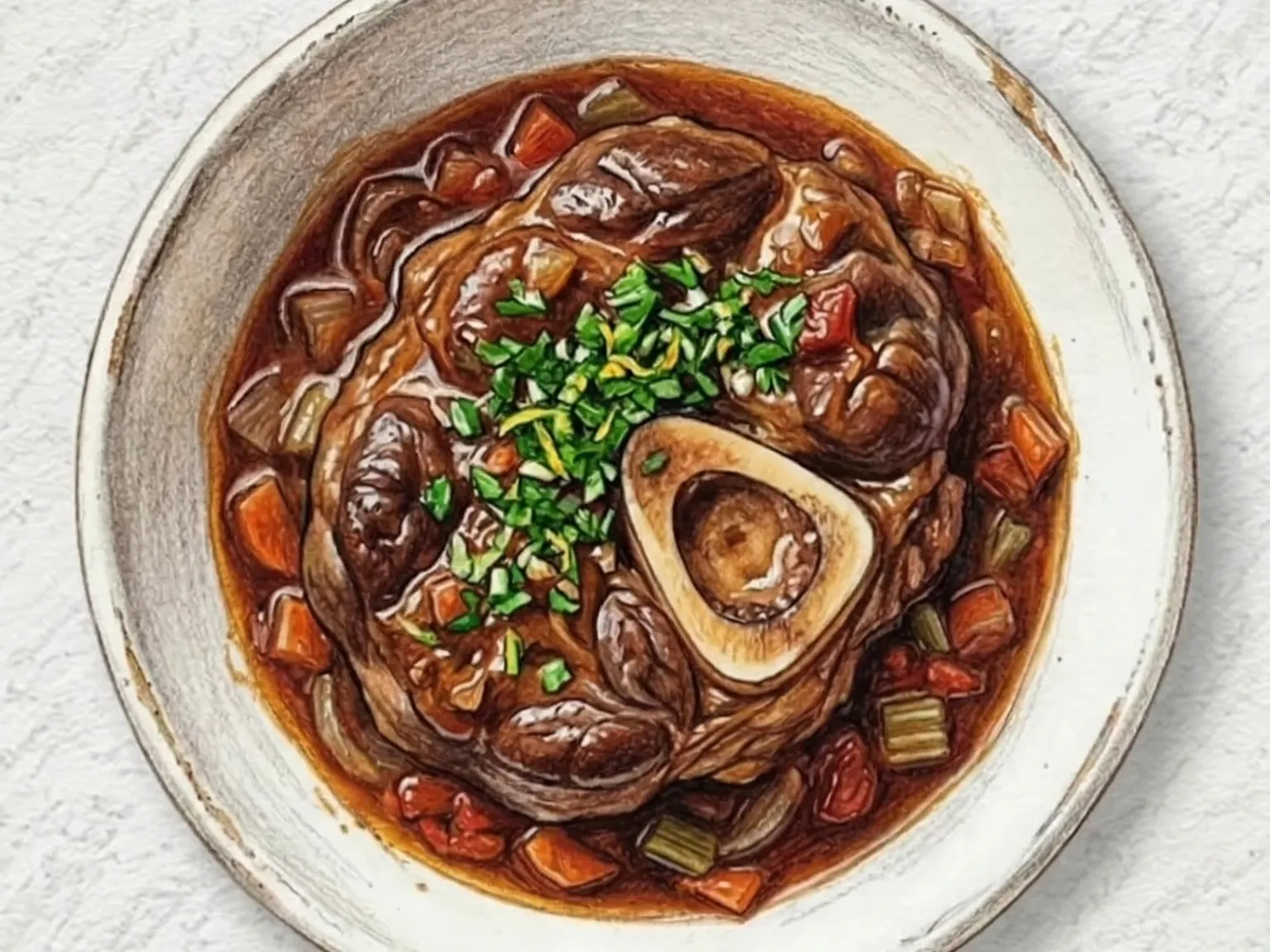
Osso buco dredges thick-cut veal shanks in flour and sears them in olive oil on all sides, then braises them with sauteed onion, carrot, and celery in a mixture of white wine, whole tomatoes, and chicken stock at 160 degrees Celsius for one and a half to two hours. The long, slow cooking converts the tough connective tissue around the bone into gelatin, making the meat fork-tender, while the marrow inside the bone melts into the sauce and enriches it with a deep, silky body. A gremolata of finely chopped parsley, lemon zest, and garlic is scattered over the finished dish - the lemon's bright acidity and the raw garlic's sharpness cut through the heavy braising liquid and lift the entire plate. Careful handling of the shanks throughout cooking is important to keep the prized marrow intact inside the bone.
Adjust Servings
Instructions
- 1
Dredge shanks in flour and sear all sides in olive oil.
- 2
Sauté vegetables until softened.
- 3
Deglaze with white wine; add tomatoes and stock.
- 4
Return shanks to sauce, cover, and braise in 160°C oven for 1.5~2 hours.
- 5
Top with gremolata (parsley, lemon zest, and garlic) and serve.
As an Amazon Associate, we may earn from qualifying purchases.
Tips
Nutrition (per serving)
More Recipes

Chicken Cacciatore
Chicken cacciatore is an Italian countryside dish where chicken pieces are seared in olive oil until deeply browned, then braised for forty minutes over low heat with onion, garlic, canned tomatoes, black olives, capers, red wine, and thyme. The initial hard sear triggers a Maillard reaction on the chicken skin, and those browned flavors dissolve into the sauce as it simmers. Red wine is added and reduced for two minutes to cook off the alcohol, leaving behind its acidity and fruit notes, which add a layer of complexity to the tomato base. The olives contribute a briny saltiness and the capers a tart, floral sharpness that balance the natural sweetness of the tomatoes. Thyme ties the components together with a quiet herbal note. This dish improves when reheated the next day, as the flavors penetrate deeper into the meat overnight.

Chicken Milanese
Chicken Milanese butterflies and pounds chicken breast thin, then coats it in flour, beaten egg, and breadcrumbs mixed with grated Parmesan before pan-frying in olive oil until golden and crisp. Pounding the meat uniformly thin ensures it cooks through quickly at the same rate as the crust browns. The Parmesan folded into the breadcrumbs adds a savory, nutty depth to the coating that plain breadcrumbs alone cannot achieve. Letting the coated chicken rest for five minutes before frying helps the breading adhere firmly and resist flaking off in the pan. A squeeze of fresh lemon juice right after plating cuts through the oil and lifts the cheese flavor, while an arugula salad on top provides a peppery, bitter contrast.

Risotto alla Milanese
Risotto alla Milanese is Milan's signature rice dish, made by toasting Arborio rice in olive oil and butter with onion, deglazing with white wine, and gradually stirring in saffron-infused chicken stock one ladle at a time. Toasting the rice first coats each grain in fat, which slows starch release and builds the characteristic creamy consistency. The white wine adds an acidity that balances the richness of butter and cheese underneath. Saffron must be steeped in warm stock beforehand so its golden color and floral aroma distribute evenly, and the stock should always be kept hot to avoid dropping the rice temperature mid-cook. Stirring in cold butter and grated Parmesan off the heat at the very end emulsifies them into the starch, producing the loose, flowing texture that defines a properly finished risotto.

Veal Saltimbocca (Italian Veal Cutlets Dish)
Veal saltimbocca pounds veal cutlets thin, tops each with a sage leaf and a slice of prosciutto pressed firmly by hand, dusts them lightly in flour, and sears them quickly in a hot pan before building a sauce with white wine and butter. Thin cutlets are essential because veal toughens rapidly with prolonged heat - the total cooking time should stay under two to three minutes per piece to keep the meat tender. Starting with the prosciutto side down lets the heat fuse it to the meat without needing toothpicks to hold it in place. When white wine hits the hot pan after the meat is removed, it lifts the caramelized fond from the bottom and forms the base of the sauce, which butter then emulsifies into a glossy, light finish. The sage leaf caught between the prosciutto and veal perfumes the meat with a subtle herbal note that pairs naturally with the prosciutto's cured saltiness.

Pasta alla Genovese (Neapolitan Slow-Braised Onion and Beef Ragu)
Pasta alla Genovese is a Neapolitan slow-cooked ragu that uses a large volume of onions braised with beef chuck for at least two hours. No tomato is involved; the sauce draws all its sweetness from caramelized onions and depth from white wine and the rendered beef fat. The finished ragu has a thick, almost jam-like consistency with shredded meat folded throughout. Ziti is the traditional pasta shape, served with a generous dusting of Parmigiano-Reggiano.

Spaghetti Carbonara
Carbonara is a Roman pasta built on four core ingredients: guanciale, egg yolks, Pecorino Romano, and black pepper. The guanciale is rendered until crisp, and its fat becomes the base of the sauce. Off the heat, a mixture of yolks and grated cheese is tossed with the hot pasta and starchy cooking water to form a glossy emulsion - no cream involved. The dish takes under 25 minutes from start to finish, though temperature control at the sauce stage is critical to avoid scrambling the eggs.