Otak-Otak (Southeast Asian Grilled Fish Paste in Banana Leaf)
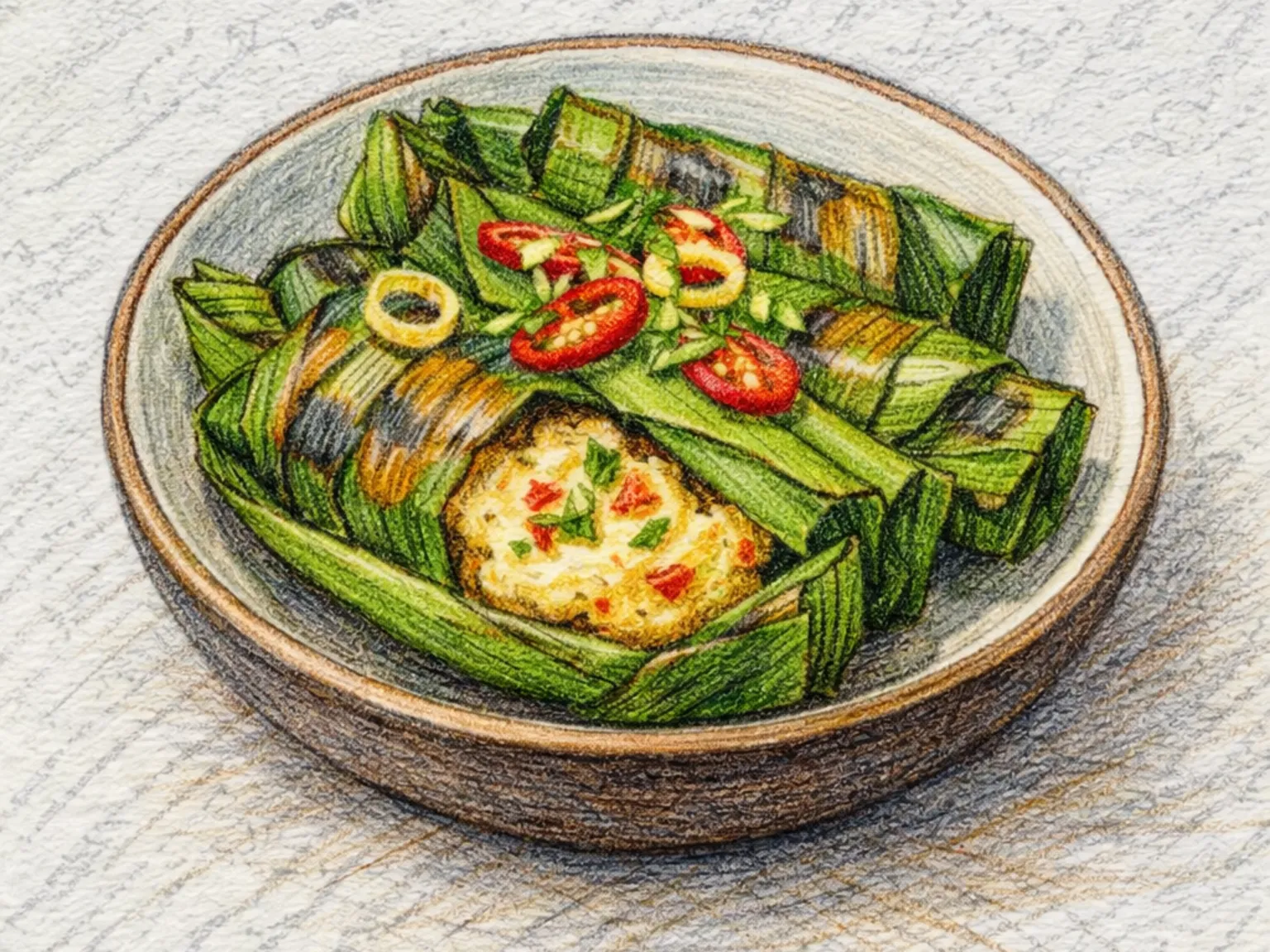
Otak-otak is a grilled fish paste preparation found across Southeast Asia, with strong traditions in Malaysia and Singapore. Fresh white fish is blended to a smooth paste with coconut milk, egg white, and red curry paste, then spread onto sections of banana leaf, folded, and grilled over charcoal. The banana leaf chars at the edges, imparting a gentle smokiness that penetrates the soft fish cake inside. Kaffir lime leaves add a bright citrus note that lifts the richness of the coconut. The finished texture is closer to a firm custard than a Western fish cake - smooth, moist, and yielding.
Adjust Servings
Instructions
- 1
Blend fish with coconut milk and egg white into a smooth paste.
- 2
Add curry paste, fish sauce, sugar, and finely sliced lime leaves, then mix well.
- 3
Pass banana leaves briefly over heat to soften, then place fish paste on them.
- 4
Fold and secure the leaves, then grill on medium-high heat on both sides.
- 5
Cook until fully set inside and serve hot.
As an Amazon Associate, we may earn from qualifying purchases.
Tips
Nutrition (per serving)
More Recipes

Ayam Lemak Cili Padi (Malay Coconut Chicken with Bird's Eye Chili)
Ayam lemak cili padi is a Malay kampung dish - village cooking at its most direct. Chicken simmers in a thin coconut milk broth spiked with bird's eye chilies, turmeric, lemongrass, and sliced shallots. The coconut milk stays light and soupy rather than reduced to a thick gravy, keeping the dish from becoming heavy. Bird's eye chilies deliver a sharp, immediate heat that lingers long after each spoonful, distinct from the slow burn of dried chili pastes. Turmeric tints the broth pale gold and adds an earthy bitterness beneath the coconut sweetness. This is comfort food across Malaysia's east coast states, typically served with steamed rice that soaks up the fragrant, spicy broth.

Tamarind Fish Noodle Soup
Asam laksa is Penang's signature noodle soup, recognized by UNESCO as one of Malaysia's cultural treasures. Unlike the coconut-rich curry laksa of Singapore, this version is built on a tamarind-soured fish broth - tart, briny, and intensely aromatic. Mackerel is poached whole, flaked, and returned to a broth infused with torch ginger flower, lemongrass, and galangal ground into a paste. The sourness from tamarind hits first, followed by a slow wave of chili heat and the ocean depth of fish sauce. Thick rice noodles sit in the bowl, their chewy resistance contrasting the thin, punchy broth. Shredded cucumber, mint, and a spoonful of sweet prawn paste stirred in at the table complete the balance.

Nasi Kandar (Penang Indian-Muslim Rice with Mixed Curries)
Nasi kandar is a Penang-born rice dish rooted in the culinary traditions of Malaysia's Indian-Muslim community. A mound of steamed white rice is doused with multiple curry gravies and accompanied by a choice of protein and vegetable sides. The defining technique is kuah campur - the deliberate mixing of different curry sauces so they pool together and soak into the rice, creating a layered complexity no single curry could achieve alone. Coconut milk lends a gentle richness, curry powder supplies aromatic depth, and chili brings lingering warmth. Diners select their own combination from a counter full of dishes, making each plate unique.

Nasi Lemak (Malaysian Coconut Pandan Rice with Anchovy Sambal)
Nasi lemak is Malaysia's definitive national dish, built on a foundation of rice cooked in coconut milk with pandan leaves. The rice alone carries a subtle richness and a faint vanilla-like fragrance from the pandan, making it flavorful even before any accompaniment. The essential sambal is a cooked chili paste built on shrimp paste and tamarind, delivering sweetness and slow-building heat in equal measure. Crispy fried anchovies and roasted peanuts contribute crunch, while a halved boiled egg and fresh cucumber slices balance the richness. In its simplest form, nasi lemak is wrapped in a banana leaf for a quick breakfast.

Mee Rebus (Noodles in Sweet Potato Curry Gravy)
Mee rebus is a Malaysian noodle dish where springy yellow noodles are topped with a thick gravy built from mashed sweet potato, curry powder, peanut butter, and chicken stock. The sweet potato dissolves into the stock to form a naturally thick base, and the curry powder and peanut butter contribute layers of spice and nuttiness that make the sauce unlike any other noodle topping. Soy sauce adds fermented depth and ties the sweetness and spice together. If the gravy becomes too thick during cooking, extra stock loosens it without diluting the flavor. A halved boiled egg and a squeeze of fresh lime just before eating cut through the richness, bringing the bright acidity that is a hallmark of Southeast Asian noodle dishes.

Korean Gochujang-Grilled Butterfish
Byeongeo gochujang-gui is a Korean spicy grilled butterfish where fillets are brushed with a paste of gochujang, soy sauce, plum syrup, minced garlic, and red pepper flakes, then pan-fried over medium heat. Butterfish has an exceptionally fine, soft flesh that absorbs the glaze readily, and the plum syrup's fruity acidity tempers the fermented heat of gochujang so the finish stays clean rather than heavy. The glaze must be applied in thin, repeated layers during cooking-a single thick coat causes the sugars to burn before the fish cooks through. A light squeeze of lemon at the end adds a bright citrus note that lifts the dish and prevents any lingering oiliness.