Korean Green Onion Kimchi
Pa-kimchi uses whole large green onions, salted for 30 minutes to soften their sharp bite and loosen the fibers so the seasoning can penetrate deeply. The paste - red pepper flakes, fish sauce, and minced garlic - coats each stalk in a layer of spicy, briny flavor. One day of room-temperature fermentation allows the lactic acid bacteria to develop, blending the onion pungency with the umami of the fish sauce into a more rounded profile. After transferring to the refrigerator, the kimchi continues to mature over two to three days, gaining a mild tanginess that intensifies with each passing day.
Adjust Servings
Instructions
- 1
Salt the green onions for 30 minutes, then rinse and drain.
- 2
Mix pepper flakes, fish sauce, and garlic.
- 3
Toss the onions with the seasoning.
- 4
Pack into a container; ferment for one day, then refrigerate.
As an Amazon Associate, we may earn from qualifying purchases.
Tips
Nutrition (per serving)
More Recipes

Korean Scallion Salad (Spicy Green Onion Grilled Meat Side)
Pa-muchim is a julienned green onion salad that serves as a classic accompaniment to Korean grilled meat. The onions are soaked in cold water for 10 minutes to draw out harsh sulfur compounds, leaving only a clean crispness behind. A dressing of soy sauce, red pepper flakes, sugar, vinegar, and sesame oil coats the thin strands, delivering a balance of salty, sweet, sour, and spicy notes in each bite. Toasted sesame seeds scattered on top contribute a lingering nuttiness. The salad should be eaten promptly after tossing, as the onions begin to wilt within minutes; placed on top of grilled pork belly or bulgogi, the sharp freshness cuts through the richness of the meat.

Korean Green Onion Salad (Doenjang-Dressed Grilled Meat Side)
Jjokpa-muchim dresses thin Korean chives (jjokpa) in a blend of doenjang and gochujang - a supporting-role banchan that almost always accompanies grilled samgyeopsal or pan-roasted fish. Jjokpa is milder and sweeter than regular green onion, which is why it works raw: the gentle sharpness cuts through fatty meat without overpowering it. The fermented depth of doenjang and the spicy kick of gochujang layer onto the chive's natural pungency to build a complex flavor from three simple ingredients. The critical rule is to dress the chives immediately before serving - salt in the pastes wilts the jjokpa within minutes, collapsing the crisp snap that defines the dish. Cut to four-centimeter lengths and gently tumbled in the sauce, the entire preparation takes under five minutes. Spring jjokpa is the most tender and sweet, making it the peak season for this banchan.

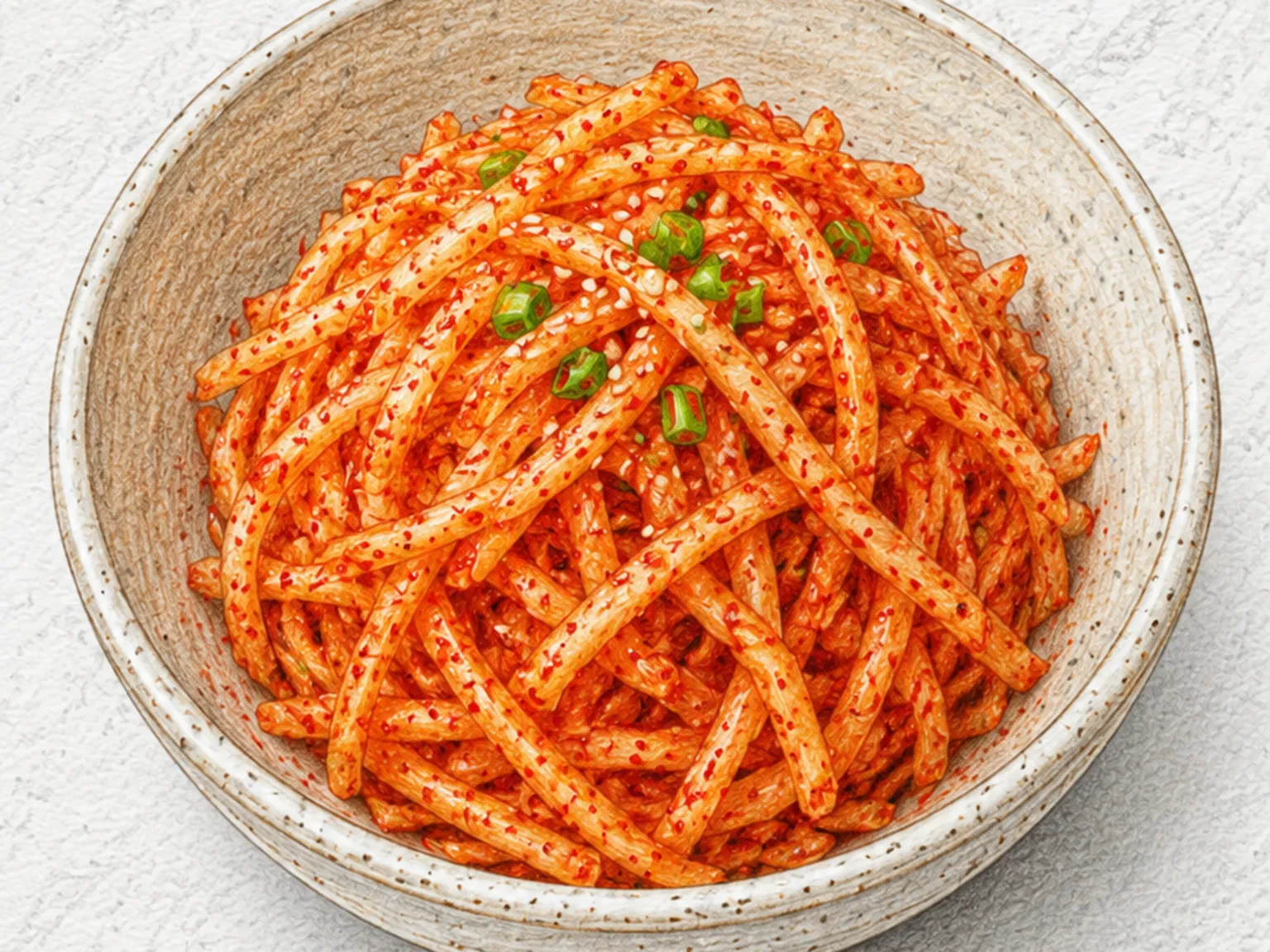
Korean Young Radish Kimchi
Young radish greens and their slender stems are salted briefly, dressed in a gochugaru-based paste, and fermented into a kimchi synonymous with Korean summer. The greens are more delicate than mature radish, absorbing the seasoning quickly while retaining a refreshing crunch that lasts well into fermentation. Gochugaru and anchovy fish sauce form the backbone of the paste, delivering heat and deep umami in equal measure, while garlic lends a pungent undercurrent that mellows as the fermentation progresses. Once dressed, the radish greens release their own moisture, creating a naturally occurring brine that becomes the hallmark of yeolmu kimchi: a tangy, chili-flecked liquid that can be spooned over cold noodles or rice. Even half a day at room temperature kicks off the fermentation, introducing a sharp, fizzy acidity that signals the kimchi is alive. Transferring it to the refrigerator slows the process and stabilizes the flavor at a bright, appetizing sourness. Draped over bibim-guksu or naengmyeon, it brings a cooling, spicy bite that defines the Korean summer table.

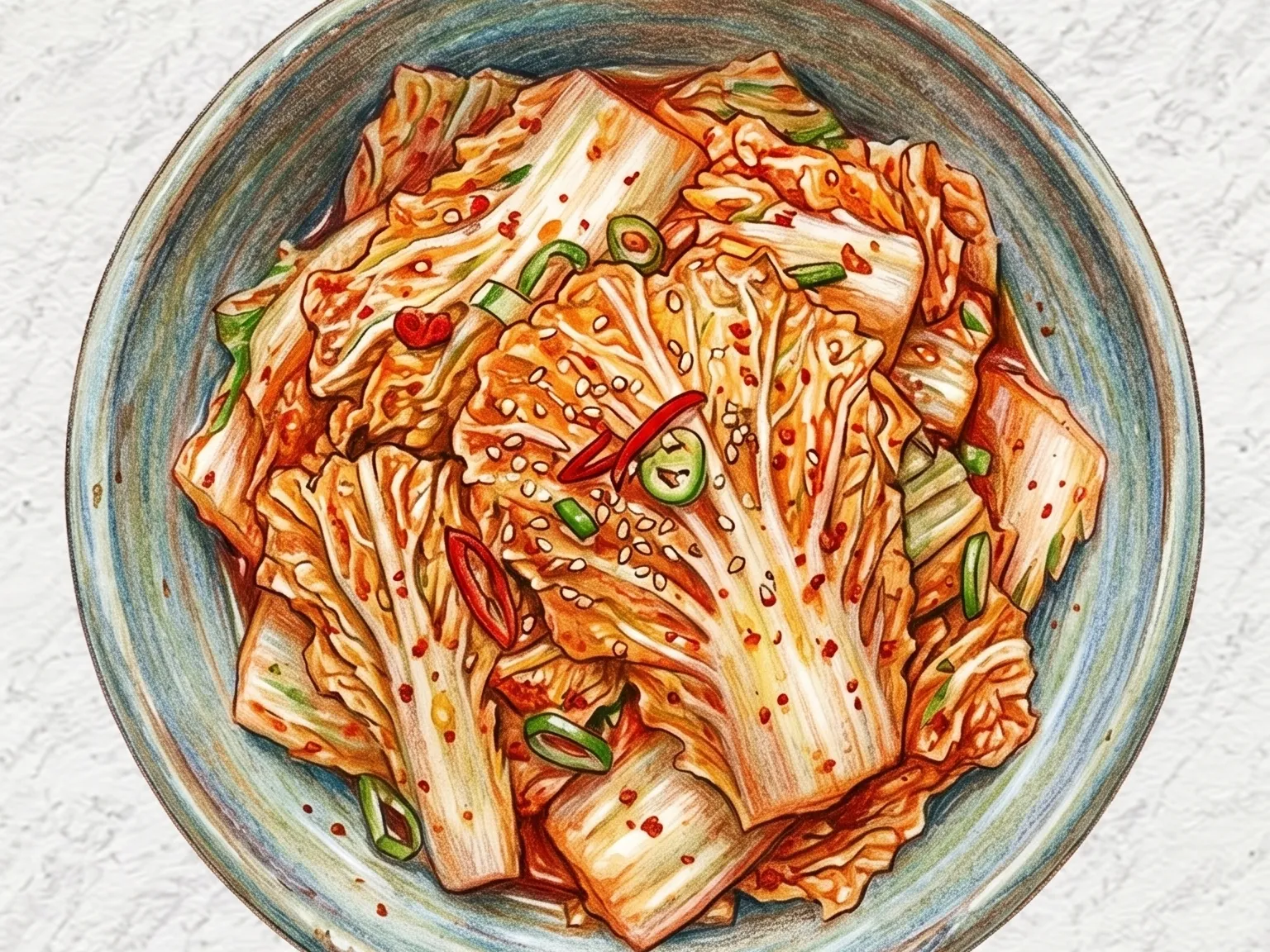
Korean Water Kimchi (Chilled Radish Broth Kimchi)
Nabak-kimchi is a Korean water kimchi made by submerging thinly sliced radish and napa cabbage in a clear, lightly reddened broth - fundamentally different from the dense, fermented intensity of baechu-kimchi. Here, the chilled broth is the centerpiece, meant to be sipped and spooned rather than merely eaten as a side. Radish and cabbage are cut into flat 2-to-3cm squares, salted briefly, then immersed in a liquid made by steeping gochugaru in water through cheesecloth - wrapping the powder prevents the particles from clouding the broth. Garlic, ginger, scallion, and fish sauce flavor the liquid. One day at room temperature initiates lactic fermentation, introducing a gentle tang, and refrigeration over two to three days deepens the complexity. A spoonful of nabak-kimchi broth alongside spicy food acts as a cooling palate cleanser. Served cold, this kimchi is particularly refreshing in summer - it is a drinking kimchi in the truest sense, closer in spirit to naengmyeon broth than to solid fermented kimchi.

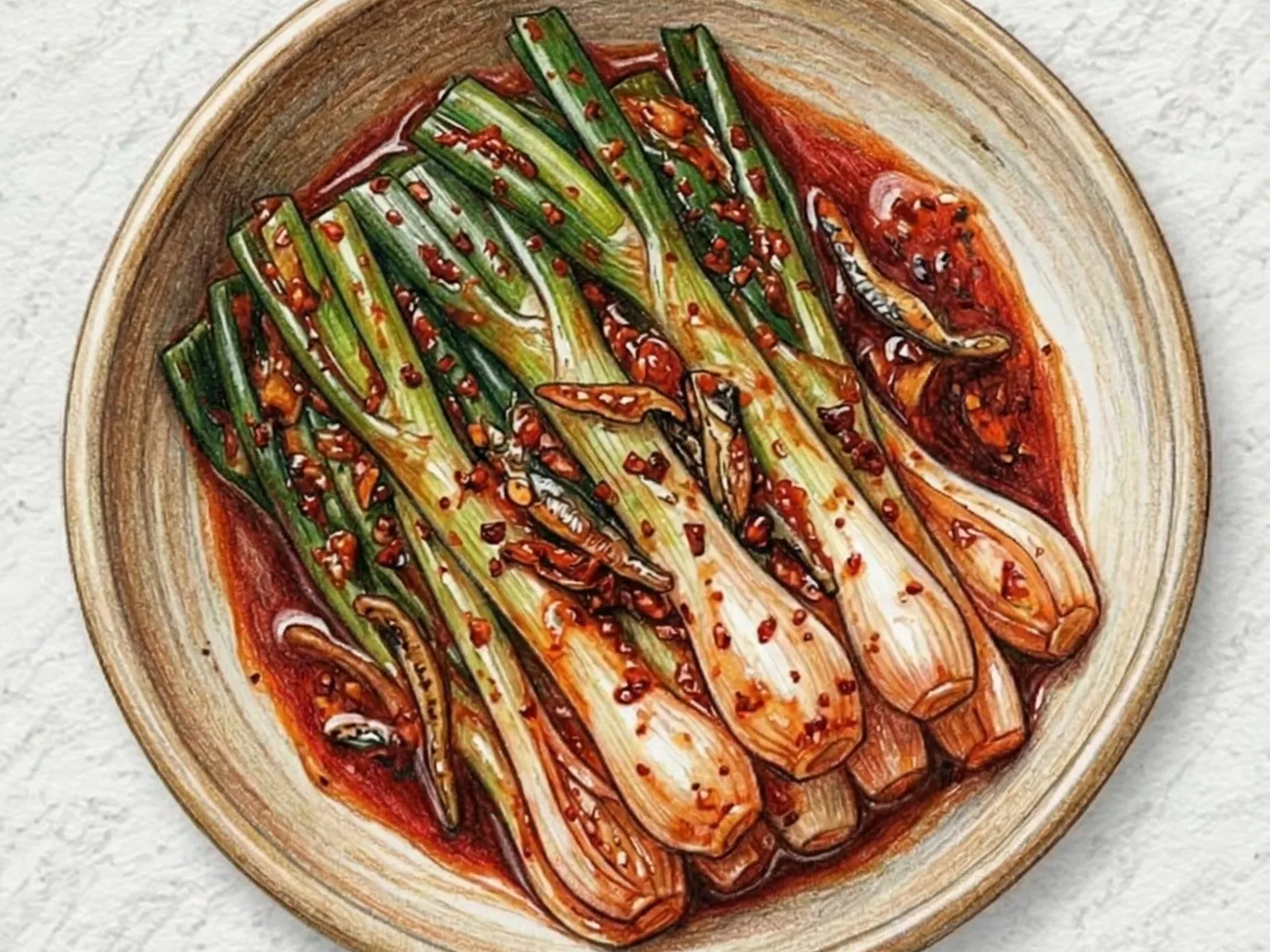
Korean Green Onion Kimchi
Daepa kimchi is made by cutting large green onions into six- to seven-centimeter lengths and gently coating them in a paste of gochugaru, anchovy fish sauce, soy sauce, plum extract, and glutinous rice paste. The rice paste acts as a binder that keeps the seasoning clinging to the onion surfaces throughout fermentation instead of sliding off. Handling the stalks carefully so they stay intact is important for presentation, and splitting thicker white portions lengthwise gives the paste more surface area to penetrate. Eight hours of room-temperature fermentation followed by two days of refrigeration brings the kimchi to its peak, where the sharp allium bite of the green onion meets the deep fermented umami of the fish sauce.

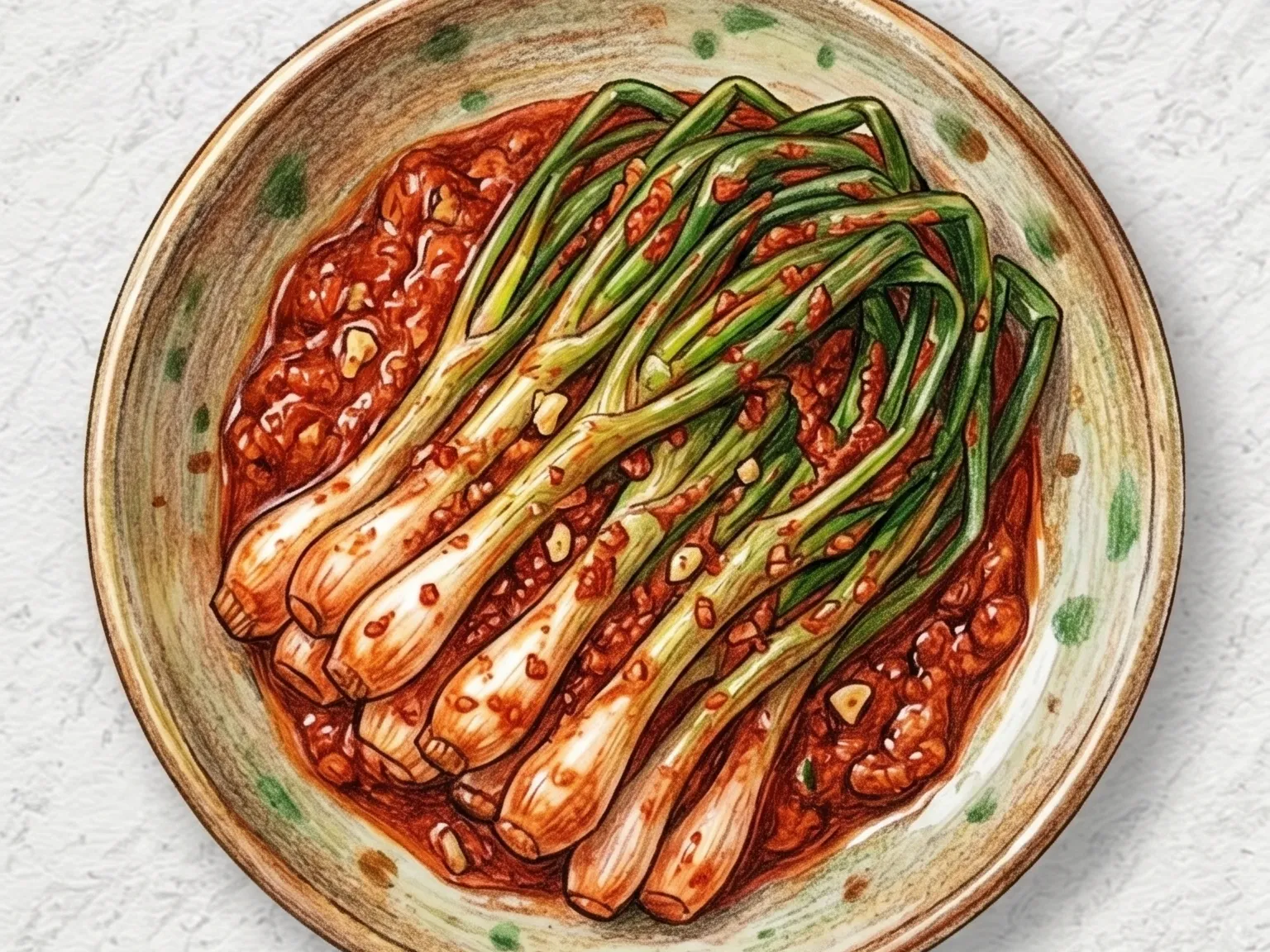
Korean Scallion Kimchi (Whole Stalk Anchovy Shrimp Paste)
Jjokpa kimchi is a traditional Korean scallion kimchi made by lightly brining whole scallions in coarse salt, then coating them from root to tip with a seasoning paste of anchovy fish sauce, salted shrimp, gochugaru, and sweet rice paste. The dual seafood condiments build a layered umami that the rice paste locks onto the scallion surface, preventing the flavor from diluting as moisture releases during fermentation. The white bulb sections stay crisp and absorb the chili heat, while the green tops wilt into a soft, pungent layer with a sharp allium bite. After six hours at room temperature followed by a day in the refrigerator, the seasoning stabilizes into a balanced, punchy side dish that works alongside steamed rice or grilled pork belly.