Thai Drunken Noodles
Noodles Medium

Thai Drunken Noodles

Quick answer

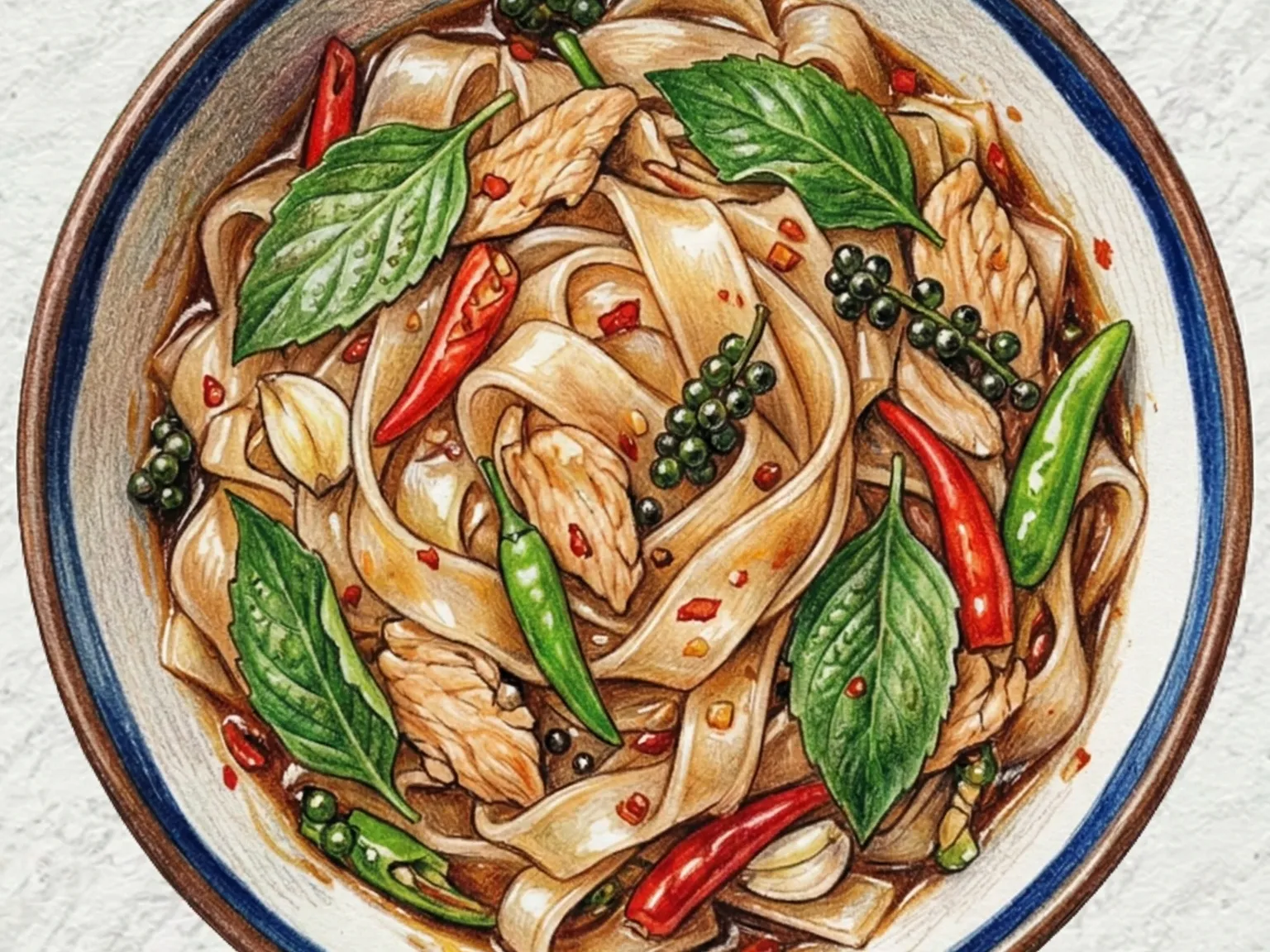
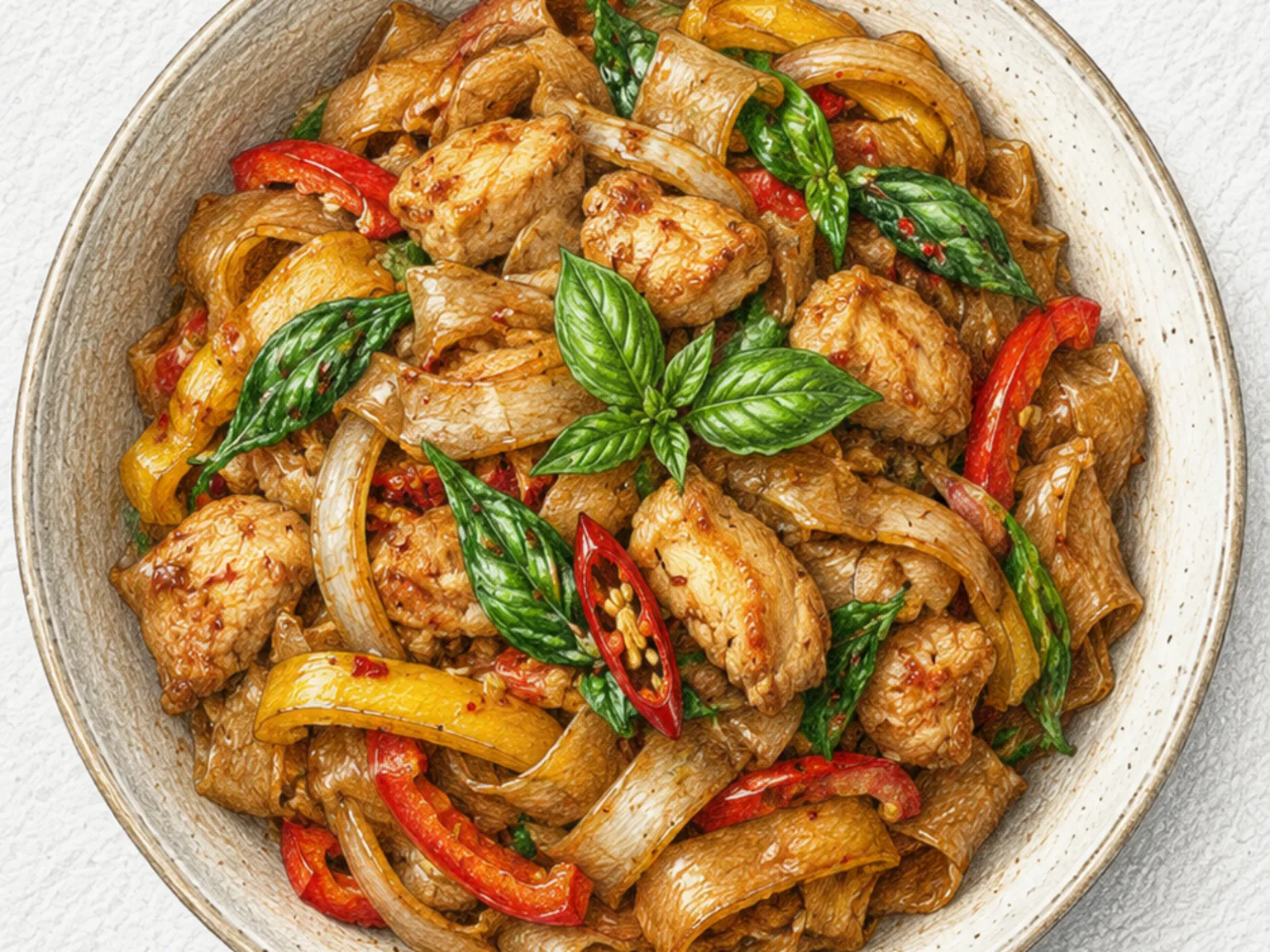
Pad kee mao, or drunken noodles, is a Thai stir-fried noodle dish where wide rice noodles are wok-tossed with chicken, garlic, fresh chili, and Thai basil over very high heat.

What makes this special

  • Wide rice noodles wok-tossed with chicken, fresh chili, and Thai basil over high heat.
  • Wok at maximum heat to burst garlic and chili aroma before adding protein
  • Thai basil added off heat so the anise-like aroma stays sharp
Total time
27 min
Level
Medium
Servings
2 servings
Ingredients
9
Calories
610 kcal
Protein
28 g

Key ingredients

wide rice noodleschicken thighThai basilonionbell pepper

Core cooking flow

  1. 1 Soak 300 g wide rice noodles in lukewarm water just until they bend easily.
  2. 2 Slice 150 g chicken thigh thinly so it cooks before the noodles overheat.
  3. 3 Heat the wok on the highest setting until it just starts to smoke, then coat it lightly with oil.

Pad kee mao, or drunken noodles, is a Thai stir-fried noodle dish where wide rice noodles are wok-tossed with chicken, garlic, fresh chili, and Thai basil over very high heat. The noodles are soaked briefly in lukewarm water until pliable but not soft. Garlic and chili go into the smoking-hot wok first to release their aroma, followed by sliced chicken thigh. Onion and bell pepper are added next and stir-fried quickly to keep them crisp. Fish sauce delivers briny umami while dark soy sauce darkens the noodles and adds a subtle sweetness. Thai basil is folded in only after the heat is turned off, so its anise-like fragrance stays intact rather than cooking away. Maintaining intense wok heat throughout is critical - too low and the noodles steam instead of sear.

Prep 15min Cook 12min 2 servings

Instructions

Read the steps as a cooking flow: prep, heat, seasoning, doneness control, and finish.

6 steps
  1. 1
    Step

    Soak 300 g wide rice noodles in lukewarm water just until they bend easily.

    Keep a slight firm core in the center, because fully softened noodles will break and turn mushy once they hit the hot wok.

  2. 2
    Heat

    Slice 150 g chicken thigh thinly so it cooks before the noodles overheat.

    Cut 70 g onion and 80 g bell pepper into strips, then wash 1 cup Thai basil and shake off excess water to prevent steaming.

  3. 3
    Step

    Heat the wok on the highest setting until it just starts to smoke, then coat it lightly with oil.

    Add 1 tablespoon minced garlic and 2 fresh chilies, and stir for about 20 seconds until sharp and fragrant.

  4. 4
    Control

    Add the sliced chicken thigh and spread it across the hot surface.

    Stir-fry for about 1 minute, until the outside turns opaque; if liquid gathers, stop stirring briefly and let the high heat drive it off.

  5. 5
    Season

    Add the onion and bell pepper, and stir-fry for only about 30 seconds so they stay crisp.

    Add the drained noodles, then pour in 1.5 tablespoons fish sauce and 1 tablespoon dark soy sauce and toss until coated.

  6. 6
    Finish

    When the noodles look glossy and the edges show slight searing, turn off the heat.

    Add the Thai basil and toss only with residual heat until just wilted, then transfer immediately and serve while hot.

After the steps

Pick a recipe that fits this dish.

Continue with shared ingredients, meal pairings, or a similar method.

Recipes That Go Well With This

More Noodles →

Based on shared ingredients and meal pairing

Drunken Noodles
Shared ingredient: wide rice noodles Asian

Drunken Noodles

Pad kee mao, known outside Thailand as drunken noodles, is a stir-fried rice noodle dish from central Thailand whose name has two competing origin stories: one holds that it was street food eaten late at night to accompany drinking, the other that the ferocious chili heat leaves the eater feeling intoxicated. Wide rice noodles called sen yai are tossed in a screaming-hot wok with fresh chilies, crushed garlic, and protein, and the defining technique is leaving the noodles undisturbed long enough to char slightly where they press against the metal surface, generating a smoky, wok-seared flavor that no other cooking method replicates. Thai holy basil, known as krapao, is a fundamentally different ingredient from Italian basil: it carries a peppery, clove-adjacent sharpness and a faint natural heat, and when it hits a hot wok the volatile oils bloom instantly into the air around the pan. A dark sauce of oyster sauce, soy sauce, fish sauce, and sugar stains the noodles a deep mahogany-brown while building a flavor profile that stacks salt, sweetness, and fermented umami in every strand. In Thailand the dish is made with seafood, pork, or chicken, and a crispy fried egg cooked in a generous pool of oil until the edges lacquer and crunch is placed on top. The yolk is broken and stirred through the noodles at the table, coating everything in a rich, golden layer that softens the heat and ties the dish together. No rice is needed when the noodles already carry this much.

Pineapple Shrimp Khao Pad
Shared ingredient: onion Asian

Pineapple Shrimp Khao Pad

Pineapple shrimp khao pad is a Thai fried rice served inside a hollowed-out pineapple half, which functions both as a vessel and as a flavoring agent as residual juice from the fruit walls seeps gradually into the rice during service. Shrimp are cooked first in a very hot wok with minimal time, just long enough to firm up and curl before they are set aside, preventing the rubbery texture that results from overcooking in the subsequent stir-fry steps. Garlic goes into the oil next, quickly followed by day-old jasmine rice, which is broken up and tossed at high heat. Using rice that has dried out in the refrigerator overnight is important: fresh rice carries too much moisture and steams rather than fries, resulting in clumping. Egg is pushed through a cleared space in the center, scrambled lightly, then folded into the rice before it fully sets. Diced fresh pineapple is added at the very end and tossed only briefly so that it retains some structure while releasing enough juice to flavor the rice with its characteristic tart sweetness, which plays against the salty depth of fish sauce. Curry powder tints the grains a pale yellow and contributes a warm, earthy undertone that keeps the dish from reading as purely sweet. Roasted cashew nuts add crunch throughout, and scattered raisins provide small concentrated hits of sweetness. The assembled rice is mounded into the pineapple shell and brought to the table, often served with a wedge of lime on the side.

Yam Woon Sen (Thai Glass Noodle Salad with Shrimp)
Serve together Salads

Yam Woon Sen (Thai Glass Noodle Salad with Shrimp)

Yam woon sen is a Thai glass noodle salad where soaked and briefly boiled mung bean noodles are tossed with blanched shrimp, sliced red onion, diagonally cut celery, and chopped cilantro in a dressing of lime juice, fish sauce, and palm sugar. The noodles are soaked in warm water for ten minutes, then boiled for just two minutes to maintain their chewy, springy texture - rinsing in cold water immediately after removes surface starch and prevents clumping. The shrimp need only a two-minute blanch to reach a firm, bouncy doneness; any longer and they turn rubbery. The dressing builds three layers simultaneously - fish sauce for salty depth, lime juice for bright acidity, and palm sugar for a caramel sweetness - creating the complex balance characteristic of Thai cuisine. Cilantro provides a fresh, herbal finish.

Pad Thai
Similar recipe Noodles

Pad Thai

Pad thai is Thailand's most widely recognized stir-fried noodle dish, centered on a sauce made from tamarind paste, fish sauce, and sugar that balances sweet, sour, and salty flavors in every bite. The proportion of these three ingredients is what determines the character of the final dish, and adjusting them even slightly shifts the balance noticeably. Dried rice noodles soak in lukewarm water for twenty minutes until they are pliable but still firm enough to hold up under high heat without becoming mushy. Firm tofu is pan-fried first until golden on all sides, establishing a nutty, textured base, then shrimp are added and pushed to the side as soon as they turn pink. The eggs are scrambled in the cleared center of the pan rather than mixed in with everything else, which allows them to set into thin, irregular sheets that distribute evenly through the noodles when tossed. Adding the soaked noodles and sauce over high heat and tossing quickly causes the noodles to absorb the sauce rapidly, developing a glossy, amber-toned coating. Bean sprouts stirred in at the very end keep their crunch, coarsely ground peanuts provide a roasted, brittle texture, and a squeeze of fresh lime just before eating introduces a bright acidity that sharpens the whole dish.

Serve with this

Korean Beef & Shiitake Japchae
Side dishes Medium

Korean Beef & Shiitake Japchae

Japchae originated as a Joseon royal court dish of stir-fried vegetables before sweet potato glass noodles were added to create the form recognized today. This version pairs glass noodles with soy-marinated beef and sliced shiitake mushrooms. Each component cooks separately: beef and mushrooms stir-fried with garlic, spinach blanched and squeezed dry, carrots and onions sauteed until just tender. A final toss with sesame oil brings everything together. The noodles should be translucent and springy, carrying a sweet-salty soy glaze into each forkful. A standard presence on every Korean holiday table at Chuseok, Seollal, and birthday celebrations alike.

🏠 Everyday 🎉 Special Occasion
Prep 20min Cook 18min 4 servings
Korean Flower Crab Pancake
Pancakes Hard

Korean Flower Crab Pancake

Fresh blue crab meat is picked clean, coated in a mixture of all-purpose flour and Korean pancake mix, dipped in beaten egg, and pan-fried until the surface turns golden. The crab's natural sweetness and mild brininess stay intact throughout the process, and minced ginger cuts through any residual fishiness without announcing itself in the finished jeon. Black pepper is added in small amounts - just enough to clean up the aftertaste without competing with the delicate crab. The egg coating holds moisture inside, keeping the meat tender while the outside crisps to a light, golden crust. A generous amount of crab filling in each piece is what makes the texture satisfying.

🍺 Bar Snacks 🎉 Special Occasion
Prep 18min Cook 12min 2 servings
Korean Mustard Greens Pickle
Kimchi Easy

Korean Mustard Greens Pickle

Paeju mustard pickle is a quick vinegar preserve where mustard greens are cut into roughly four-centimeter pieces, packed into jars with sliced garlic, and submerged in a hot brine of vinegar, water, sugar, salt, and lemon juice. Mustard greens hold on to their peppery, nasal bite even after pickling, layering that natural heat against the sharp acidity of the brine. Lemon juice is added only after the heat is turned off, preserving the citrus aroma that would otherwise evaporate during boiling. Thicker stems absorb the brine more slowly than the leaves, so separating them and salting the stems first gives a more uniform texture throughout. The pickles are ready after twelve hours of refrigeration, but a full day of resting allows the brine to penetrate to the center of each piece and the flavors to settle into a rounder balance. Served alongside fatty meats, their peppery acidity cleans the palate effectively; tucked into a sandwich, they stand in for mustard with more complexity.

🍱 Lunchbox ⚡ Quick
Prep 12min Cook 6min 2 servings

Similar recipes

Thai Soy Sauce Noodles (Wide Rice Noodles with Beef and Chinese Broccoli)
Noodles Medium

Thai Soy Sauce Noodles (Wide Rice Noodles with Beef and Chinese Broccoli)

Pad see ew is a Thai stir-fried noodle dish built around wide rice noodles, beef, Chinese broccoli, and egg, all tossed in a sauce of soy sauce, oyster sauce, and dark sugar. The central technique is wok hei through extreme heat. Without a properly scorching pan, the sauce pools at the bottom rather than adhering to the noodles, and caramelization never happens. Beef goes into the hot pan first to develop a seared surface before anything else is added. Gai lan and cracked eggs follow, the eggs scrambled loose in the same pan, then the soaked noodles and the pre-mixed sauce go in together and the whole thing is tossed hard and fast. During those few seconds of high contact heat, the sauce binds to the noodle surface and develops a slightly charred, smoky-sweet aroma that is the defining character of the dish. The thick stems of Chinese broccoli keep a satisfying crunch and introduce a mild bitterness that cuts the sweetness of the sauce. Egg fragments distributed throughout the noodles add pockets of soft, creamy texture. The finished noodles are deeply stained, and every strand carries the sauce.

🎉 Special Occasion 🌙 Late Night
Prep 15min Cook 15min 2 servings
Northern Thai Coconut Curry Noodles
Noodles Medium

Northern Thai Coconut Curry Noodles

Khao soi is a coconut curry noodle soup from northern Thailand's Chiang Mai region. Red curry paste is fried in coconut cream until fragrant, then combined with more coconut milk and chicken stock to form a thick, spiced broth. Bone-in chicken thighs simmer in this liquid for about 20 minutes until the meat turns fork-tender. Egg noodles are boiled separately and placed in the bowl, but what sets the dish apart is a handful of the same noodles deep-fried until crisp and scattered on top - the crunch against the soft, soupy noodles below creates a sharp textural contrast. Shallots, cilantro, and a squeeze of lime cut through the richness, while fish sauce and a touch of sugar fine-tune the balance between salty, sweet, and sour.

🎉 Special Occasion 🌙 Late Night
Prep 20min Cook 30min 2 servings
Thai Crab Fried Rice (Khao Pad Pu)
Asian Easy

Thai Crab Fried Rice (Khao Pad Pu)

Khao pad pu is a Thai crab fried rice built on the premise that the sweetness of fresh crab meat carries the entire dish. The wok must reach smoking heat before minced garlic goes in and fries for ten seconds. Beaten egg follows and is scrambled into large, loose curds before cold jasmine rice is added and tossed rapidly to prevent sticking. Cold rice works here because its lower moisture content allows every grain to stay separate and pick up a direct scorch from the wok surface. Fish sauce and a small measure of soy sauce season the rice, and white pepper ground over the top adds a subtle, lingering heat. Lump crab meat goes in thirty seconds before the heat is cut and is stirred only gently, just enough to warm through without breaking the pieces down or toughening the texture. Prolonged heat would shrink the crab and strip out its sweetness entirely. The finished rice is plated and finished with a generous squeeze of lime, then garnished with spring onion, sliced cucumber, and fresh coriander. The salted umami of the fish sauce, the brightness of the lime, and the delicate sweetness of the crab come together cleanly on one plate.

🎉 Special Occasion ⚡ Quick
Prep 12min Cook 10min 2 servings

Tips

Use very high heat to avoid soggy noodles.
Add basil at the end for best aroma.

Nutrition (per serving)

Calories
610
kcal
Protein
28
g
Carbs
79
g
Fat
20
g