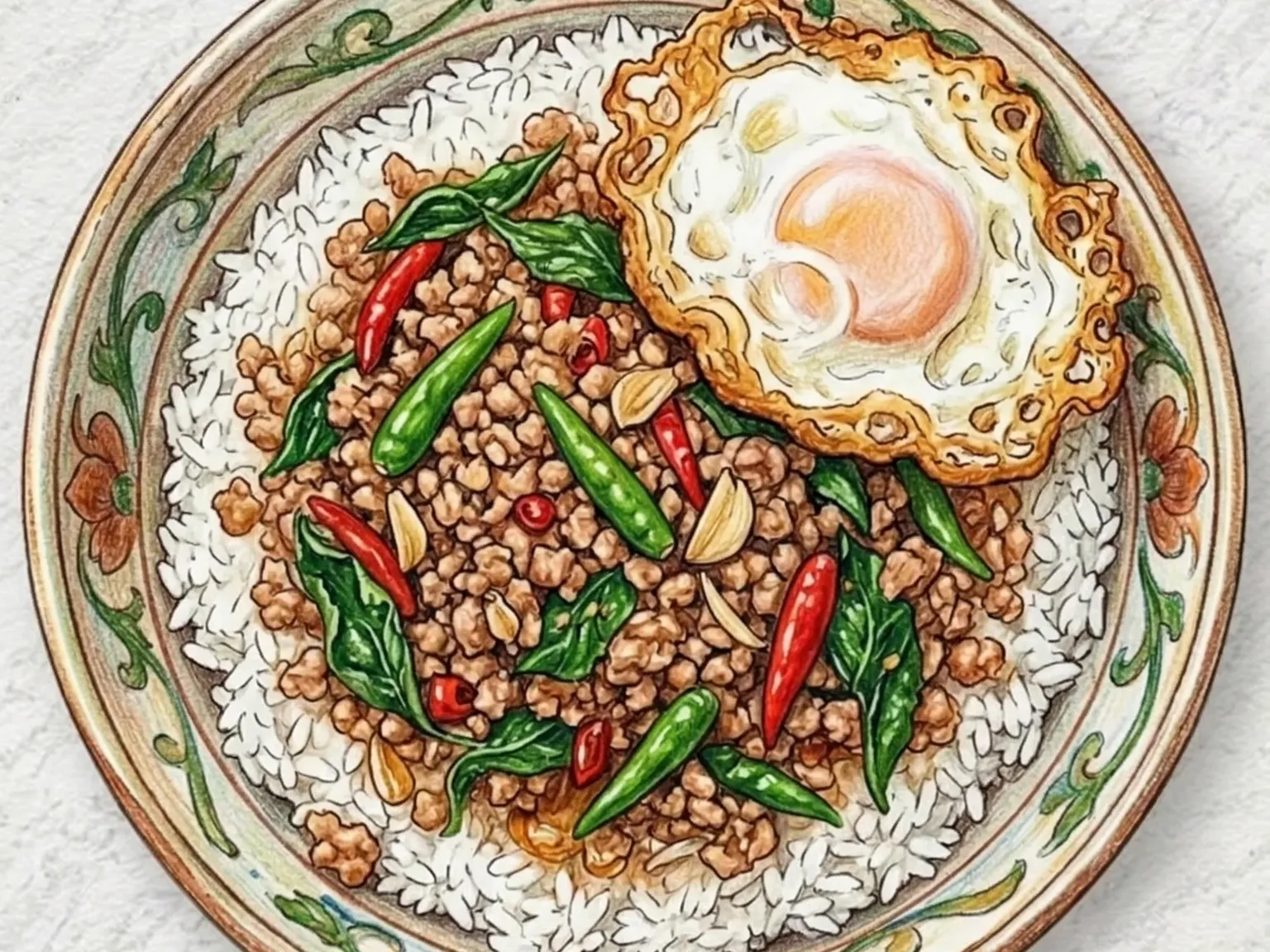
Pad Kra Pao (Thai Holy Basil Stir-Fried Minced Meat with Egg)
Pad kra pao is the single most common everyday meal in Thailand - a wok-fried dish of minced meat with holy basil and chilies, spooned over steamed rice and topped with a fried egg. Garlic and fresh chilies are roughly pounded and fried in a smoking-hot wok until fragrant, then ground pork goes in and is broken apart quickly. Oyster sauce, fish sauce, soy sauce, and a pinch of sugar create the seasoning base. A generous handful of holy basil leaves is tossed in at the end, releasing a peppery, clove-like aroma that defines the dish. The fried egg should have crispy lacy edges and a runny yolk that becomes a sauce when broken.
Adjust Servings
Instructions
- 1
Mince garlic and chop chilies.
- 2
Heat oil on high and stir-fry garlic and chili.
- 3
Add ground pork and break apart while cooking.
- 4
Season with oyster sauce, fish sauce, soy sauce, sugar.
- 5
Add basil, stir-fry briefly, serve over rice with fried egg.
As an Amazon Associate, we may earn from qualifying purchases.
Tips
Nutrition (per serving)
More Recipes

Drunken Noodles
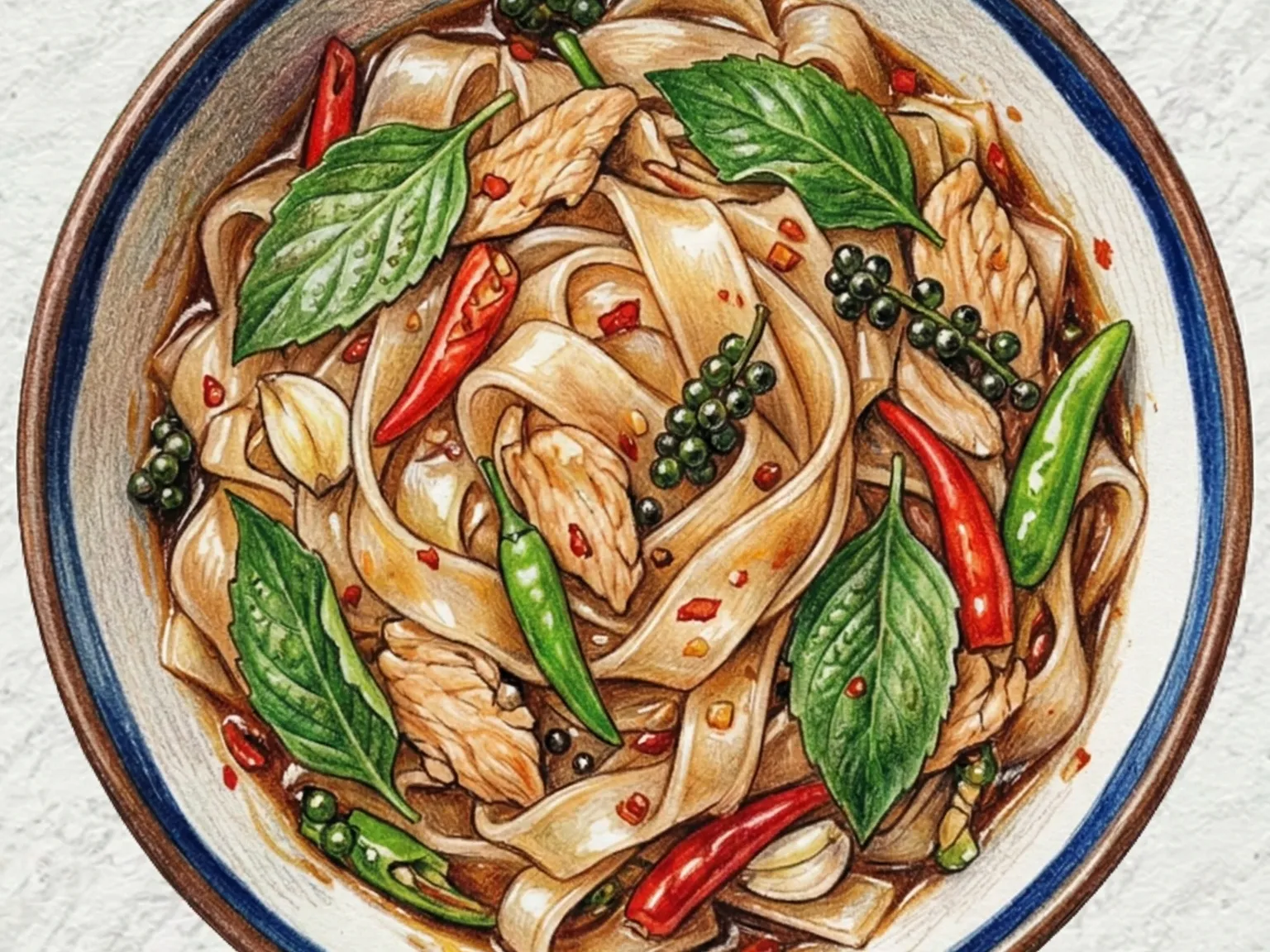
Pad kee mao - drunken noodles - is a Thai stir-fried noodle dish whose name sparks competing origin stories: some say it was designed as drinking food, others that the chili heat itself is intoxicating. Wide sen lek rice noodles hit a smoking-hot wok with holy basil, fresh chilies, and garlic, and the key is letting the noodles char slightly where they press against the wok surface, developing a smoky sear that defines the dish. Thai holy basil (krapao) differs sharply from Italian basil - it carries a peppery, almost clove-like bite and a faint heat that blooms instantly when it meets the wok's flame. A dark sauce of oyster sauce, soy sauce, fish sauce, and sugar stains the noodles nearly black, layering salt, sweetness, and umami in every strand. In Thailand, the dish is typically made with seafood or pork and crowned with a crispy fried egg whose runny yolk is broken and mixed through the noodles at the table.

Kung Pao Chicken
Kung pao chicken is a landmark dish of Sichuan cuisine, combining diced chicken, roasted peanuts, and dried chilies in a sauce that is simultaneously spicy, sweet, sour, and numbing. The chicken is cut into small cubes and marinated briefly in soy sauce and cornstarch, which creates a thin coating that seals in moisture when the meat hits the searing-hot wok. Dried red chilies and Sichuan peppercorns are fried in oil first, infusing it with their heat and the distinctive tingling sensation known as mala. The sauce - a balanced mixture of soy sauce, black vinegar, and sugar - is added at the end and reduced quickly into a glossy glaze that clings to every piece. Roasted peanuts are tossed in just before serving to preserve their crunch, and chopped scallion adds a final layer of freshness. The interplay of spice, tang, and nuttiness in each bite explains why this dish has traveled far beyond Sichuan to become one of the most recognized Chinese dishes worldwide.

Massaman Curry (Thai-Muslim Mild Chicken Potato Peanut Coconut Curry)
Massaman curry stands apart from other Thai curries with its mild, sweet-savory character and its roots in the Muslim communities of southern Thailand. The dish draws from Persian and Indian spice traditions - cinnamon sticks, cardamom pods, cloves, and star anise simmer alongside the coconut milk base, lending an aromatic warmth that has little to do with chili heat. Chicken thighs, whole shallots, potatoes, and roasted peanuts braise slowly until the potatoes begin to break down and thicken the sauce. Tamarind paste and palm sugar balance the richness with a gentle tang and sweetness. It is one of the most approachable Thai curries for those unaccustomed to spice, yet its layered aromatics make it anything but plain.

Pineapple Shrimp Khao Pad
Pineapple shrimp khao pad is a Thai fried rice served inside a hollowed-out pineapple half, making it as striking to look at as it is to eat. Shrimp are stir-fried briefly in a hot wok to keep them firm, then joined by garlic, egg, and day-old rice tossed at high heat. Chunks of fresh pineapple go in at the end, releasing their juice into the rice so that every spoonful carries a tart, fruity sweetness against the salty backbone of fish sauce. A light dusting of curry powder tints the grains pale yellow and adds a warm, earthy undertone. Roasted cashew nuts contribute crunch, and scattered raisins provide small pockets of concentrated sweetness. The finished rice is mounded into the pineapple shell and served with a wedge of lime. It is one of the most photographed dishes on Thai restaurant menus and a staple of beachside dining.

Pad Thai
Pad thai is Thailand's iconic stir-fried rice noodle dish, built on a sauce of tamarind paste, fish sauce, and sugar that balances sweet, sour, and salty in every bite. The rice noodles are soaked in warm water for twenty minutes until pliable but still firm. Firm tofu is pan-fried until golden before shrimp is added, establishing a savory base. Eggs are scrambled in the center of the pan while other ingredients are pushed aside, then everything is tossed together with the soaked noodles and sauce over high heat. The noodles absorb the sauce quickly and develop a glossy sheen. Bean sprouts add crunch, crushed peanuts bring a roasted nuttiness, and a squeeze of lime just before eating sharpens the acidity. The interplay of these toppings gives each forkful a different combination of textures and flavors.

Thai Drunken Noodles
Pad kee mao, or drunken noodles, is a Thai stir-fried noodle dish where wide rice noodles are wok-tossed with chicken, garlic, fresh chili, and Thai basil over very high heat. The noodles are soaked briefly in lukewarm water until pliable but not soft. Garlic and chili go into the smoking-hot wok first to release their aroma, followed by sliced chicken thigh. Onion and bell pepper are added next and stir-fried quickly to keep them crisp. Fish sauce delivers briny umami while dark soy sauce darkens the noodles and adds a subtle sweetness. Thai basil is folded in only after the heat is turned off, so its anise-like fragrance stays intact rather than cooking away. Maintaining intense wok heat throughout is critical - too low and the noodles steam instead of sear.