Pad Woon Sen (Thai Stir-Fried Glass Noodles with Shrimp and Egg)
Quick answer
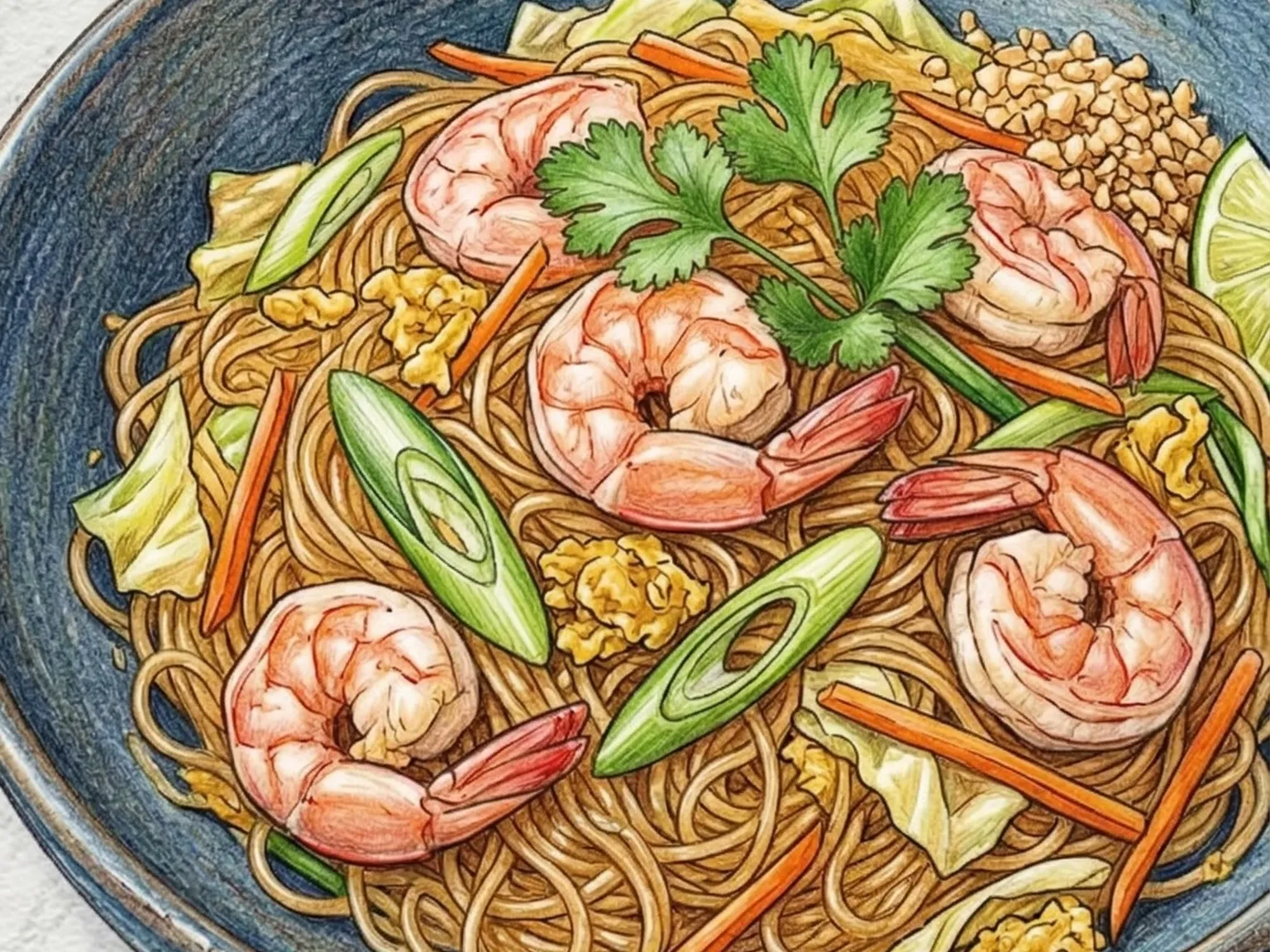
Pad woon sen is a Thai stir-fried glass noodle dish that comes together in minutes.
What makes this special
- Pad Woon Sen is a Thai glass noodle stir-fry with shrimp, egg, and springy mung bean noodles.
- Mung bean glass noodles absorb sauce while retaining a springy bite
- Mid-cook scrambled egg folds into noodles for layered texture
Key ingredients
Core cooking flow
- 1 Soak 120 g glass noodles in lukewarm water for only 10 minutes, then drain well.
- 2 Slice 120 g cabbage and 60 g carrot thinly, and pat 180 g shrimp dry before cooking.
- 3 Heat the pan thoroughly over high heat, add 1 tablespoon cooking oil, and st...
Pad woon sen is a Thai stir-fried glass noodle dish that comes together in minutes. The noodles, made from mung bean starch, turn translucent when soaked and have a springy, slippery texture that absorbs sauce without becoming mushy. Shrimp is cooked first until just pink, then vegetables - typically cabbage and carrot - are tossed in over high heat to keep their crunch. Eggs are scrambled to one side of the wok and folded into the noodles along with soy sauce and oyster sauce. The seasoning is deliberately simple, allowing the natural sweetness of the shrimp and the clean bite of the vegetables to come through.
Instructions
Read the steps as a cooking flow: prep, heat, seasoning, doneness control, and finish.
- 1Heat
Soak 120 g glass noodles in lukewarm water for only 10 minutes, then drain well.
Press a strand with your fingers: it should bend but still feel springy, because over-soaked noodles break easily during stir-frying.
- 2Heat
Slice 120 g cabbage and 60 g carrot thinly, and pat 180 g shrimp dry before cooking.
Keep everything near the stove so the high-heat stir-fry moves quickly and nothing sits half-cooked in the pan.
- 3Finish
Heat the pan thoroughly over high heat, add 1 tablespoon cooking oil, and stir-fry the shrimp for about 1 minute.
Stop when the outside turns pink, since they will finish cooking with the noodles later.
- 4Heat
Add the cabbage and carrot, keeping the heat high, and stir-fry for about 1 minute.
The edges should soften slightly while the centers stay crisp, so avoid cooking until the vegetables release too much water.
- 5Step
Push the ingredients to one side and crack 2 eggs into the empty space, stirring gently until softly scrambled.
When the eggs are only partly set, add the drained noodles and fold everything together.
- 6Finish
Add 2 tablespoons soy sauce and 1 tablespoon oyster sauce, then toss for 1 to 2 minutes so the noodles absorb the seasoning evenly.
Serve as soon as the noodles look glossy, translucent, and moist, before they dry out.
After the steps
Pick a recipe that fits this dish.
Continue with shared ingredients, meal pairings, or a similar method.
Recipes That Go Well With This
More Asian →Based on shared ingredients and meal pairing
Yam Woon Sen (Thai Glass Noodle Salad with Shrimp)
Yam woon sen is a Thai glass noodle salad where soaked and briefly boiled mung bean noodles are tossed with blanched shrimp, sliced red onion, diagonally cut celery, and chopped cilantro in a dressing of lime juice, fish sauce, and palm sugar. The noodles are soaked in warm water for ten minutes, then boiled for just two minutes to maintain their chewy, springy texture - rinsing in cold water immediately after removes surface starch and prevents clumping. The shrimp need only a two-minute blanch to reach a firm, bouncy doneness; any longer and they turn rubbery. The dressing builds three layers simultaneously - fish sauce for salty depth, lime juice for bright acidity, and palm sugar for a caramel sweetness - creating the complex balance characteristic of Thai cuisine. Cilantro provides a fresh, herbal finish.
Thai Soy Sauce Noodles (Wide Rice Noodles with Beef and Chinese Broccoli)
Pad see ew is a Thai stir-fried noodle dish built around wide rice noodles, beef, Chinese broccoli, and egg, all tossed in a sauce of soy sauce, oyster sauce, and dark sugar. The central technique is wok hei through extreme heat. Without a properly scorching pan, the sauce pools at the bottom rather than adhering to the noodles, and caramelization never happens. Beef goes into the hot pan first to develop a seared surface before anything else is added. Gai lan and cracked eggs follow, the eggs scrambled loose in the same pan, then the soaked noodles and the pre-mixed sauce go in together and the whole thing is tossed hard and fast. During those few seconds of high contact heat, the sauce binds to the noodle surface and develops a slightly charred, smoky-sweet aroma that is the defining character of the dish. The thick stems of Chinese broccoli keep a satisfying crunch and introduce a mild bitterness that cuts the sweetness of the sauce. Egg fragments distributed throughout the noodles add pockets of soft, creamy texture. The finished noodles are deeply stained, and every strand carries the sauce.
Som Tam Thai (Thai Green Papaya Salad)
Som tam Thai shreds green papaya into thin strips and pounds them in a mortar with Thai chilies, palm sugar, lime juice, and fish sauce, bruising the fibers just enough to let the dressing seep in while keeping the crunch intact. The pounding technique drives flavor deeper than simple tossing, creating a salad where each strand carries the full range of sweet, salty, sour, and spicy in a single bite. Palm sugar's dark caramel sweetness, fish sauce's fermented brine, the sharp brightness of lime, and the direct burn of chili hold each other in a balance that defines the dish. Roasted peanuts scattered on top add a nutty crunch to finish. Without a mortar, a large bowl and a rolling pin work as a substitute by applying light pressure to bruise the papaya without crushing it. Halved cherry tomatoes pounded in alongside the papaya release their juice into the dressing and contribute a natural sweetness and extra moisture.
Drunken Noodles
Pad kee mao, known outside Thailand as drunken noodles, is a stir-fried rice noodle dish from central Thailand whose name has two competing origin stories: one holds that it was street food eaten late at night to accompany drinking, the other that the ferocious chili heat leaves the eater feeling intoxicated. Wide rice noodles called sen yai are tossed in a screaming-hot wok with fresh chilies, crushed garlic, and protein, and the defining technique is leaving the noodles undisturbed long enough to char slightly where they press against the metal surface, generating a smoky, wok-seared flavor that no other cooking method replicates. Thai holy basil, known as krapao, is a fundamentally different ingredient from Italian basil: it carries a peppery, clove-adjacent sharpness and a faint natural heat, and when it hits a hot wok the volatile oils bloom instantly into the air around the pan. A dark sauce of oyster sauce, soy sauce, fish sauce, and sugar stains the noodles a deep mahogany-brown while building a flavor profile that stacks salt, sweetness, and fermented umami in every strand. In Thailand the dish is made with seafood, pork, or chicken, and a crispy fried egg cooked in a generous pool of oil until the edges lacquer and crunch is placed on top. The yolk is broken and stirred through the noodles at the table, coating everything in a rich, golden layer that softens the heat and ties the dish together. No rice is needed when the noodles already carry this much.
Serve with this
Thai Drunken Noodles
Pad kee mao, or drunken noodles, is a Thai stir-fried noodle dish where wide rice noodles are wok-tossed with chicken, garlic, fresh chili, and Thai basil over very high heat. The noodles are soaked briefly in lukewarm water until pliable but not soft. Garlic and chili go into the smoking-hot wok first to release their aroma, followed by sliced chicken thigh. Onion and bell pepper are added next and stir-fried quickly to keep them crisp. Fish sauce delivers briny umami while dark soy sauce darkens the noodles and adds a subtle sweetness. Thai basil is folded in only after the heat is turned off, so its anise-like fragrance stays intact rather than cooking away. Maintaining intense wok heat throughout is critical - too low and the noodles steam instead of sear.
Thai Iced Tea
Thai iced tea is a boldly flavored, sweet milk tea made by steeping black tea leaves with cardamom over low heat for five minutes to produce a deeply concentrated brew. The intentionally strong extraction is necessary because the ice slowly dilutes the drink as it sits, and a weak brew would taste watery long before the last sip. Sugar is dissolved while the tea is still hot, then the liquid is cooled fully before being poured over a glass packed with ice. Milk and condensed milk are poured gently on top without stirring to create a visual gradient of white layered over amber, and the drink is mixed at the table before drinking. Once combined, the cardamom's floral spice and gentle bitterness weave through the sweetened black tea base to produce a complex flavor that goes beyond simple sweetness. Adjusting the amount of condensed milk is the easiest way to control how sweet the finished drink turns out.
Egg Over Rice (Raw Egg Stirred into Hot Rice with Soy Sauce)
Tamago Kake Gohan is a simple Japanese comfort food consisting of raw egg stirred into freshly cooked hot rice and seasoned with soy sauce. The core of this dish lies in utilizing the steam and residual heat of the rice to warm and partially cook the raw egg. As it is whipped rapidly with chopsticks, the egg transforms into a silky, custard-like coating around every single grain of rice. Melting a small pat of butter in the center before adding the egg introduces an additional layer of rich aroma. Soy sauce is added gradually to balance the richness with its savory umami depth. To complete the dish, seaweed flakes and finely chopped green onions are sprinkled on top. It must be eaten immediately while steaming hot, as letting it sit cools the egg and causes the rice to become soggy.
Similar recipes
Beef Pad See Ew (Thai Wok-Fried Wide Rice Noodles in Dark Soy)
Beef pad see ew is a Thai wok-fried noodle dish built around wide rice noodles and dark soy sauce. The name translates to 'fried with soy sauce,' and broad, silky noodles are stained deep brown by dark soy, balanced with light soy and oyster sauce for a sweet-savory glaze. Thinly sliced beef is seared first in a blazing wok, then noodles go in to absorb the sauce and char slightly against the hot metal. Chinese broccoli or kale adds crunch from its stems and softness from its leaves. The defining element is wok hei - the smoky flavor that only comes from letting noodles sit against the wok until they pick up toasted spots.
Pad Thai
Pad thai is Thailand's most widely recognized stir-fried noodle dish, centered on a sauce made from tamarind paste, fish sauce, and sugar that balances sweet, sour, and salty flavors in every bite. The proportion of these three ingredients is what determines the character of the final dish, and adjusting them even slightly shifts the balance noticeably. Dried rice noodles soak in lukewarm water for twenty minutes until they are pliable but still firm enough to hold up under high heat without becoming mushy. Firm tofu is pan-fried first until golden on all sides, establishing a nutty, textured base, then shrimp are added and pushed to the side as soon as they turn pink. The eggs are scrambled in the cleared center of the pan rather than mixed in with everything else, which allows them to set into thin, irregular sheets that distribute evenly through the noodles when tossed. Adding the soaked noodles and sauce over high heat and tossing quickly causes the noodles to absorb the sauce rapidly, developing a glossy, amber-toned coating. Bean sprouts stirred in at the very end keep their crunch, coarsely ground peanuts provide a roasted, brittle texture, and a squeeze of fresh lime just before eating introduces a bright acidity that sharpens the whole dish.
Gai Pad Med Mamuang (Thai Cashew Chicken)
Gai pad med mamuang is a Thai-Chinese stir-fry that traces its lineage to Chinese cashew chicken but has absorbed Thai seasoning logic - fish sauce replacing salt, oyster sauce adding body, and dried chilies providing a gentle background warmth. Bite-sized chicken and roasted cashews are tossed in a blazing wok with dried chilies, onion, and bell pepper; the cashews are pre-fried at low temperature to golden throughout, ensuring they stay crunchy even after joining the wet sauce. The sauce blends oyster sauce, soy sauce, fish sauce, and sugar, and the ratio among these four determines whether the dish leans sweet, salty, or somewhere in between. As the sauce coats the chicken, it takes on a lacquered sheen, and the cashews' oily richness melts into the glaze, adding a buttery undertone. In Thailand, it is typically served over steamed jasmine rice as a one-plate meal (khao rat kaeng), and its mild heat profile makes it one of the first Thai stir-fries that international visitors order with confidence.