Paella Valenciana (Spanish Saffron Rice with Chicken and Rabbit)
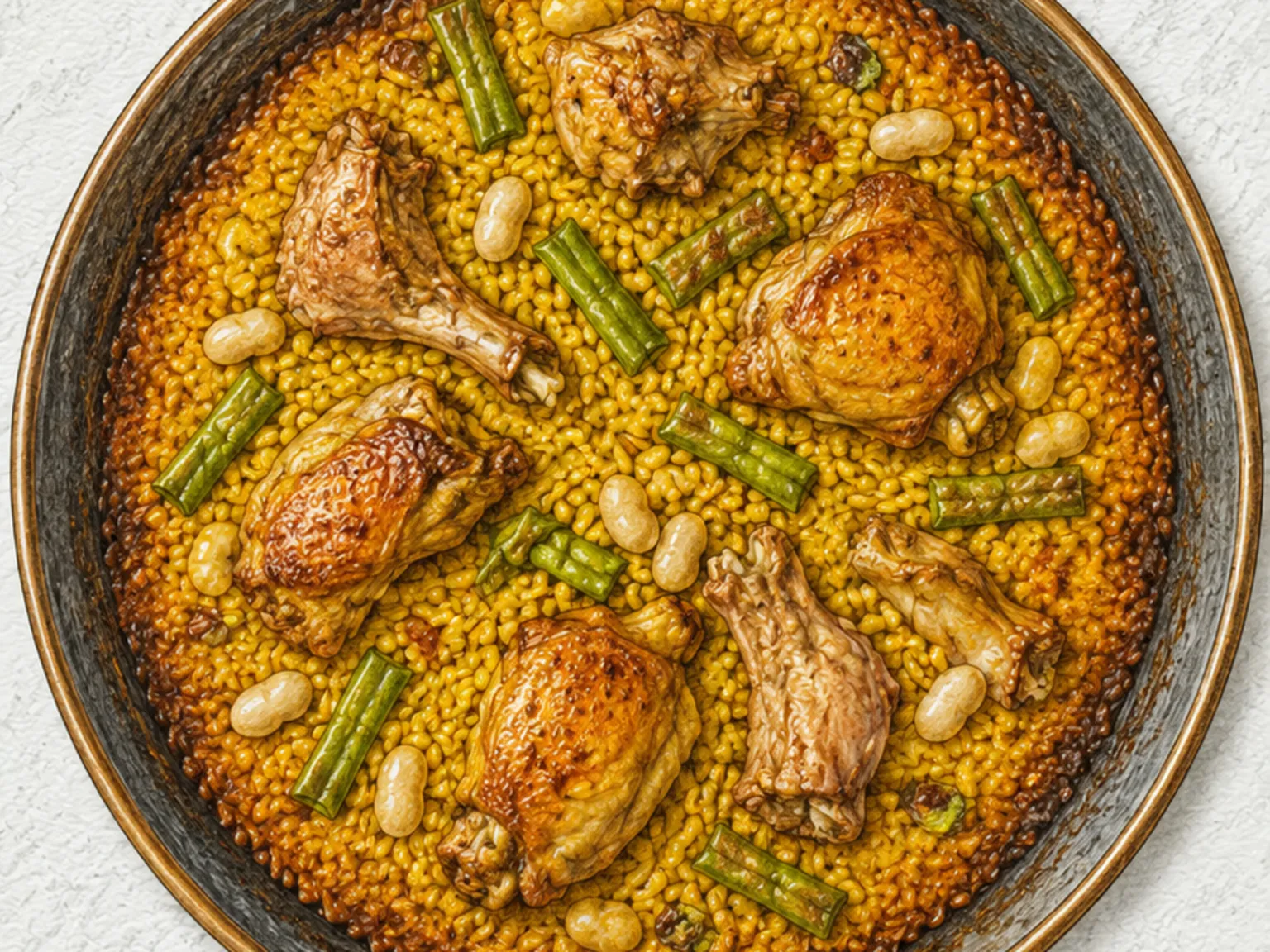
Paella Valenciana is a traditional rice dish from the Valencia region of Spain, cooked in a wide, shallow steel pan with saffron-tinted short-grain rice, chicken, rabbit, and green beans. The chicken and rabbit are seared first to build a fond on the pan's surface, which the rice absorbs as it cooks in the broth. Saffron must be bloomed in hot stock beforehand to extract its color and aroma evenly across every grain. Once the rice goes in, it is never stirred - the undisturbed bottom layer forms the socarrat, a caramelized crust of toasted rice that defines an authentic paella. In the final three minutes, the heat is raised to drive off remaining moisture, leaving grains that are firm on the outside and moist within, sitting atop a crackling golden crust.
Adjust Servings
Instructions
- 1
Soak saffron in warm water for 5 minutes.
- 2
Heat olive oil in a paella pan and brown chicken and rabbit.
- 3
Add tomatoes and cook 5 minutes, then add beans and paprika.
- 4
Add broth and saffron water, bring to boil, spread rice evenly.
- 5
Cook uncovered on medium heat 18 minutes, then low heat 5 minutes for socarrat.
As an Amazon Associate, we may earn from qualifying purchases.
Tips
Nutrition (per serving)
More Recipes

Fideua (Toasted Noodle Seafood Paella)
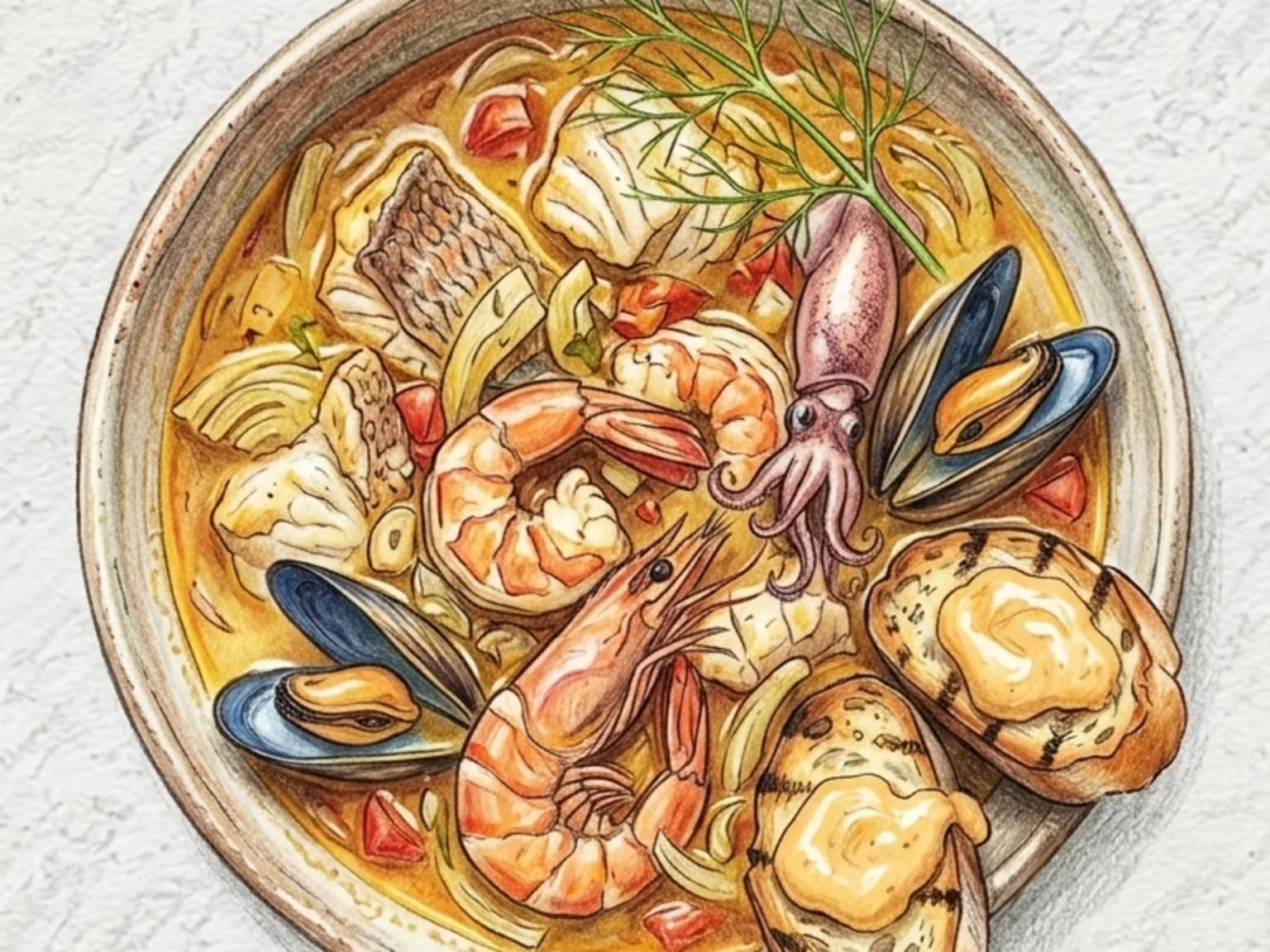
Fideua is a Valencian dish that mirrors paella in technique but replaces rice with short, thin pasta called fideos. The noodles are toasted in olive oil until golden before being cooked in a seafood broth made from shrimp shells, mussels, and fish stock. As the pasta absorbs the broth, it concentrates the flavor of the sea into each strand. The bottom layer develops a crispy crust called socarrat, prized for its caramelized, toasty crunch. Saffron colors the broth golden and contributes a subtle floral note. The dish is traditionally cooked in a wide, shallow pan to maximize surface area and crust formation. Served with alioli on the side, the garlic-infused mayonnaise adds richness and a pungent kick that amplifies the seafood character.

Fabada Asturiana (White Bean and Chorizo Stew)
Fabada Asturiana is the signature bean stew of the Asturias region in northern Spain. Large, creamy faba beans are soaked overnight and then simmered slowly with chorizo, morcilla (blood sausage), and pork shoulder in a broth that gradually turns a deep reddish-orange from the rendered paprika fat in the chorizo. The long, gentle cooking allows the beans to absorb the smoky, meaty broth while releasing starch that thickens the liquid naturally without any added flour or cream. Morcilla contributes an earthy richness that rounds out the smokiness of the chorizo. The beans should be whole and intact when served, each one bursting with concentrated flavor. Traditionally eaten during the cold months, a generous bowlful with crusty bread constitutes a complete and deeply warming meal.

Gazpacho
Gazpacho is a cold soup from Andalusia made by blending ripe tomatoes, cucumber, red bell pepper, red onion, and garlic with extra virgin olive oil and red wine vinegar. Soaking stale bread in water and blending it into the mixture releases starch that gives the soup its characteristic body and velvety texture. The olive oil wraps around the fresh vegetable flavors, while the vinegar sharpens the natural sweetness of the tomatoes into a balanced acidity. Chilling the blended soup for at least two hours allows the flavors to marry and deepen. Just before serving, a drizzle of olive oil and finely diced cucumber and pepper on top provide a textural contrast against the smooth, cold base.

Croquetas de Jamon (Crispy Ham Béchamel Bites)
Croquetas de jamón begin with a roux of butter and flour cooked for two minutes, followed by milk added gradually while whisking to form a thick béchamel. Finely chopped jamón serrano is folded into the sauce along with a pinch of salt, and the mixture is refrigerated until firm enough to shape. Chilling thoroughly is critical because soft filling will not hold its oval form during breading. Each croqueta is dipped in beaten egg and rolled in breadcrumbs - double-coating helps prevent splitting in the hot oil. Fried at medium heat until deep golden, the exterior shatters into the creamy, ham-laced center with every bite.

Basque Burnt Cheesecake
Basque burnt cheesecake is a crustless cheesecake originating from La Vina bar in San Sebastian, Spain, defined by its deliberately charred exterior and custardy interior. Cream cheese, sugar, eggs, heavy cream, and a small amount of flour are blended into a smooth batter and baked at high temperature - above 220 degrees Celsius - until the top develops deep, dark caramelization. This blackened surface contributes a bittersweet complexity that offsets the richness beneath. The center remains intentionally underset, yielding a texture closer to a dense custard than a traditional cheesecake. The cake is best served at room temperature, when the contrast between the firm caramelized shell and the soft center is most pronounced.

Caramel Flan
Caramel flan is a baked custard dessert built on the interplay between smooth egg custard and bittersweet caramel. Sugar is cooked in a dry pan until it reaches a deep amber, then poured into the bottom of a mold where it hardens into a glassy layer. The custard - eggs, milk, sugar, and vanilla - is poured on top and the whole assembly bakes in a water bath at gentle heat to prevent curdling. The slow, even cooking produces a texture that is perfectly smooth, without bubbles or grainy patches. Once chilled and unmolded, the caramel reliquefies into a flowing sauce that coats the pale custard in amber streaks. The flavor is a study in contrasts: the custard is milky and gently sweet, while the caramel adds a roasted, slightly bitter edge that prevents the dish from becoming cloying. It is served cold, and the clean wobble of a well-set flan is a point of pride.