Charim

2686 Korean & World Recipes

2686+ Korean recipes, clean and organized. Ingredients to instructions, all at a glance.

Korean Paengi Beoseot Jeon (Enoki Pancake)

Korean Paengi Beoseot Jeon (Enoki Pancake)

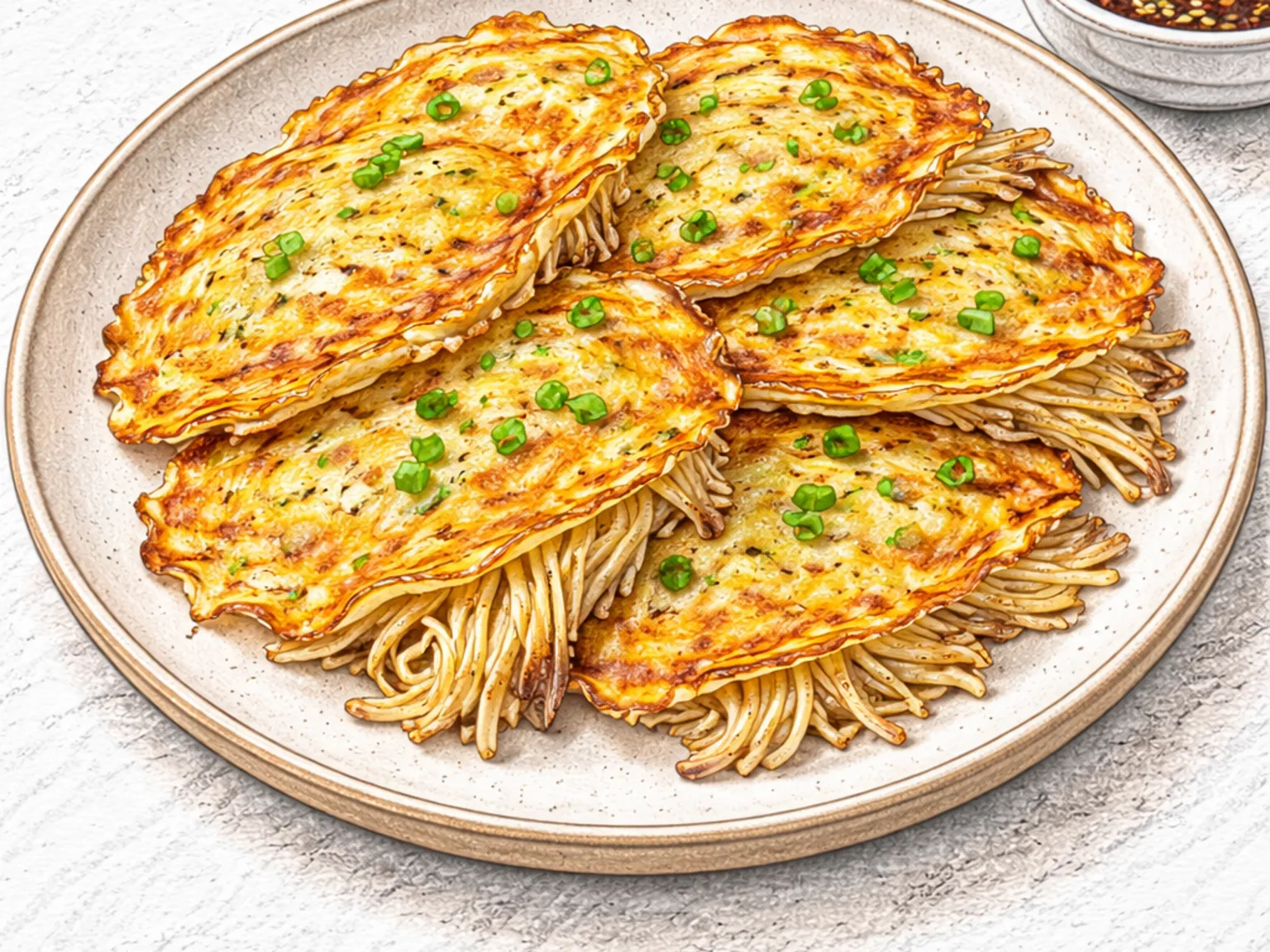
Paengibeoseot-jeon is a thin Korean pancake built around 200 grams of enoki mushrooms separated into loose strands and coated in a light batter of pancake mix, egg, and water. Cooked over medium-low heat, the batter spreads thin enough that the edges turn golden and crisp while the mushroom clusters in the center stay moist and chewy. Chopped scallions add color and a mild onion fragrance throughout. The pancake is served with a dipping sauce of soy sauce, vinegar, and a pinch of chili flakes, whose acidity and salt lift the subtle earthiness of the mushrooms. Keeping the heat moderate is essential - too high and the outside burns before the interior sets.

Prep 15minCook 12min2 servings

Adjust Servings

2servings
servings

Instructions

  1. 1

    Trim enoki root ends, cut in half, and gently separate strands.

  2. 2

    Chop scallions and make a thin batter with pancake mix, egg, water, and salt.

  3. 3

    Add enoki and scallions to the batter and mix until evenly coated.

  4. 4

    Oil a pan over medium-low heat, spread the batter thin, and cook 3 minutes per side until golden.

  5. 5

    Mix soy sauce, vinegar, and chili flakes for dipping sauce and serve with the pancake.

🛒Shop Ingredients on Amazon

As an Amazon Associate, we may earn from qualifying purchases.

Tips

High heat burns the outside while leaving the inside soggy; keep medium-low heat.
Spread the batter thin for a crisp texture.

Nutrition (per serving)

Calories
214
kcal
Protein
8
g
Carbs
22
g
Fat
10
g

More Recipes

Korean Green Laver Pancake
Side dishesEasy

Korean Green Laver Pancake

Parae-jeon is a Korean pancake that features 80 grams of fresh green laver folded into a pancake-mix batter alongside sliced onion and chopped green chili. Rinsing the laver two to three times removes sand and grit without stripping its briny ocean aroma. Keeping the batter on the thick side concentrates the seaweed flavor, preventing it from washing out during cooking. Pan-fried over medium heat for two to three minutes per side, the pancake develops crisp, golden edges while the interior stays tender and fragrant. Cutting it into bite-size pieces immediately after cooking preserves the crunch before steam softens the crust.

🏠 Everyday🍱 Lunchbox
Prep 10minCook 12min2 servings
Korean Garlic Chive Pancake
GrilledEasy

Korean Garlic Chive Pancake

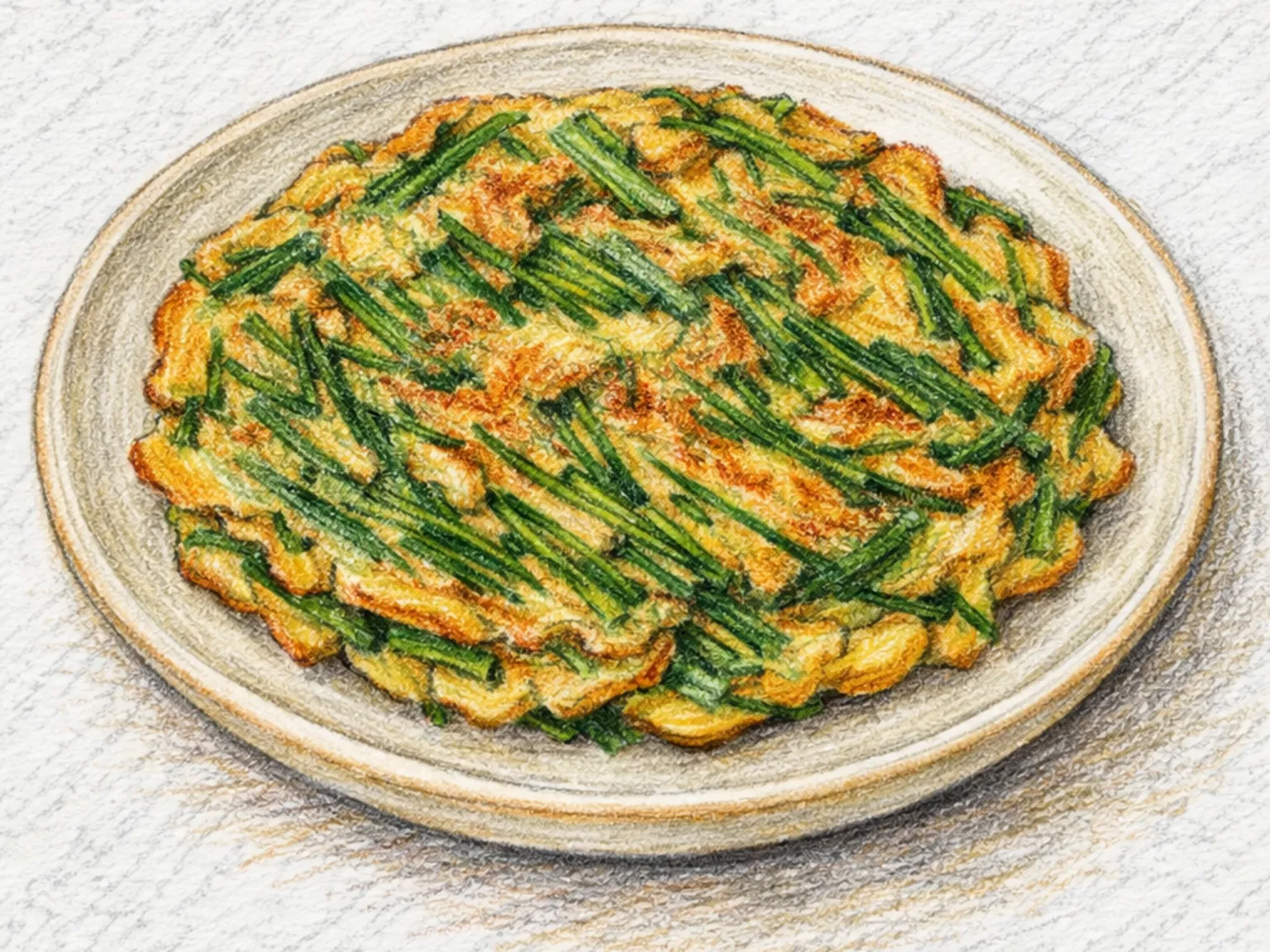
Buchu-jeon is a Korean garlic chive pancake where a generous amount of chives is bound in a thin batter with julienned carrot and onion, then pan-fried until the edges are crisp and golden. The chives carry a distinctly pungent, slightly spicy aroma that intensifies with heat, and cutting them to five centimeters keeps the pancake manageable to flip. A deliberately thin, runny batter is the key to achieving crispness-thick batter results in a doughy center that masks the chive flavor. Smaller individual pancakes hold their crunch far better than one large one, and they are best eaten warm right off the pan, dipped in soy sauce spiked with a little vinegar.

🍺 Bar Snacks
Prep 12minCook 10min2 servings
Korean Beoseot Deulkkae Jeon (Mushroom Perilla Pancake)
PancakesEasy

Korean Beoseot Deulkkae Jeon (Mushroom Perilla Pancake)

This Korean pancake combines oyster and shiitake mushrooms with perilla seed powder, creating a distinctively nutty aroma that sets it apart from standard mushroom jeon. The mushrooms are sliced thin and mixed with onion into a batter seasoned with soy sauce for built-in umami depth. Once pan-fried until the edges crisp up, the contrast between the crunchy exterior and the soft, chewy mushroom filling makes each bite satisfying. It pairs well with makgeolli or as a simple side dish.

🍺 Bar Snacks
Prep 18minCook 14min2 servings
Korean Eggplant Pancakes (Egg-Battered Pan-Fried Eggplant)
Side dishesEasy

Korean Eggplant Pancakes (Egg-Battered Pan-Fried Eggplant)

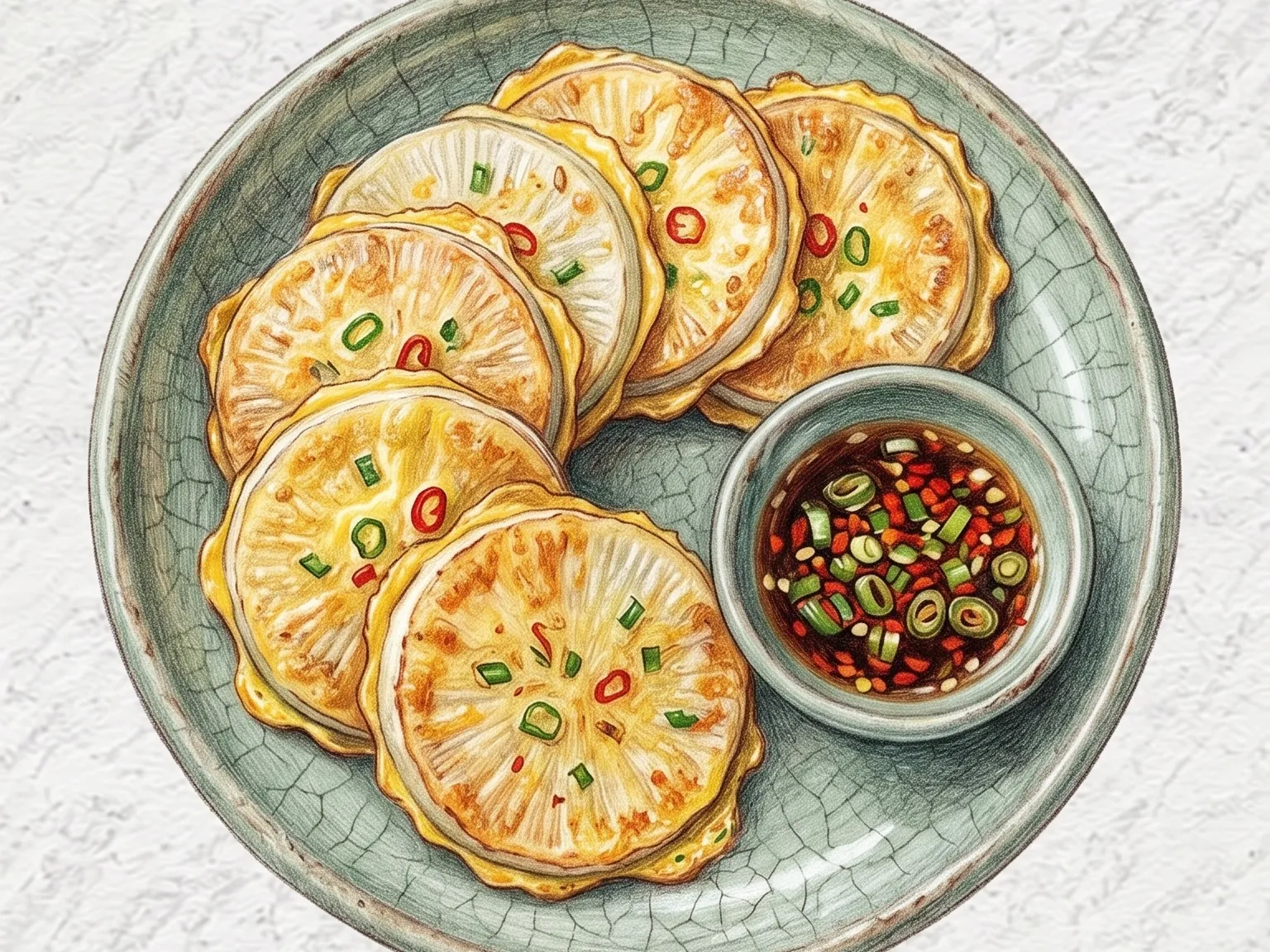
Gaji-jeon belongs to the Korean jeon family - vegetables dipped in egg wash and pan-fried in a thin layer of oil, a technique that appears at ancestral rites (jesa) and holiday tables. Eggplant rounds are sliced about 7mm thick - thin enough to cook through but thick enough to maintain a soft center. A light dusting of flour before the egg wash helps the batter adhere. The egg coating sets into a golden, lacy shell in the pan, while the eggplant inside steams in its own moisture. The result is a contrast between the crisp, slightly eggy exterior and the collapsing, custardy eggplant within. Dipped in a simple soy-vinegar sauce, each piece delivers a clean, understated flavor. Korean families often fry gaji-jeon alongside hobak-jeon and other vegetable jeon for Chuseok.

🏠 Everyday🍱 Lunchbox
Prep 12minCook 10min2 servings
Korean Crown Daisy Pancake
Side dishesEasy

Korean Crown Daisy Pancake

Fragrant crown daisy leaves are coated in a light pancake batter and pan-fried until the edges crisp and the herb's aroma intensifies. Heat amplifies the crown daisy's grassy, slightly bitter character, and the scent rises through the thin layer of batter as the jeon cooks. Egg in the batter provides structure, helping the exterior hold its crunch, while a small addition of potato starch keeps the texture light and prevents sogginess as the pancake cools. Sliced onion mixed into the batter introduces a gentle sweetness that offsets the herb's bitterness. Cooking over medium-low heat with ample oil ensures the interior sets evenly before the surface browns too deeply, and waiting until one side has fully firmed before flipping prevents the pancake from falling apart. The finished jeon is served with a dipping sauce of soy sauce and vinegar, whose acidity lifts the richness of the fried exterior and highlights the crown daisy's herbal notes.

🏠 Everyday🍱 Lunchbox
Prep 10minCook 10min2 servings
Korean Pan-fried Zucchini Jeon
GrilledEasy

Korean Pan-fried Zucchini Jeon

Hobak-jeon is a Korean pan-fried zucchini pancake made by slicing Korean zucchini into even half-centimeter rounds, salting them for five minutes to draw out excess moisture, then dusting in flour, dipping in beaten egg, and frying over medium heat for two to three minutes per side. The salting step is essential-it removes water that would otherwise make the jeon soggy, and it simultaneously concentrates the zucchini's mild natural sweetness into a more pronounced flavor. The egg coating acts as a gentle heat buffer, keeping the interior soft and moist while the exterior develops a pale golden crust with a subtle nuttiness from the cooked egg. It is one of the most versatile banchan in Korean cooking, equally at home in a child's lunchbox, on an everyday dinner table alongside soup or stew, or stacked on a holiday platter.

🍺 Bar Snacks🏠 Everyday
Prep 10minCook 12min2 servings
More Side dishes