Pain au Chocolat
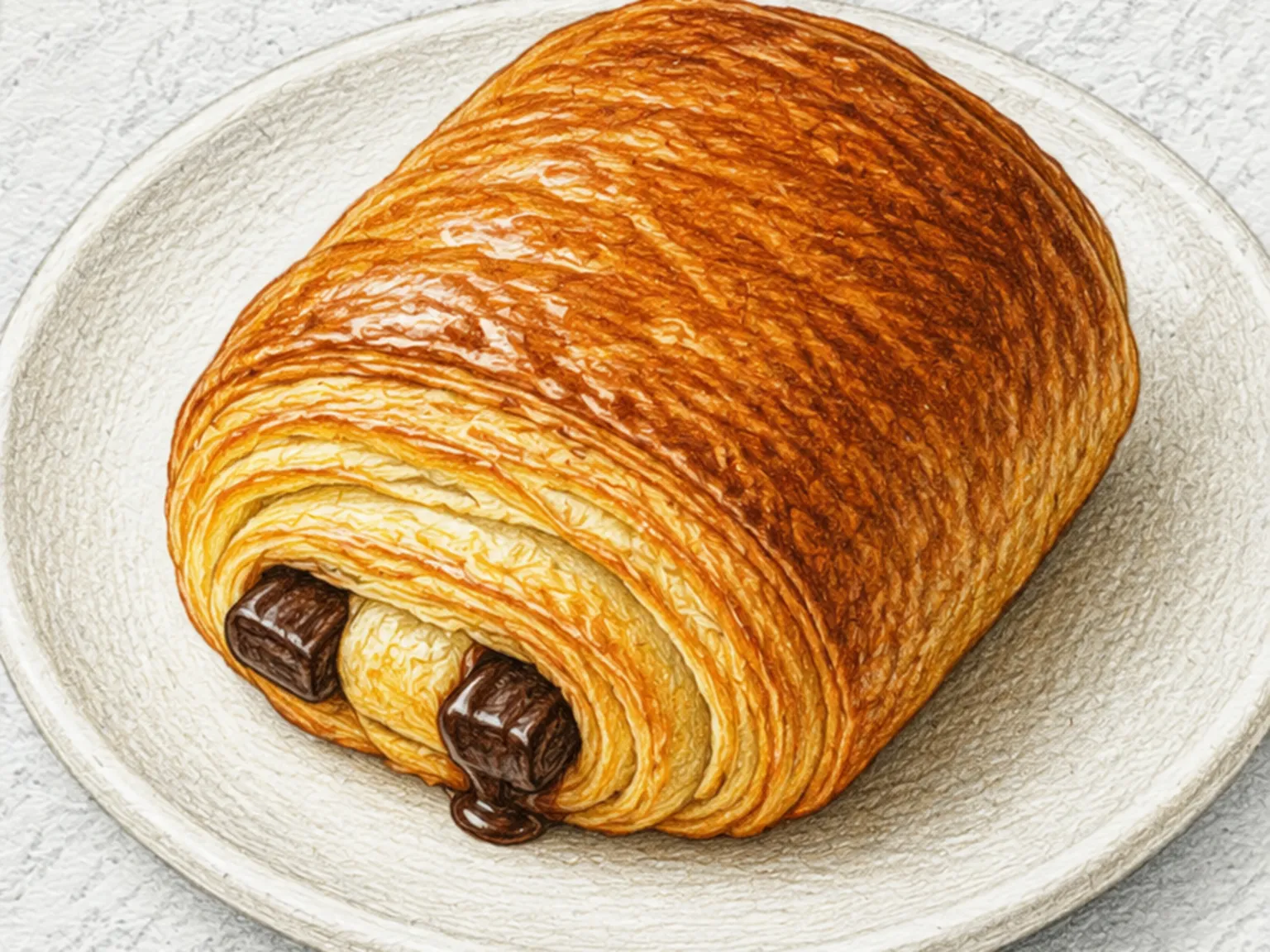
Two sticks of dark chocolate are sealed inside laminated croissant dough and baked until the exterior shatters into golden, buttery flakes. As the pastry cools for a minute on the rack, the chocolate inside transitions from fully molten to a soft, fudgy state that clings to the layers when torn apart. Dozens of paper-thin sheets of dough, created through repeated folding with cold butter, give each bite an audible crunch followed by a yielding, airy interior. Using chocolate with at least fifty-five percent cacao ensures that the filling carries enough bitterness to stand up to all that butter. Shaped portions freeze well, allowing an overnight thaw and morning proof for fresh pastries without starting from scratch.
Adjust Servings
Instructions
- 1
Combine flour, sugar, salt, and yeast; add milk and dough butter, knead until smooth.
- 2
Wrap dough and refrigerate for 1 hour.
- 3
Enclose butter sheet in dough and perform 3 single folds, chilling 30 minutes between each.
- 4
Roll dough to 5mm, cut into 8 rectangles, place 2 chocolate batons on each and roll up.
- 5
Place seam-side down, proof 90 minutes in a warm spot, then brush with egg wash.
- 6
Bake at 200°C for 16-18 minutes until golden.
As an Amazon Associate, we may earn from qualifying purchases.
Tips
Nutrition (per serving)
More Recipes

Classic Croissant
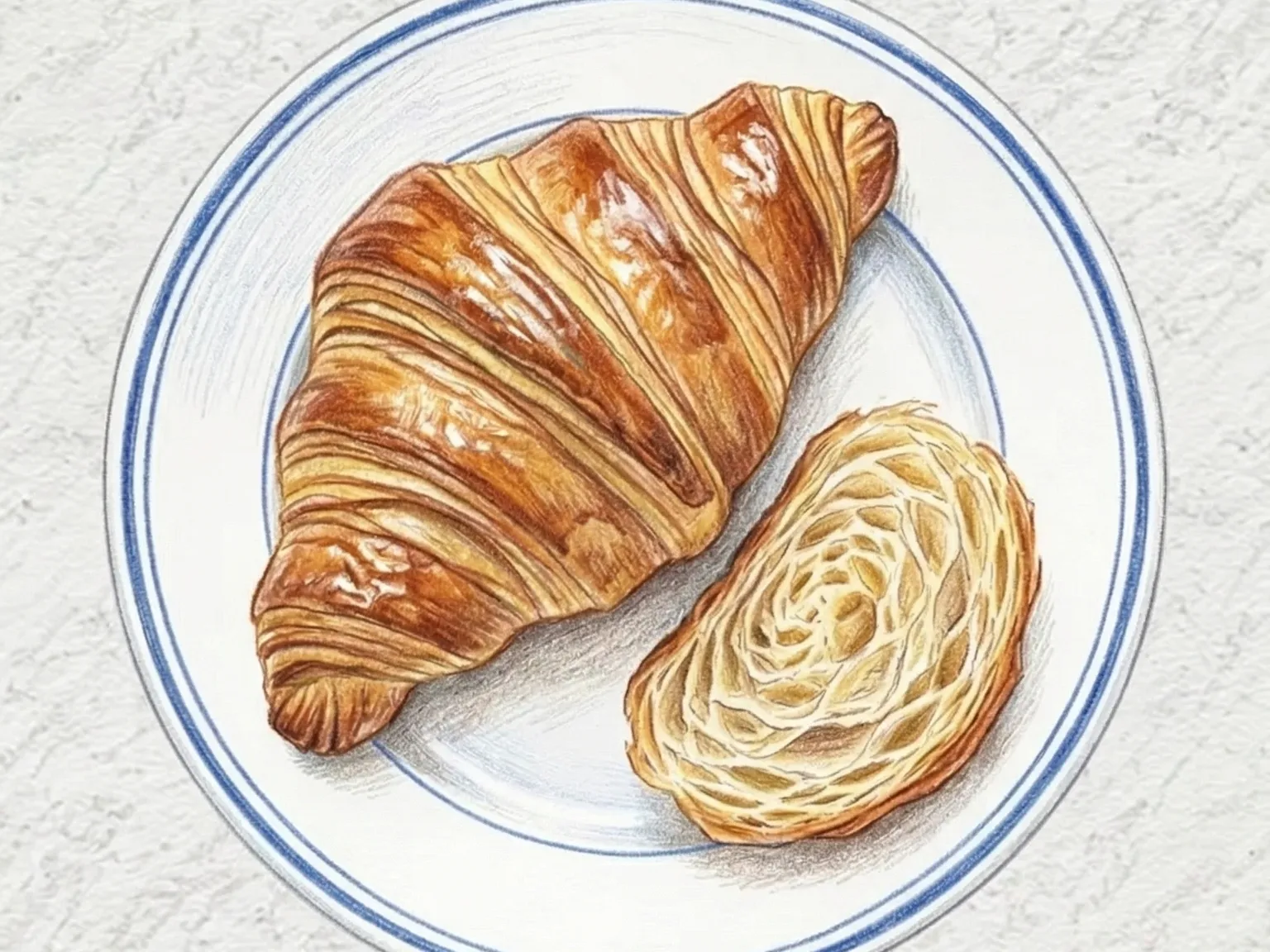
A classic croissant is built through lamination - a process of folding cold butter into yeast-leavened dough in successive turns to create dozens of alternating layers. Three sets of folds produce a structure so layered that when baked, the butter melts and releases steam, forcing each layer apart from within. The exterior caramelizes into a shell so thin and crisp it shatters at the slightest pressure, scattering golden flakes. The interior, by contrast, is a honeycomb of soft, airy strands held together by the ghost of dissolved butter. Tearing a warm croissant apart releases a rush of butter fragrance that fills the room. The dough itself carries a faint sweetness from sugar and milk, but the dominant flavor is pure butter, amplified and transformed by heat.

Gateau au Chocolat (Rich Flourless Chocolate Cake)
Gateau au chocolat is a French-style chocolate cake built on a generous proportion of dark chocolate and butter, yielding a dense, moist crumb that sits closer to a truffle than a sponge. Many recipes use minimal flour or none at all, so the structure comes almost entirely from eggs and chocolate. Whipping the egg whites into a meringue and folding them into the batter introduces just enough air to keep the texture from feeling leaden, creating a quality that is simultaneously rich and melt-on-the-tongue light. After baking, the cake develops a thin, crackly shell on top while the interior remains soft and fudge-like, revealing an intensely dark cross-section when sliced. A dusting of powdered sugar or a dollop of unsweetened whipped cream provides visual contrast and a mild counterpoint to the concentrated chocolate. The cake improves overnight as the flavors deepen, making it well suited for preparing a day ahead of celebrations.

Cronut
The cronut is a hybrid pastry created in New York in 2013, made by frying laminated croissant dough in a doughnut shape. The process starts with traditional croissant dough - flour, yeast, and layers of butter folded over three days. The laminated dough is cut into rings and deep-fried, producing a pastry with the flaky interior of a croissant and the crisp shell of a doughnut. A flavored cream is piped inside and the outside is finished with a glaze. Biting through delivers a sequence of cracking glaze, crisp exterior, airy buttery layers, and smooth cream filling. The three-day preparation is non-negotiable for proper lamination.

French Baguette
A baguette is a traditional French bread made from just four ingredients: bread flour, water, yeast, and salt. The simplicity of the formula means that technique in fermentation and baking determines the final quality. The dough requires a high hydration level of seventy percent or above to develop the irregular open crumb structure that gives a baguette its characteristic chewy yet airy interior. A long first fermentation builds acidity and deep wheat flavor in the dough, and during shaping the gas is only partially pressed out with gentle folds to preserve the large air pockets. Scoring (coupes) cut along the top controls how the loaf expands in the oven; a sharp blade drawn quickly prevents the dough from dragging and tearing. Introducing steam into the oven at the start of baking keeps the crust from setting too early, allowing the bread to expand fully before the surface crisps into a crackling shell. A well-made baguette crackles audibly when squeezed and reveals an interior with unevenly distributed holes of varying sizes when sliced.

Coq au Vin (French Red Wine Braised Chicken with Mushrooms)
Coq au vin is a classic French braise in which chicken pieces are browned until golden, then simmered in red wine with bacon lardons, shallots, button mushrooms, garlic, chicken stock, and tomato paste. Browning the chicken first seals the surface and adds caramelized depth to the braising liquid. Cooking the lardons, shallots, and mushrooms in the same pan layers their flavors into the fond before the wine deglazes it. Forty-five minutes of covered braising allows the wine's tannins and fruit character to permeate the meat, producing a sauce that is deeply complex and savory. Reducing the sauce at the end concentrates it to a glossy consistency that clings to each piece of chicken.

Potato Au Gratin
Potato Au Gratin is a French baked potato dish where thinly sliced potatoes are layered with cream and Gruyere cheese, then baked until the top forms a deep golden crust. The potatoes must be sliced to a uniform two to three millimeters - a mandoline slicer ensures consistent thickness so every layer cooks at the same rate. A mixture of heavy cream and milk warmed gently with garlic is poured between each layer of potatoes, where it meets the potato starch and thickens into a binding sauce that holds the layers together. Gruyere is the classic cheese choice - it melts into long, stretchy strands and carries a nutty, slightly sweet flavor. It is distributed between the layers for internal richness and piled on top for the signature golden crust. After about fifty minutes at 180 degrees Celsius, the cream bubbles around the edges, the potatoes turn completely tender, and the surface cheese crisps into a crackling, browned cap.