Eight Treasure Seafood Stir-fry
Quick answer
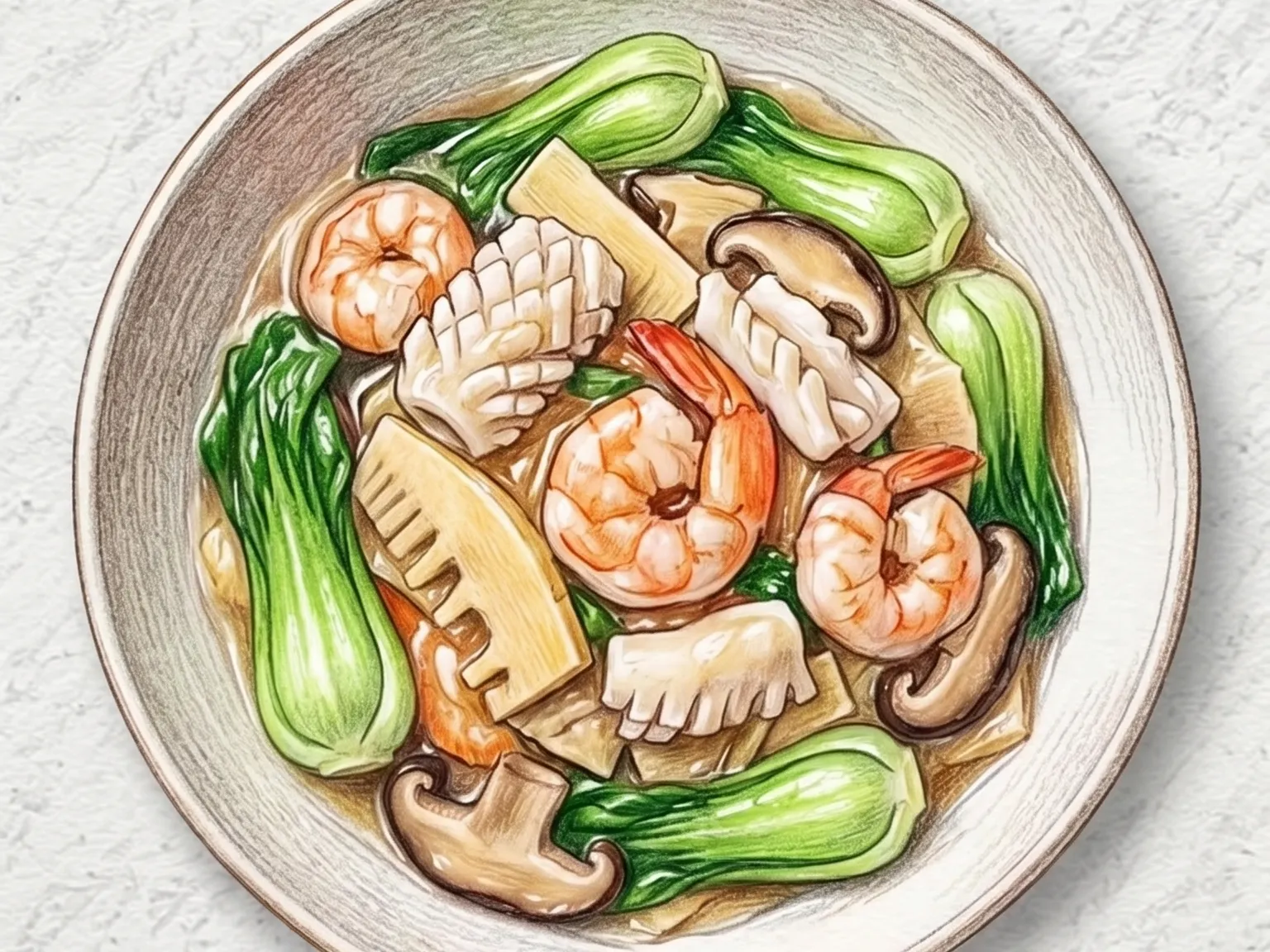
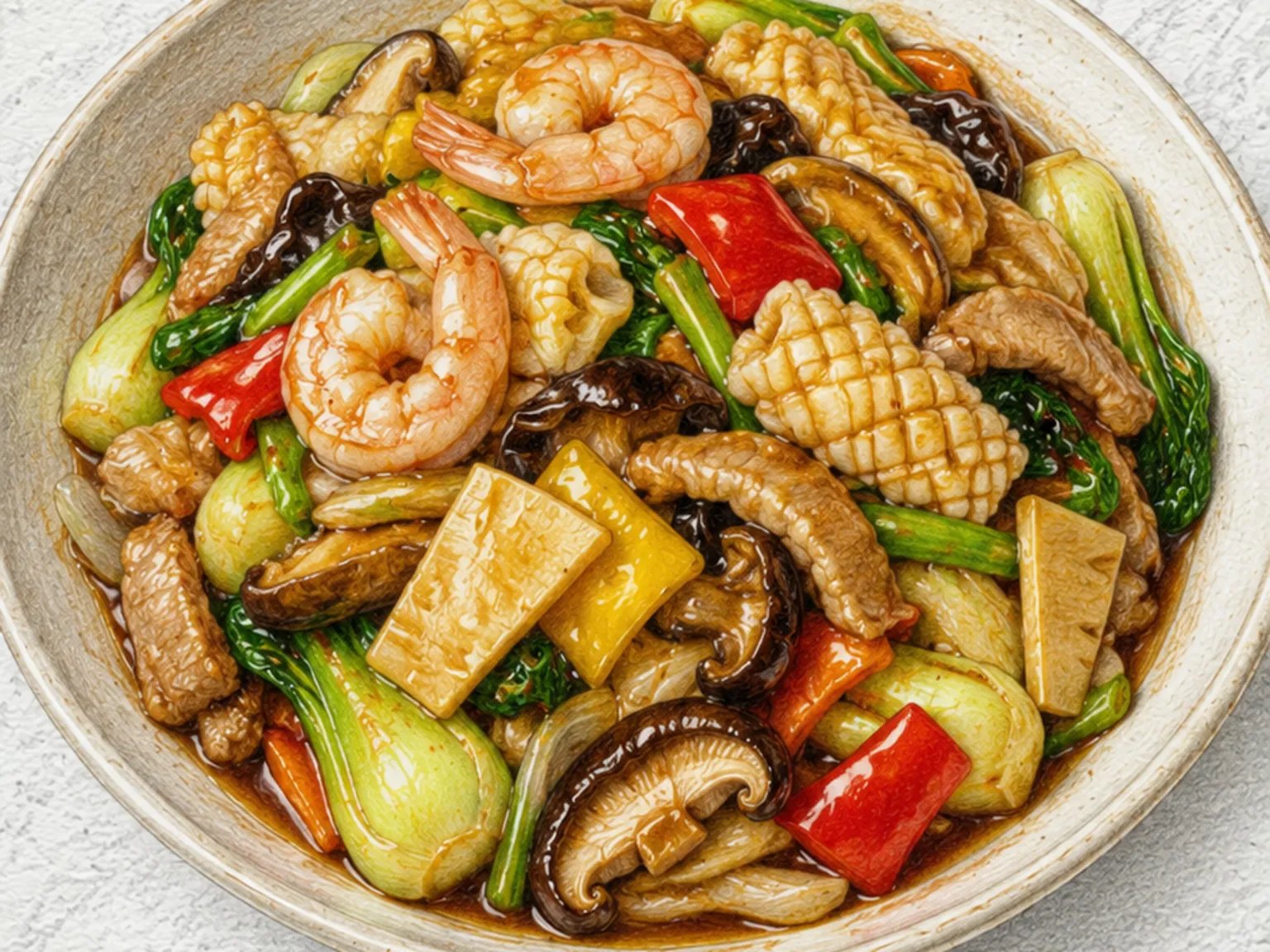
Palbochae is a Korean-Chinese banquet stir-fry that brings together shrimp, squid, pork, bamboo shoots, shiitake mushrooms, and bok choy in a single wok.
What makes this special
- Shrimp, squid, and bamboo shoots enter the wok in sequence to preserve the distinct texture of each.
- Eight ingredients added in cook-time order so every texture arrives intact on the plate
- Small amount of starch slurry adds gloss to the oyster sauce base
Key ingredients
Core cooking flow
- 1 Cut the shrimp, squid, and pork into even bite-size pieces so they cook at a similar pace.
- 2 Slice the bamboo shoots, shiitake mushrooms, and bok choy to a similar size...
- 3 Add the pork first and spread it across the hot surface for about 1 minute over high heat.
Palbochae is a Korean-Chinese banquet stir-fry that brings together shrimp, squid, pork, bamboo shoots, shiitake mushrooms, and bok choy in a single wok. Each ingredient is added in sequence according to its cooking time, then finished in an oyster-sauce glaze thickened with a light cornstarch slurry. The high-heat technique imparts a pronounced wok char, while the variety of proteins and vegetables creates contrasting textures in every bite. It is a dish traditionally reserved for special occasions, built on the interplay of seafood brine, pork fat, and crisp greens.
Instructions
Read the steps as a cooking flow: prep, heat, seasoning, doneness control, and finish.
- 1Heat
Cut the shrimp, squid, and pork into even bite-size pieces so they cook at a similar pace.
Press the seafood with paper towels until the surface is dry, because excess moisture lowers the pan temperature.
- 2Control
Slice the bamboo shoots, shiitake mushrooms, and bok choy to a similar size, then keep them separate for quick adding.
Heat the wok or pan over high heat until it feels very hot before cooking.
- 3Control
Add the pork first and spread it across the hot surface for about 1 minute over high heat.
When the outside turns pale and starts releasing flavor, toss it before the edges scorch.
- 4Heat
Add the shrimp and squid while keeping the heat high, then stir-fry quickly for about 1 minute.
As soon as the shrimp changes color and the squid firms slightly, add the vegetables.
- 5Heat
Add the bamboo shoots, shiitake mushrooms, and bok choy, then stir-fry for 1 more minute.
The bok choy should wilt slightly but still look bright and crisp, not collapsed.
- 6Control
Add 1.5 tablespoons oyster sauce and 180 ml water, then simmer for 2 minutes so the flavors coat everything.
If needed, stir in a little starch slurry and stop when the sauce turns glossy.
After the steps
Pick a recipe that fits this dish.
Continue with shared ingredients, meal pairings, or a similar method.
Recipes That Go Well With This
More Stir-fry →Based on shared ingredients and meal pairing
Mixed Seafood and Vegetable Stir-fry
Yusanseul is a Korean-Chinese stir-fry of shrimp, squid, bamboo shoots, shiitake mushrooms, and bok choy, finished with a light cornstarch sauce. The seafood is seared quickly over high heat to maintain a springy bite, while chicken stock and oyster sauce build a clean umami backbone. A starch slurry binds everything in a silky, translucent glaze that clings to each ingredient without heaviness. Bamboo shoots and bok choy retain their crunch, giving the dish textural contrast that makes it well-suited for a special occasion table.
Dry Mala Stir-fry (Sichuan Numbing Spice Dry Wok)
Mala xiangguo is a dry Sichuan stir-fry where beef slices, bok choy, shiitake mushrooms, and lotus root are coated in mala sauce and tossed over high heat without any broth. The Sichuan peppercorn's numbing tingle and the chili's sharp burn hit simultaneously, and the absence of liquid concentrates the seasoning directly onto each ingredient's surface. Lotus root adds crunch, shiitake contributes chewiness, and bok choy provides a soft counterpoint - the textural variety within a single plate is part of the appeal. Overcrowding the pan releases moisture and dilutes the sauce, so controlled portions are essential.
Tomato Egg Rice Bowl (Stir-fried Tomatoes with Soft Scrambled Eggs)
Ripe tomatoes are cut into wedges and stir-fried over high heat until they release their juices and form a natural, tangy sauce. Beaten eggs are poured in and gently folded so they stay soft and barely set, mingling with the tomato pulp. A small amount of sugar and soy sauce brings the sweet-tart balance into focus. Spooned over hot rice, the sauce soaks into the grains and the whole bowl comes together in under ten minutes, drawing on the simplicity of Chinese home cooking. It can be served as a one-bowl meal, with simple accompaniments chosen to match the sauce, broth, or topping.
Pepper and Pork Stir-fry (Chinese-Style Julienned Bell Pepper and Pork)
Gochu-japchae is a Korean-Chinese stir-fry of julienned bell peppers and pork loin cooked fast over high heat in a combined soy and oyster sauce base. The pork is pre-marinated with soy sauce and cornstarch before cooking: the starch coats each strip and holds in moisture, so the meat stays tender through the high-heat cooking rather than drying out. Soy sauce and oyster sauce together give the dish a clean, savory base where saltiness and umami are balanced without either dominating. Bell peppers are kept in the pan for only a short time, just enough to soften slightly while retaining their crunch and bright color. The high heat of the wok or pan is what sears the surface of the ingredients and creates the light, smoky char that distinguishes this kind of stir-fry from gentler cooking methods. Served over rice it works as a straightforward weeknight meal, or rolled into steamed flower buns or tortillas it becomes a more casual, hand-held meal. The whole dish comes together in under thirty minutes, making it one of the more practical examples of Korean-Chinese home cooking.
Serve with this
Korean Pork Bone Hangover Soup
Ppyeo-haejang-guk is a Korean hangover soup built on a foundation of pork neck bones simmered for well over an hour until their collagen dissolves into a heavy, full-bodied stock. The bones are soaked and blanched beforehand to eliminate any off-flavors, and the resulting broth is clean despite its richness. Blanched napa cabbage outer leaves are pre-seasoned with doenjang, gochugaru, garlic, and soup soy sauce before being added to the pot, where they absorb the meaty broth and release their own earthy flavors in return. Perilla seed powder is stirred in at the end, thickening the liquid to a creamy consistency and adding a nutty finish. The completed soup is spicy, deeply savory, and thick enough to feel restorative after a long night. In Korea, this style of haejang-guk is a morning-after institution, served steaming in dedicated restaurants that open before dawn.
Korean Seasoned Bracken Fern
Gosari, the Korean name for bracken fern, is one of the oldest foraged vegetables in Korean cooking, with consumption records tracing back to the Three Kingdoms period. It is a mandatory component of bibimbap and a required dish on jesa, the ancestral rite table set for ceremonies honoring the dead. Dried gosari must soak overnight in cold water and then boil until the tough, wiry fibers relax into a distinctively springy, almost elastic chew that no fresh vegetable can replicate. The rehydrated fern is stir-fried in perilla oil with minced garlic until fragrant, then a small amount of soup soy sauce and water goes in and the pan is covered to let the liquid absorb and the fern braise briefly. This short braising step is what rounds the flavor and ensures the seasoning penetrates the fibrous strands rather than sitting only on the surface. Perilla oil is the traditional fat of choice rather than sesame oil because its green, herbal quality pairs more naturally with the woodsy, forest-floor flavor of gosari, amplifying rather than competing with it. Large batches are typically made during Chuseok or Seollal and eaten over several days, as the flavor improves and deepens as the dish sits.
Korean Eel Stew (Freshwater Eel in Spicy Perilla Broth)
Jangeo jjigae is a nourishing Korean stew featuring freshwater eel simmered in a gochujang-based broth enriched with ground perilla seeds. The eel's fatty, firm flesh melds with the fermented chili paste to produce an intensely savory liquid, while the perilla adds a creamy, nutty body that gives the finished stew a thick, substantial texture. Gochugaru layers an additional level of heat on top of the gochujang's deep sweetness, so the spice builds in complexity across each spoonful rather than hitting at one flat register. Cooking the eel with the bones left in extracts collagen into the broth and deepens the overall richness, while boneless pieces are easier to eat. Garlic and ginger are added in generous amounts to counter the eel's strong aroma, and the perilla powder is stirred in only at the very end of cooking so its nutty fragrance is preserved rather than cooked off. Traditionally regarded as a stamina food, the stew is especially popular on the three hottest days of the Korean lunar calendar - sambok - and throughout the summer months when the body loses energy to the heat. A bowl served piping hot produces a spreading warmth from the inside out.
Similar recipes
Crispy Chili Garlic Chicken
Kkanpunggi is a Korean-Chinese chicken dish where bone-in or boneless thigh pieces are coated in potato starch and deep-fried until the crust is completely shatter-crisp, then tossed quickly over high heat in a sauce built from garlic, dried red chilies, soy sauce, rice vinegar, and sugar. The sauce must go on while the chicken is still hot from the fryer: the heat helps the thin glaze bond to the surface without softening the coating, while allowing the seasoning to penetrate just enough. Leaving the chicken in the sauce any longer causes the starch shell to absorb moisture and go limp, which destroys the entire point of the dish. The balance of salty, sour, and sweet in the sauce coats each piece evenly, and the assertive garlic aroma combined with the slow heat of dried chilies forms the flavor signature that makes kkanpunggi instantly recognizable. Additional sliced fresh chilies, green or red, can be added at the end to control heat intensity to personal preference. Crisping the skin side of the thigh thoroughly during frying deepens both the textural contrast and the roasted savory aroma. This is one of the most popular anju dishes in Korea, routinely paired with beer or soju, and it must be eaten immediately while the crunch is intact.
Hui Guo Rou (Twice-Cooked Pork)
Hui guo rou, literally 'twice-cooked pork,' stands as one of the defining dishes of Sichuan cuisine. Pork belly is first simmered whole until cooked through, then cooled completely and sliced thin before returning to a screaming-hot wok. The initial boiling renders excess fat and firms the meat, making clean, uniform slices possible. Back in the wok, those slices fry until their edges curl and crisp while the fat layers turn chewy rather than soft. Doubanjiang, the fermented chili bean paste that forms the backbone of Sichuan cooking, goes in along with fermented black beans, and together they build the dish's signature salty-spicy character. A splash of soy sauce and a pinch of sugar round out the depth. Diagonally sliced leek and green bell pepper are added only in the final one to two minutes over maximum heat, keeping their snap and fresh color against the richly seasoned pork. Because doubanjiang's saltiness varies significantly by brand, the soy sauce amount should always be adjusted to taste after the paste is added. When the wok is hot enough to generate wok hei, all the elements fuse into a cohesive, smoky whole that captures the bold spirit of Sichuan cooking.
Chinese Chow Mein
Chinese chow mein stir-fries boiled noodles with vegetables and protein over fierce wok heat. The noodles are parboiled, lightly oiled, then tossed in a screaming-hot wok until the exterior crisps while the interior stays chewy. A sauce of soy, oyster sauce, and sesame oil lacquers each strand with salty depth and umami, while bean sprouts, cabbage, and carrot contribute crunch. The hallmark smoky flavor known as wok hei comes only from sustained high heat, so home cooks achieve the closest result by working in small batches and letting the pan fully recover between additions. Chicken, shrimp, or beef can replace one another as the main protein, making chow mein endlessly adaptable. A squeeze of lime at the table brightens the overall flavor.