Palmier (Caramelized Sugar Puff Pastry Butterfly Cookie)

Palmier (Caramelized Sugar Puff Pastry Butterfly Cookie)

Quick answer

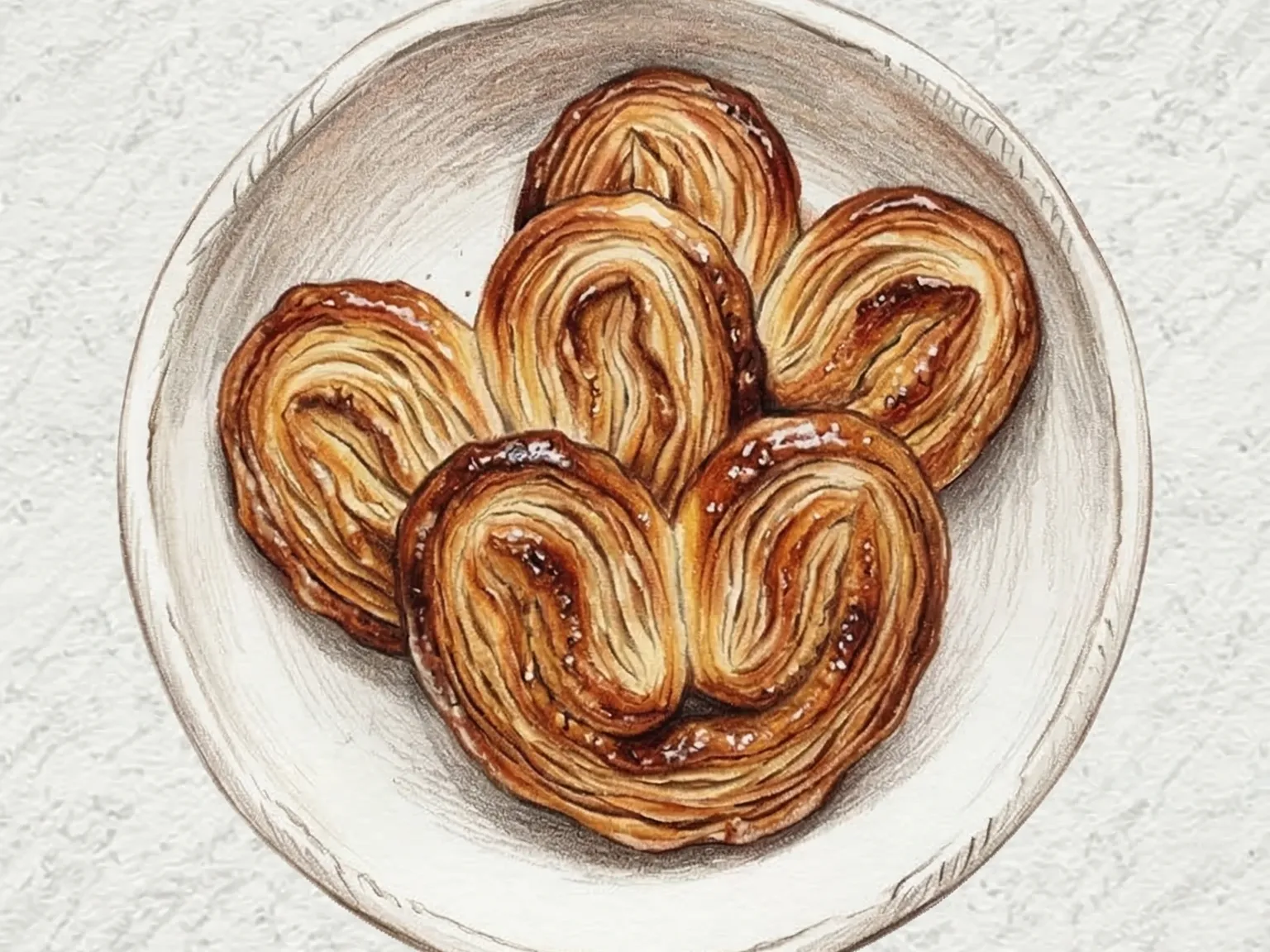
Puff pastry is coated in granulated sugar, rolled inward from both edges to the center, chilled, and sliced into rounds that bake into crisp, caramelized butterfly shapes.

What makes this special

  • Butterfly-shaped Palmier cookies feature glass-crisp, caramelized sugar and puff pastry.
  • Double-rolled puff pastry unfolds into butterfly wings as it bakes
  • Sugar caramelizes on contact with heat, making edges glass-crisp
Total time
33 min
Level
Easy
Servings
4 servings
Ingredients
6
Calories
300 kcal
Protein
3 g

Key ingredients

puff pastrysugarground cinnamonsaltunsalted butter

Core cooking flow

  1. 1 Preheat the oven fully to 200C. Mix the 100 g sugar with the ground cinnamon...
  2. 2 Scatter a generous layer of the sugar mixture on the work surface and place the 250 g puff pastry on top.
  3. 3 Sprinkle the remaining sugar mixture over the top, then roll both long edges inward toward the center.

Puff pastry is coated in granulated sugar, rolled inward from both edges to the center, chilled, and sliced into rounds that bake into crisp, caramelized butterfly shapes. The sugar melts against the hot pan and forms a glassy, toffee-like shell on each side while the interior layers remain light and flaky. A pinch of cinnamon mixed into the sugar adds warmth without masking the buttery pastry flavor. Chilling the log before slicing keeps the spirals tight and symmetrical. Each cookie is flipped midway through baking so both faces develop an even amber crust. They cool to a satisfying snap and pair naturally with espresso or tea, where their sweetness offsets the drink's bitterness.

Prep 15min Cook 18min 4 servings
Recipes by ingredient → butter

Instructions

Read the steps as a cooking flow: prep, heat, seasoning, doneness control, and finish.

6 steps
  1. 1
    Season

    Preheat the oven fully to 200C.

    Mix the 100 g sugar with the ground cinnamon, salt, and vanilla sugar, breaking up any lumps so the pastry will coat evenly and caramelize without dark patches.

  2. 2
    Season

    Scatter a generous layer of the sugar mixture on the work surface and place the 250 g puff pastry on top.

    Keep it cool, then roll lightly just to press sugar onto the surface without crushing the layers.

  3. 3
    Season

    Sprinkle the remaining sugar mixture over the top, then roll both long edges inward toward the center.

    When the two rolls meet, press gently so the butterfly shape holds without sealing the layers too tightly.

  4. 4
    Season

    Chill the rolled pastry for 10 minutes so it firms up before slicing.

    Cut it into 1 cm pieces, then arrange them widely spaced on the baking sheet because the cookies spread as the butter and sugar melt.

  5. 5
    Control

    Brush the 10 g unsalted butter in a thin layer to reduce sticking, then bake for 9 minutes.

    When the edges have spread and the sugar looks melted and glossy, turn each piece carefully with tongs.

  6. 6
    Finish

    Bake the flipped cookies for another 7 to 9 minutes, until both sides are evenly amber and caramelized.

    Transfer them to a rack and cool completely; they become crisp as the sugar shell sets, then serve with tea or espresso.

After the steps

Pick a recipe that fits this dish.

Continue with shared ingredients, meal pairings, or a similar method.

Recipes That Go Well With This

More Baking →

Based on shared ingredients and meal pairing

Mille-Feuille (Layered Puff Pastry with Vanilla Cream)
Shared ingredient: puff pastry Baking

Mille-Feuille (Layered Puff Pastry with Vanilla Cream)

Mille-feuille stacks three sheets of puff pastry with layers of vanilla pastry cream between them, creating a dessert defined by the tension between crisp and soft. The pastry itself is built through repeated folding with cold butter, generating hundreds of paper-thin layers that puff apart in the oven into shatteringly flaky sheets. Pastry cream - egg yolks, sugar, milk, and a touch of flour cooked to a thick custard - fills the gaps with a smooth richness that yields immediately to the fork. The top is typically dusted with powdered sugar or glazed with fondant, sometimes decorated with a feathered chocolate pattern. Timing matters: once assembled, moisture from the cream migrates into the pastry, so the window for peak crispness is roughly one to two hours. When eaten fresh, each bite collapses with an audible crunch before the cream takes over.

Cream Horn Pastry (Spiral Puff Pastry Cone with Cream Filling)
Shared ingredient: puff pastry Baking

Cream Horn Pastry (Spiral Puff Pastry Cone with Cream Filling)

Cream horns are made by wrapping thin strips of puff pastry around conical metal molds in a tight spiral and baking until the laminated layers separate into a crisp, golden shell. The hundreds of butter-and-dough layers in the pastry open and puff apart in the oven's heat, producing a horn that is structurally firm yet delicate enough to shatter on first bite. Once the horns cool, the metal cone is removed to reveal a hollow pastry ready for filling. A mixture of cream cheese and whipped cream is piped generously inside, delivering smooth, lightly tangy sweetness that plays against the brittle exterior. A final dusting of powdered sugar completes the presentation. The critical rule is timing - filling the horns only just before serving preserves the crispness, as the cream introduces moisture that softens the pastry rapidly.

French Toast
Serve together Western

French Toast

French toast soaks thick bread slices in a mixture of beaten eggs, milk, sugar, vanilla extract, and cinnamon until both sides absorb the custard evenly. The soaked bread is then cooked in melted butter over medium-low heat until each side turns golden brown and lightly caramelized on the surface while staying soft and moist inside. Slightly stale bread works better than fresh because its drier crumb absorbs more of the egg mixture without falling apart. Warm cinnamon and vanilla fragrance fills the kitchen during cooking. A drizzle of maple syrup and a dusting of powdered sugar finish the dish, and adding whipped cream or fresh fruit elevates it further.

Meringue Cookies
Similar recipe Baking

Meringue Cookies

Built from nothing more than egg whites and sugar, meringue cookies are baked low and slow until nearly all moisture evaporates, leaving behind a shell that shatters at the slightest pressure and dissolves on the tongue in seconds. The interior is a lattice of tiny air cells - so fragile that each piece weighs almost nothing despite its volume. A small measure of vanilla extract tames any residual egginess and adds a gentle perfume. Humidity is the one enemy: stored outside an airtight container, the cookies turn tacky and lose their snap within hours. Folding in a spoonful of cocoa powder or matcha before piping shifts both the color and flavor profile without altering the texture. They pair well with black coffee or tea, where their sweetness serves as a counterpoint to bitterness.

Serve with this

French Celeriac Remoulade
Salads Medium

French Celeriac Remoulade

Celeriac remoulade shreds thickly peeled celeriac into fine matchsticks and dresses them in a mixture of Dijon mustard, mayonnaise, lemon juice, and white wine vinegar. Tossing the shreds immediately with half the lemon juice prevents enzymatic browning, while the rest goes into the dressing to balance acidity. The Dijon's sharp heat cuts through the mayonnaise's richness, and the white wine vinegar keeps the finish clean and bright. Cutting the matchsticks as thin as possible maximizes surface area so the dressing absorbs quickly and evenly. A 15-minute chill in the refrigerator lets the flavors settle throughout; overnight refrigeration deepens the result further. The salad pairs well with cold meats and charcuterie, where its tangy crunch offsets richer textures.

🥗 Light & Healthy ⚡ Quick
Prep 20min 2 servings
Korean Dalgona Coffee (Whipped Instant Coffee Foam Milk)
Drinks Easy

Korean Dalgona Coffee (Whipped Instant Coffee Foam Milk)

Dalgona coffee is made by whipping equal parts instant coffee, sugar, and hot water with a hand mixer for three to five minutes until stiff, caramel-colored peaks form, then spooning the foam over iced milk. The whipped layer carries a concentrated, bittersweet coffee flavor that gradually blends into the cold, neutral milk below as you stir. A light dusting of cocoa powder on top introduces a faint chocolate note, and increasing the sugar slightly helps the whipped cream hold its stiff structure longer.

🍺 Bar Snacks 🧒 Kid-Friendly
Prep 8min 2 servings
Honey Ginger Ribbon Cookies
Desserts Medium

Honey Ginger Ribbon Cookies

Maejakgwa are traditional Korean ribbon cookies made from a firm dough of wheat flour, sesame oil, and ginger juice, rolled to 2 mm thickness, slit lengthwise through the center, and twisted through the opening into a knot shape before frying. Slow-frying at 160 degrees Celsius turns them light golden and crisp all the way through without darkening the surface unevenly. A warm coating of honey blended with rice syrup is applied while the cookies are still hot, adding a glossy, sweet shell that sets as it cools. The ginger lends a subtle warm bite that sits behind the nuttiness of sesame oil rather than announcing itself upfront, and a final dusting of pine nut powder contributes a soft, buttery fragrance that completes the layering of flavor. Each piece shatters lightly when bitten, yet the syrup-soaked sections at the twisted edges carry a slight chewiness that gives the cookie a layered texture unusual for a fried dough confection. Maejakgwa appear regularly on ritual food tables at memorial ceremonies and are commonly prepared for Lunar New Year and Chuseok.

🎉 Special Occasion 🧒 Kid-Friendly
Prep 30min Cook 25min 4 servings

Similar recipes

Honey Madeleines (Buttery Shell-Shaped French Cakes)
Baking Medium

Honey Madeleines (Buttery Shell-Shaped French Cakes)

Honey madeleines are small French sponge cakes characterized by their shell-like shape and the prominent rounded mound that rises on their underside during the baking process. To successfully create this characteristic hump, the prepared batter must be rested in a refrigerator until it is thoroughly chilled before being placed into a preheated oven set to a high temperature. This specific thermal shock between the cold batter and the hot air causes the outer edges of the cake to set almost immediately. While the exterior firms up, the steam generated inside the batter is forced upward through the center, resulting in the distinct bump that separates a correctly baked madeleine from one that remains flat. The recipe utilizes a high proportion of melted butter to ensure the edges are crisp and develop a deep golden color. By substituting a portion of the standard granulated sugar with honey, the cakes gain a specific floral sweetness and a rounded flavor profile that sugar alone cannot provide. When served fresh from the oven, the exterior provides a light crunch that gives way to a moist and spongy texture inside. This combination releases the fragrance of toasted butter and warm honey as the cake is eaten. The addition of lemon zest to the batter introduces a sharp citrus quality. This component serves to balance the inherent richness of the butter and prevents the flavor from becoming overly heavy on the palate. Madeleines are best consumed within a very narrow window of time, ideally within thirty minutes of leaving the oven. During this period, the outer shell retains its crispness while the center of the cake is still warm. These cakes are commonly served alongside a cup of black tea or coffee as a simple afternoon snack.

🧒 Kid-Friendly 🎉 Special Occasion
Prep 20min Cook 12min 4 servings
Clafoutis (French Baked Cherry Custard Dessert)
Western Easy

Clafoutis (French Baked Cherry Custard Dessert)

Clafoutis is a traditional French dessert from the Limousin region made by arranging fresh cherries in a buttered baking dish, then pouring over a thin batter of eggs, sugar, milk, and flour and baking at 180 degrees Celsius for thirty to thirty-five minutes. The batter is considerably thinner than pancake batter, and the result when baked is a texture that sits between a creamy custard and a light sponge -- the edges puff and turn golden while the center around the cherries stays moist and yielding. Using unpitted cherries is the traditional method: the pits release a faint almond scent during baking that perfumes the surrounding batter in a way that pitted fruit cannot replicate. The cherries also hold their shape better with the pits in. Vanilla extract deepens the egg-and-milk base, and the cherries' own tart juice seeps into the batter during baking, creating concentrated pockets of fruit flavor that balance the overall sweetness. Clafoutis is served directly from the baking dish, typically dusted with powdered sugar and brought to the table while still warm, because the custard texture softens and loosens slightly as it cools, making the warm version noticeably more appealing. Made with blueberries, plums, or apricots instead of cherries, the dessert takes a different name -- flaugnarde -- though the technique remains identical.

🎉 Special Occasion 🧒 Kid-Friendly
Prep 15min Cook 35min 4 servings
Salmon in Puff Pastry
Western Hard

Salmon in Puff Pastry

Salmon en croute wraps a salmon fillet spread with a mixture of cream cheese, wilted spinach, dill, and lemon zest inside puff pastry and bakes it until golden. Patting the salmon completely dry with paper towels is crucial - any surface moisture will make the pastry soggy. The spinach must also be squeezed thoroughly to prevent a wet filling. Cream cheese and Dijon mustard form a barrier between the fish and the dough, blocking the salmon's moisture from softening the pastry. Baking at 200 degrees Celsius for twenty-five to thirty minutes puffs the pastry into flaky, crisp layers while the salmon inside stays tender and moist, delivering both textures in every slice. Chilling the assembled package for ten minutes before baking re-firms the butter in the pastry, producing sharper layers after baking.

🎉 Special Occasion
Prep 25min Cook 30min 4 servings

Tips

Chilling before slicing keeps the shape neat.
Leave plenty of space; they expand while baking.

Nutrition (per serving)

Calories
300
kcal
Protein
3
g
Carbs
31
g
Fat
18
g