Pan Bagnat (Nicoise Olive Oil Soaked Tuna Sandwich)
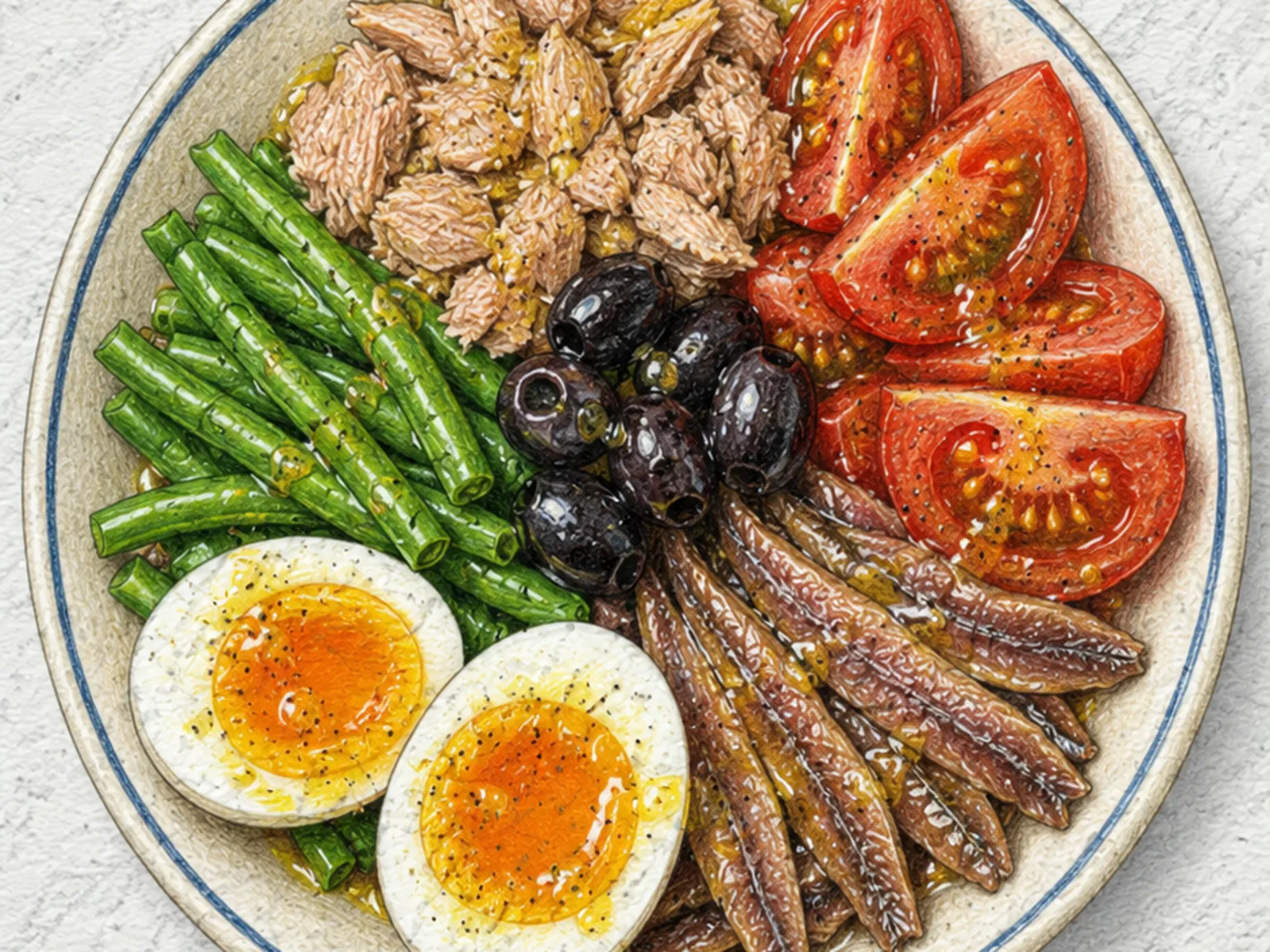
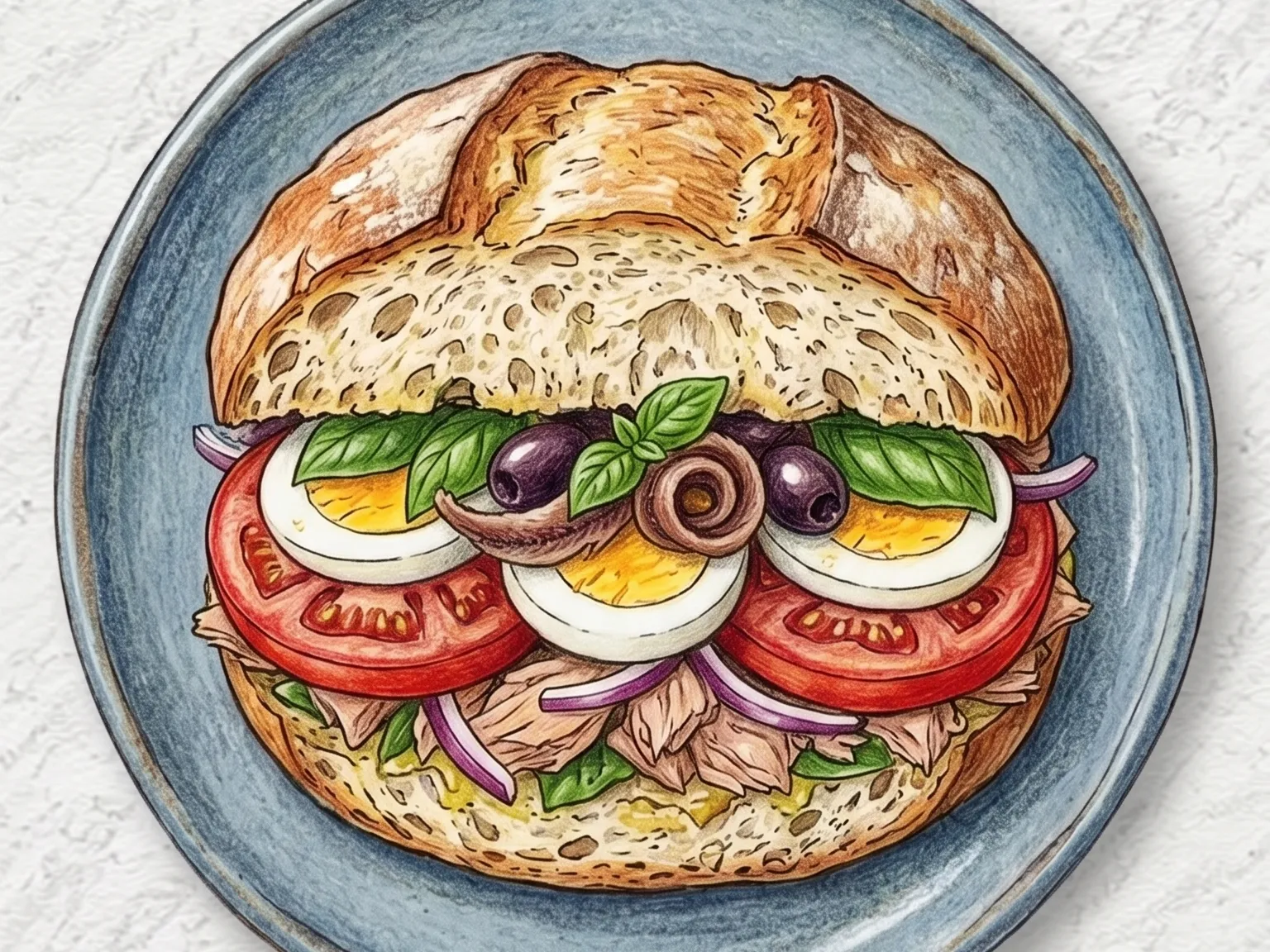
Pan bagnat is a traditional tuna sandwich from Nice in southern France, defined by bread that is thoroughly soaked in olive oil and red wine vinegar before being filled. A small baguette is halved and hollowed slightly, then drizzled generously with extra virgin olive oil and layered with canned tuna, boiled eggs, sliced tomato, red onion, anchovy fillets, and black olives. After assembly, the sandwich is wrapped tightly and pressed under weight for at least thirty minutes to two hours in the refrigerator, allowing the oil and vinegar to penetrate the bread and meld the flavors into a cohesive whole. The anchovies contribute deep umami, the olives add brine, and the tomato brings acidity - together they make additional condiments unnecessary. Originally packed by fishermen heading out to sea, this is a sandwich that genuinely improves with time.
Adjust Servings
Instructions
- 1
Split the baguette and press the crumb lightly to make room for filling.
- 2
Mix olive oil and vinegar, then brush evenly inside the bread.
- 3
Flake tuna with a little oil retained and spread on the bottom half.
- 4
Layer sliced tomato, red onion, egg, olives, anchovies, and basil.
- 5
Close the sandwich, wrap tightly, and press for 15 minutes to meld flavors.
- 6
Cut in half and serve before the layers loosen.
As an Amazon Associate, we may earn from qualifying purchases.
Tips
Nutrition (per serving)
More Recipes

Croque Monsieur (Béchamel Ham and Cheese Melt)
Croque monsieur is a Parisian café classic built on a smooth béchamel sauce made from a butter-flour roux whisked with warm milk. One slice of white bread is spread with Dijon mustard before being layered with sliced ham and grated Gruyère cheese. The second slice tops the sandwich, which then gets a generous coat of béchamel and more cheese on the upper surface. Baking at 200 degrees Celsius for ten minutes melts the interior filling, and a brief three-minute broil creates a golden, bubbling crust on top. The mustard's pungent sharpness balances the salty richness of ham and cheese, keeping the overall flavor clean.

Beef Tartare
Beef tartare is a French raw-beef preparation where premium tenderloin is hand-chopped with a knife - never ground - to preserve the texture of each small piece, then mixed with capers, anchovies, shallots, cornichons, egg yolk, and Dijon mustard. The knife cut keeps the meat granular and distinct on the tongue rather than pasty, and the yolk coats every morsel in a rich, silky film. Capers and anchovies drive the salty, briny umami that makes raw beef compelling, while Dijon adds a sharp mustard heat that wakes up the palate. Freshness is everything here - the quality of the tenderloin determines the entire experience, and there is nowhere for lesser cuts to hide.

Duck Confit
Duck confit is a traditional French preservation technique that begins by rubbing duck legs with coarse salt, thyme, garlic, and black pepper, then curing them in the refrigerator for twelve hours to draw out moisture and concentrate flavor. After rinsing off the salt and patting dry, the legs are submerged in duck fat heated to 90 degrees Celsius and cooked for three hours at that gentle temperature. The prolonged low heat dissolves the connective tissue, yielding meat so tender it pulls apart with a fork. A final sear in a hot pan with the skin side down crisps the exterior into a shattering shell, creating the signature contrast between the silky interior and crackling skin. Leftover duck fat stores well and adds exceptional depth to roasted potatoes.

Bouillabaisse (Provencal Saffron Seafood Stew)
Bouillabaisse is a Provencal seafood stew originating from Marseille fishermen cooking their unsold catch, distinguished by saffron's golden color and subtle floral aroma threaded through the broth. Fennel and tomatoes are first sauteed in olive oil to build an aromatic base, then saffron-infused fish stock is poured in and brought to a simmer. Firm-fleshed fish go in first, with shrimp and mussels added last to preserve their texture - overcooked shellfish turns rubbery and loses its snap. The broth derives its complexity from the layered contribution of multiple seafood varieties, each releasing a different aspect of ocean flavor into the pot. Traditionally, grilled baguette spread with garlicky rouille sauce is dipped into the broth alongside the stew.

French Crepes
French crepes are thin pancakes made from a pourable batter of flour, eggs, milk, and melted butter, cooked on a hot surface until golden and lacy. The batter must rest for at least an hour so the gluten relaxes and the flour hydrates, producing a supple rather than rubbery crepe. A small amount of batter is swirled onto a hot pan, covering the surface in a thin, even layer that cooks in under a minute per side. The flavor is neutral and buttery, making crepes versatile for both sweet and savory fillings. In Parisian street stalls, crepes are made to order on large griddles, filled, folded, and handed over in paper for eating while walking.

Dacquoise (Almond Meringue Disc with Butter Cream Filling)
Dacquoise is a French confection made by folding almond flour into a stiff egg white meringue, piping the mixture into flat discs, and baking until the surface forms a thin, crisp shell. Inside, the almond oils keep the texture chewy and slightly sticky, creating a contrast between the crackly exterior and the dense interior. Two of these discs sandwich a layer of buttercream, which adds richness and binds the halves together. In Korean cafes, dacquoise has been miniaturized into bite-sized individual pieces, often wrapped for takeaway, and they have become one of the most popular accompaniments to afternoon coffee. The combination of textures - the snap of the shell, the chew of the almond meringue, the smoothness of the cream - makes each small piece surprisingly satisfying.