Pan de Elote (Mexican Corn Cake)
Quick answer
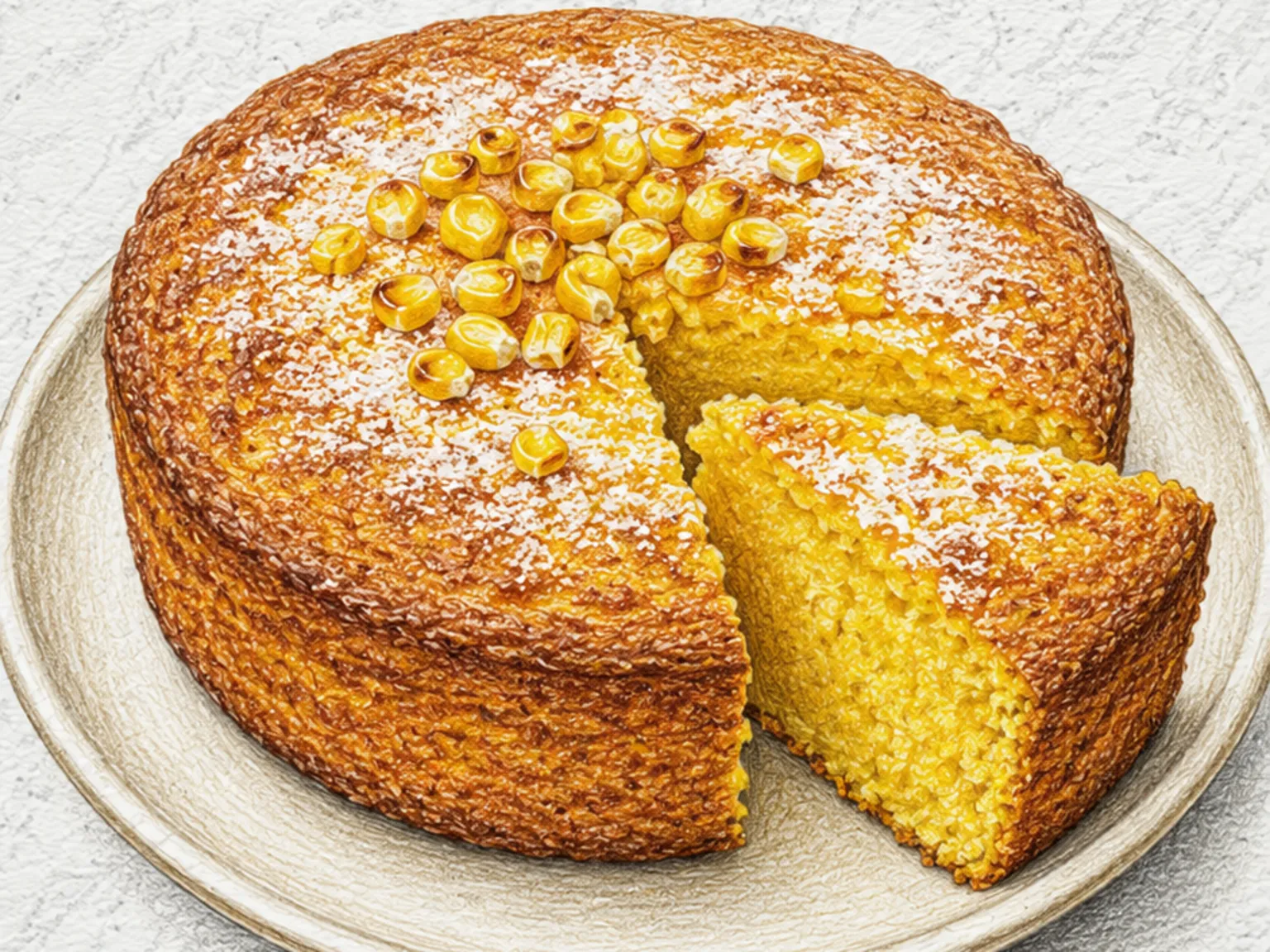
Fresh corn kernels are blended into a smooth puree and folded into a buttery batter, producing a baked cake saturated with natural corn flavor.
What makes this special
- Pureed whole corn kernels provide Pan de Elote with a dense, custard-like crumb and sweetness.
- Blended whole corn kernels go directly into the batter
- Heavy cream locks in moisture for days after baking
Key ingredients
Core cooking flow
- 1 Preheat the oven fully to 175°C and press parchment snugly into the loaf pan so the sides release cleanly.
- 2 Add 280 g corn kernels, 80 ml heavy cream, and 2 eggs to a blender.
- 3 Beat 80 g softened unsalted butter with 90 g sugar until the mixture looks lighter and slightly fluffy.
Fresh corn kernels are blended into a smooth puree and folded into a buttery batter, producing a baked cake saturated with natural corn flavor. The crumb is dense yet tender, closer to custard than to sponge, with a faint golden hue from the corn itself. Heavy cream in the batter locks in moisture so the cake stays soft for several days without drying out. Because the corn provides substantial natural sweetness, refined sugar plays a supporting role rather than leading. If using frozen kernels, thorough thawing and draining are essential to prevent a watery batter. An overnight rest at room temperature allows the corn starch to redistribute, deepening the flavor and firming the texture to a satisfying slice.
Instructions
Read the steps as a cooking flow: prep, heat, seasoning, doneness control, and finish.
- 1Step
Preheat the oven fully to 175°C and press parchment snugly into the loaf pan so the sides release cleanly.
If using frozen corn, thaw it completely, squeeze out excess moisture, and measure it after draining.
- 2Prep
Add 280 g corn kernels, 80 ml heavy cream, and 2 eggs to a blender.
Blend in short bursts until mostly smooth, stopping before the mixture becomes foamy or warm from overblending.
- 3Season
Beat 80 g softened unsalted butter with 90 g sugar until the mixture looks lighter and slightly fluffy.
Add the corn base in two or three additions, scraping the bowl so the batter stays even.
- 4Season
Sift in 95 g all-purpose flour, 6 g baking powder, and 2 g salt.
Fold with a spatula from the bottom of the bowl, stopping as soon as no dry flour streaks remain.
- 5Heat
Pour the batter into the prepared pan and level the top with a spatula so it bakes evenly.
Bake at 175°C for 40 to 45 minutes, avoiding repeated oven opening while the center sets.
- 6Step
Remove the cake when the top is golden and a skewer comes out without wet batter attached.
Cool it in the pan for 20 minutes before unmolding, and rest overnight for deeper corn flavor.
After the steps
Pick a recipe that fits this dish.
Continue with shared ingredients, meal pairings, or a similar method.
Recipes That Go Well With This
More Baking →Based on shared ingredients and meal pairing
Yuja Ricotta Tea Cake (Korean Citron Ricotta Loaf Cake)
Yuja ricotta tea cake pairs the gentle creaminess of ricotta cheese with the bright citrus punch of yuja marmalade in a single tender loaf. Ricotta replaces much of the butter found in traditional pound cakes, keeping the crumb exceptionally moist and giving it a soft, almost custard-like quality. Pieces of yuja peel and pulp are folded into the batter, creating pockets of fragrant sourness that cut through the richness with each bite. Once baked, the top develops a thin golden crust while the interior remains plush and yielding. The cake pairs naturally with black tea or green tea, where the yuja's aromatic acidity complements the tannins in the brew. It keeps well for a day or two without drying out.
Maple Pecan Pound Cake
Maple syrup and toasted pecans anchor this dense, buttery pound cake with woodsy sweetness and deep nuttiness. Brown sugar replaces white, contributing a caramel undertone that aligns naturally with the maple flavor. Creaming the room-temperature butter and sugar for several minutes introduces enough air to lighten the heavy crumb without losing the characteristic density of a pound cake. Eggs added one at a time keep the emulsion stable, and alternating the dry ingredients with milk and maple syrup prevents the batter from splitting. Toasting the pecans for five minutes before chopping and folding them in amplifies their flavor and ensures even distribution throughout each slice. At 170 degrees Celsius, the cake bakes for roughly 45 minutes; if the top darkens too quickly, a foil tent protects it while the center finishes setting. A skewer emerging mostly clean signals doneness. Resting the cake wrapped overnight allows the maple oils to permeate every layer of crumb, producing a deeper, more unified flavor the next day.
Burrito
A burrito layers seasoned ground beef, cooked rice, black beans, shredded cheese, and salsa inside a large flour tortilla that gets folded and rolled into a tight cylinder. Warming the tortilla briefly on a hot pan makes it pliable enough to wrap without tearing. The filling goes down the center in a long line, both ends fold inward first, then the whole thing rolls forward into a sealed package that holds together in the hand. Black beans add starchy substance and protein that make the burrito filling even without the meat at the center, and the tomato acidity in salsa cuts through the melted cheese and beef fat. A line of sour cream inside provides a cool, tangy buffer against the cumin-chili heat. For the cheese, Monterey Jack or cheddar melts evenly without clumping and binds the filling together well. Wrapping the finished burrito tightly in foil keeps the shape and makes it easier to eat on the go.
Tres Leches Cake (Latin Three-Milk Soaked Sponge Cake)
A light sponge cake is baked, perforated with a fork, and then drenched in a mixture of three milks - whole milk, sweetened condensed milk, and evaporated milk - until the crumb absorbs the liquid and transforms into something closer to custard than cake. Each milk contributes a distinct quality: whole milk provides clean dairy flavor, condensed milk adds concentrated sweetness and body, and evaporated milk brings a faintly caramelized undertone. The soaking liquid must be poured in stages so the sponge absorbs evenly rather than pooling at the bottom. After at least two hours of refrigeration - overnight is better - the cake reaches its signature ultra-moist state, wet enough to spoon yet firm enough to slice. Whipped cream spread over the top provides a cool, airy contrast to the dense, sweet base, and the combination of the cold cream with the soaked cake is what gives tres leches its distinctive character across Latin American celebrations.
Serve with this
Mexican Cactus Salad (Lime-Dressed Nopal Cactus Pad)
Ensalada de nopales is a traditional Mexican salad made from cleaned and boiled prickly pear cactus pads tossed with diced tomato, onion, fresh cilantro, and lime juice. Preparing the pads requires removing the fine spines and glochids that cover the surface; wearing gloves and scraping with a knife is the standard method. Once cleaned, the pads are diced and boiled until tender. Cooking releases a mucilaginous substance similar to okra, which is the source of nopales' distinctive texture. Draining the cooked cactus thoroughly and letting it cool before dressing prevents the lime juice from becoming diluted. Even after full cooking, nopales retain a slight resistance in the bite, producing a texture that is at once tender and firm. The strong acidity of lime and the herbal quality of cilantro create contrast against the cactus's mild, neutral flavor, giving the salad a clear flavor structure. In Mexico this is a common side dish alongside tacos, grilled meats, or beans, and its high fiber and water content make it a practical addition to a balanced meal.
Glutinous Rice Cake Balls
Chapssal-danja are Korean glutinous rice cake balls filled with sweet red bean paste, boiled until they float, and rolled in a mixture of roasted soybean powder and sugar. The dough is flattened, wrapped around the filling, and sealed tightly into a sphere so the paste stays contained during boiling, with an extra minute of cooking after the balls surface to ensure the center is fully cooked through. A very thin brush of honey applied immediately after draining acts as an adhesive for the soybean powder coating and adds a faint floral sweetness to the exterior. Sifting the soybean powder before rolling produces a fine, even layer that gives each ball a powdery, melt-on-the-tongue finish over the chewy rice cake underneath. Kneading the glutinous rice dough thoroughly before portioning builds elasticity, which translates directly into the characteristic chew once the balls are cooked.
Korean Dalgona Coffee (Whipped Instant Coffee Foam Milk)
Dalgona coffee is made by whipping equal parts instant coffee, sugar, and hot water with a hand mixer for three to five minutes until stiff, caramel-colored peaks form, then spooning the foam over iced milk. The whipped layer carries a concentrated, bittersweet coffee flavor that gradually blends into the cold, neutral milk below as you stir. A light dusting of cocoa powder on top introduces a faint chocolate note, and increasing the sugar slightly helps the whipped cream hold its stiff structure longer.
Similar recipes
Goguma Streusel Loaf Bread (Sweet Potato Streusel Loaf)
Sweet potato puree is whisked into a batter enriched with brown sugar, eggs, and neutral oil, then baked in a loaf pan with a generous layer of butter streusel on top. The puree keeps the crumb remarkably moist and dense, while the streusel bakes into crunchy, crumbly clusters that shatter against the soft interior. Cinnamon reinforces the sweet potato's warmth, and brown sugar deepens the flavor with a faint molasses note. The streusel must be prepared with cold butter rubbed by hand into flour and sugar - the coarse, irregular texture is what creates the satisfying crunch after baking. If the puree is particularly wet, reducing the milk by ten milliliters prevents a batter that is too loose. Should the top brown too quickly during the long bake, a loose tent of foil protects the streusel without trapping steam. The loaf slices most neatly after cooling completely on a rack.
Chocolate Lava Cake
Chocolate lava cake bakes a batter of melted dark chocolate, butter, whole eggs, egg yolks, sugar, and a small measure of flour in buttered ramekins at 220 degrees Celsius for ten to twelve minutes, producing a set crust and molten center from a single brief baking window. The high oven temperature firms the outside and top of the batter into cake while the core stays liquid, so breaking the surface with a spoon releases a slow pour of concentrated warm chocolate. High-cacao dark chocolate provides a complex, bittersweet depth that pairs with the richness of butter fat, and vanilla extract softens and rounds the overall aroma. Timing controls everything in this recipe: overbaking by even two minutes sets the center solid and destroys the signature flow. The edges of each ramekin should feel just firm when pressed lightly through a towel at the ten-minute mark. Ramekins can be filled ahead and refrigerated, but the baking time then needs an extra one to two minutes to account for the colder starting temperature. Serving with a scoop of vanilla ice cream or a spoonful of cold heavy cream creates a striking contrast between the hot, dense chocolate interior and the chilled, lighter dairy.
Mexican Cactus Salad (Lime-Dressed Nopal Cactus Pad)
Ensalada de nopales is a traditional Mexican salad made from cleaned and boiled prickly pear cactus pads tossed with diced tomato, onion, fresh cilantro, and lime juice. Preparing the pads requires removing the fine spines and glochids that cover the surface; wearing gloves and scraping with a knife is the standard method. Once cleaned, the pads are diced and boiled until tender. Cooking releases a mucilaginous substance similar to okra, which is the source of nopales' distinctive texture. Draining the cooked cactus thoroughly and letting it cool before dressing prevents the lime juice from becoming diluted. Even after full cooking, nopales retain a slight resistance in the bite, producing a texture that is at once tender and firm. The strong acidity of lime and the herbal quality of cilantro create contrast against the cactus's mild, neutral flavor, giving the salad a clear flavor structure. In Mexico this is a common side dish alongside tacos, grilled meats, or beans, and its high fiber and water content make it a practical addition to a balanced meal.