Fluffy Pancakes
Quick answer
A straightforward American breakfast staple built from flour, egg, milk, and melted butter.
What makes this special
- Gently mixed batter lifts these Fluffy Pancakes into thick rounds with a golden exterior.
- Only 15 strokes of mixing leaves lumps that prevent tough texture
- 5-minute batter rest stabilizes gluten for an even rise
Key ingredients
Core cooking flow
- 1 Place 1 1/2 cups all-purpose flour, 2 tablespoons sugar, 2 teaspoons baking...
- 2 In a second bowl, beat 1 cup milk with 1 egg until the yolk is fully loosened.
- 3 Pour the wet mixture into the dry ingredients and fold with a spatula, scrap...
A straightforward American breakfast staple built from flour, egg, milk, and melted butter. Baking powder lifts the batter into thick, pillowy rounds with a golden-brown exterior. The key to a tender pancake is restraint when mixing: a few small lumps in the batter are preferable to a smooth but overworked one, which produces a tough, chewy result. Resting the batter for five to ten minutes lets the gluten relax and the leavener activate fully, yielding a noticeably fluffier rise on the griddle. Cooking over medium-low heat prevents the outside from scorching before the center sets. Maple syrup, fresh berries, or a pat of butter on the warm stack are the classic accompaniments.
Instructions
Read the steps as a cooking flow: prep, heat, seasoning, doneness control, and finish.
- 1Season
Place 1 1/2 cups all-purpose flour, 2 tablespoons sugar, 2 teaspoons baking powder, and 1/2 teaspoon salt in a bowl.
Whisk thoroughly so the leavener and salt are evenly distributed before the liquid is added.
- 2Step
In a second bowl, beat 1 cup milk with 1 egg until the yolk is fully loosened.
Stir in 30 g melted butter only after it is warm, not hot, so the egg does not start to set.
- 3Prep
Pour the wet mixture into the dry ingredients and fold with a spatula, scraping the bottom of the bowl, for only 15 to 20 strokes.
Stop while small lumps remain, because overmixing makes the pancakes chewy.
- 4Control
Let the batter rest for 5 to 10 minutes, and use that time to preheat the pan over medium-low heat.
The temperature is right when a drop of water sizzles gently instead of vanishing instantly.
- 5Heat
Grease the pan with a very thin layer of butter and ladle about 1/3 cup batter for each pancake.
Cook for 2 to 3 minutes, until bubbles break on the surface and the edges look dry and set.
- 6Finish
Flip each pancake once with a wide spatula and cook for about 1 minute more.
Serve warm when both sides are golden and the center springs back lightly when pressed, with syrup, butter, or fresh fruit.
After the steps
Pick a recipe that fits this dish.
Continue with shared ingredients, meal pairings, or a similar method.
Recipes That Go Well With This
More Baking →Based on shared ingredients and meal pairing
Banana Bread
Banana bread is a quick bread leavened with baking soda rather than yeast, which means no rising time and a straightforward one-bowl process. The most important variable is the banana: heavily blackened, overripe fruit is essential because the starches have converted to sugar, the flesh mashes effortlessly, and the concentrated banana aroma permeates every part of the crumb. Melted butter adds richness without creaming, a single egg provides structure, and vanilla extract amplifies the banana's fragrance. The batter mixes in one bowl and goes directly into the oven at 170 degrees Celsius for roughly sixty minutes. A toothpick inserted into the center should come out clean. The bread is good warm from the oven, but the flavor is measurably deeper the following day as banana sugars continue to penetrate the interior. Walnuts or chocolate chips folded into the batter add textural contrast without changing the essential character of the loaf.
Classic Waffle
Classic waffles are made from a batter of flour, eggs, milk, melted butter, and baking powder cooked in a hot waffle iron. The baking powder aerates the batter, producing a crumb that is open and light while the outer surface crisps against the heated metal plates. Each square grid pocket in the iron serves a structural purpose: it forms a channel that holds maple syrup, melted butter, or fruit compote so every forkful carries an even measure of topping. Eggs distinguish American-style waffles from Belgian ones, contributing fat and protein that give the interior a slightly chewy, springy quality rather than a purely airy crumb. The sizzling sound from the iron as the batter hits the plates signals that the surface temperature is high enough for browning; the waffle is done when the steam output drops off and the exterior color deepens to a uniform amber. Fresh from the iron, pressing a fork into the surface produces an audible crack, and the inside is steaming, soft, and moist.
Real Pineapple Sherbet
This refreshing fruit dessert is prepared by scooping out the flesh of a mini pineapple and using its hollowed shell as a serving vessel. The fruit pulp is blended until smooth to prevent icy lumps, then mixed with sugar, lemon juice, and oligosaccharide syrup to achieve a sweet and tangy flavor. After pouring the mixture back into the shell and covering it with the top lid, it is frozen for at least four hours. Stirring the mixture occasionally during freezing breaks up ice crystals, resulting in a smoother texture. The active bromelain enzyme present in the fresh fruit provides a subtle tingly sensation on the tongue. Serving the sherbet directly inside the pineapple skin minimizes juice loss and keeps the dessert cold. Letting it stand for five minutes before scraping and topping with fresh apple mint leaves makes it ready to serve.
Classic Bagel
Classic bagels are defined by a two-stage cooking process that no other mainstream bread undergoes: the shaped rings are boiled before they are baked, and it is that boiling step that creates everything distinctive about the finished product. The dough is made with high-gluten bread flour and deliberately low hydration, then kneaded extensively to build a dense gluten network strong enough to resist expansion in the oven. After shaping into rings and a brief second proof, the bagels are lowered into boiling water -- often sweetened with honey or malt syrup -- and held there for about a minute per side. The heat gelatinizes the starch on the outer surface, forming a thin, tight skin that acts as a physical barrier against the gas trying to expand inside. When the boiled rings go into a hot oven, that skin constrains the rise so the interior stays compressed and dense rather than open and airy. The result is a crust that is firm, slightly shiny, and resilient under pressure, surrounding an interior with a chewiness measured in seconds of resistance rather than the instant softness of most bread. Adding honey or malt to the boiling water contributes a faint sweetness and a deeper color to the finished crust. In New York tradition the bagel is split, toasted, and loaded with cream cheese and smoked salmon, but sliced in half and toasted with butter alone, the structure of a well-made bagel carries the eating experience entirely on its own.
Serve with this
Bananas Foster
Bananas Foster is a New Orleans dessert invented in the 1950s at Brennan's Restaurant, built around the simple technique of caramelizing bananas in butter and brown sugar before serving them over vanilla ice cream. The sauce begins by melting butter in a skillet and stirring in brown sugar until the two combine into a thick, bubbling caramel. Halved bananas go in cut-side down and cook just long enough to absorb the syrup while holding their shape. Ground cinnamon folded into the sauce adds a warm spice layer that keeps the sweetness from reading as flat, and a squeeze of lemon juice sharpens the overall profile. Traditional preparation calls for igniting rum poured into the hot pan - the blue flame burns off the alcohol and concentrates the molasses notes in a few dramatic seconds. The step can be skipped at home without meaningfully altering the result. Spooning the hot caramelized bananas over cold ice cream generates immediate steam, and the contrast between molten caramel and frozen cream defines every bite. The entire dish takes roughly ten minutes.
Seven Layer Salad
Seven layer salad stacks romaine lettuce, sliced cucumber, halved cherry tomatoes, cooked green peas, chopped boiled egg, and thinly sliced red onion in a clear glass bowl, then seals the top with a smooth layer of Greek yogurt mixed with lemon juice. The yogurt cap acts as a moisture barrier, preventing the lower layers from turning soggy and making the salad suitable for advance preparation. Boiled eggs contribute a mild richness and peas add a starchy sweetness that rounds out the crisp vegetable layers, while red onion's sharp bite creates a contrast against the creamy, tangy dressing. Serving requires scooping deep to the bottom so every portion captures all seven layers at once.
Citrus Espresso Tonic with Orange
Espresso tonic is a carbonated coffee drink built by slowly pouring espresso over chilled tonic water to form two distinct layers. The tonic must be thoroughly cold to maintain stable carbonation throughout; cooling the espresso for about thirty seconds before pouring it over a spoon produces a clean separation between the two liquids. The quinine bitterness in the tonic water meets the espresso's roast bitterness, creating a balanced interplay rather than one-note sharpness. Orange slices and lemon peel garnish the glass, releasing citrus oils that rise with the bubbles. Specialty espresso with pronounced fruit acidity works particularly well here, harmonizing with the tonic's effervescence and lending natural sweetness without added sugar. Pre-chilling the glass with ice before adding the tonic helps preserve carbonation. The drink gained popularity in Scandinavian coffee culture during the 2010s before spreading worldwide.
Similar recipes
Granola Yogurt Bowl
Granola yogurt bowl is a composed breakfast or snack that starts with a thick base of Greek yogurt and builds upward with sliced banana, kiwi, and blueberries, finished with granola, chia seeds, and a drizzle of honey. Greek yogurt differs from regular yogurt in that most of its liquid whey has been strained away, leaving a denser, higher-protein base that holds its shape in the bowl rather than pooling around the fruit. The tang of the yogurt meets the juicy sweetness of the fruit and creates a balanced flavor that needs no additional sauce or dressing. Granola begins absorbing moisture the moment it contacts the yogurt, so adding it immediately before eating is the only way to keep its crunch intact through the meal. Chia seeds undergo a visible transformation within about five minutes of sitting in moisture, their outer layer swelling into a gel that adds a springy, slightly resistant bite unlike anything else in the bowl. Using unsweetened yogurt puts control of sweetness entirely in the hands of the person eating it, since the honey can be measured to taste, and rotating the fruit with whatever is in season gives a different combination each time without changing the structure of the dish.
Flaky Oven Biscuits
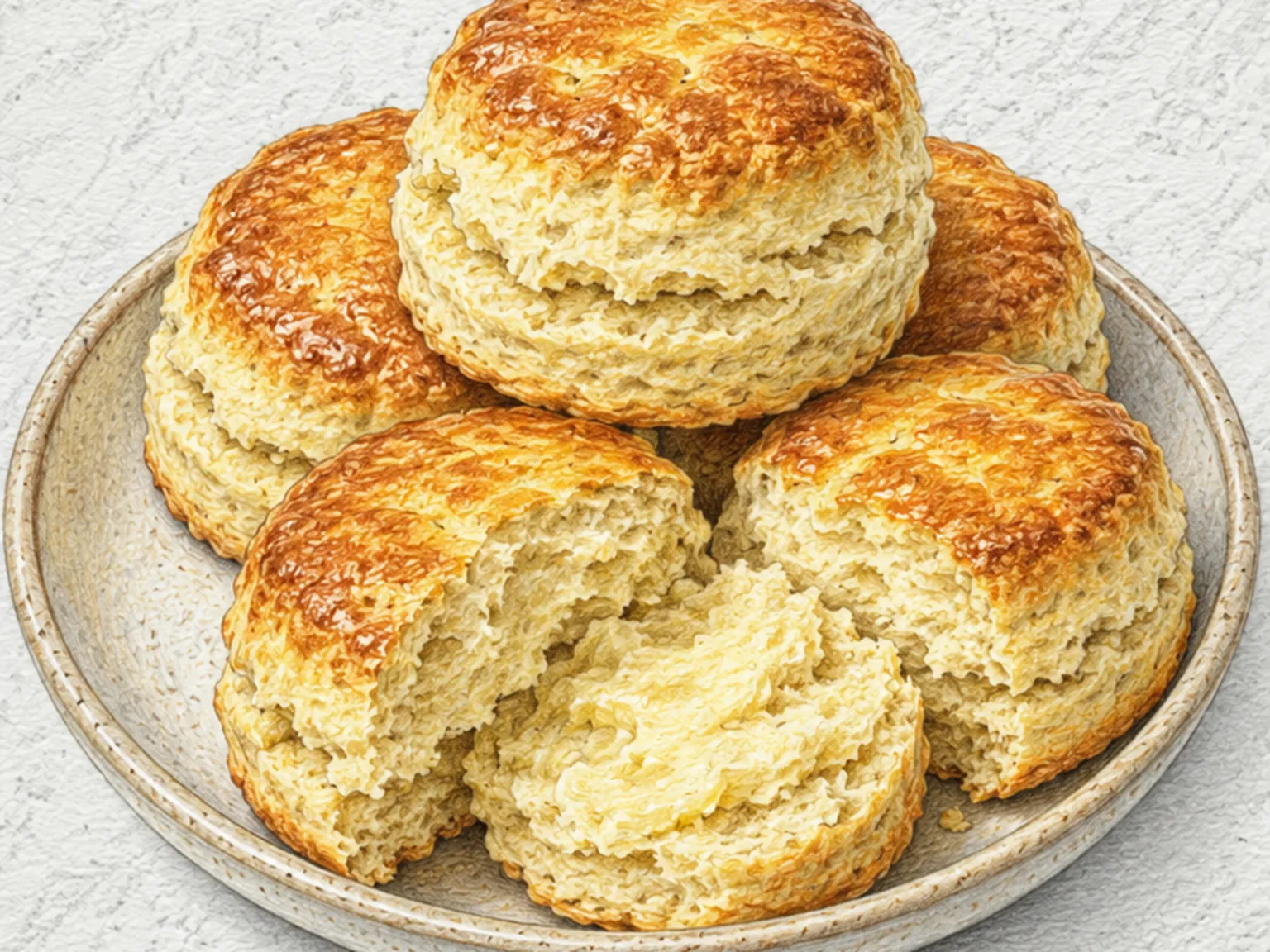
Buttermilk biscuits are built on the tension between cold butter and high oven heat. Cubes of chilled butter are cut into flour until pea-sized pieces remain, and the dough is brought together quickly with buttermilk - just enough mixing to bind, no more. In the oven, the butter melts and releases steam, forcing the dough apart into flaky, irregular layers. The exterior bakes to a golden, slightly crisp shell while the interior stays soft and crumbly. Buttermilk provides a faint tanginess that sharpens the overall flavor and reacts with baking soda to give the biscuits additional lift. Overworking the dough is the most common mistake, as it develops gluten and produces a tough, bread-like result instead of the tender, pull-apart texture that defines a good biscuit. Split while still warm and spread with butter and jam, they are a cornerstone of American Southern breakfast. Lower-protein flour produces a more tender crumb, and keeping the butter frozen until just before use helps maintain the distinct layers throughout baking.
Grilled Chicken Caesar Salad
Grilled chicken Caesar salad is a classic constructed salad built on pan-seared chicken breast, crisp romaine lettuce, house-made Caesar dressing, croutons, and shaved Parmesan. The chicken breast is seasoned simply with salt and pepper and cooked over medium-high heat until golden on both sides, then left to rest for five minutes before slicing. Resting allows the muscle fibers to relax and the internal juices to redistribute, so each slice stays moist at the center rather than releasing liquid when cut. Slicing too thinly also causes rapid heat loss and results in a dry, mealy texture, so cutting into thicker pieces is preferable. The dressing is made by whisking together mayonnaise, fresh lemon juice, minced garlic, and a small amount of Worcestershire sauce. That combination produces a coating that is creamy and rich but balanced by the sharpness of citrus and the depth of the fermented condiment. Romaine is torn into bite-sized pieces and tossed lightly with dressing before the chicken and croutons are added on top, which prevents the weight of the toppings from bruising the leaves and accelerating wilting. Croutons go on last and should not be tossed through the greens, as contact with dressing causes them to absorb moisture and lose crunch quickly. Parmesan provides the concentrated salty umami of aged hard cheese that ties the neutral lettuce, mild chicken, and tangy dressing into a unified plate. The salad must be assembled immediately before serving to preserve the distinct textures that make it satisfying.