Pancit Bihon (Filipino Stir-Fried Rice Vermicelli with Chicken)
Asian Easy

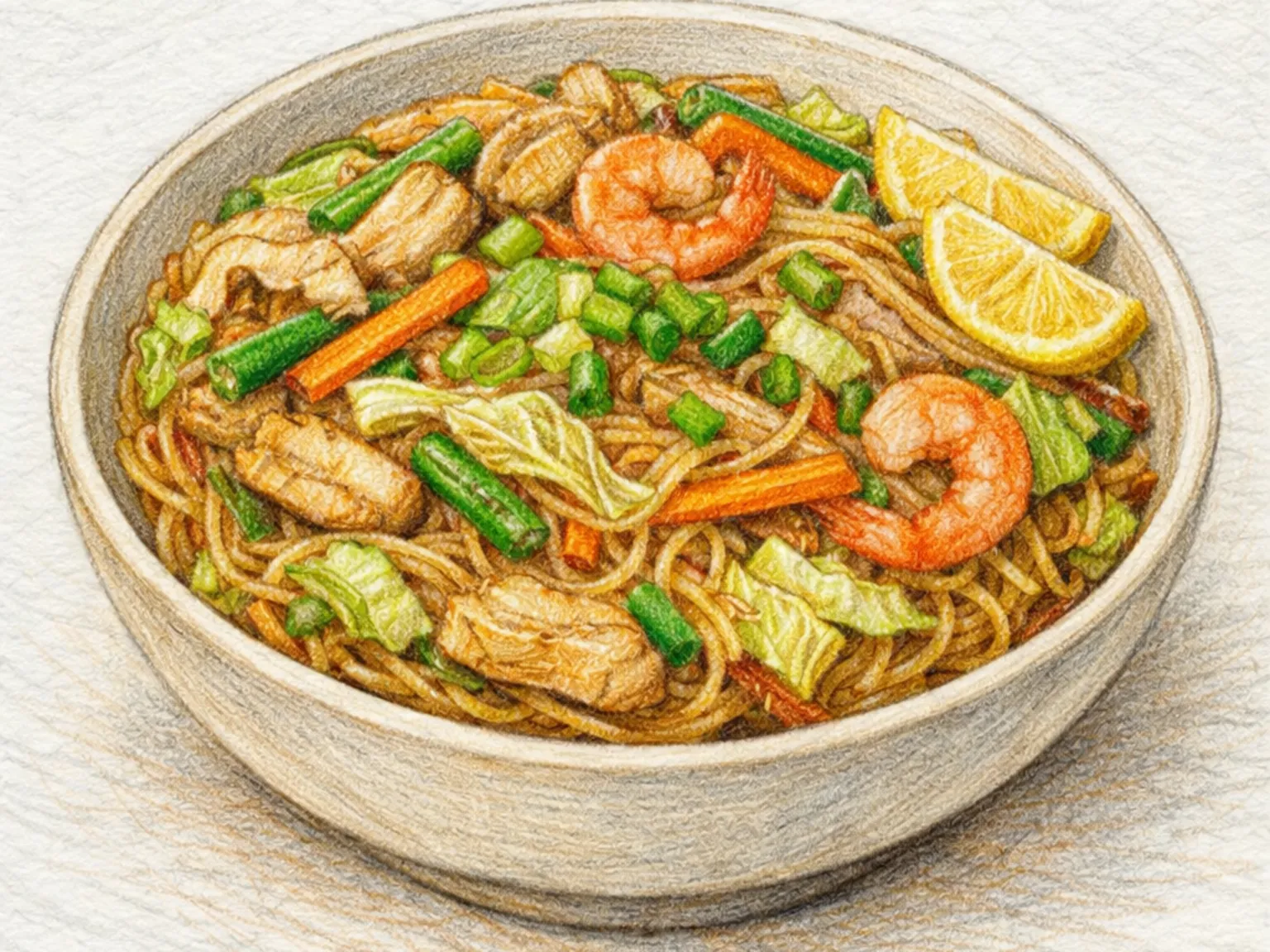
Pancit Bihon (Filipino Stir-Fried Rice Vermicelli with Chicken)

Quick answer

Pancit bihon is the most widely eaten noodle dish in the Philippines, made with thin rice vermicelli stir-fried with meat, vegetables, and a savory soy-fish sauce seasoning.

What makes this special

  • Pancit Bihon features Filipino rice vermicelli stir-fried with chicken, fish sauce, and citrus.
  • Chicken braising broth absorbed by noodles while stir-frying carries deep flavor
  • Calamansi juice cuts the oil and sharpens the finish with bright acidity
Total time
40 min
Level
Easy
Servings
4 servings
Ingredients
8
Calories
430 kcal
Protein
23 g

Key ingredients

rice vermicellichicken breastcabbagecarrotonion

Core cooking flow

  1. 1 Soak 250 g rice vermicelli in lukewarm water for about 10 minutes, just until the strands bend easily.
  2. 2 Boil 200 g chicken breast until cooked through, then shred it along the grain.
  3. 3 Heat a wide pan over medium heat and add 2 tbsp cooking oil.

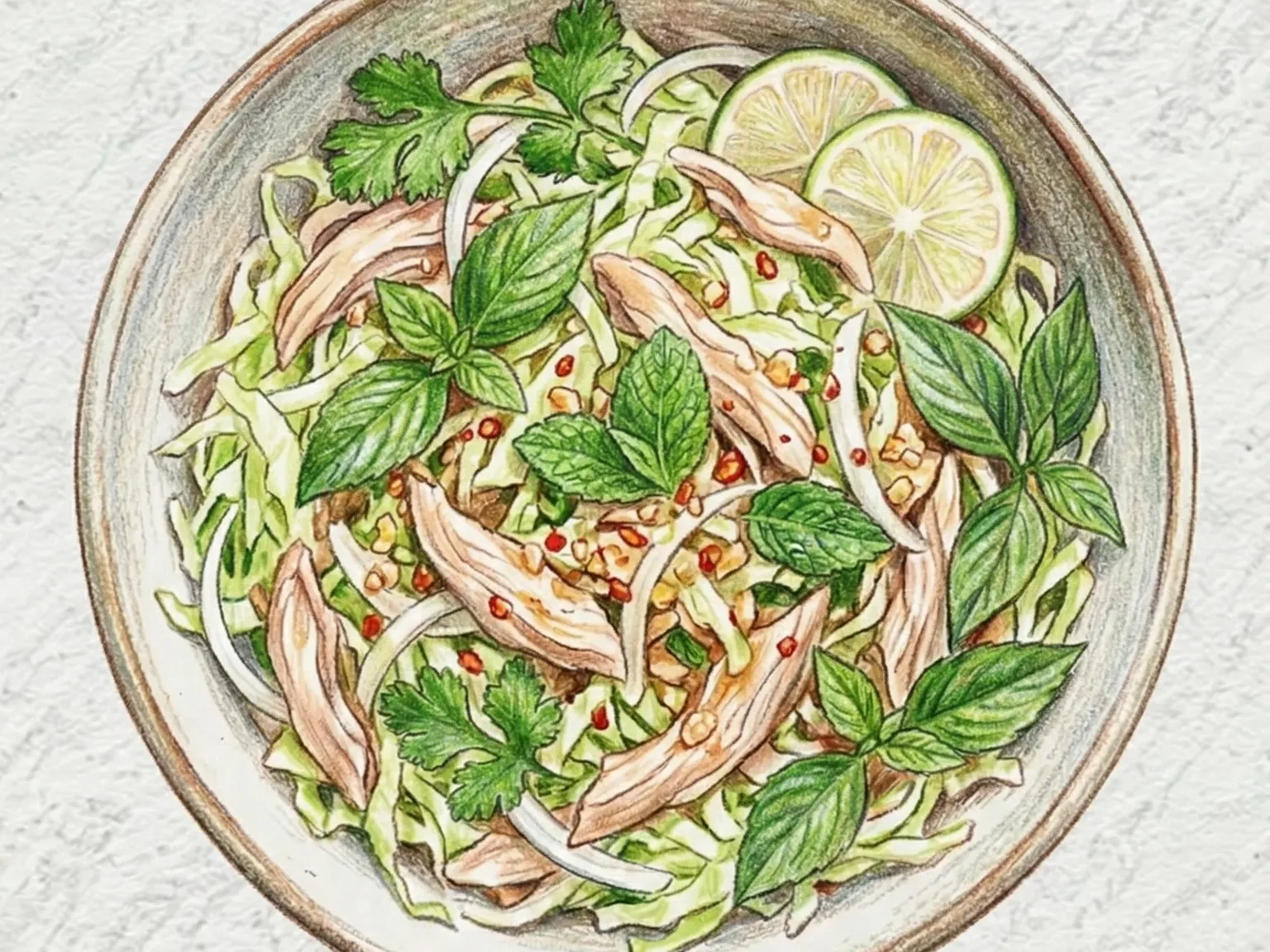
Pancit bihon is the most widely eaten noodle dish in the Philippines, made with thin rice vermicelli stir-fried with meat, vegetables, and a savory soy-fish sauce seasoning. It holds a special place in Filipino culture as a celebration dish - no birthday party is complete without a large platter, symbolizing long life and good fortune. The technique involves boiling chicken to create a broth, then using that broth to cook the noodles in the wok so every strand absorbs savory depth. Shredded cabbage and julienned carrots provide crunch, while a squeeze of calamansi brightens the dish with a tart, floral acidity.

Prep 20min Cook 20min 4 servings

Instructions

Read the steps as a cooking flow: prep, heat, seasoning, doneness control, and finish.

6 steps
  1. 1
    Finish

    Soak 250 g rice vermicelli in lukewarm water for about 10 minutes, just until the strands bend easily.

    Drain before they turn fully soft, because they will finish cooking in the pan.

  2. 2
    Heat

    Boil 200 g chicken breast until cooked through, then shred it along the grain.

    Keep the cooking liquid nearby, since small splashes will help the noodles absorb flavor without clumping or drying out.

  3. 3
    Control

    Heat a wide pan over medium heat and add 2 tbsp cooking oil.

    Stir-fry 100 g onion for 1 to 2 minutes until the edges look translucent, then add the shredded chicken and coat it in the oil.

  4. 4
    Finish

    Raise the heat to high and add 80 g carrot and 150 g cabbage.

    Stir-fry for about 2 minutes, keeping the vegetables bright and lightly wilted rather than soft, so the finished noodles have crunch.

  5. 5
    Season

    Add the drained noodles, then pour in 2 tbsp soy sauce and 1 tbsp fish sauce around the edge of the pan.

    Toss by lifting with chopsticks or tongs so the seasoning coats the strands evenly.

  6. 6
    Finish

    If the noodles feel stiff or dry, add chicken broth or water a spoonful at a time and stir-fry for 2 to 3 minutes.

    Serve when the noodles are tender and the pan is almost dry.

After the steps

Pick a recipe that fits this dish.

Continue with shared ingredients, meal pairings, or a similar method.

Recipes That Go Well With This

More Asian →

Based on shared ingredients and meal pairing

Bihun Goreng (Indonesian Stir-Fried Rice Vermicelli with Sweet Soy)
Shared ingredient: chicken breast Asian

Bihun Goreng (Indonesian Stir-Fried Rice Vermicelli with Sweet Soy)

Bihun goreng is fried rice vermicelli sold at street stalls and warung throughout Indonesia and Malaysia from early morning through midnight. Thin rice noodles soaked just until pliable go into a wok heated until it smokes, alongside garlic, shallots, and a generous spoonful of sambal that sizzles the moment it hits the surface. Kecap manis, the thick Indonesian sweet soy sauce, caramelizes rapidly against the hot metal and wraps each strand in a dark, sticky glaze that is the defining characteristic of the dish. Cabbage, bean sprouts, and sliced carrot are added quickly so they retain their crunch against the softness of the noodles. The technique requires constant lifting and turning to prevent the noodles from breaking or clumping while they absorb the sauce. A fried egg laid on top, its edges lacy from being cooked in very hot oil, is the standard finish. The flavor of bihun goreng rests on four layers stacked one over another: the sweetness of kecap manis, the smokiness from the wok, the heat of the sambal, and the salt of a dash of fish sauce added at the end. The ratio shifts from vendor to vendor but the underlying structure holds across regions.

Bicol Express (Filipino Pork Belly in Spicy Coconut Cream Stew)
Shared ingredient: onion Asian

Bicol Express (Filipino Pork Belly in Spicy Coconut Cream Stew)

Bicol Express takes its name from the train line that once ran between Manila and the Bicol region in southeastern Luzon, an area where coconut and chili peppers appear in quantities that would be considered excessive almost anywhere else in the Philippines. Thinly sliced pork belly simmers in a mixture of coconut milk and coconut cream together with fermented shrimp paste (bagoong), garlic, onion, and a generous measure of both long finger chilies and bird's eye chilies. The liquid reduces slowly over medium heat until the coconut milk splits, releasing its fat into the pan - at that point the pork begins to fry in the rendered coconut oil rather than braise in liquid, and its texture changes noticeably. The finished dish has almost no remaining sauce; a thick, creamy, oily coating clings to every piece of pork and chili. The shrimp paste operates below the surface of the sweetness provided by the coconut, laying down a deep, briny, funky foundation that defines the flavor without announcing itself. The heat from the chilies does not arrive immediately - it accumulates over successive spoonfuls. The combination of coconut, chili, and fermented shrimp reflects an ancient Bicolano flavor structure that predates the dish's catchy modern name by generations. Serving it over steamed white rice, which absorbs the rich coating as it sits on the plate, is the only way to eat it properly.

Pancit Palabok (Filipino Rice Noodles with Annatto Shrimp Sauce)
Serve together Noodles

Pancit Palabok (Filipino Rice Noodles with Annatto Shrimp Sauce)

Pancit palabok is a Filipino celebratory noodle dish built on thin rice noodles blanketed in an orange-hued shrimp sauce. The sauce draws its color from annatto powder, which also contributes a faint earthy sweetness, and its savory backbone from shrimp-shell stock simmered with fish sauce. Boiled egg halves and a squeeze of lime are the traditional garnish, cutting through the richness with acidity. Fried garlic, sliced scallions, and crushed chicharron scattered on top add texture contrast and bring multiple layers of flavor to a single serving. At Filipino birthday parties and holiday gatherings, palabok is presented on a large platter and shared family-style, making it one of the most recognizable celebration dishes in the cuisine.

Pancit Canton (Filipino Stir-Fried Egg Noodles with Chicken and Vegetables)
Similar recipe Noodles

Pancit Canton (Filipino Stir-Fried Egg Noodles with Chicken and Vegetables)

Pancit canton is a Filipino stir-fried egg noodle dish cooked with chicken, carrot, and cabbage in a soy sauce and oyster sauce base. The salty depth of soy sauce and the savory richness of oyster sauce permeate the noodles evenly, and a squeeze of fresh lemon at the end cuts through the oil to leave a clean, bright finish. The noodles are parboiled to roughly seventy percent doneness so they finish cooking in the wok while absorbing the sauce, retaining their springy texture rather than turning soft. Chicken thigh is stir-fried first to render its fat and release its juices into the pan, and that rendered fat then carries the carrot and cabbage through a quick, high-heat toss that preserves their crunch. Small additions of broth or water allow the noodles to absorb the sauce gradually, but too much liquid tips the dish toward soupy rather than stir-fried, so the volume must be controlled carefully. Lemon juice is added only after removing the pan from heat, because its volatile citrus aroma dissipates almost instantly on contact with a hot surface. In the Philippines, long noodles symbolize longevity and a full life, making pancit canton a fixture at birthdays and holiday celebrations.

Serve with this

Korean Grilled Eel Rice Bowl
Rice Medium

Korean Grilled Eel Rice Bowl

Jangeeo deopbap is a bowl of grilled freshwater eel over steamed rice, where the key technique is building up a thick, lacquered glaze through multiple applications of a sweet-salty sauce reduced from soy sauce, mirin, sugar, and ginger juice. The eel starts skin-side down on the grill over medium heat for around five minutes to crisp the skin, then is flipped and basted repeatedly with the sauce as it finishes cooking. A single coat of sauce produces a pale, thin color, so at least two applications and ideally three or more are needed to build the characteristic glossy surface. With each additional coat, the sugars in the sauce react with heat through both Maillard browning and caramelization, layering flavor with every pass. Because freshwater eel is naturally fatty, fat drips during grilling can cause flare-ups, so heat control is important throughout the process. Sansho pepper dusted on at the end cuts through the eel's inherent richness with a sharp, numbing fragrance that balances the sweet glaze and keeps the dish from feeling heavy.

🎉 Special Occasion 🏠 Everyday
Prep 10min Cook 15min 1 servings
Squid Naengi Chojang Salad
Salads Medium

Squid Naengi Chojang Salad

Preparing squid for a seasonal salad involves a quick blanching process in boiling water for less than thirty seconds. This precise timing keeps the seafood tender and prevents it from turning rubbery or tough. Shepherd's purse, or naengi, contributes an earthy aroma characteristic of early spring that complements the oceanic profile of the squid. Crisp lettuce and fresh cucumber provide a crunchy texture that contrasts with the soft seafood pieces. The dressing relies on a combination of gochujang, rice vinegar, and oligosaccharide syrup to create a spicy, tangy, and mildly sweet foundation for the ingredients. To finish the sauce, sesame oil contributes a nutty scent while minced garlic adds a sharp, aromatic quality that integrates the different components. Careful cleaning of the naengi to remove soil and fine roots is necessary before briefly blanching it in salted water to eliminate bitterness and preserve its fragrance. Serving this dish cold during the early spring months highlights the specific seasonal qualities of the ingredients. For variations, scallops or shrimp can replace the squid, as they both pair well with the spicy dressing. Similarly, spring cabbage or wild chives can substitute for the shepherd's purse to maintain the seasonal character of the salad.

🥗 Light & Healthy 🏠 Everyday
Prep 20min Cook 4min 2 servings
Korean Crispy Potato Pancake
Drinks Easy

Korean Crispy Potato Pancake

Gamja-jeon is a Korean potato pancake made by finely grating raw potatoes, letting the starch settle out of the liquid for at least ten minutes, discarding the water, and folding the settled starch back into the pulp to improve binding. Waiting long enough for full starch separation is what gives the batter enough cohesion to hold together when the pancake hits the hot pan. Spreading the batter as thinly as possible produces glass-crisp edges while the center retains a chewy, starchy bite characteristic of potato starch. The first side must cook all the way through and the underside must firm up completely before any attempt to flip, and using two spatulas simultaneously makes the turn fast enough to keep the pancake intact. Frying both sides over medium heat until evenly golden delivers a crust that is crisp on the outside while the center stays moist. A dipping sauce of soy sauce, vinegar, and minced cheongyang green chili cuts through the oily richness with sharpness and heat.

🍺 Bar Snacks ⚡ Quick
Prep 15min Cook 12min 2 servings

Similar recipes

Sisig (Filipino Crispy Chopped Pork with Chili and Calamansi)
Asian Medium

Sisig (Filipino Crispy Chopped Pork with Chili and Calamansi)

Sisig is a Filipino bar food built around chopped pork that is boiled first for tenderness, then pan-fried in butter until the edges turn deeply crisp. Diced onion and fresh chilies are tossed in briefly, adding crunch and a sharp bite that cuts through the richness. Calamansi juice-a small citrus native to the Philippines-brings a tart brightness that lifts the entire dish, while a finishing fold of mayonnaise binds everything together in a creamy coating without dulling the flavor. The mixture is traditionally served on a sizzling cast-iron plate so it arrives at the table still popping and hissing. Each forkful delivers a layered experience: the crunch of the fried pork, the cool tang of citrus, and the lingering heat of the chili. Sisig is inseparable from Filipino drinking culture and remains one of the country's most iconic street-to-table dishes.

🍺 Bar Snacks
Prep 20min Cook 25min 2 servings
Bibingka (Filipino Coconut Rice Cake)
Asian Easy

Bibingka (Filipino Coconut Rice Cake)

Bibingka is a Filipino baked rice cake that belongs almost entirely to the Christmas season, sold warm from clay-pot stalls outside churches after Simbang Gabi, the nine-day series of dawn masses leading up to Christmas Day. For Filipinos, the smell of bibingka cooking over charcoal at four in the morning is inseparable from the feeling of the holiday itself. The batter is made from ground rice flour mixed with coconut milk, eggs, and sugar, then poured into a clay pot lined with fresh banana leaves. The pot sits between two layers of live charcoal - one below and one held above on a metal lid - so both surfaces cook simultaneously. This top-and-bottom heat is what gives bibingka its characteristic crust: lightly charred and fragrant on the outside from the banana leaves, moist and tender within. As the batter cooks, the banana leaves release a vegetal green fragrance that infuses into the rice cake and leaves faint dark marks on the underside. Midway through cooking, slices of salted duck egg are pressed into the surface alongside fresh coconut shavings, then a brush of butter is applied and the cake returns to the heat. During this final pass the sugars in the butter and batter caramelize at the edges, producing a triple wave of banana leaf, coconut, and butter aromas. The finished texture sits somewhere between a glutinous rice cake and a sponge cake - slightly sticky and chewy yet airy and soft. The salted egg cuts through the sweetness and gives each bite a complexity that plain sweetness alone cannot provide. Bibingka vendors outside Philippine churches in December, tending glowing braziers in the pre-dawn darkness, are one of the country's most enduring Christmas images.

🎉 Special Occasion 🧒 Kid-Friendly
Prep 15min Cook 30min 4 servings

Tips

Add small splashes of water if noodles dry out while stir-frying.

Nutrition (per serving)

Calories
430
kcal
Protein
23
g
Carbs
58
g
Fat
11
g