Pancit Palabok (Filipino Rice Noodles with Annatto Shrimp Sauce)
Noodles Medium

Pancit Palabok (Filipino Rice Noodles with Annatto Shrimp Sauce)

Quick answer

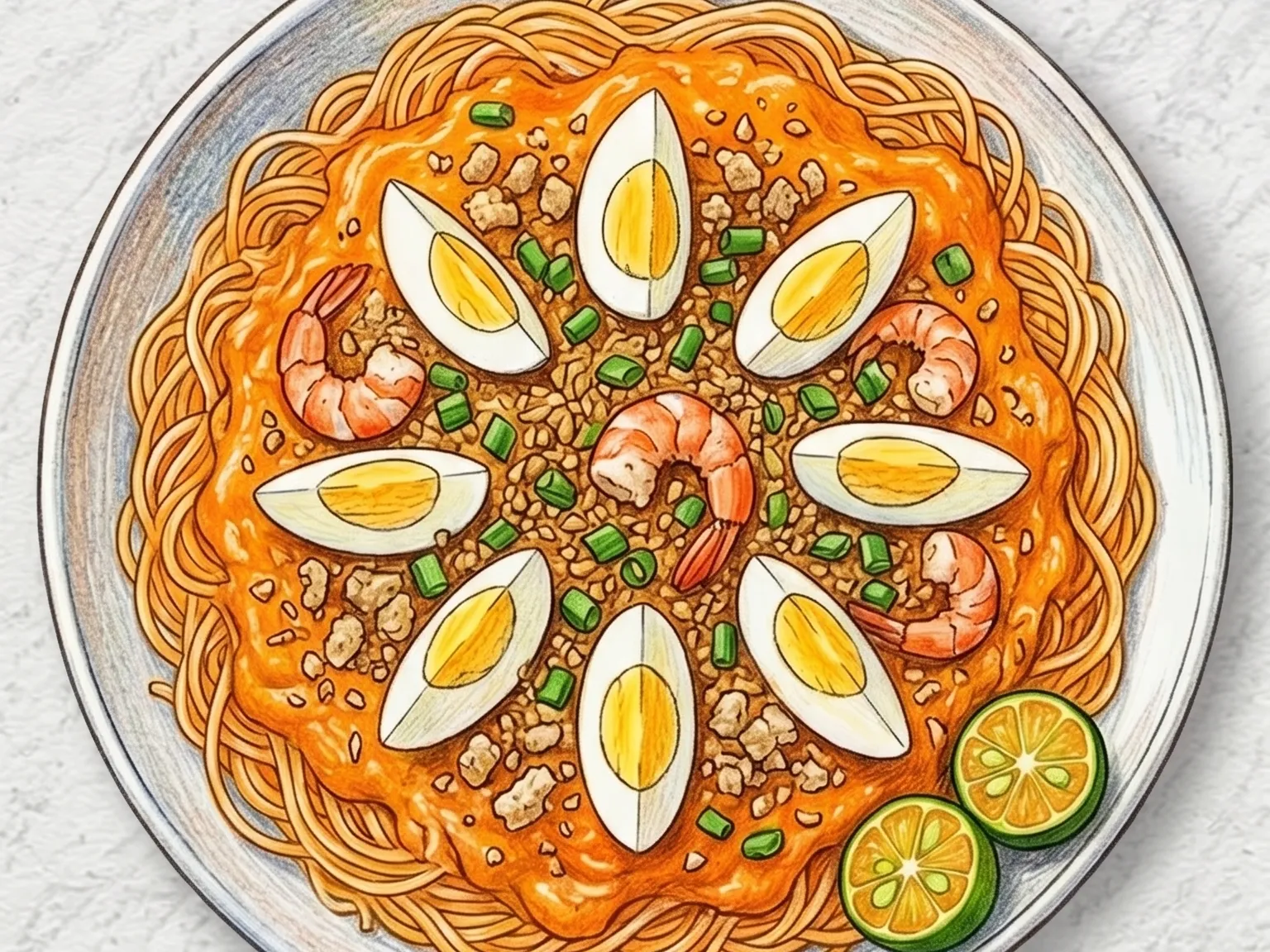
Pancit palabok is a Filipino celebratory noodle dish built on thin rice noodles blanketed in an orange-hued shrimp sauce.

What makes this special

  • Filipino rice noodles blanketed in a shrimp sauce colored with earthy, orange annatto powder.
  • Shrimp shell broth deepens the annatto-orange sauce
  • Fish sauce builds umami base; lime juice cuts through it
Total time
45 min
Level
Medium
Servings
2 servings
Ingredients
8
Calories
560 kcal
Protein
33 g

Key ingredients

rice noodlesshrimpshrimp stockannatto powdergarlic

Core cooking flow

  1. 1 Prepare 220 g rice noodles according to the package, either boiling or soaki...
  2. 2 Peel 180 g shrimp, keeping the meat and shells separate.
  3. 3 Cover the shrimp shells with water and simmer over medium heat for about 10 minutes.

Pancit palabok is a Filipino celebratory noodle dish built on thin rice noodles blanketed in an orange-hued shrimp sauce. The sauce draws its color from annatto powder, which also contributes a faint earthy sweetness, and its savory backbone from shrimp-shell stock simmered with fish sauce. Boiled egg halves and a squeeze of lime are the traditional garnish, cutting through the richness with acidity. Fried garlic, sliced scallions, and crushed chicharron scattered on top add texture contrast and bring multiple layers of flavor to a single serving. At Filipino birthday parties and holiday gatherings, palabok is presented on a large platter and shared family-style, making it one of the most recognizable celebration dishes in the cuisine.

Prep 20min Cook 25min 2 servings
Recipes by ingredient → shrimp garlic

Instructions

Read the steps as a cooking flow: prep, heat, seasoning, doneness control, and finish.

6 steps
  1. 1
    Heat

    Prepare 220 g rice noodles according to the package, either boiling or soaking until flexible but not mushy.

    Rinse briefly with cool water, drain thoroughly, and keep them loose so they do not clump before saucing.

  2. 2
    Finish

    Peel 180 g shrimp, keeping the meat and shells separate.

    Pat the shrimp dry so it cooks cleanly in the sauce, and reserve the shells because they are the flavor base for the stock.

  3. 3
    Control

    Cover the shrimp shells with water and simmer over medium heat for about 10 minutes.

    When the liquid smells savory and looks lightly colored, strain it and measure 700 ml of shrimp stock for the sauce.

  4. 4
    Control

    Set a pan over medium-low heat and saute 1 tablespoon garlic for about 1 minute, just until fragrant.

    Before it browns, stir in 1 teaspoon annatto powder so the oil and garlic turn evenly orange.

  5. 5
    Control

    Pour in 700 ml shrimp stock and 1 tablespoon fish sauce, then bring it to a steady simmer over medium heat.

    Add the shrimp meat, cook about 2 minutes, and reduce until the sauce lightly coats a spoon.

  6. 6
    Finish

    Arrange the drained rice noodles on a platter and spoon the hot shrimp sauce generously over the top.

    Add 2 boiled eggs, cut as desired, and serve with 1 lime so the juice can be squeezed on just before eating.

After the steps

Pick a recipe that fits this dish.

Continue with shared ingredients, meal pairings, or a similar method.

Recipes That Go Well With This

More Noodles →

Based on shared ingredients and meal pairing

Vietnamese Mi Quang (Turmeric Noodles with Pork and Shrimp)
Shared ingredient: shrimp Noodles

Vietnamese Mi Quang (Turmeric Noodles with Pork and Shrimp)

Mi quang is a noodle dish from the Quang Nam province in central Vietnam, built on wide, turmeric-tinted rice noodles dressed with pork, shrimp, and a deliberately small amount of intensely concentrated broth. The defining characteristic of the dish is that ratio. Where most noodle soups are meant to be submerged, mi quang uses just enough broth to moisten the noodles, making it closer to a dressed noodle than a soup bowl. Pork is marinated in fish sauce and turmeric before cooking, which simultaneously tints the meat yellow and saturates it with fermented savory depth. Simmering it briefly with chicken stock draws out a small volume of broth with a concentrated, meaty intensity that would taste overwhelmingly strong on its own but calibrates perfectly when distributed across a full serving of noodles. Shrimp are kept separate and cooked quickly by sautéing or grilling rather than simmering, which keeps them springy rather than soft. The noodles are cooked, rinsed under cold water so they do not stick, and placed in a bowl before the meat, shrimp, and broth go on top. Bean sprouts add a raw crunch that contrasts directly with the soft noodles, while crushed roasted peanuts contribute a dry, nutty texture that absorbs some of the broth. A squeeze of lime at the end sharpens the entire flavor profile and balances the richness.

Korean-Chinese Seafood Gravy Noodles
Shared ingredient: shrimp Noodles

Korean-Chinese Seafood Gravy Noodles

Ulmyeon is a Korean-Chinese noodle dish in which fresh wheat noodles are topped with a thick, white starch-thickened gravy loaded with seafood and vegetables. Shrimp, squid, and other shellfish give the gravy a pronounced umami backbone. Beaten egg is swirled into the sauce toward the end, adding body and soft curds throughout. Unlike jjamppong, the dish carries little to no chili heat. Preparation takes about 40 minutes, and getting the starch slurry to the right consistency is the most important step.

Korean Mushroom Japchae (Shiitake Glass Noodle Stir-Fry)
Serve together Side dishes

Korean Mushroom Japchae (Shiitake Glass Noodle Stir-Fry)

Beoseot japchae replaces beef with shiitake mushrooms as the primary source of savory depth, making it a staple of Buddhist temple cuisine and vegetarian tables alike. Sweet potato noodles are soaked and boiled, then rinsed in cold water immediately to lock in a firm, springy texture. Shiitake, spinach, carrot, and onion are each cooked separately - their moisture levels and heat tolerances differ enough that combining them prematurely flattens every component. Soy sauce, sugar, minced garlic, and sesame oil bring the noodles and vegetables together, and the finished dish rests for ten minutes so the seasoning penetrates the noodles evenly. The result is a japchae where the mushroom carries genuine umami weight without any meat.

Pancit Canton (Filipino Stir-Fried Egg Noodles with Chicken and Vegetables)
Similar recipe Noodles

Pancit Canton (Filipino Stir-Fried Egg Noodles with Chicken and Vegetables)

Pancit canton is a Filipino stir-fried egg noodle dish cooked with chicken, carrot, and cabbage in a soy sauce and oyster sauce base. The salty depth of soy sauce and the savory richness of oyster sauce permeate the noodles evenly, and a squeeze of fresh lemon at the end cuts through the oil to leave a clean, bright finish. The noodles are parboiled to roughly seventy percent doneness so they finish cooking in the wok while absorbing the sauce, retaining their springy texture rather than turning soft. Chicken thigh is stir-fried first to render its fat and release its juices into the pan, and that rendered fat then carries the carrot and cabbage through a quick, high-heat toss that preserves their crunch. Small additions of broth or water allow the noodles to absorb the sauce gradually, but too much liquid tips the dish toward soupy rather than stir-fried, so the volume must be controlled carefully. Lemon juice is added only after removing the pan from heat, because its volatile citrus aroma dissipates almost instantly on contact with a hot surface. In the Philippines, long noodles symbolize longevity and a full life, making pancit canton a fixture at birthdays and holiday celebrations.

Serve with this

Korean Chive Clam Jeon (Garlic Chive and Clam Seafood Pancake)
Pancakes Medium

Korean Chive Clam Jeon (Garlic Chive and Clam Seafood Pancake)

Buchu-bajirak-jeon is a seafood pancake of garlic chives and clam meat, pan-fried in a batter made with a mix of all-purpose pancake flour and rice flour. The rice flour addition increases the chew and gives the finished jeon a slightly more resilient texture than plain flour batters. Clam meat releases a briny, oceanic liquid as it cooks that seeps into the batter and flavors it throughout, while the chives add a sharp, grassy counterpoint. Minced garlic and diagonally sliced cheongyang chili worked into the batter suppress any fishiness and build a layered fragrance. A generous amount of oil in the pan over medium heat produces edges that crisp and brown like the outside of a fritter. Waiting until the bottom is fully set before flipping prevents the pancake from tearing. Served with soy dipping sauce or a seasoned soy mixture, the clean salinity of the clams comes through clearly.

🍺 Bar Snacks 🏠 Everyday
Prep 25min Cook 15min 4 servings
Bellflower Root, Chestnut & Perilla Salad
Salads Medium

Bellflower Root, Chestnut & Perilla Salad

Doraji chestnut perilla salad brings together blanched bellflower root, boiled chestnuts, and Korean pear in a combination that captures the flavors of Korean autumn. Blanching doraji tempers its raw bitterness to a clean, gentle edge and softens its crunch just enough to make it pleasant to eat without cooking out its character entirely. Boiled chestnut contributes a starchy warmth and sweetness that is entirely different from fruit sugars - it is dense and slightly powdery, more comforting than bright. Korean pear introduces cool juice and a delicate crunch that refreshes the palate between bites of root and nut. Ground perilla seeds tie the ingredients together with a nutty, faintly grassy aroma rooted in their omega-3 fatty acid content, a flavor profile that cannot be replicated by sesame alone. The dressing is built from apple cider vinegar for fruit acidity, honey for sweetness, and olive oil to emulsify and smooth the transitions between components. Both bellflower root and chestnuts peak in autumn, so the salad is at its most rewarding when made with freshly harvested seasonal ingredients. The color combination of ivory doraji, cream-colored chestnut, and pale pear gives the bowl a quiet, autumnal visual quality.

🥗 Light & Healthy 🎉 Special Occasion
Prep 25min Cook 5min 4 servings
Korean Lettuce Root Kimchi
Kimchi Hard

Korean Lettuce Root Kimchi

Godeulppaegi kimchi is a seasonal Korean kimchi made from the bitter wild herb godeulppaegi (Korean lettuce root), which is soaked in salted water for about a week to extract most of its sharp bitterness before being dressed in gochugaru, anchovy fish sauce, and glutinous rice paste for fermentation. The extended soak rounds off the bitter edge so that only a pleasant, lingering bitterness remains after fermentation, creating a complex interplay with the lactic acidity. The roots have a chewy, fibrous bite while the leaves turn soft, giving each stalk a dual texture in a single bite. This is a regional autumn kimchi from the Jeolla and parts of Gyeongsang provinces, traditionally prepared in fall to last through winter. The preparation is labor-intensive, requiring patient soaking and careful seasoning, but the resulting depth of flavor is what has kept this variety treasured across generations of Korean home cooking.

🎉 Special Occasion 🍱 Lunchbox
Prep 60min Cook 10min 4 servings

Similar recipes

Pancit Bihon (Filipino Stir-Fried Rice Vermicelli with Chicken)
Asian Easy

Pancit Bihon (Filipino Stir-Fried Rice Vermicelli with Chicken)

Pancit bihon is the most widely eaten noodle dish in the Philippines, made with thin rice vermicelli stir-fried with meat, vegetables, and a savory soy-fish sauce seasoning. It holds a special place in Filipino culture as a celebration dish - no birthday party is complete without a large platter, symbolizing long life and good fortune. The technique involves boiling chicken to create a broth, then using that broth to cook the noodles in the wok so every strand absorbs savory depth. Shredded cabbage and julienned carrots provide crunch, while a squeeze of calamansi brightens the dish with a tart, floral acidity.

🏠 Everyday 🎉 Special Occasion
Prep 20min Cook 20min 4 servings
Korean Warm Perilla Mushroom Rice Noodles
Noodles Easy

Korean Warm Perilla Mushroom Rice Noodles

Deulkkae beoseot on ssalguksu is a warm Korean noodle soup built on kelp stock simmered with oyster and shiitake mushrooms, then enriched with ground perilla seeds into a creamy, opaque broth. Rice noodles are smoother and more slippery than wheat varieties, sliding through the rich liquid with ease, while the mushrooms provide a firm, chewy counterpoint. Adding the perilla powder at the very end preserves its roasted, nutty fragrance on the surface of each spoonful rather than cooking it off. Soup soy sauce seasons the broth cleanly without the heaviness of fermented soybean paste. Using dried shiitake mushrooms instead of fresh ones and soaking them in cold water first draws out a concentrated mushroom stock that deepens the base significantly. Substituting king oyster mushrooms cut into thick rounds for oyster mushrooms adds more substantial chew. The dish contains no wheat and suits gluten-free diets. It is particularly fitting on cold days as a light but warming meal.

🥗 Light & Healthy 🏠 Everyday
Prep 20min Cook 20min 4 servings
Korean Seafood Rice Bowl (Shrimp Squid Clam Starchy Sauce Bowl)
Rice Easy

Korean Seafood Rice Bowl (Shrimp Squid Clam Starchy Sauce Bowl)

Haemul deopbap is a Korean seafood rice bowl built on a thick, glossy sauce that starts with garlic stir-fried over high heat before shrimp, squid, and clams are added and tossed together. Oyster sauce and soy sauce form the seasoning base - the oyster sauce brings a rounded, caramel-like sweetness and body, while the soy adds depth and color. A cornstarch slurry stirred in at the end transforms the thin pan juices into a glossy, clingy sauce that coats every piece of seafood and, when ladled over rice, seeps downward slowly rather than running off. The key to keeping the seafood tender is to add it last and remove the pan from heat before it overcooks - squid turns rubbery within seconds of going past done, and shrimp loses its snap if left even a moment too long. Clams contribute their natural briny-sweet liquor to the sauce, adding a layer of umami that oyster sauce alone cannot replicate. Browning the garlic first in oil before anything else goes into the pan reduces any raw edge in the flavor and lays a savory, aromatic foundation for the entire dish. The whole process takes about 25 minutes from start to finish, making this one of the more practical weeknight meals in the Korean home kitchen.

🏠 Everyday ⚡ Quick
Prep 15min Cook 10min 2 servings

Tips

Using shrimp-shell stock gives much deeper flavor.
Aim for a sauce that lightly coats the back of a spoon.

Nutrition (per serving)

Calories
560
kcal
Protein
33
g
Carbs
66
g
Fat
16
g