Panna Cotta
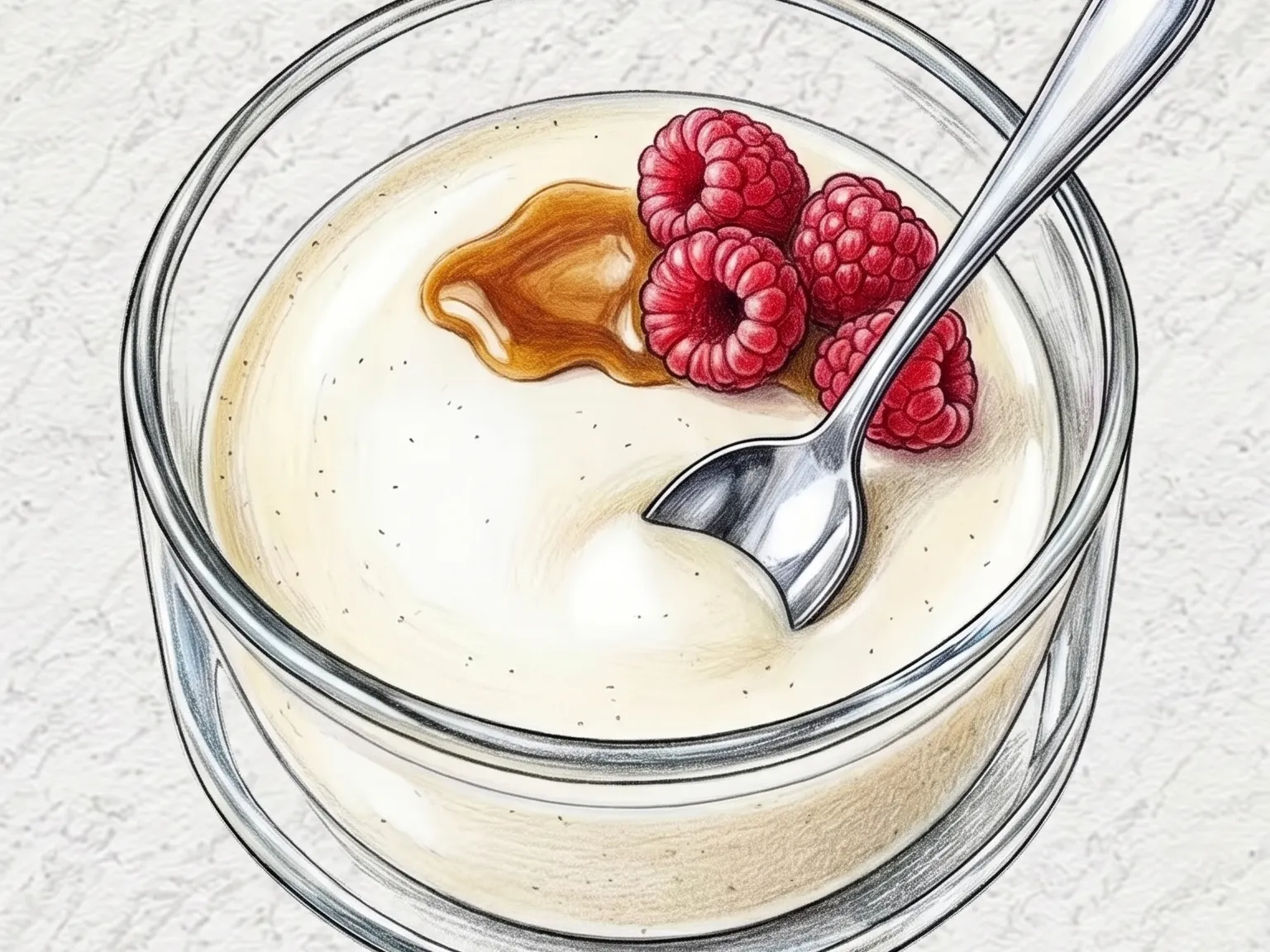
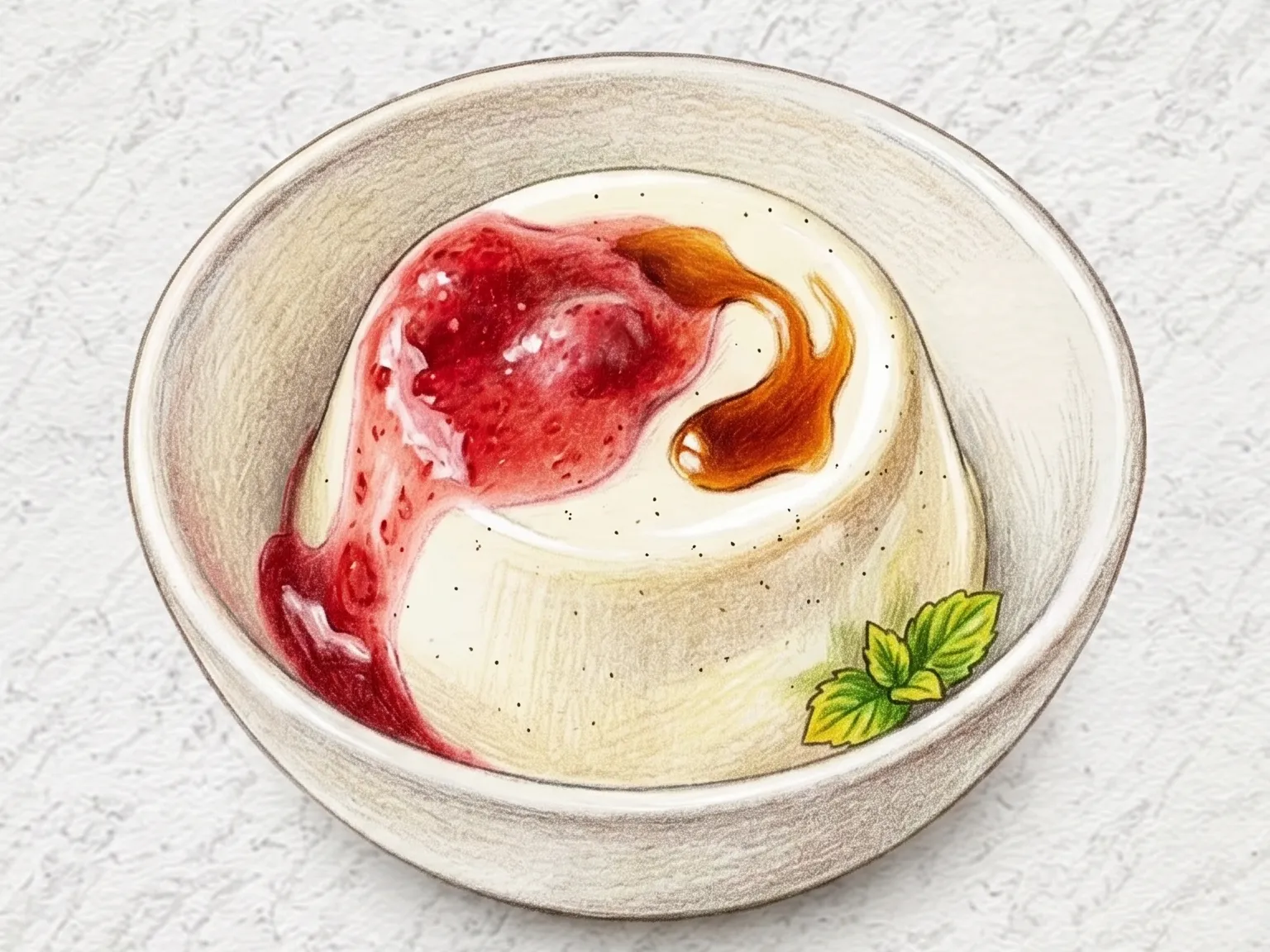
Panna cotta is a cold dessert from the Piedmont region of Italy, made by gently warming heavy cream with vanilla and sugar, then setting it with gelatin. The gelatin ratio is critical - too much produces a rubbery texture like firm pudding, while too little leaves it unable to hold its shape. A properly made panna cotta trembles when nudged with a spoon yet scoops cleanly. The cream must be heated only until small bubbles appear at the edges, never brought to a full boil, which would cause the fat to separate and ruin the silky consistency. Strawberry coulis or caramel sauce provides contrast - fruit acidity or bittersweet caramel against the rich cream. Using a whole vanilla bean rather than extract yields a more complex fragrance, and the dark seeds suspended in the white cream create visual appeal.
Adjust Servings
Instructions
- 1
Bloom gelatin in cold water for 5 minutes.
- 2
Heat cream, milk, and sugar gently until dissolved.
- 3
Remove from heat and stir in gelatin and vanilla until fully dissolved.
- 4
Strain into molds and chill for at least 4 hours.
- 5
Top with sliced strawberries and serve chilled.
As an Amazon Associate, we may earn from qualifying purchases.
Tips
Nutrition (per serving)
More Recipes

Vanilla Panna Cotta
Heavy cream and milk are gently heated with sugar and vanilla, then set with gelatin into a chilled Italian dessert that requires no oven at all. After four hours of refrigeration, the mixture firms to a silky consistency that trembles on the spoon and dissolves on the tongue. The vanilla fragrance is carried by the high fat content of the cream, releasing slowly with each bite rather than hitting all at once. Sweetness is kept moderate so the dairy richness speaks for itself, leaving a clean finish. To unmold, a brief dip of the cup in warm water loosens the edges. Berry coulis or salted caramel sauce over the top adds color and a contrasting flavor note. Gelatin must be dissolved off the heat to preserve its setting strength.

Classic Tiramisu
Classic tiramisu layers ladyfingers briefly soaked in a syrup of cooled espresso and Marsala wine with a cream made from egg yolks whipped with sugar over a bain-marie, then folded with mascarpone and softly whipped heavy cream. Dipping the ladyfingers for only about one second prevents them from absorbing too much liquid and collapsing. Whipping the cream to soft peaks and folding it gently keeps the filling light rather than dense. The bittersweet depth of espresso plays against the rich, buttery smoothness of mascarpone, creating a flavor contrast that develops further with chilling. A minimum of four hours in the refrigerator - ideally overnight - allows the layers to meld into a cohesive, melt-in-the-mouth texture.

Chestnut Espresso Tiramisu
Chestnut espresso tiramisu folds chestnut puree into the mascarpone cream, adding an autumnal dimension to the classic layered dessert. Savoiardi biscuits soaked in strong espresso are layered with a cream made from mascarpone whipped with chestnut puree and sugar. The chestnut contributes a mellow, nutty sweetness that tempers the espresso's bitterness rather than competing with it, giving the cream a denser body than the traditional version. Cocoa powder dusted on top adds another layer of bitterness, and each spoonful pulls through all the strata. Overnight refrigeration is essential, allowing the espresso to migrate into the cream layers and the chestnut flavor to deepen into a cohesive whole.

Bam Tiramisu (Chestnut Tiramisu)
Bam tiramisu layers espresso-soaked ladyfingers with a chestnut-enriched mascarpone cream, merging the classic Italian dessert format with a Korean autumn ingredient. Boiled chestnuts are pureed until smooth and folded into whipped mascarpone and heavy cream to form the filling. The ladyfinger biscuits, briefly dipped in espresso, soften as they absorb moisture during refrigeration. A dusting of cocoa powder on top bridges the coffee and chestnut flavors. The dessert requires no baking and sets entirely in the refrigerator over four or more hours. Assembling it in individual cups rather than a large dish makes portioning straightforward and adds a layered visual when served.

Dalgona Tiramisu (Korean Whipped Coffee Cream Layered Tiramisu)
This tiramisu borrows the whipped dalgona coffee technique that became a global trend and layers it into a classic Italian dessert structure. Instant coffee, sugar, and hot water are whipped into a thick, airy foam that intensifies the coffee presence far beyond what a simple espresso soak provides. Between layers of mascarpone cream and espresso-dipped ladyfingers, the dalgona foam adds both flavor concentration and a mousse-like lightness. After at least four hours of refrigeration, the layers meld together so that each spoonful captures biscuit, cream, and coffee foam simultaneously. A final dusting of cocoa powder across the top adds visual polish and a faint bitterness. For those who prefer a less sweet version, reducing the dalgona syrup brings the coffee's natural bitterness forward.

Spaghetti Carbonara
Carbonara is a Roman pasta that relies on egg yolks, Pecorino Romano, and black pepper emulsified with hot pasta to form its sauce - no cream involved. Guanciale or bacon is rendered slowly over low heat to release its fat, which coats the drained spaghetti before the egg-cheese mixture is tossed in off the heat. The starch in reserved pasta water acts as the emulsifier that binds cheese protein and egg fat into a glossy, clinging sauce. Coarsely ground black pepper adds a sharp, aromatic edge over the rich base of cheese and cured pork. The dish must be served immediately because the sauce continues to thicken as it cools, losing the silky consistency that defines a properly made carbonara.