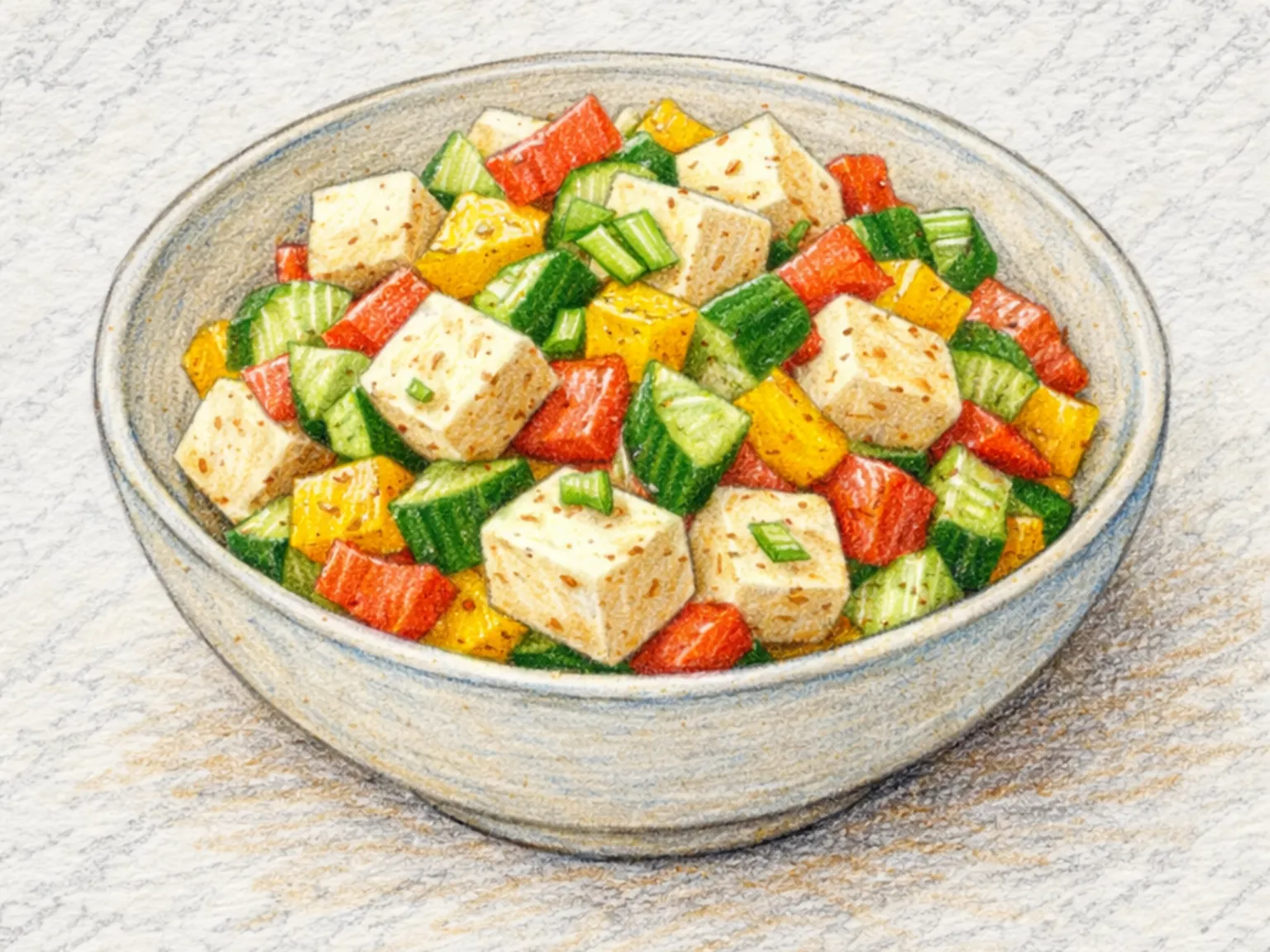
Korean Tofu and Bell Pepper Salad
Quick answer
- Total time
- 15 min
- Level
- Easy
- Servings
- 2 servings
- Ingredients
- 10
About this dish
Coarse, soft lumps of tofu sit between thin strips of red and yellow pepper and cucumber, and each bite alternates between creamy and crisp.
Read more
The soy and vinegar dressing is a small amount, and any water left on the tofu or vegetables thins it quickly and pools at the bottom of the bowl.
Ingredients
Instructions
- 1
Bring a large pot of water to a boil.
Add the 300 g tofu and blanch for 1 minute to shed the raw smell while keeping soft texture. Lift onto a kitchen towel for 5 minutes to cool and drain.
- 2
Julienne 60 g each of red and yellow bell pepper plus 70 g cucumber into thin 5 cm strips.
Slice 40 g onion, soak in cold water for 3 minutes to mellow the bite, then drain and pat dry.
- 3
Whisk 15 ml soy sauce, 10 ml vinegar, 8 ml sesame oil, and 4 g minced garlic in a small bowl.
The 3-to-2 soy-vinegar ratio gives the dressing savory depth balanced by enough tartness to brighten the tofu.
- 4
Place drained tofu in a large bowl and crumble by hand into rough 3 to 4 cm pieces, keeping some larger for contrast.
Blot the peppers, cucumber, and onion dry with a kitchen towel and lay over the tofu.
- 5
Pour the dressing into the bowl and fold with a spatula or clean hands using gentle upward strokes for 10 seconds, keeping the tofu pieces intact. Scatter 4 g sesame seeds evenly over the top to finish.
- 6
Cover with plastic wrap and chill in the refrigerator for 10 minutes.
The cold allows the soy-vinegar dressing to soak deeper into the tofu and tightens the vegetable strips for a crisper bite. Plate while still cold and serve immediately.
Official cooking and safety guidance
Public-agency cooking and food safety guidance that applies to this recipe.
Official cooking and safety guidance
-
Storage and reheating
Refrigerate leftovers in shallow containers within 2 hours and use them within 3 to 4 days. Reheat the center to 74°C.
Source: USDA Food Safety and Inspection Service. Leftovers and Food Safety
Sources checked 2026-07-22
Use-up ingredient planner
Turn these ingredients into two more meals
The overlap excludes basic seasonings. Open the next recipe and your selected dishes will stay with you.
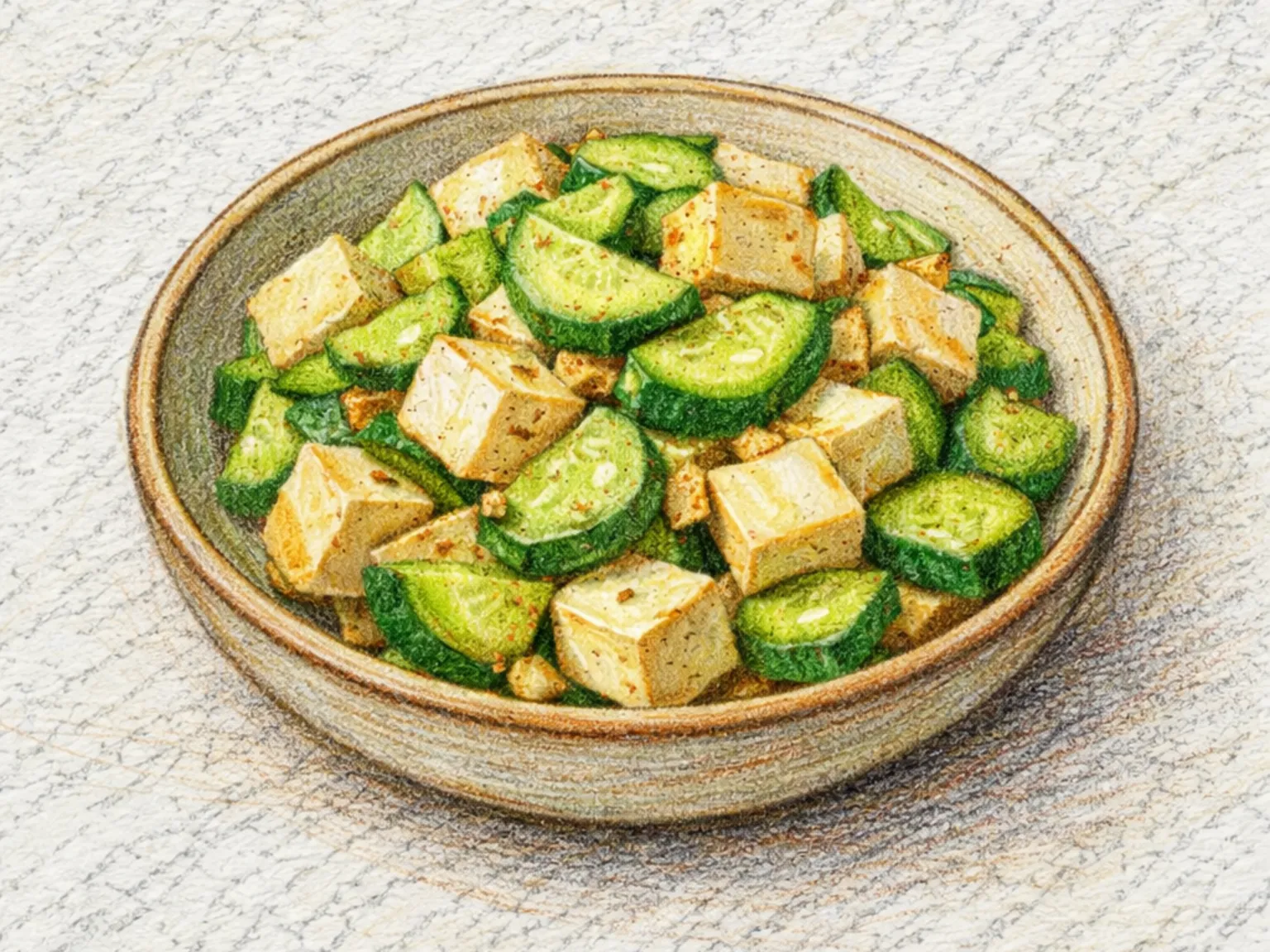
Korean Oi Dubu Bokkeum (Cucumber Tofu Stir-fry)
firm tofu, cucumber
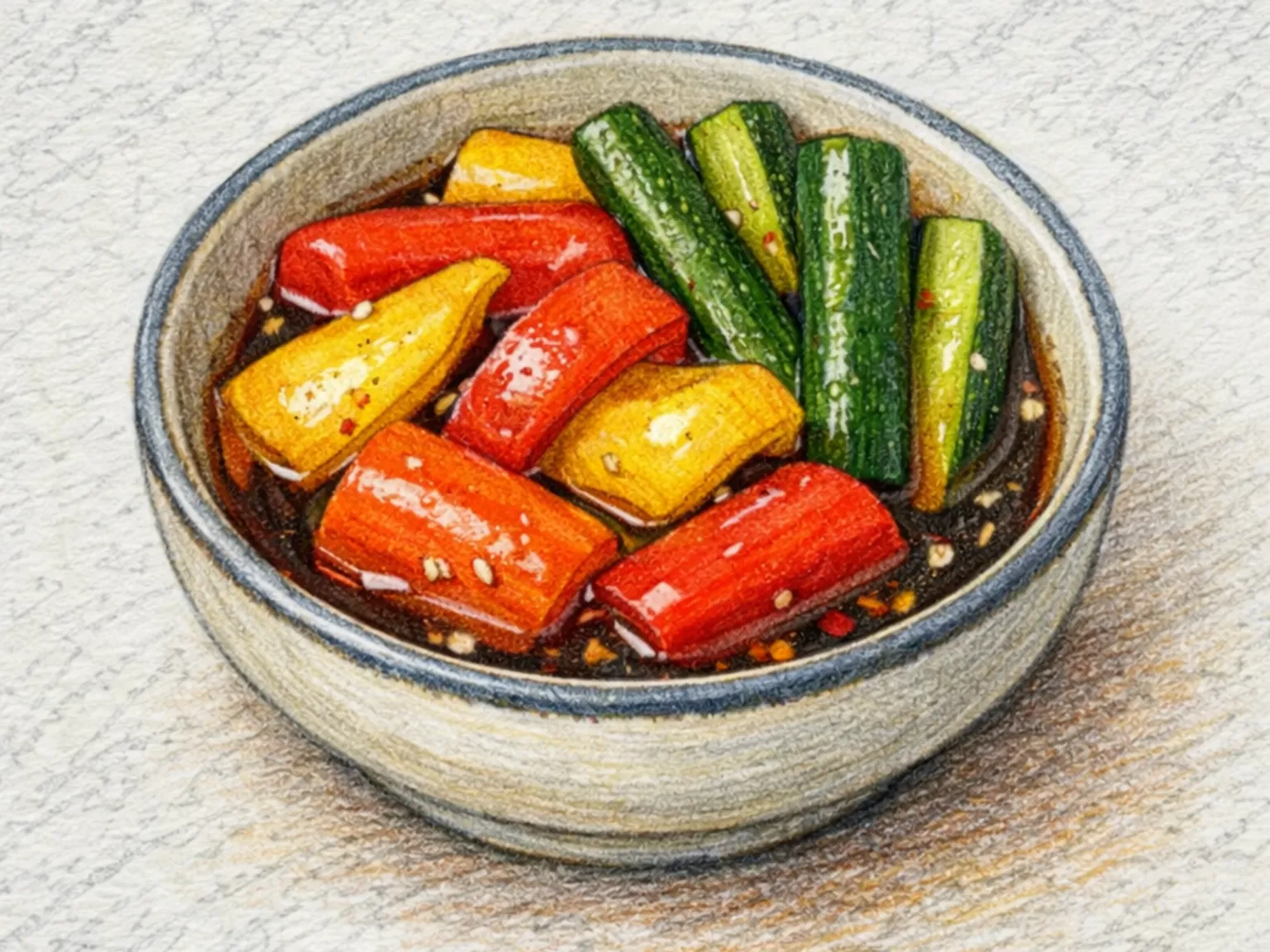
Korean Bell Pepper Pickles
red bell pepper, yellow bell pepper
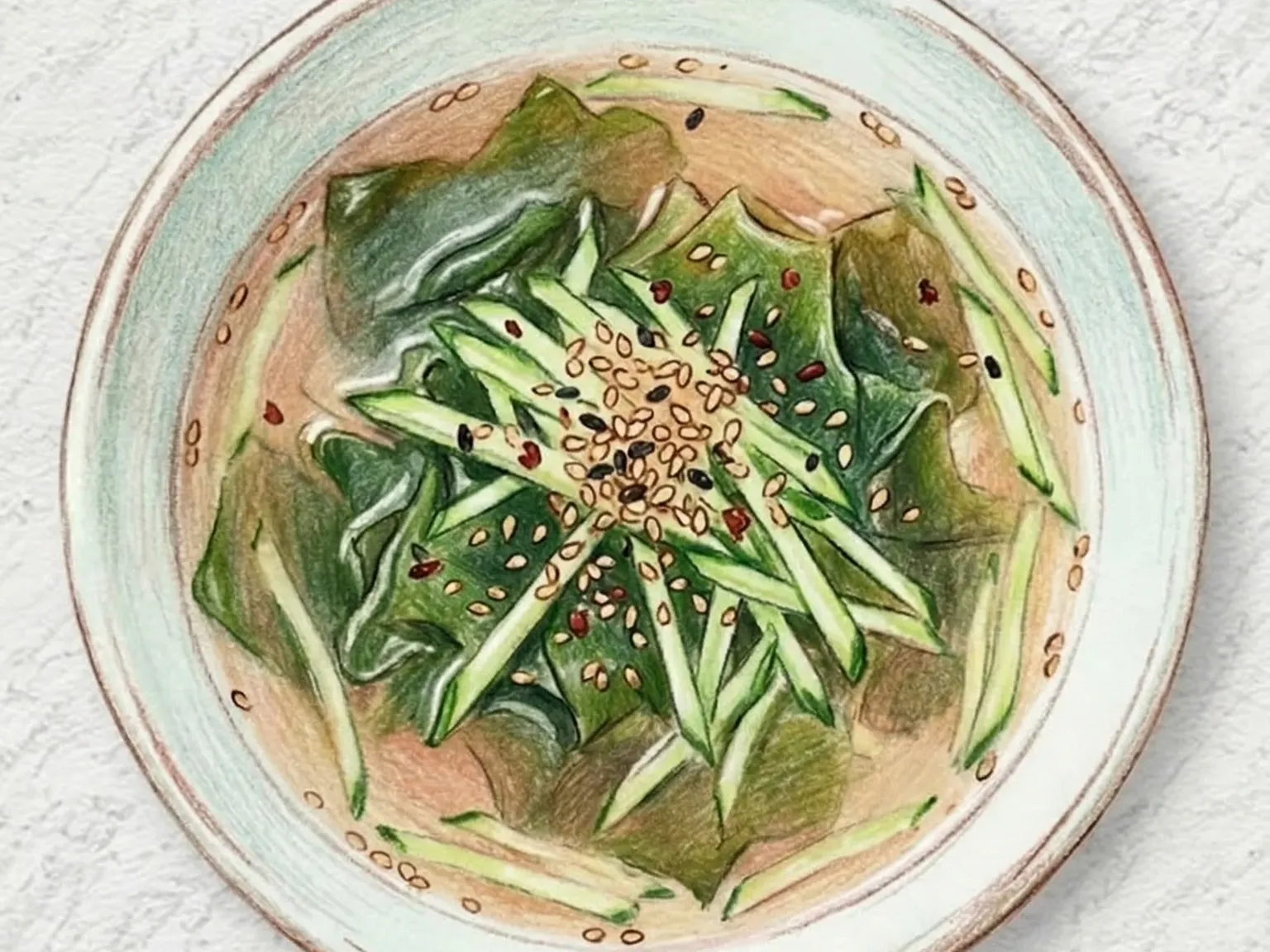
Korean Chilled Seaweed Soup
cucumber, onion