Korean Seasoned Green Laver
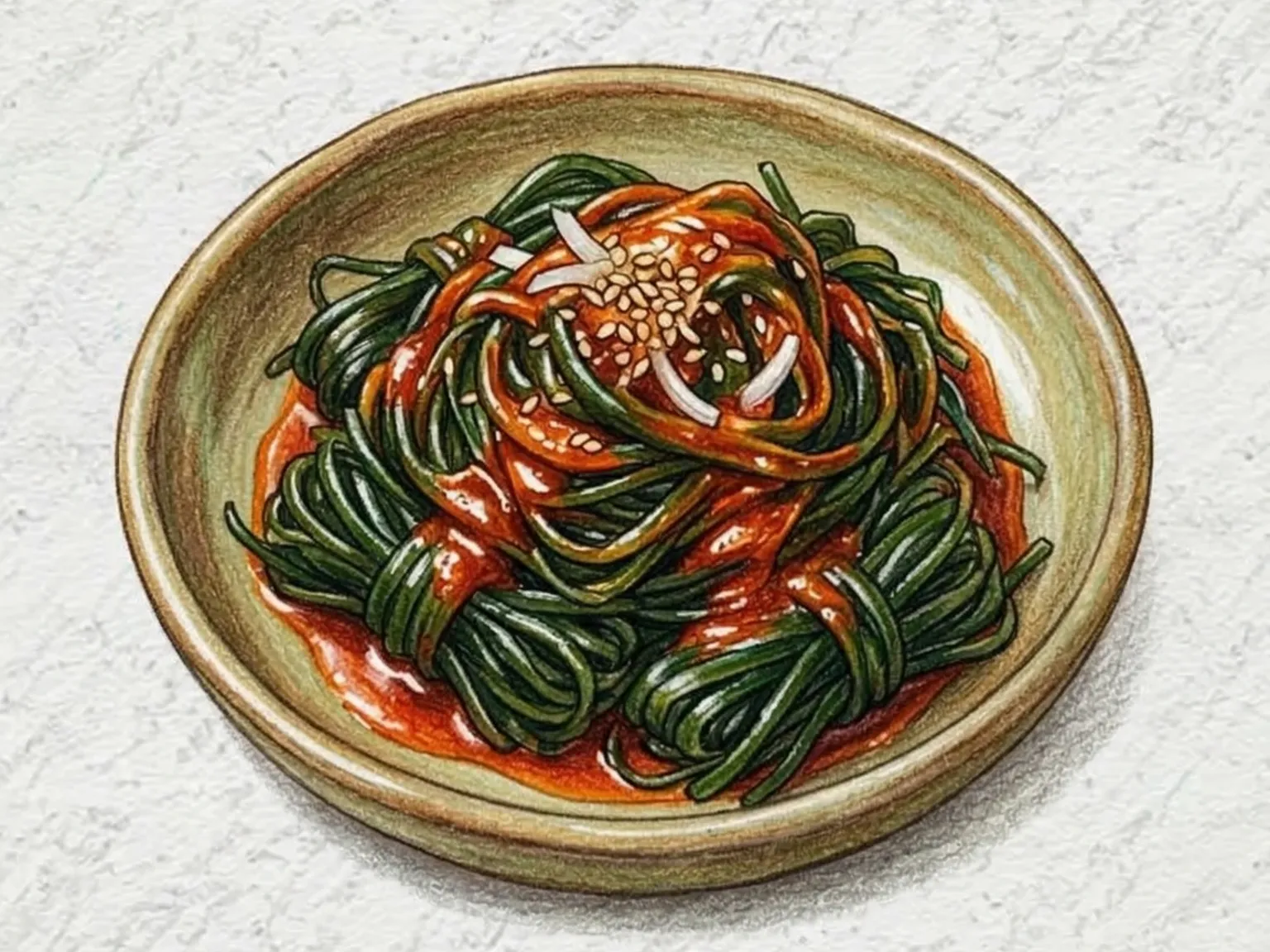
Parae-muchim dresses winter-season green laver in a vinegared gochujang sauce that balances the seaweed's natural brininess with sweet, sour, and spicy notes. The laver must be washed at least five times with fresh water to remove every grain of sand embedded in its delicate fronds. A brief 10-second blanch in boiling water tames any fishy undertone while keeping the texture soft and slippery. The dressing - gochujang, vinegar, sugar, minced garlic, and sesame oil - clings to the damp strands, coating them in a glossy, reddish glaze. Each bite delivers a wave of ocean flavor followed by the slow warmth of the chili paste.
Adjust Servings
Instructions
- 1
Wash green laver multiple times to remove sand and debris.
- 2
Briefly blanch in boiling water for 10 seconds and rinse in cold water.
- 3
Gently squeeze out water and cut to a manageable length.
- 4
Mix gochujang, vinegar, sugar, garlic, and sesame oil for the sauce.
- 5
Gently toss laver with sauce and top with sesame seeds.
As an Amazon Associate, we may earn from qualifying purchases.
Tips
Nutrition (per serving)
More Recipes

Korean Seasoned Gamtae Seaweed
Gamtae is a green seaweed harvested from Korea's southern coast - primarily around Wando and Jangheung - during winter months. Thinner and more delicate than gim (roasted seaweed), it carries a deeper oceanic perfume. Dried gamtae sheets are torn into large pieces and tossed for no more than twenty seconds with soy sauce, vinegar, sesame oil, gochugaru, sugar, and garlic - over-handling causes the fragile fronds to disintegrate into mush. The vinegar's acidity lifts the seaweed's natural brininess into something bright and clean. Fresh gamtae appears only in winter markets, but the dried form works year-round as a quick banchan.

Korean Seasoned Green Seaweed
Cheonggak is a branching green seaweed from Korea's southern coast, prized for its oceanic perfume and cartilage-like crunch. A 10-second blanch brightens the color without destroying its snap. Squeezed and cut to finger lengths, it is dressed in a vinegar-forward sauce with soy, gochugaru, garlic, and sugar that cuts through the brininess. The seaweed must be served immediately - its texture collapses within hours. A specialty of Jeollanam-do coastal markets in winter and early spring.

Korean Green Laver Pancake
Parae-jeon is a Korean pancake that features 80 grams of fresh green laver folded into a pancake-mix batter alongside sliced onion and chopped green chili. Rinsing the laver two to three times removes sand and grit without stripping its briny ocean aroma. Keeping the batter on the thick side concentrates the seaweed flavor, preventing it from washing out during cooking. Pan-fried over medium heat for two to three minutes per side, the pancake develops crisp, golden edges while the interior stays tender and fragrant. Cutting it into bite-size pieces immediately after cooking preserves the crunch before steam softens the crust.

Korean Seasoned Sea Grapes Salad
Kkosiraegi-muchim is a tangy, low-calorie banchan made from kkosiraegi, a red algae seaweed with thin, noodle-like strands and a distinctive snappy texture unlike any other seaweed. Blanching must not exceed twenty seconds - anything longer dissolves the characteristic pop - and immediate cold-water shocking is mandatory to set the texture. The dressing combines gochugaru, soup soy sauce, vinegar, maesil-cheong (green plum extract), garlic, and sesame oil; the plum extract adds a fruity acidity that lifts the dish beyond simple sour-spicy territory. Julienned cucumber threaded through the strands provides a fresh garden counterpoint to the ocean flavors. At roughly 72 kilocalories per serving with high dietary fiber, this banchan appears frequently in Korean diet meal plans. It is best served chilled, making it a natural fit for summer tables.

Korean Lettuce Kimchi (Quick Leaf Gochugaru Dressed)
Sangchu kimchi is a quick Korean lettuce kimchi made by tearing leaf lettuce into bite-sized pieces, lightly salting for ten minutes to wilt the leaves just enough, then tossing them in a dressing of gochugaru, sand lance fish sauce, minced garlic, vinegar, and sugar. The lettuce absorbs the seasoning and softens, but eating it before it fully collapses preserves a slight crispness at the leaf edges. Fish sauce's fermented depth adds weight to the lettuce's otherwise mild green flavor, and vinegar leaves a clean, tangy finish. Sesame seeds contribute a toasted accent with each chew. Thorough drying after salting is essential - residual water dilutes the seasoning rapidly, turning the kimchi bland within hours.

Korean Green Laver Soup (Seaweed Tofu Anchovy Broth)
Parae-guk is a Korean seaweed soup made with green laver and tofu in a light anchovy broth. The broth is brought to a simmer and seasoned with garlic and soup soy sauce before diced tofu is added and warmed through for three minutes. The green laver enters at the very end, cooking for no more than a minute - just long enough to wilt - because extended heat strips away the seaweed's vivid color and fresh ocean fragrance. The result is a bright green, mineral-rich soup that tastes unmistakably of the sea. The tofu provides a soft, neutral counterpoint to the laver's briny intensity. Speed is the defining feature of this soup: from start to finish, it takes about fifteen minutes, making it one of the quickest Korean soups to prepare while still delivering genuine depth of flavor.