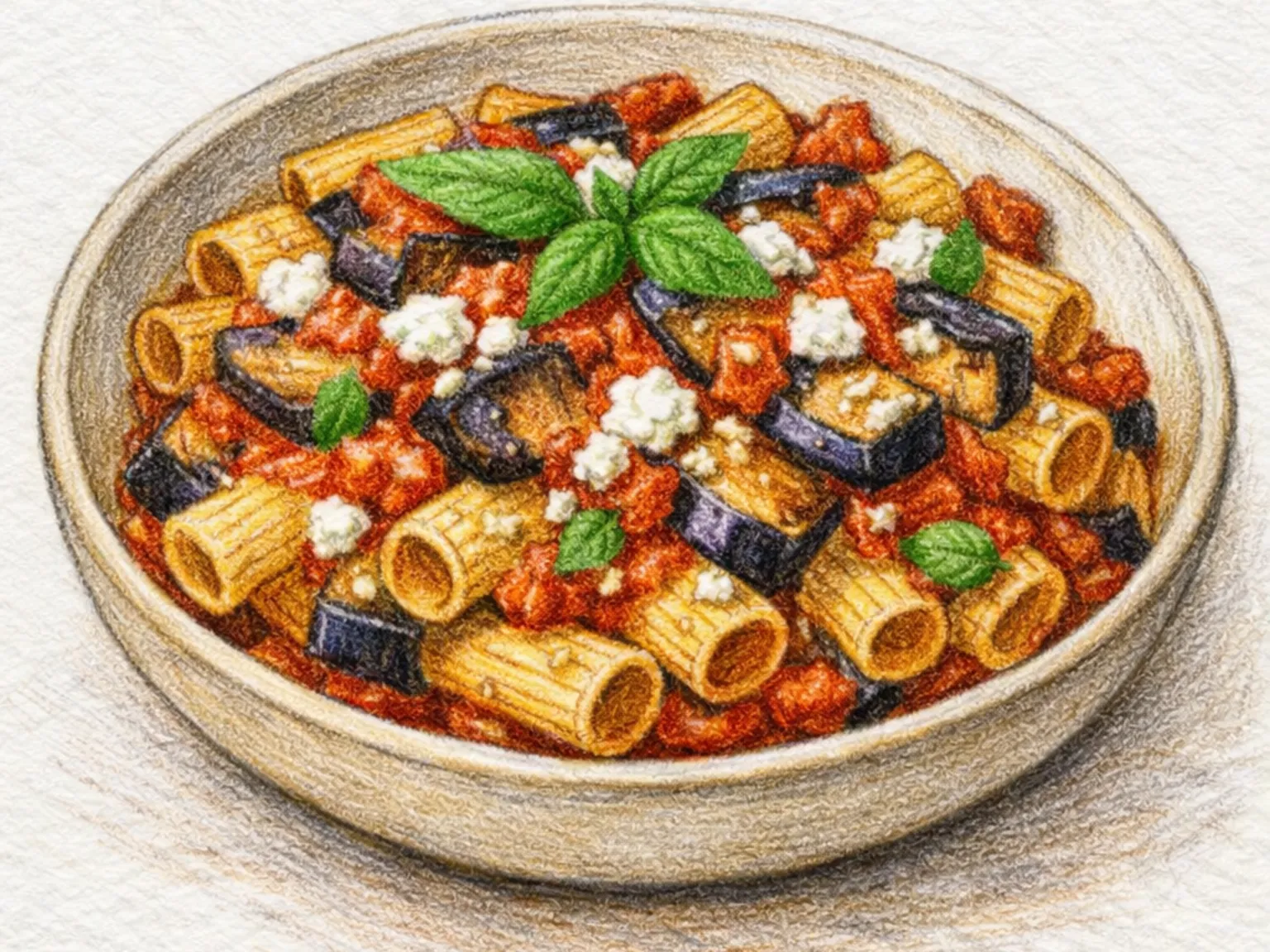
Pasta alla Norma (Sicilian Fried Eggplant Tomato Pasta)
Pasta alla Norma originates from Catania in Sicily and combines fried eggplant cubes with a simple tomato passata sauce. Salting the eggplant beforehand draws out moisture and bitterness, resulting in firmer pieces that absorb less oil during cooking. Garlic provides aromatic depth, while fresh basil added off-heat preserves its fragrance. The dish is named after Vincenzo Bellini's opera Norma, a tribute to its status as a Sicilian culinary masterpiece.
Adjust Servings
Instructions
- 1
Cube eggplant, salt lightly, rest 10 minutes, then pat dry.
- 2
Saute eggplant in olive oil until golden.
- 3
Add minced garlic, then pour in tomato passata and simmer.
- 4
Cook pasta al dente and transfer to the sauce pan.
- 5
Add a splash of pasta water and toss to emulsify.
- 6
Turn off heat and finish with basil and parmesan.
As an Amazon Associate, we may earn from qualifying purchases.
Tips
Nutrition (per serving)
More Recipes

Penne alla Vodka
Penne alla vodka combines tomato puree, heavy cream, and a splash of vodka into a smooth, coral-colored sauce. The vodka helps release flavor compounds in the tomato that are not soluble in water or fat alone, then cooks off to leave only a subtle warmth. Butter-softened onions and a pinch of chili flakes round out the base before cream is stirred in on low heat. The tubular shape of penne catches the thick sauce inside each piece.

Rigatoni all'Amatriciana (Roman Guanciale Tomato Spicy Pasta)
Rigatoni all'Amatriciana is a Roman pasta where crisp-rendered guanciale fat forms the base of a tomato sauce enriched with peperoncino heat. White wine deglazes the pan before crushed whole tomatoes are added and simmered for fifteen minutes to thicken. The ridged surface of rigatoni traps the sauce, ensuring each bite carries the full flavor of cured pork and tomato. A generous grating of Pecorino Romano finishes the dish with sharp, salty contrast.

Fettuccine Alfredo
Fettuccine Alfredo is an exercise in simplicity where technique matters more than a long ingredient list. Wide fettuccine noodles are tossed with unsalted butter and finely grated Parmigiano-Reggiano cheese, using starchy pasta water to create a smooth emulsion that clings to every strand. The original Roman recipe contains no cream at all - the silky texture comes from the marriage of melted butter fat, cheese protein, and the starch released by the pasta during cooking. The pan must stay off direct heat while tossing, as excessive temperature breaks the emulsion and turns the sauce grainy. Speed is essential: the dish should move from pan to plate in under a minute. Generous freshly cracked black pepper provides a sharp counterpoint to the rich, concentrated cheese flavor.

Spaghetti Carbonara
Carbonara is a Roman pasta built on four core ingredients: guanciale, egg yolks, Pecorino Romano, and black pepper. The guanciale is rendered until crisp, and its fat becomes the base of the sauce. Off the heat, a mixture of yolks and grated cheese is tossed with the hot pasta and starchy cooking water to form a glossy emulsion - no cream involved. The dish takes under 25 minutes from start to finish, though temperature control at the sauce stage is critical to avoid scrambling the eggs.

Gochujang Eggplant Ricotta Lasagna Rolls
Gochujang eggplant ricotta lasagna rolls roast diced eggplant at 200 degrees Celsius with olive oil and salt until the flesh turns creamy, then spread the roasted eggplant with ricotta onto boiled lasagna sheets, roll them up, and bake under a spicy gochujang-tomato sauce. Roasting the eggplant for fifteen minutes collapses its cellular structure, driving out water and concentrating its mild sweetness. The tomato sauce is built by sauteing onion and garlic, then simmering tomato puree with gochujang and dried oregano for ten minutes until the heat from the chili paste integrates with the tomato's acidity. Mozzarella melted over the assembled rolls forms a browned, crisp cap during the final bake, while the filling inside stays moist and soft. The contrast between the crunchy cheese top and the tender eggplant-ricotta interior defines the texture of each slice.

Tomato Basil Soup
Tomato basil soup sautés onion and garlic in olive oil, adds canned whole tomatoes crushed by hand, simmers with vegetable stock for 15 minutes, then blends until smooth and finishes with cream and fresh basil. Crushing and cooking the tomatoes for the first five minutes before adding stock concentrates their natural sugars and reduces raw acidity, building a sweeter, deeper base. The 15-minute simmer lets the flavors merge without overcooking, and blending produces a velvety texture that cream enhances without masking the tomato. Basil is heat-sensitive - its volatile oils dissipate within minutes of cooking - so it goes in only after the heat is off, releasing its fragrance through residual warmth alone. A tablespoon of tomato paste can be stirred in during the sauté stage for a more intense tomato flavor if desired.