Pasta Bolognese
Quick answer
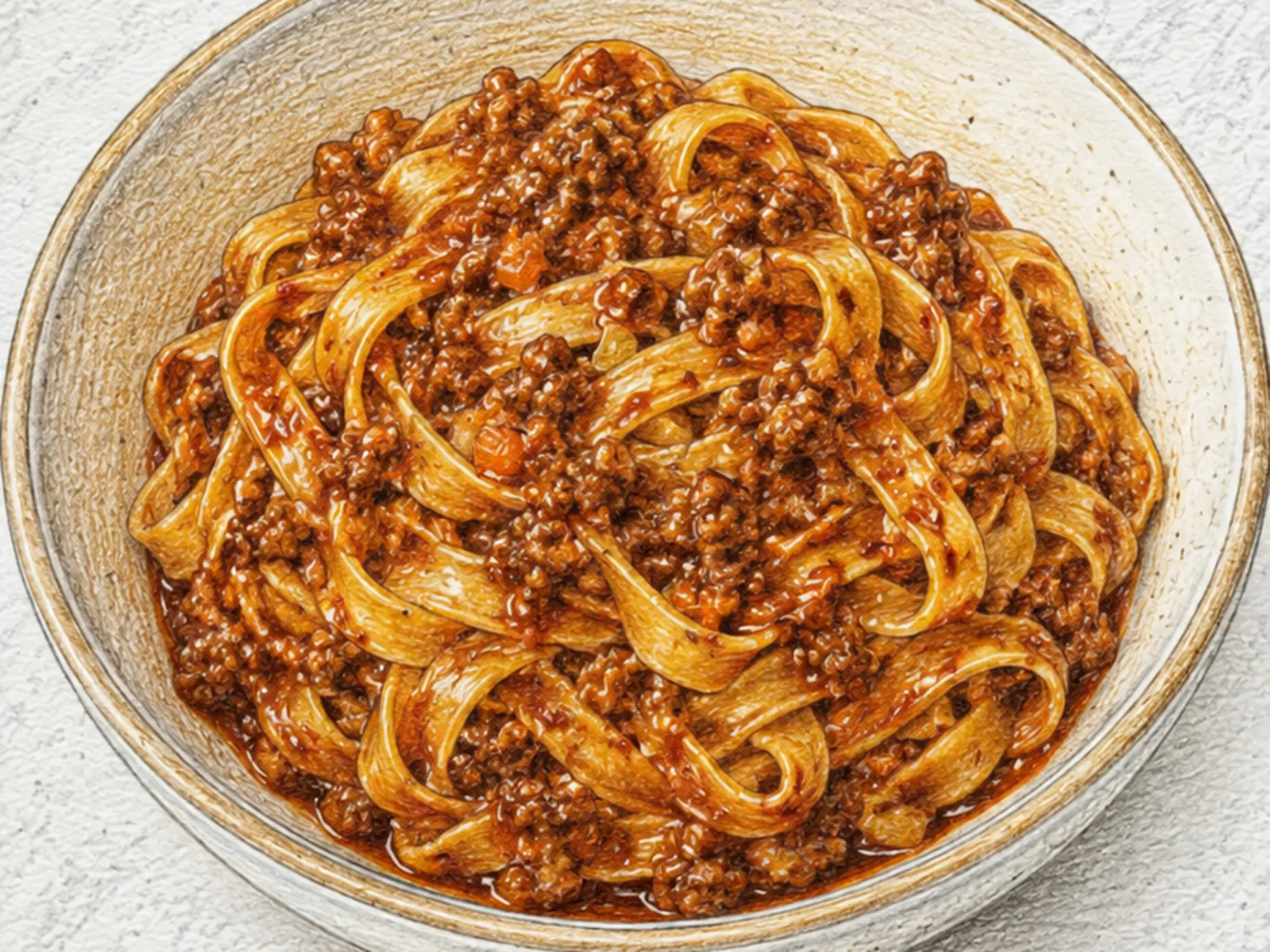
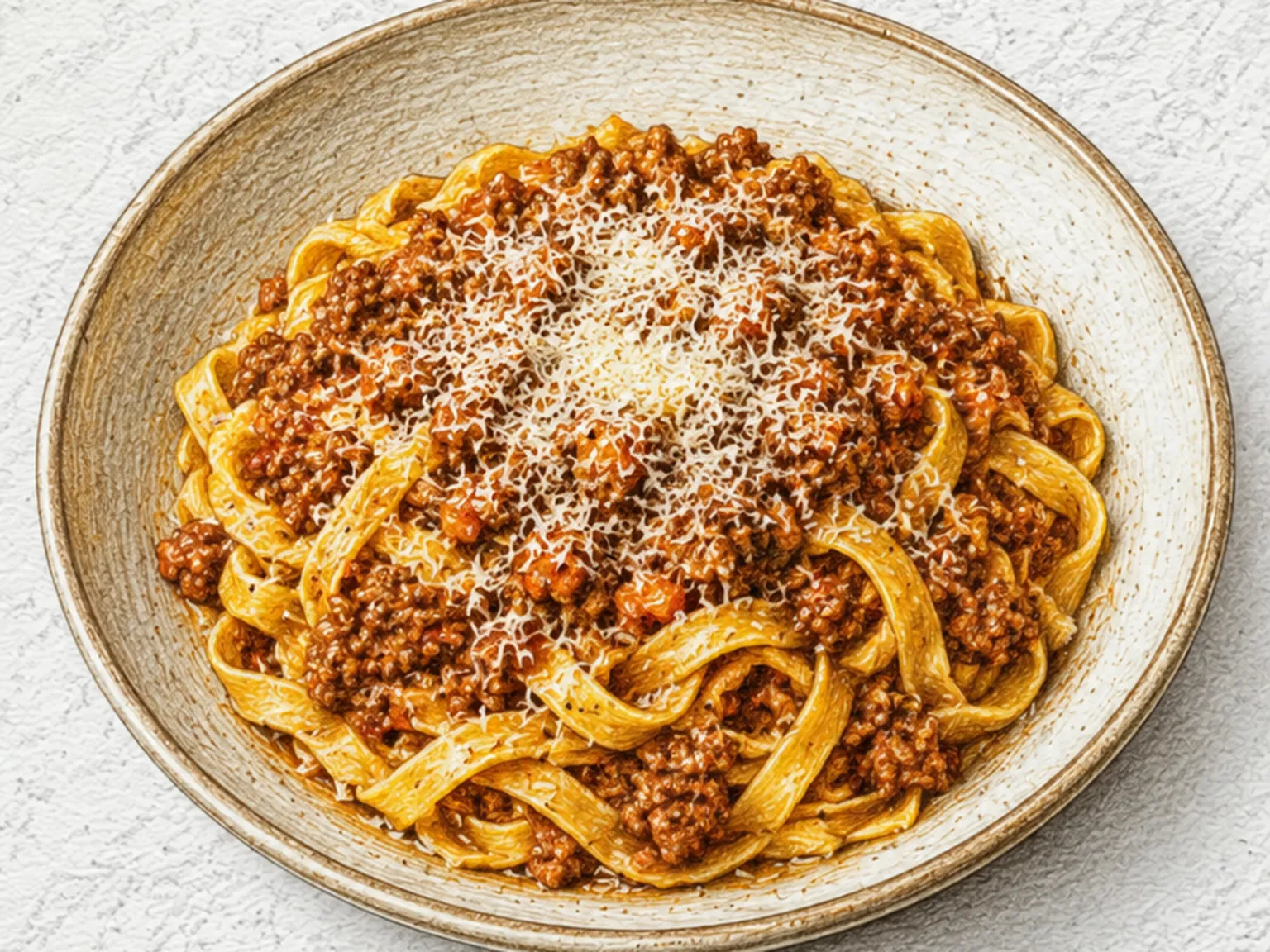
Pasta Bolognese is a slow-simmered meat ragu from Bologna in Emilia-Romagna, built on a soffritto of onion, carrot, and celery cooked down with a mixture of ground beef a...
What makes this special
- Slow-simmered beef and pork ragu softened with milk to balance the acidity of red wine.
- 100ml milk softens beef and neutralizes red wine acidity
- Tomato paste toasted alone 2 minutes before liquids eliminates raw notes
Key ingredients
Core cooking flow
- 1 Finely dice 100 g onion, 60 g carrot, and 60 g celery into even pieces so they soften at the same pace.
- 2 Heat 2 tablespoons olive oil in a heavy pan over medium-low heat.
- 3 Add 200 g ground beef and 150 g ground pork, then raise the heat to medium-high.
Pasta Bolognese is a slow-simmered meat ragu from Bologna in Emilia-Romagna, built on a soffritto of onion, carrot, and celery cooked down with a mixture of ground beef and ground pork. Browning the meat properly in a hot pan before any liquid is added creates a Maillard crust that contributes a depth of flavor that no amount of simmering can replicate. Red wine deglazes the pan, lifting every bit of browned fond from the bottom. Whole milk is then stirred in to soften the acidity and tenderize the proteins, which is the detail that separates a true Bolognese from a generic meat sauce. The ragu requires at least one hour of low, uncovered simmering for the fat to separate, the liquid to reduce, and the meat to break down into a cohesive sauce. Tagliatelle is the canonical pairing in the region, with the wide, egg-enriched ribbons catching the chunky sauce in every fold. Freshly grated Parmigiano-Reggiano finishes the dish. Cooking the tomato paste directly in the pan after the soffritto for two minutes caramelizes its natural sugars and removes raw bitterness before any liquid goes in.
Instructions
Read the steps as a cooking flow: prep, heat, seasoning, doneness control, and finish.
- 1Heat
Finely dice 100 g onion, 60 g carrot, and 60 g celery into even pieces so they soften at the same pace.
Break up the ground beef and pork before cooking so they brown evenly in the pan.
- 2Control
Heat 2 tablespoons olive oil in a heavy pan over medium-low heat.
Add the soffritto and cook for about 8 minutes, stirring often, until the vegetables lose moisture, turn glossy, and smell sweet without browning too hard.
- 3Step
Add 200 g ground beef and 150 g ground pork, then raise the heat to medium-high.
Let the meat sit briefly between stirs so browned bits form on the bottom instead of steaming in its own juices.
- 4Control
Pour in 100 ml red wine and scrape the bottom of the pan to dissolve the browned fond.
Simmer for about 2 minutes, until the sharp alcohol aroma fades and the liquid reduces by roughly half.
- 5Control
Crush 400 g whole peeled tomatoes by hand or with a spoon, then add them with 100 ml milk and 1 teaspoon salt.
Simmer uncovered over low heat for at least 1 hour, stirring occasionally so the ragu thickens without catching.
- 6Finish
Cook 320 g tagliatelle in salted water until al dente, then transfer it directly into the ragu.
Loosen with a little pasta water if needed, toss until glossy, and finish with 40 g grated Parmigiano Reggiano.
After the steps
Pick a recipe that fits this dish.
Continue with shared ingredients, meal pairings, or a similar method.
Recipes That Go Well With This
More Noodles →Based on shared ingredients and meal pairing
Slow-Simmered Meat Sauce Pasta
Beef ragu tagliatelle is an Italian braised meat sauce pasta built on slow cooking rather than speed. Ground beef and a soffritto of finely diced onion, carrot, and celery are cooked together in a heavy pot for ninety minutes or longer until the vegetables dissolve entirely into the sauce. Tomato paste is stirred in and caramelized during the early stages to deepen its sweetness and concentrate flavor, then red wine deglazes the pot, lifting the browned fond from the bottom into the liquid. The long, low simmer breaks the meat down into small, tender pieces suspended in a thick, glossy sauce. Wide tagliatelle ribbons are ideal here because their surface texture and broad folds trap the heavy ragu rather than letting it slide off, delivering concentrated beef flavor with every bite.
Pasta alla Genovese (Neapolitan Slow-Braised Onion and Beef Ragu)
Pasta alla Genovese is a Neapolitan slow-cooked ragu that uses a large volume of onions braised together with beef chuck for at least two hours over low heat. No tomato is involved at any stage; the sauce draws all its sweetness from the onions, which gradually dissolve and caramelize into a thick, deeply savory base, while white wine and the rendered beef fat add richness and acidity. Once the onions have nearly melted into the sauce, the beef is shredded and folded back in, giving the finished ragu a dense, almost jam-like consistency with strands of meat throughout. Despite its name, the dish has no connection to Genoa or Ligurian basil pesto; it is a distinctly Neapolitan preparation, and the name is thought to trace back to Genoese cooks or merchants who settled in Naples. Ziti is the traditional pasta shape, served with a generous dusting of Parmigiano-Reggiano.
Korean Flower Crab Pancake
Fresh blue crab meat is picked clean, coated in a mixture of all-purpose flour and Korean pancake mix, dipped in beaten egg, and pan-fried until the surface turns golden. The crab's natural sweetness and mild brininess stay intact throughout the process, and minced ginger cuts through any residual fishiness without announcing itself in the finished jeon. Black pepper is added in small amounts - just enough to clean up the aftertaste without competing with the delicate crab. The egg coating holds moisture inside, keeping the meat tender while the outside crisps to a light, golden crust. A generous amount of crab filling in each piece is what makes the texture satisfying.
Meat Sauce Pasta
Meat sauce pasta cooks ground beef in olive oil until deeply browned for a strong Maillard reaction, then builds flavor with diced onion and garlic before adding tomato sauce and tomato paste. Simmering the sauce on low heat for at least 15 minutes allows the tomato acidity to mellow and the meat juices to concentrate. Salting the pasta water generously - as salty as the sea - seasons the noodles from the inside. Tossing the drained spaghetti directly into the sauce pan for a minute or two lets the surface starch bind with the sauce for better coating. A splash of red wine adds acidity and depth, while grated Parmesan and fresh basil at the end bring a savory-herbal finish. The dish is straightforward but rewards patience during the simmer.
Serve with this
Mushroom Spinach Warm Salad
Button mushrooms are seared over high heat for a deep caramelized crust, then spinach is added just long enough to barely wilt in the residual heat of the pan. Garlic bloomed in olive oil at the start ensures the entire pan is fragrant before the other ingredients are added. Once the mushrooms go in, leaving them untouched for one to two minutes is the critical step: stirring immediately causes them to steam and release water, which prevents browning and dilutes the flavor. Balsamic vinegar deglazed in at the end lifts the pan with a balance of sweetness and acidity, and grated parmesan melts into the warm greens for a salty, nutty finish. The salad should be eaten immediately: the spinach holds its vivid green and the mushrooms retain their firm, springy bite only while everything is hot. The entire dish comes together in under ten minutes, making it a reliable choice for a quick weeknight side or a no-effort addition to a wine table.
Korean Mushroom Japchae (Shiitake Glass Noodle Stir-Fry)
Beoseot japchae replaces beef with shiitake mushrooms as the primary source of savory depth, making it a staple of Buddhist temple cuisine and vegetarian tables alike. Sweet potato noodles are soaked and boiled, then rinsed in cold water immediately to lock in a firm, springy texture. Shiitake, spinach, carrot, and onion are each cooked separately - their moisture levels and heat tolerances differ enough that combining them prematurely flattens every component. Soy sauce, sugar, minced garlic, and sesame oil bring the noodles and vegetables together, and the finished dish rests for ten minutes so the seasoning penetrates the noodles evenly. The result is a japchae where the mushroom carries genuine umami weight without any meat.
Korean Pickled Taro Stems
Torandae jangajji is a Korean pickled side dish made from taro stems. The outer fibrous skin is peeled away first, and the stems are salted and then blanched. Raw taro stems contain calcium oxalate crystals that cause an unpleasant prickling sensation in the throat, and blanching effectively neutralizes this before the stems are packed into the pickling liquid. The brine is made by bringing soy sauce, vinegar, and sugar to a boil, and it is poured over the stems while still hot so the seasoning penetrates quickly and evenly. Sliced garlic and ginger are simmered in the brine before it is poured, which infuses the liquid with deep aromatic warmth without any of the sharp pungency those ingredients carry raw. After two to three days of refrigerating, each piece develops a layered depth of salty, savory flavor with a clean vinegar brightness underneath. The defining characteristic of this pickle is its distinctive fibrous crunch, which stays satisfying even after the stems have fully absorbed the brine. It works as a rice accompaniment throughout the week and doubles as a drinking snack alongside soju.
Similar recipes
Pasta Puttanesca (Neapolitan Anchovy Olive Caper Tomato Sauce)
Pasta puttanesca is a Neapolitan pasta sauce built from anchovies melted into olive oil, crushed whole tomatoes, black olives, capers, and peperoncino. The anchovies dissolve completely during cooking, leaving behind a deep umami foundation rather than a fishy taste. Olives and capers provide enough salt that additional seasoning is rarely needed. The entire sauce comes together in under twenty minutes using shelf-stable pantry ingredients. Controlling noodle texture and sauce coating helps the ingredients cook evenly while keeping the final seasoning balanced.
Penne alla Vodka
Penne alla vodka combines tomato puree, heavy cream, and a splash of vodka into a smooth, coral-colored sauce. The vodka helps release flavor compounds in the tomato that are not soluble in water or fat alone, then cooks off to leave only a subtle warmth. Butter-softened onions and a pinch of chili flakes round out the base before cream is stirred in on low heat. The tubular shape of penne catches the thick sauce inside each piece. Controlling noodle texture and sauce coating helps the ingredients cook evenly while keeping the final seasoning balanced.
Fettuccine Alfredo
Fettuccine Alfredo is an exercise in simplicity where technique matters more than a long ingredient list. Wide fettuccine noodles are tossed with unsalted butter and finely grated Parmigiano-Reggiano cheese, using starchy pasta water to create a smooth emulsion that clings to every strand. The original Roman recipe contains no cream at all - the silky texture comes from the marriage of melted butter fat, cheese protein, and the starch released by the pasta during cooking. The pan must stay off direct heat while tossing, as excessive temperature breaks the emulsion and turns the sauce grainy and clumped. Speed is essential: the dish should move from pan to plate in under a minute. Generous freshly cracked black pepper provides a sharp counterpoint to the rich, concentrated cheese flavor. Born in Rome in the early twentieth century, this pasta remains one of the most recognizable Italian dishes served worldwide.