Pasta e Ceci (Italian Chickpea Stew Pasta)
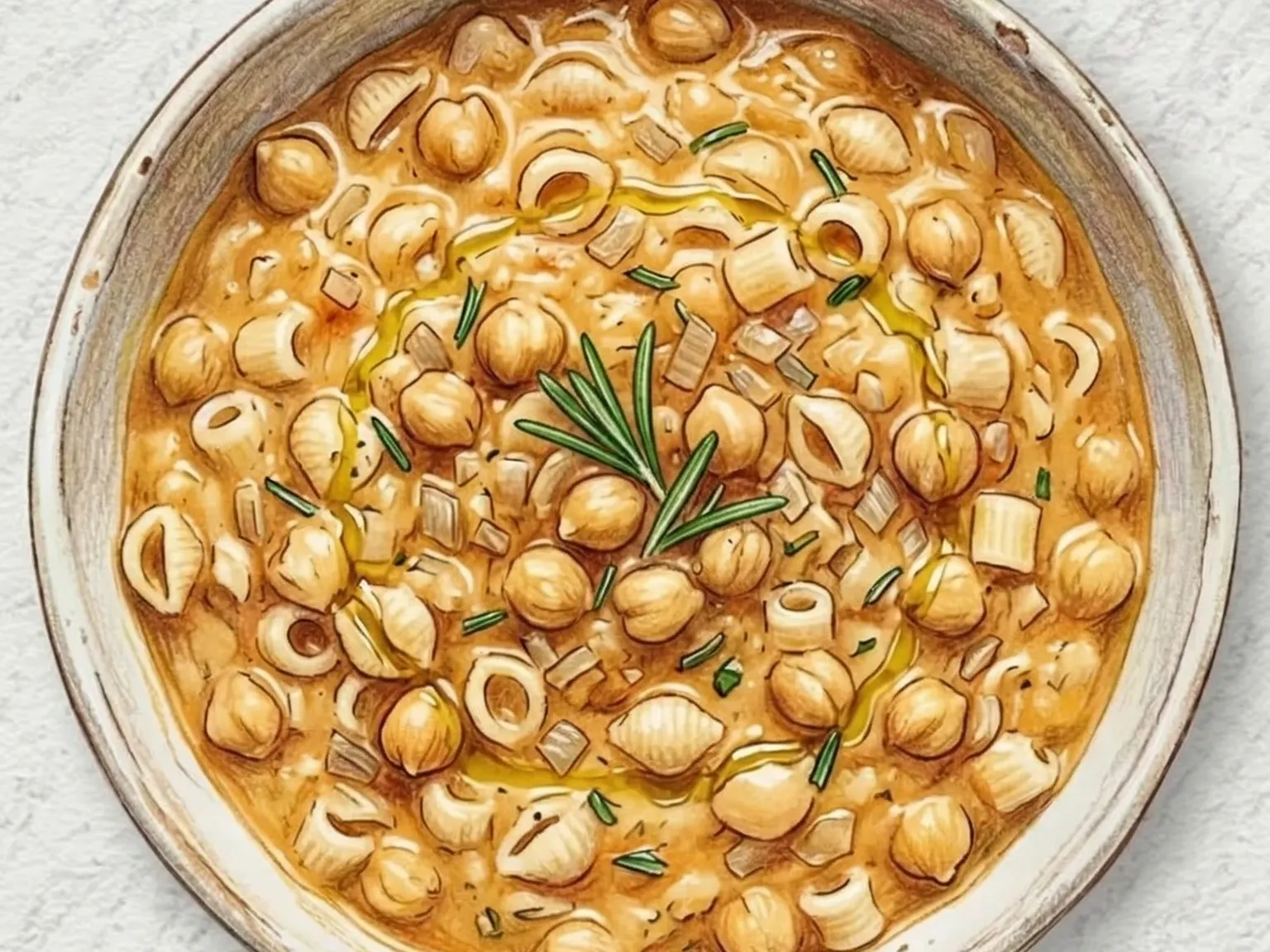
Pasta e ceci is an Italian pantry staple that cooks small pasta directly in a chickpea-enriched broth. Half the chickpeas are mashed before simmering, releasing starch that naturally thickens the liquid into a stew-like consistency. A base of olive oil, garlic, rosemary, and tomato paste provides aromatic depth without overwhelming the mild chickpea flavor. The dish cooks in a single pot and is substantial enough to serve as a complete vegetarian meal.
Adjust Servings
Instructions
- 1
Saute minced onion and garlic in olive oil over medium-low heat.
- 2
Add tomato paste and rosemary; cook 1 more minute.
- 3
Mash half the chickpeas and keep half whole, then add both.
- 4
Pour in stock, bring to a boil, and add ditalini.
- 5
Simmer while stirring until thick and stew-like.
- 6
Season with salt and finish with a drizzle of olive oil.
As an Amazon Associate, we may earn from qualifying purchases.
Tips
Nutrition (per serving)
Goes Well With

Citrus Fennel Salad (Orange & Shaved Fennel with Arugula)
Fennel is shaved thin to highlight its anise-scented crunch, then paired with segmented orange for juicy acidity. Arugula contributes a peppery bite that offsets the citrus sweetness, and sliced almonds add a toasted crunch. The dressing stays minimal - olive oil and white wine vinegar - so the raw ingredients come through clearly without interference. Dressing should be added just before serving to prevent the fennel from wilting. The salad works well before rich meat or fish courses, since the citrus and fennel combination opens the palate rather than dulling it.

Korean Seasoned Kelp Strips
Kelp strips are soaked in cold water for ten minutes to draw out excess salt, then blanched for twenty seconds, just long enough to turn them pliable without losing their snap. The strips are dressed with gochugaru, vinegar, soy sauce, sugar, and garlic while julienned cucumber adds a cool, refreshing contrast. The seasoning sits over the mineral-dense ocean flavor of the kelp, layering a bright, acidic kick onto each bite. Sesame oil and whole sesame seeds finish the dish. The strips keep a satisfying resistance between the teeth that sets them apart from softer Korean seaweed preparations. Best served cold; the texture and flavor hold up well in packed lunches. Blanching beyond twenty seconds causes the kelp to soften and lose the chew that defines this banchan.

Korean Shiitake Tofu Pancake
Shiitake-tofu jeon is a savory Korean pancake made by finely chopping fresh shiitake mushrooms and firm tofu, then mixing them into a batter of pancake mix, egg, and a touch of sesame oil before pan-frying. The shiitakes contribute a meaty chew and pronounced umami depth, while the tofu lightens the texture and keeps the interior moist. Carrot and chives are added for color contrast and a fresh, slightly pungent bite. The egg binds everything together, and the sesame oil in the batter gives a nutty fragrance. Cooked uncovered over medium-low heat until both sides are golden, the exterior crisps up while the inside stays tender. When using dried shiitakes, soaking them in water first is worthwhile because the soaking liquid can be reserved for use in soups or braising liquid. Served with a dipping sauce of soy sauce and vinegar, the salty acidity sharpens the overall savory flavor.

Korean Pickled Shishito Peppers
Kkwarigochu jangajji is a Korean pickled shishito pepper side dish made by pricking each pepper all over with a toothpick, blanching briefly in salted boiling water for thirty to sixty seconds, and submerging them with sliced garlic and optional cheongyang chili in a brine of soy sauce, vinegar, and sugar brought to a boil. Pricking the peppers before blanching ensures the brine penetrates evenly through the hollow interior, eliminating any difference in seasoning between the skin and the flesh inside. Blanching for only thirty seconds to one minute wilts the peppers just enough to make them pliable while keeping a firm, springy bite and their natural mild heat. Pouring the brine hot, then letting the jar cool before refrigerating, helps the peppers hold their green color rather than browning. Vinegar cuts through the saltiness of the soy sauce and prevents the pickle from tasting heavy, while sugar smooths the sharpness into a balanced, clean finish. Ready after at least one day of refrigeration and keeps well for over a week, making it a reliable banchan to have on hand when the weeknight table needs one more dish.
More Recipes

Spaghetti Carbonara
Carbonara is a Roman pasta built on four core ingredients: guanciale, egg yolks, Pecorino Romano, and black pepper. The guanciale is rendered until crisp, and its fat becomes the base of the sauce. Off the heat, a mixture of yolks and grated cheese is tossed with the hot pasta and starchy cooking water to form a glossy emulsion - no cream involved. The dish takes under 25 minutes from start to finish, though temperature control at the sauce stage is critical to avoid scrambling the eggs.

Pasta Puttanesca (Neapolitan Anchovy Olive Caper Tomato Sauce)
Pasta puttanesca is a Neapolitan pasta sauce built from anchovies melted into olive oil, crushed whole tomatoes, black olives, capers, and peperoncino. The anchovies dissolve completely during cooking, leaving behind a deep umami foundation rather than a fishy taste. Olives and capers provide enough salt that additional seasoning is rarely needed. The entire sauce comes together in under twenty minutes using shelf-stable pantry ingredients.

Pasta Bolognese
Pasta Bolognese is a slow-simmered meat ragu from Bologna in Emilia-Romagna, built on a soffritto of onion, carrot, and celery cooked down with a mixture of ground beef and ground pork. Browning the meat properly in a hot pan before any liquid is added creates a Maillard crust that contributes a depth of flavor that no amount of simmering can replicate. Red wine deglazes the pan, lifting every bit of browned fond from the bottom. Whole milk is then stirred in to soften the acidity and tenderize the proteins, which is the detail that separates a true Bolognese from a generic meat sauce. The ragu requires at least one hour of low, uncovered simmering for the fat to separate, the liquid to reduce, and the meat to break down into a cohesive sauce. Tagliatelle is the canonical pairing in the region, with the wide, egg-enriched ribbons catching the chunky sauce in every fold. Freshly grated Parmigiano-Reggiano finishes the dish. Cooking the tomato paste directly in the pan after the soffritto for two minutes caramelizes its natural sugars and removes raw bitterness before any liquid goes in.

Pasta Primavera
Pasta primavera is a vegetable-forward Italian pasta that stir-fries broccoli, zucchini, bell pepper, and green peas in olive oil with garlic before tossing with spaghetti. Cutting each vegetable to a similar size and adding them in stages preserves distinct textures, while a splash of pasta water emulsifies the oil into a light, glossy coating that clings to every strand without the need for cream or a heavy sauce. Parmesan is folded in off the heat to prevent clumping, melting smoothly into the dish. The result is a bright, clean pasta that lets the natural sweetness and fragrance of the vegetables take center stage. Swapping in whatever vegetables are at peak freshness is part of how this dish works, making it as adaptable as it is straightforward to prepare.

Gochujang Eggplant Ricotta Lasagna Rolls
Gochujang eggplant ricotta lasagna rolls begin by roasting diced eggplant with olive oil and salt at 200 degrees Celsius. Fifteen minutes in the oven drive out moisture and collapse the flesh into a soft, dense interior. The roasted eggplant is combined with ricotta and spread across boiled lasagna sheets, which are rolled tight and arranged in a baking dish. A sauce of tomato puree, gochujang, sauteed onion and garlic, and dried oregano is simmered for ten minutes until the chili paste loses its raw edge and the tomato acidity settles into the mix, producing a layer that is spicy and faintly tangy. The rolled sheets are covered in sauce and topped with mozzarella, then baked until the cheese browns and blisters into a firm crust. Below that crust the eggplant-ricotta filling stays moist and soft, and the contrast between the crisp cheese cap and the tender interior defines each slice.

Chicken Marsala
Chicken Marsala pounds chicken breast thin, dredges it in flour, and pan-sears it to a golden crust before building a sauce from Marsala wine, sliced cremini mushrooms, chicken stock, and heavy cream. Pounding the breast to an even thickness ensures uniform heat transfer so the interior stays moist while the exterior browns quickly, and the flour coating creates the browned fond on the pan surface that becomes the sauce's flavor base. Deglazing with Marsala wine lifts that fond while the wine reduces, concentrating its sweetness, acidity, and characteristic walnut-like nuance into a deeply layered sauce. Mushrooms must be spread in a single layer and cooked until their moisture fully evaporates, otherwise they release liquid into the sauce and dilute its intensity. Heavy cream goes in at the end to give the sauce a velvety body, but the heat should be reduced before adding it to prevent the cream from breaking. Dry Marsala is essential here because sweet Marsala produces an excessively sugary sauce that masks the wine's complexity, turning a nuanced pan sauce into something that tastes more like a dessert glaze. Serve with mashed potatoes, pasta, or steamed rice and spoon the sauce generously over everything.