Pasta Primavera

Pasta Primavera

Quick answer

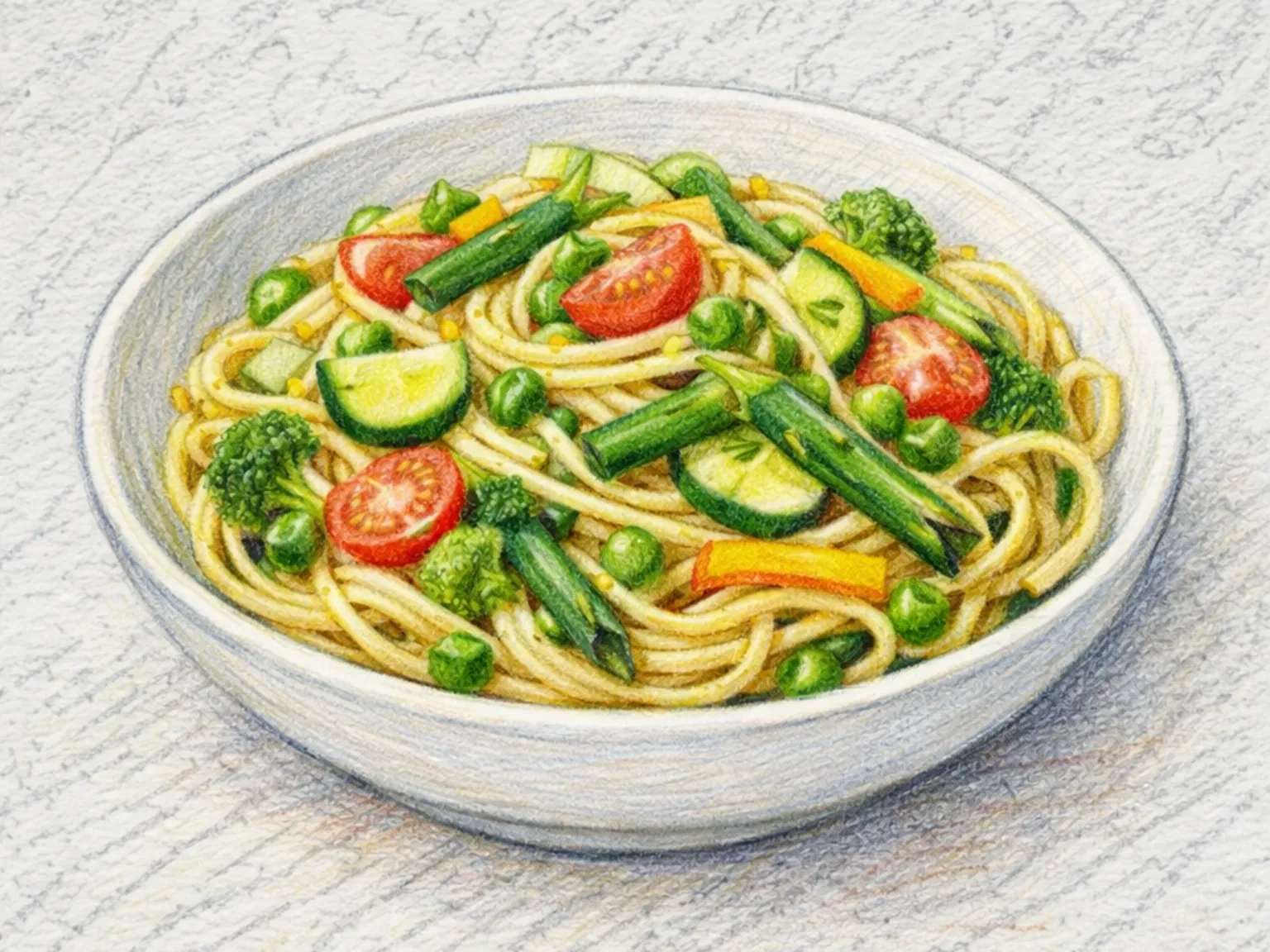
Pasta primavera is a vegetable-forward Italian pasta that stir-fries broccoli, zucchini, bell pepper, and green peas in olive oil with garlic before tossing with spaghetti.

What makes this special

  • Vegetable-forward pasta stir-fried with broccoli, zucchini, and peppers in a garlic oil base.
  • Pasta water and olive oil emulsify without any separate sauce
  • Vegetables added in order of cooking time to preserve each texture
Total time
30 min
Level
Easy
Servings
2 servings
Ingredients
8
Calories
530 kcal
Protein
16 g

Key ingredients

spaghettibroccolizucchinibell peppergreen peas

Core cooking flow

  1. 1 Cut 90 g broccoli into small florets, then cut 90 g zucchini and 80 g bell p...
  2. 2 Cook 220 g spaghetti in boiling water until al dente, stopping while the center still has a slight bite.
  3. 3 Warm a wide pan over medium-low heat, then add 2 tablespoons olive oil and 2 garlic cloves.

Pasta primavera is a vegetable-forward Italian pasta that stir-fries broccoli, zucchini, bell pepper, and green peas in olive oil with garlic before tossing with spaghetti. Cutting each vegetable to a similar size and adding them in stages preserves distinct textures, while a splash of pasta water emulsifies the oil into a light, glossy coating that clings to every strand without the need for cream or a heavy sauce. Parmesan is folded in off the heat to prevent clumping, melting smoothly into the dish. The result is a bright, clean pasta that lets the natural sweetness and fragrance of the vegetables take center stage. Swapping in whatever vegetables are at peak freshness is part of how this dish works, making it as adaptable as it is straightforward to prepare.

Prep 15min Cook 15min 2 servings
Recipes by ingredient → zucchini olive oil garlic

Instructions

Read the steps as a cooking flow: prep, heat, seasoning, doneness control, and finish.

6 steps
  1. 1
    Prep

    Cut 90 g broccoli into small florets, then cut 90 g zucchini and 80 g bell pepper into similar bite-size pieces.

    Keep 70 g green peas separate so each vegetable can be added at the right time.

  2. 2
    Finish

    Cook 220 g spaghetti in boiling water until al dente, stopping while the center still has a slight bite.

    Reserve some pasta water before draining, because it will loosen and emulsify the olive oil coating later.

  3. 3
    Control

    Warm a wide pan over medium-low heat, then add 2 tablespoons olive oil and 2 garlic cloves.

    Let the garlic become fragrant, but lower the heat before it browns so the oil stays clean-tasting.

  4. 4
    Heat

    Add the broccoli first and stir-fry for about 1 minute, then add the zucchini and bell pepper in order.

    Cook only until the colors brighten and the edges soften slightly, keeping the vegetables crisp.

  5. 5
    Finish

    Add the green peas and cooked spaghetti, then toss over medium heat.

    Splash in reserved pasta water little by little while shaking the pan, until the oil turns glossy and coats the strands evenly.

  6. 6
    Finish

    Turn off the heat and add 20 g parmesan, tossing lightly so it melts without clumping.

    Plate immediately while the vegetables still have bite and the pasta is glossy rather than dry.

After the steps

Pick a recipe that fits this dish.

Continue with shared ingredients, meal pairings, or a similar method.

Recipes That Go Well With This

More Noodles →

Based on shared ingredients and meal pairing

Pasta al Limone (Italian Lemon Butter Cream Pasta)
Shared ingredient: olive oil Noodles

Pasta al Limone (Italian Lemon Butter Cream Pasta)

Pasta al limone is a pasta from southern Italy that relies entirely on lemon zest, lemon juice, butter, cream, and Parmesan for its sauce, with no tomato and no meat to complicate the flavor. The citrus oils drawn from the zest dissolve into warm butter and spread their aroma evenly through the fat before any liquid is added, which is what gives the finished sauce its rounded, lingering lemon character rather than a sharp acidic bite. A ladleful of starchy pasta water is then added to emulsify everything into a glossy, clingy coating that holds to each strand of linguine without pooling at the bottom of the plate. Cooking the sauce over low heat throughout is critical: cream added to high heat separates and loses its silky texture. Linguine cooked al dente provides enough resistance to stand up to the light sauce without the combination feeling heavy or cloying. Total preparation from filling a pot with water to plating takes roughly twenty minutes, making it a realistic weeknight option despite its refined result.

Pasta Puttanesca (Neapolitan Anchovy Olive Caper Tomato Sauce)
Shared ingredient: spaghetti Noodles

Pasta Puttanesca (Neapolitan Anchovy Olive Caper Tomato Sauce)

Pasta puttanesca is a Neapolitan pasta sauce built from anchovies melted into olive oil, crushed whole tomatoes, black olives, capers, and peperoncino. The anchovies dissolve completely during cooking, leaving behind a deep umami foundation rather than a fishy taste. Olives and capers provide enough salt that additional seasoning is rarely needed. The entire sauce comes together in under twenty minutes using shelf-stable pantry ingredients. Controlling noodle texture and sauce coating helps the ingredients cook evenly while keeping the final seasoning balanced.

Mushroom Spinach Warm Salad
Serve together Salads

Mushroom Spinach Warm Salad

Button mushrooms are seared over high heat for a deep caramelized crust, then spinach is added just long enough to barely wilt in the residual heat of the pan. Garlic bloomed in olive oil at the start ensures the entire pan is fragrant before the other ingredients are added. Once the mushrooms go in, leaving them untouched for one to two minutes is the critical step: stirring immediately causes them to steam and release water, which prevents browning and dilutes the flavor. Balsamic vinegar deglazed in at the end lifts the pan with a balance of sweetness and acidity, and grated parmesan melts into the warm greens for a salty, nutty finish. The salad should be eaten immediately: the spinach holds its vivid green and the mushrooms retain their firm, springy bite only while everything is hot. The entire dish comes together in under ten minutes, making it a reliable choice for a quick weeknight side or a no-effort addition to a wine table.

Fettuccine Alfredo
Similar recipe Noodles

Fettuccine Alfredo

Fettuccine Alfredo is an exercise in simplicity where technique matters more than a long ingredient list. Wide fettuccine noodles are tossed with unsalted butter and finely grated Parmigiano-Reggiano cheese, using starchy pasta water to create a smooth emulsion that clings to every strand. The original Roman recipe contains no cream at all - the silky texture comes from the marriage of melted butter fat, cheese protein, and the starch released by the pasta during cooking. The pan must stay off direct heat while tossing, as excessive temperature breaks the emulsion and turns the sauce grainy and clumped. Speed is essential: the dish should move from pan to plate in under a minute. Generous freshly cracked black pepper provides a sharp counterpoint to the rich, concentrated cheese flavor. Born in Rome in the early twentieth century, this pasta remains one of the most recognizable Italian dishes served worldwide.

Serve with this

Korean Seasoned King Oyster Mushroom
Side dishes Easy

Korean Seasoned King Oyster Mushroom

Saesongi-beoseot-muchim steams 250 grams of king oyster mushrooms, torn into strips along the grain, for six minutes over high heat to preserve their chewy, fibrous texture better than boiling would. After cooling slightly and squeezing out excess moisture, the strips are tossed in a dressing of soy sauce, vinegar, chili flakes, garlic, and sugar. The vinegar provides a tangy lift, while the chili flakes introduce gentle warmth without overwhelming the mushroom's mild flavor. Sesame oil and sesame seeds finish the dish with a nutty aroma. It holds up well when chilled and served cold, making it a convenient banchan to prepare ahead of time.

🥗 Light & Healthy 🏠 Everyday
Prep 10min Cook 8min 2 servings
Korean Dried Radish Greens Pancake
Pancakes Easy

Korean Dried Radish Greens Pancake

Boiled dried radish greens are combined with doenjang and pan-fried into a dense, rustic jeon with deep fermented character. The fibrous texture of the radish greens gives the pancake a satisfying chew, and the soybean paste saturates the batter so thoroughly that no dipping sauce is necessary. Buckwheat flour adds an earthy coarseness that suits the greens well. Cheongyang chili provides a spicy accent throughout. Minced garlic benefits from a brief saute in oil before being mixed into the batter-the raw edge cooks off and the garlic's savory depth integrates fully into the finished pancake. Cooking over low heat lets the inside set without burning the outside, producing a crisp surface and a tender, flavorful center.

🍺 Bar Snacks ⚡ Quick
Prep 18min Cook 10min 2 servings
Korean Soy Pickled Cucumber
Kimchi Easy

Korean Soy Pickled Cucumber

Oi jangajji is a Korean soy-pickled cucumber made by slicing cucumbers into one-centimeter rounds, lightly salting them to draw out surface moisture, then packing them into a sterilized jar with whole garlic cloves and green chilies before pouring over a boiling brine of soy sauce, water, vinegar, and sugar. The hot liquid partially cooks the cucumber surface while leaving the center firmly crisp, and two days of cold fermentation allows the sweet, salty, sour brine to penetrate all the way through. The green chilies leave a faint heat at the back of each bite, and the whole garlic cloves release their aroma gradually into the brine as they soften over the resting period, adding a layer of complexity beyond a straightforward soy pickle. Reboiling the spent brine and pouring it back over the cucumbers once extends the crunch considerably, turning this into a practical side dish that holds up well for more than a week in the refrigerator. It works alongside a bowl of rice, next to a hearty soup, or as a sharp palate-waker on a hot summer day when appetite runs low.

🏠 Everyday 🍱 Lunchbox
Prep 20min Cook 10min 4 servings

Similar recipes

Pasta Bolognese
Noodles Medium

Pasta Bolognese

Pasta Bolognese is a slow-simmered meat ragu from Bologna in Emilia-Romagna, built on a soffritto of onion, carrot, and celery cooked down with a mixture of ground beef and ground pork. Browning the meat properly in a hot pan before any liquid is added creates a Maillard crust that contributes a depth of flavor that no amount of simmering can replicate. Red wine deglazes the pan, lifting every bit of browned fond from the bottom. Whole milk is then stirred in to soften the acidity and tenderize the proteins, which is the detail that separates a true Bolognese from a generic meat sauce. The ragu requires at least one hour of low, uncovered simmering for the fat to separate, the liquid to reduce, and the meat to break down into a cohesive sauce. Tagliatelle is the canonical pairing in the region, with the wide, egg-enriched ribbons catching the chunky sauce in every fold. Freshly grated Parmigiano-Reggiano finishes the dish. Cooking the tomato paste directly in the pan after the soffritto for two minutes caramelizes its natural sugars and removes raw bitterness before any liquid goes in.

🎉 Special Occasion 🍺 Bar Snacks
Prep 20min Cook 90min 4 servings
Minestrone
Western Easy

Minestrone

Minestrone is an Italian home-style soup that sautees onion, carrot, celery, and zucchini in olive oil, then simmers them with crushed tomatoes and vegetable stock before adding kidney beans and short pasta. Its greatest strength is flexibility - virtually any leftover vegetable works, and there is no single correct combination. The beans add protein and body, while the tomato's acidity forms the backbone of the broth. Cooking the pasta directly in the soup releases starch that naturally thickens the liquid. Finishing with fresh basil and a drizzle of olive oil preserves the herb's fragrance. Minestrone improves overnight as the vegetable flavors continue to meld into the broth, making it an ideal make-ahead meal.

🏠 Everyday 🎉 Special Occasion
Prep 20min Cook 40min 6 servings
Spaghetti Aglio e Olio (Garlic and Olive Oil Pasta)
Western Easy

Spaghetti Aglio e Olio (Garlic and Olive Oil Pasta)

Spaghetti aglio e olio appears in Italian cookbooks as far back as the 19th century, making it one of the oldest documented pasta preparations in the canon. The restraint is the point: five ingredients, no sauce made separately, and the whole dish done in under twenty minutes. Thinly sliced garlic goes into extra virgin olive oil over low heat, slowly transferring its flavor into the fat - the temperature must stay low enough that the garlic turns golden but never brown, since browning brings bitterness. Dried chili flakes follow, infusing a second layer of heat into the oil. The technical turning point is adding starchy pasta water and tossing the pan hard over high heat: the starch links the oil and water into an emulsion that clings to every strand rather than pooling at the bottom. Skip this step and the dish separates on the plate. Parmigiano is not traditional but has become near-universal; shaved over the top, it adds a salty, crystalline crunch. The finished pasta should look barely coated, each strand glistening rather than swimming in sauce. Getting that result consistently is what separates people who understand the dish from people who have simply followed the ingredient list.

🏠 Everyday 🌙 Late Night
Prep 10min Cook 15min 2 servings

Tips

Do not overcook vegetables to keep color and bite.
Add cheese off heat to avoid clumping.

Nutrition (per serving)

Calories
530
kcal
Protein
16
g
Carbs
84
g
Fat
14
g