Pasta Puttanesca (Neapolitan Anchovy Olive Caper Tomato Sauce)
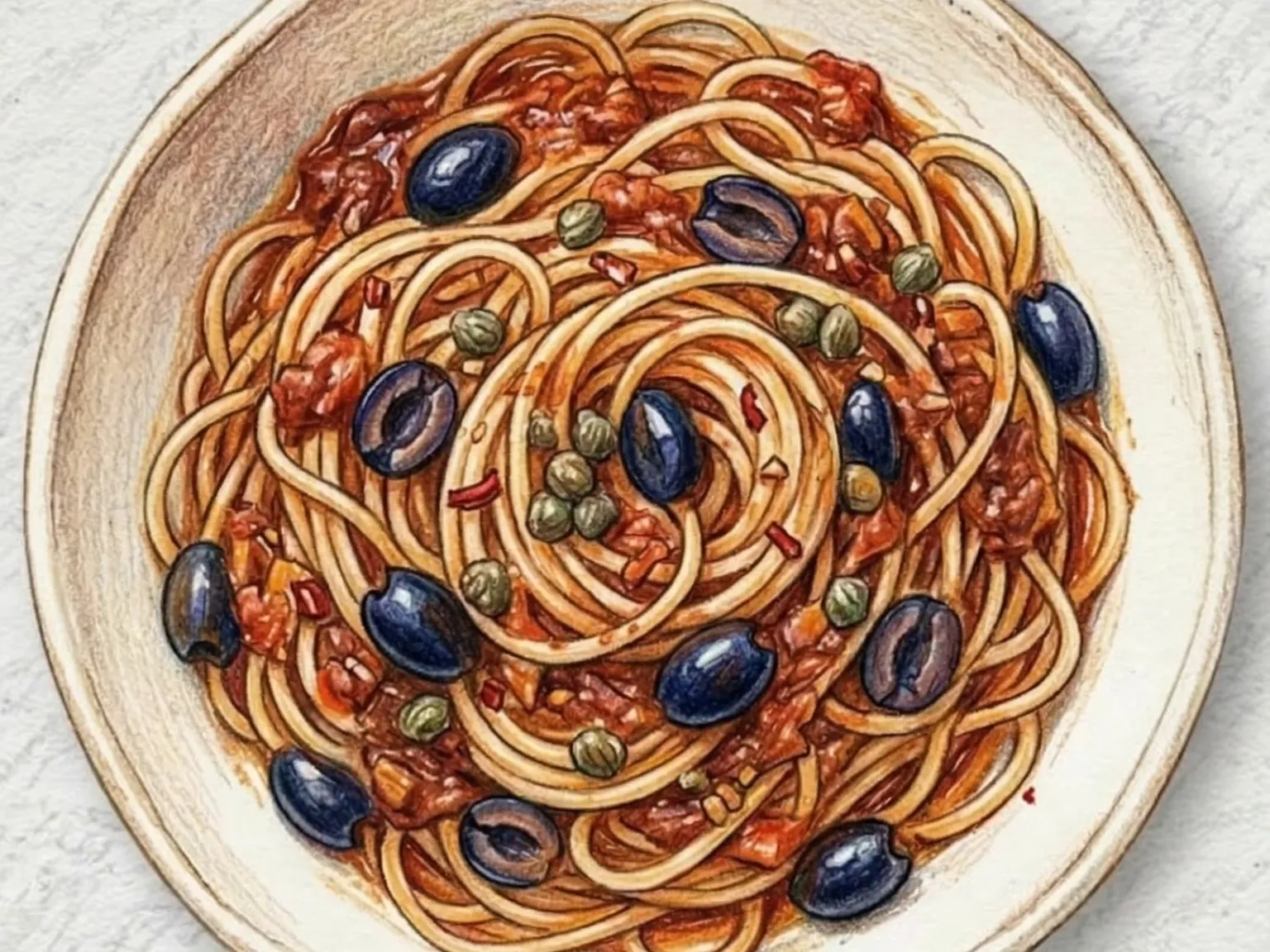
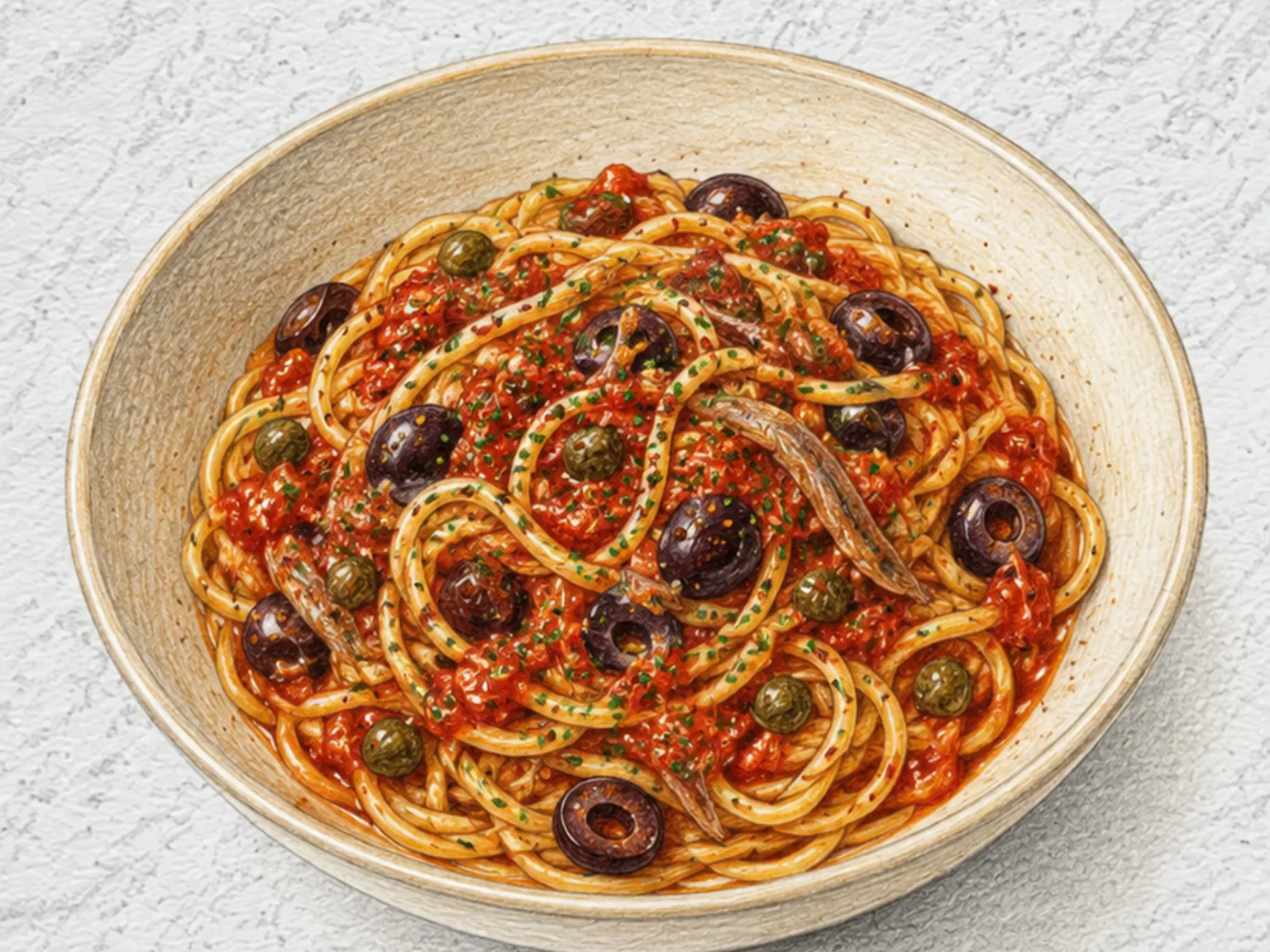
Pasta puttanesca is a Neapolitan pasta sauce built from anchovies melted into olive oil, crushed whole tomatoes, black olives, capers, and peperoncino. The anchovies dissolve completely during cooking, leaving behind a deep umami foundation rather than a fishy taste. Olives and capers provide enough salt that additional seasoning is rarely needed. The entire sauce comes together in under twenty minutes using shelf-stable pantry ingredients.
Adjust Servings
Instructions
- 1
Heat olive oil in a pan with garlic, peperoncino, and anchovies; let anchovies melt.
- 2
Add crushed whole tomatoes and simmer 10 minutes.
- 3
Add olives and capers, simmer 5 more minutes.
- 4
Cook spaghetti al dente and toss into the sauce.
- 5
Top with chopped parsley and serve.
As an Amazon Associate, we may earn from qualifying purchases.
Tips
Nutrition (per serving)
More Recipes

Spaghetti alla Puttanesca
Spaghetti alla puttanesca melts anchovy fillets into olive oil with sliced garlic over low heat, creating a deeply savory base before any tomato is added. Hand-crushed whole tomatoes, halved black olives, capers, and red pepper flakes go in next and simmer for eight minutes, during which the sauce reduces and the briny, salty, and spicy elements fuse into a bold, cohesive flavor. The anchovies dissolve completely, leaving no trace of fish but contributing an intense umami backbone. Because capers and anchovies are already heavily salted, seasoning is adjusted only at the very end by taste. The spaghetti is pulled one minute short of al dente and finished in the sauce pan with a splash of pasta water, which allows the starch to bind the sauce tightly to each strand.

Orecchiette with Broccoli Rabe
Orecchiette with broccoli rabe is a Southern Italian pasta from Puglia that pairs ear-shaped pasta with blanched broccoli rabe, garlic, anchovy, and dried chili in olive oil. Blanching the broccoli rabe for one to two minutes tames its bitterness, and cooking the pasta in the same water infuses it with the green's flavor. Garlic and anchovy fillets are warmed slowly in olive oil until the anchovy dissolves into a savory paste, providing salt and umami without needing additional seasoning. Dried chili flakes contribute a gentle background heat. Tossing the drained pasta and greens in the pan with a splash of pasta water emulsifies the oil into a light coating on every piece. Grated parmesan scattered on top adds a salty, nutty finish that balances the vegetal bitterness.

Spaghetti Carbonara
Carbonara is a Roman pasta built on four core ingredients: guanciale, egg yolks, Pecorino Romano, and black pepper. The guanciale is rendered until crisp, and its fat becomes the base of the sauce. Off the heat, a mixture of yolks and grated cheese is tossed with the hot pasta and starchy cooking water to form a glossy emulsion - no cream involved. The dish takes under 25 minutes from start to finish, though temperature control at the sauce stage is critical to avoid scrambling the eggs.

Pasta Bolognese
Pasta Bolognese is a slow-simmered meat ragu from Bologna, built on a soffritto of onion, carrot, and celery cooked with ground beef and pork. Red wine deglazes the browned meat, and whole milk is added to soften acidity and tenderize the proteins. The sauce requires at least one hour of low heat to meld the flavors into a cohesive, concentrated ragu. Tagliatelle is the traditional pairing in Emilia-Romagna, served with freshly grated Parmigiano-Reggiano.

Cacio e Pepe (Pecorino Cheese and Black Pepper Pasta)
This Roman classic achieves remarkable depth from just two starring ingredients: Pecorino Romano cheese and black pepper. The technique is everything. Finely grated cheese must be emulsified with starchy pasta water off the heat to form a glossy, clump-free sauce that coats every strand. Toasting whole peppercorns in a dry pan before crushing them coarsely releases volatile oils that give the dish its distinctive sharp, floral bite. The cheese contributes a salty, tangy intensity that needs no additional seasoning. Tonnarelli or spaghetti, with their round cross-sections, grip the sauce most effectively, ensuring that each twirl of the fork delivers a full measure of peppery, cheesy richness. Timing is critical: even a few seconds of excess heat can turn the smooth sauce into grainy clumps.

Gochugaru Anchovy Broccolini Orecchiette
Gochugaru anchovy broccolini orecchiette melts anchovy fillets into olive oil with garlic over low heat, creating a salty umami base free of fishiness. Korean chili flakes are briefly toasted in the anchovy oil, releasing a warm, aromatic heat rather than sharp spiciness. Broccolini is blanched in the pasta cooking water during the last two minutes, which saves a separate pot and keeps the florets crisp with a pleasantly bitter edge. Breadcrumbs toasted separately until golden are scattered over the finished dish, adding a crunchy contrast to the soft, cupped orecchiette shapes. A final squeeze of lemon juice cuts through the oil-rich sauce and brightens the overall flavor. Parmesan shaved on top adds a sharp, salty finish.