Pastitsio (Greek Cinnamon Beef Macaroni Bechamel Bake)
Quick answer
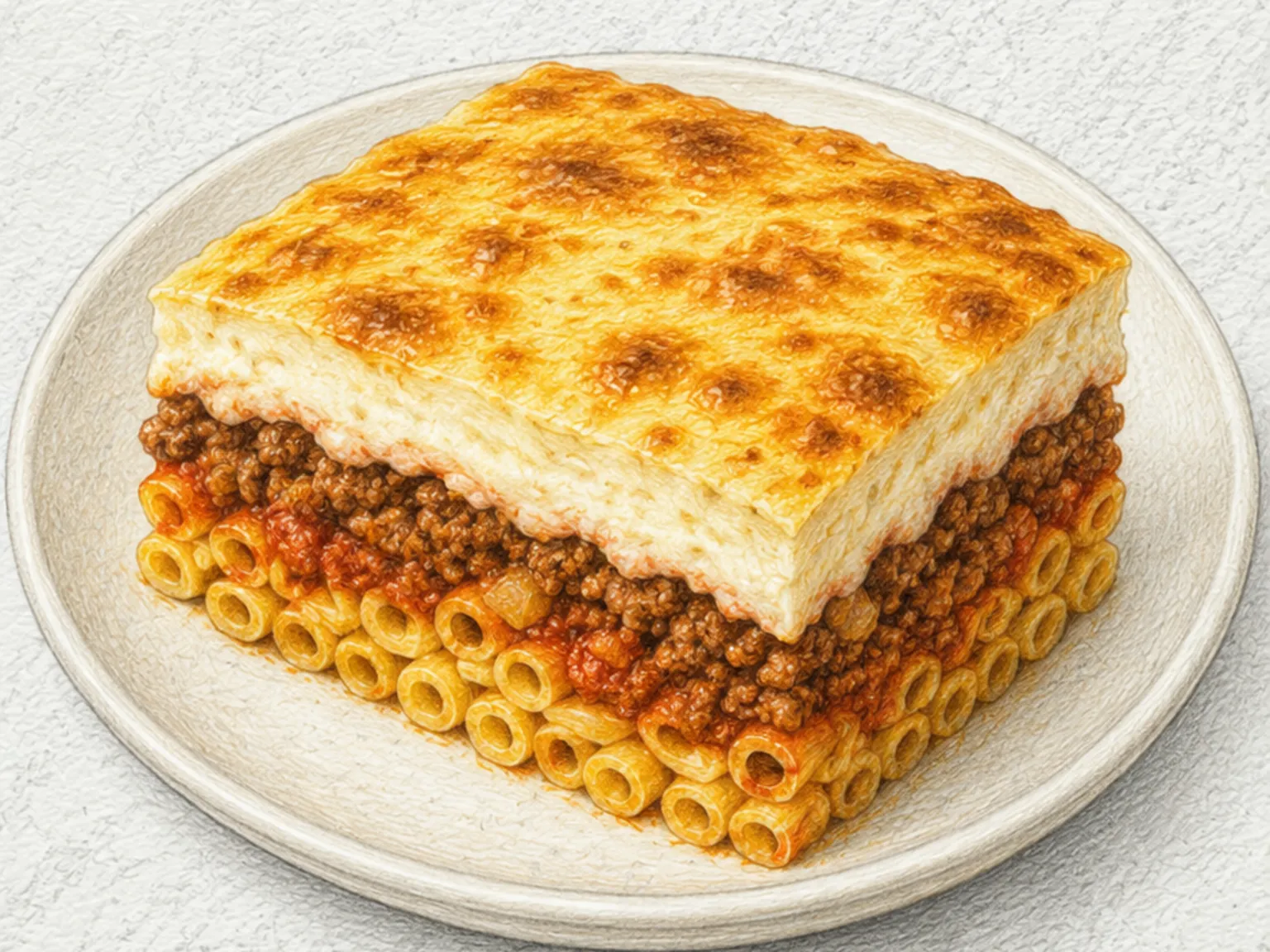
Pastitsio is a signature Greek oven-baked pasta composed of three distinct layers - macaroni on the bottom, spiced ground beef in the middle, and a thick bechamel on top.
What makes this special
- Cinnamon-scented beef sauce provides the aromatic profile that defines this Greek Pastitsio.
- Cinnamon in the beef sauce is the defining flavor that separates it from lasagna
- Egg in the bechamel sets like custard at 190C so layers cut cleanly
Key ingredients
Core cooking flow
- 1 Cook 250 g macaroni in boiling water until slightly firmer than al dente, be...
- 2 Warm a pan over medium heat and cook 120 g onion first until it turns translucent.
- 3 Stir in 250 ml tomato sauce and 0.5 tsp ground cinnamon, then reduce to low...
Pastitsio is a signature Greek oven-baked pasta composed of three distinct layers - macaroni on the bottom, spiced ground beef in the middle, and a thick bechamel on top. The beef is browned with onion and simmered in tomato sauce seasoned with ground cinnamon, which gives pastitsio its distinctive aroma that sets it apart from lasagna. Adding eggs to the bechamel allows it to set firmly in the oven, forming a custard-like cap that can be sliced cleanly with a knife. The macaroni should be slightly undercooked before assembly, as it continues to absorb liquid and soften during baking. Parmesan scattered between the pasta layers bridges the salty richness of the cheese with the meat sauce and creamy bechamel. After baking, a rest of at least fifteen minutes is essential for the layers to hold their structure when cut.
Instructions
Read the steps as a cooking flow: prep, heat, seasoning, doneness control, and finish.
- 1Season
Cook 250 g macaroni in boiling water until slightly firmer than al dente, because it will soften further in the oven.
Drain well and spread it out so the tubes do not clump while the sauce is prepared.
- 2Control
Warm a pan over medium heat and cook 120 g onion first until it turns translucent.
Add 300 g ground beef, break up the clumps with a spoon, and brown it until no raw red patches remain.
- 3Control
Stir in 250 ml tomato sauce and 0.5 tsp ground cinnamon, then reduce to low heat and simmer for 12 minutes.
Stop when the sauce thickens and no loose liquid pools on the bottom of the pan.
- 4Control
Melt 2 tbsp butter in a saucepan, add 2 tbsp flour, and cook over low heat for about 1 minute so the raw flour taste fades.
Whisk in 400 ml milk gradually until thick but still pourable.
- 5Finish
Spread the macaroni in the baking dish and scatter on part of the 40 g parmesan so it seasons the pasta layer.
Spoon the beef sauce evenly over it, pour the bechamel on top, and finish with the remaining parmesan.
- 6Heat
Bake at 190C for 30 minutes, until the top is golden and the edges bubble gently.
Let it rest for at least 15 minutes before slicing, then cut with a steady downward motion so the layers stay neat.
After the steps
Pick a recipe that fits this dish.
Continue with shared ingredients, meal pairings, or a similar method.
Recipes That Go Well With This
More Western →Based on shared ingredients and meal pairing
Moussaka (Greek Eggplant Lamb Bechamel Bake)
Layers of pan-fried eggplant, cinnamon-scented lamb sauce, and a thick bechamel topping define the structure of this Greek oven-baked casserole. The preparation begins by salting the eggplant slices for thirty minutes to draw out moisture and bitterness, which prevents the vegetable from absorbing excess oil and helps it retain its shape during baking. Inside the meat sauce, ground lamb is simmered with tomatoes and a touch of cinnamon, an addition that tempers the natural gamey scent of the lamb with warm Mediterranean aromatics. To complete the assembly, a layer of bechamel enriched with egg yolks and Parmesan cheese is spread over the top before the dish enters a 180-degree Celsius oven for 40 minutes. The inclusion of egg yolks allows the creamy sauce to set firmly, creating a golden crust that holds the internal components together when the dish is sliced. This structural stability results in clean, visible layers in each serving. Options for customization include replacing or mixing the eggplant with potatoes or zucchini, or substituting the lamb with ground beef. Allowing the moussaka to rest for 15 to 20 minutes after baking ensures the layers settle properly for ideal presentation. Since the flavors intensify when kept in the refrigerator for a day or two, this dish functions well as a make-ahead option for gatherings.
Tuna Noodle Casserole
Tuna noodle casserole boils egg noodles one minute short of the package time, sautés onion and mushrooms in butter, builds a cream sauce with flour and milk, folds in drained tuna and half the cheddar cheese, then bakes the mixture topped with the remaining cheese at 190 degrees Celsius for 20 minutes. Undercooking the noodles is intentional - they continue absorbing sauce and softening in the oven, so fully cooked noodles turn mushy by the time the casserole is done. Toasting the flour in butter before adding milk eliminates the raw flour taste and produces a smooth sauce when the milk is poured in gradually. Draining the tuna well keeps the sauce from becoming greasy. Splitting the cheese between the sauce and the topping gives the casserole depth throughout while creating a golden, bubbling gratin crust on the surface.
Cretan Dakos Salad (Barley Rusk with Tomato & Feta)
Dakos is a traditional salad from the Greek island of Crete, built on a base of dried barley rusks - thick, twice-baked rounds of bread that have been air-dried to a deep crunch. Ripe tomatoes are grated directly onto the rusk surface rather than sliced, so their juice immediately begins to soften the bread from the inside while the outer rim retains its crunch, creating a textural contrast of crisp edges and a moistened, dense center. Crumbled feta cheese piled on top adds a salty, tangy richness that balances the tomato's acidity, and a generous pour of good olive oil ties the components together. Dried oregano and whole or halved olives complete the dish. Dakos functions simultaneously as a bread course and a salad, and has been part of Cretan summer eating for centuries - a light, satisfying meal that requires no cooking and uses ingredients that thrive in the Mediterranean climate.
Meatloaf
Meatloaf combines ground beef with sauteed onion, breadcrumbs, egg, and Worcestershire sauce, pressed into a loaf pan and topped with a ketchup glaze before baking at 180 degrees Celsius for 50 to 55 minutes. The breadcrumbs absorb and hold moisture, preventing the loaf from drying out, while Worcestershire sauce deepens the savory flavor. Pre-cooking the onion and letting it cool before mixing removes excess moisture that would otherwise make the mixture too wet. Minimal handling is important - overworking the meat compacts the proteins and produces a tough texture. The ketchup glaze caramelizes in the oven to form a sweet-salty crust. Resting the meatloaf for at least 10 minutes after baking lets the internal juices redistribute so the slices hold together cleanly.
Serve with this
Korean Crispy Potato Pancake
Gamja-jeon is a Korean potato pancake made by finely grating raw potatoes, letting the starch settle out of the liquid for at least ten minutes, discarding the water, and folding the settled starch back into the pulp to improve binding. Waiting long enough for full starch separation is what gives the batter enough cohesion to hold together when the pancake hits the hot pan. Spreading the batter as thinly as possible produces glass-crisp edges while the center retains a chewy, starchy bite characteristic of potato starch. The first side must cook all the way through and the underside must firm up completely before any attempt to flip, and using two spatulas simultaneously makes the turn fast enough to keep the pancake intact. Frying both sides over medium heat until evenly golden delivers a crust that is crisp on the outside while the center stays moist. A dipping sauce of soy sauce, vinegar, and minced cheongyang green chili cuts through the oily richness with sharpness and heat.
Ssiat Hotteok (Korean Sweet Seed Pancake)
Ssiat-hotteok is a Korean street snack made from a yeast-leavened dough stuffed with a mixture of brown sugar, cinnamon, sunflower seeds, and pumpkin seeds, then pressed flat in an oiled pan until the outside crisps and the inside turns molten. The dough must proof until it doubles in size before dividing into eight portions; each portion is filled and the seam pinched shut firmly, because a loose seal allows the melted sugar to escape and burn against the pan. Slow cooking on low heat develops a thin, crisp crust on the exterior while the brown sugar inside dissolves into a sticky syrup that carries the warmth of the cinnamon and the crunch of the seeds. Activating the yeast in warm milk rather than water adds a subtle dairy richness to the dough, producing a softer, more rounded result than versions made with water alone.
Chamnamul Walnut Pesto Trofie
Chamnamul walnut pesto trofie is a fusion pasta that coats twisted trofie in a pesto made from Korean chamnamul (wild parsley), walnuts, Parmigiano, and olive oil. Chamnamul has a lighter, more herbaceous quality than basil, with a faintly bitter finish that gives the pesto a distinctly Korean aromatic character. Walnuts contribute a heavier, more assertive nuttiness than pine nuts, thickening the sauce and anchoring the savory depth together with the aged cheese. The spiral grooves of trofie hold the pesto in every ridge, releasing an even concentration of flavor with each bite. Adding sufficient olive oil during blending slows oxidation and prevents the chamnamul's green color from darkening too quickly. The pasta is best eaten immediately after tossing, when both the color and fragrance are at their peak.
Similar recipes
Spanakopita (Greek Spinach and Feta Phyllo Pie)
Spanakopita is a Greek savory pie where spinach is sauteed with onion to drive off moisture, then combined with crumbled feta cheese, beaten eggs, and fresh dill to make a filling that is layered between sheets of buttered phyllo dough and baked at 190 degrees Celsius for thirty-five to forty minutes. Removing as much water from the spinach as possible is the single most important step - any residual moisture soaks through the thin pastry and prevents it from crisping. Phyllo sheets dry out within minutes of being exposed to air, so they must be kept under a damp towel and worked one at a time, each brushed with melted butter before stacking. Four layers on the bottom and four on top provide enough structure and crunch. Scoring the surface before baking allows steam to escape and helps the layers puff and separate into distinct, flaky sheets.
Nikujaga (Japanese Beef Potato Onion Soy-Sweet Stew)
Nikujaga is a Japanese home-cooked stew often described as the dish that defines a mother's cooking in Japan. Thinly sliced beef, potatoes, onion, carrot, and shirataki noodles are simmered in a broth of dashi, soy sauce, mirin, and sugar. The dish traces its origins to the Meiji era, when a Japanese naval officer attempted to recreate British beef stew using local ingredients -- resulting in a clear, soy-based braise rather than a thick, flour-bound stew. The potatoes absorb the seasoned liquid until soft at the edges but still holding shape, while shirataki noodles soak up flavor and add a springy contrast.
Greek Custard Phyllo Pie (Crispy Filo & Semolina Custard)
Galaktoboureko is a beloved Greek pastry in which sheets of butter-brushed phyllo dough are layered around a thick semolina custard, baked until golden, and then drenched in cold lemon syrup while still hot from the oven. Every sheet of phyllo must be brushed with melted butter before stacking, a labor-intensive process that creates dozens of paper-thin layers capable of shattering at the touch of a fork. The custard is cooked on the stovetop by whisking semolina into hot milk in a slow, steady stream until the mixture thickens into a smooth but faintly grainy cream. Unlike flour-based pastry creams, semolina custard retains a subtle granular texture that gives the filling a distinct character. Egg yolks and whole eggs are both incorporated, adding richness and a custardy softness, and vanilla deepens the flavor further. Pouring cold syrup over the pastry while it comes scorching from the oven causes rapid absorption: the liquid rushes between the phyllo layers and saturates the custard without turning the top surface soft and soggy. The temperature contrast between hot pastry and cold syrup is the exact mechanism that preserves the crisp exterior. Adding cinnamon or orange zest to the custard before filling introduces a fragrant complexity that offsets the sweetness of the syrup. The pastry tastes noticeably different eaten warm versus at room temperature, offering two distinct textural and aromatic experiences from the same preparation.