Korean Red Bean Noodle Soup
Quick answer
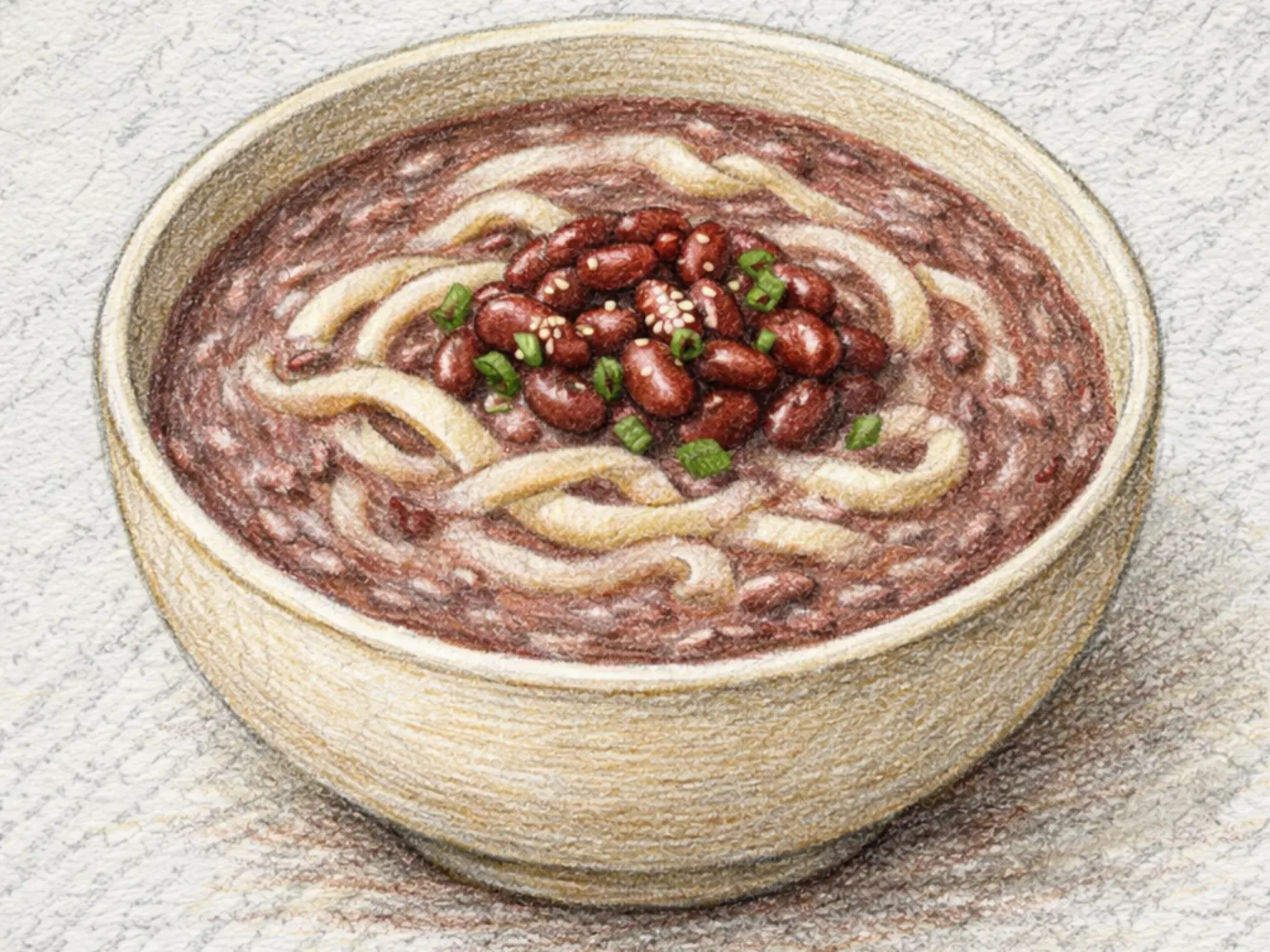
Pat kalguksu is a traditional Korean noodle dish where hand-cut wheat noodles are served in a thick, velvety broth made from pureed and strained red beans.
What makes this special
- Korean hand-cut noodles served in a thick, velvety broth made from pureed and strained red beans.
- First boiling water fully discarded to remove astringency
- Sweet rice flour thickens red bean broth to a clinging consistency
Key ingredients
Core cooking flow
- 1 Rub and rinse 300 g dried red beans until the water runs clearer, then cover...
- 2 Add 1.2 liters fresh water to the rinsed beans and simmer over medium-low heat for about 30 minutes.
- 3 Blend the cooked beans with their cooking liquid until as smooth as possible.
Pat kalguksu is a traditional Korean noodle dish where hand-cut wheat noodles are served in a thick, velvety broth made from pureed and strained red beans. The beans go through two rounds of boiling - the first batch of water is discarded entirely to strip away the astringent compounds that give red beans their initial edge, and the second boil cooks them until completely soft. After blending and straining, the smooth puree is returned to the pot with glutinous rice flour stirred in to thicken the base to the consistency needed to hold the noodles without turning stodgy. Salt and sugar are adjusted until the broth hits a balance of nuttiness and gentle sweetness that neither overwhelms nor disappears. Cooked chestnuts and pine nuts are scattered on top as garnish, contributing a rich, oily nuttiness that deepens and complements the earthy flavor of the red bean broth. This dish is most closely associated with winter eating in Korea, and unlike sweet red bean porridge, the addition of noodles turns it into a properly filling meal.
Instructions
Read the steps as a cooking flow: prep, heat, seasoning, doneness control, and finish.
- 1Control
Rub and rinse 300 g dried red beans until the water runs clearer, then cover with 1 liter water and bring to a boil over high heat.
Boil 10 minutes, discard all the first water, and rinse the beans again.
- 2Control
Add 1.2 liters fresh water to the rinsed beans and simmer over medium-low heat for about 30 minutes.
Keep the boil gentle so the liquid does not splash, and cook until a bean crushes easily between your fingers.
- 3Heat
Blend the cooked beans with their cooking liquid until as smooth as possible.
Strain the mixture through a sieve, pressing with a spatula to extract enough red bean liquid while leaving coarse skins behind.
- 4Control
Return the strained red bean liquid to the pot and warm it over medium heat, stirring often.
Dissolve 3 tablespoons glutinous rice flour in a little water first, then add it while stirring so the bottom does not scorch.
- 5Control
When the broth thickens, season with 1.5 teaspoons salt and 2 tablespoons sugar.
Simmer over low heat for 5 minutes, stirring steadily, until the nuttiness and gentle sweetness taste balanced and the texture stays pourable.
- 6Heat
Cook 600 g fresh kalguksu noodles in a separate pot for 4-5 minutes, then rinse off excess starch so the broth stays smooth.
Divide into bowls, pour over the hot red bean broth, and top with cooked chestnuts and pine nuts.
After the steps
Pick a recipe that fits this dish.
Continue with shared ingredients, meal pairings, or a similar method.
Recipes That Go Well With This
More Noodles →Based on shared ingredients and meal pairing
Korean Red Bean Porridge (Velvety Adzuki Porridge with Rice Dumplings)
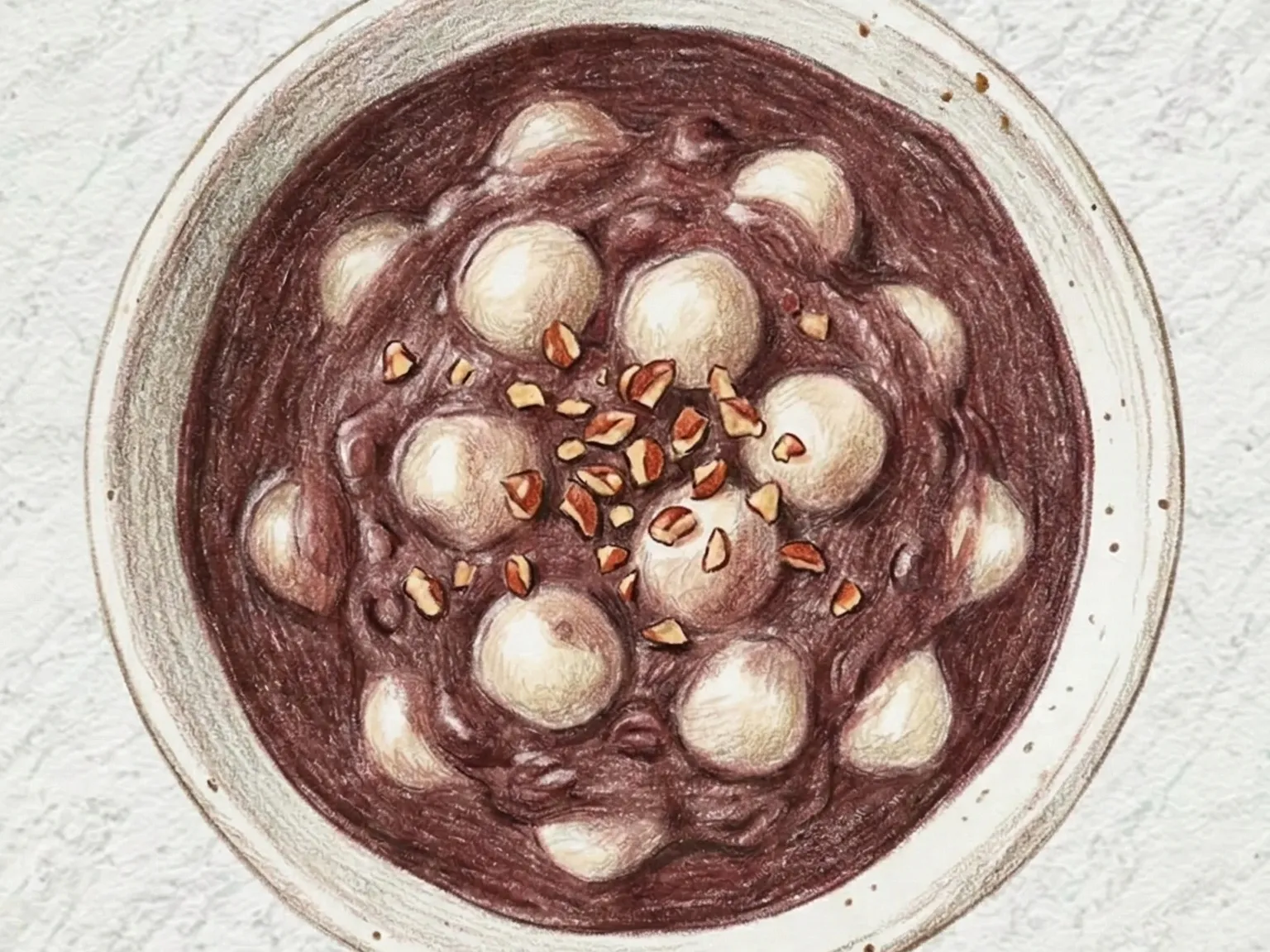
Pat-juk is a traditional Korean red bean porridge made by boiling dried red beans until very soft, straining them to extract a smooth, deeply colored paste, and simmering that paste with rice until it thickens into a velvety porridge. Small dumplings rolled from glutinous rice flour - called saeal-sim - are dropped in toward the end, giving each spoonful a chewy counterpoint to the creamy base. The porridge carries a gentle, natural sweetness from the red beans, which can be adjusted with a touch of sugar. A dusting of cinnamon on top complements the earthy bean flavor. Traditionally served on the winter solstice, pat-juk is equally satisfying as an everyday warm meal or a light late-night dish.
Korean Clam Kalguksu (Hand-Cut Noodles in Clam Broth)
Baekhap kalguksu is a Korean knife-cut noodle soup in which the broth is derived entirely from hard clams rather than the more standard anchovy base. Purged clams are placed in cold water and brought to a boil; once the shells open, the clams are lifted out and the broth is strained through cheesecloth to remove any residual sand or shell fragments. Thinly sliced daikon radish and Korean zucchini cook in the strained broth for five minutes, contributing vegetal sweetness. The hand-cut noodles go in next and are boiled for six to seven minutes until they turn translucent; starch released from the noodles thickens the broth naturally into a lightly viscous, silky consistency without any additional thickener. Once the noodles are cooked, the reserved clam meat returns to the pot, and the soup is seasoned with minced garlic and guk-ganjang. Onion added with the vegetables deepens the broth's sweetness further. Because clam liquor rather than dried anchovy forms the base, the soup carries a distinctly marine, mineral character that permeates every strand of noodle, setting baekhap kalguksu apart from all other regional kalguksu variations. Along the coastal areas of South Chungcheong and Jeolla Provinces, this style of noodle soup has been a local specialty for generations, best in the seasons when clams are most abundant.
Korean Flower Crab Pancake
Fresh blue crab meat is picked clean, coated in a mixture of all-purpose flour and Korean pancake mix, dipped in beaten egg, and pan-fried until the surface turns golden. The crab's natural sweetness and mild brininess stay intact throughout the process, and minced ginger cuts through any residual fishiness without announcing itself in the finished jeon. Black pepper is added in small amounts - just enough to clean up the aftertaste without competing with the delicate crab. The egg coating holds moisture inside, keeping the meat tender while the outside crisps to a light, golden crust. A generous amount of crab filling in each piece is what makes the texture satisfying.
Korean Spicy Gangwon Knife-Cut Noodles
Jang kalguksu is a Gangwon Province style of knife-cut noodle soup defined by dissolving both gochujang and doenjang directly into an anchovy-kelp stock, a combination that sets it apart from standard kalguksu at a fundamental level. The fermented chili paste brings a spicy, rounded sweetness while the soybean paste contributes a dense, earthy richness, and together they build a broth with a complexity that neither ingredient could produce alone. An additional measure of gochugaru piles on a sharper chili heat, giving the soup its signature fiery edge. Potato breaks down as it simmers, naturally thickening the broth without any added starch, while zucchini releases sweetness, and onion and green onion round out the aromatics. Fresh-cut noodles have a smooth exterior and a springy, slightly resistant bite that clings well to the thick, rust-red broth. The dish originates from the mountainous interior of Gangwon Province, where it warmed workers through cold seasons, and the combination of deep umami and lingering heat still makes it one of the most satisfying one-bowl meals in Korean regional cooking.
Serve with this
Korean Beef & Shiitake Japchae
Japchae originated as a Joseon royal court dish of stir-fried vegetables before sweet potato glass noodles were added to create the form recognized today. This version pairs glass noodles with soy-marinated beef and sliced shiitake mushrooms. Each component cooks separately: beef and mushrooms stir-fried with garlic, spinach blanched and squeezed dry, carrots and onions sauteed until just tender. A final toss with sesame oil brings everything together. The noodles should be translucent and springy, carrying a sweet-salty soy glaze into each forkful. A standard presence on every Korean holiday table at Chuseok, Seollal, and birthday celebrations alike.
Korean Stuffed Bossam Kimchi
Bo-kimchi is a premium Korean stuffed kimchi where brined napa cabbage leaves are wrapped around a filling of julienned radish, water dropwort, chestnuts, jujubes, shrimp, and pine nuts, then tied into bundles and left to ferment. Each ingredient in the stuffing develops its own flavor during fermentation, building a complex, layered taste enclosed in a single neat package. Shrimp and pine nuts contribute richness and a roasted note, while chestnuts and jujubes add subtle sweetness that lifts this well above everyday kimchi. Originating in the Gaeseong region and tracing its lineage through Goryeo-era court cuisine, it is a kimchi reserved for holidays and formal occasions.
Yuja Mustard Chicken Naengchae Salad
Yuja mustard chicken naengchae salad shreds boiled chicken breast along the grain and tosses it with julienned cucumber, Korean pear, bell pepper, and cabbage in a dressing of yuja marmalade, Korean mustard paste, vinegar, and sesame oil. Soaking the chicken breast in lightly salted water for ten minutes before boiling helps the muscle fibers retain moisture, keeping the shredded meat tender rather than dry. The yuja marmalade brings a bright citrus fragrance, and the Korean mustard delivers a sharp, nasal heat - vinegar binds these two strong personalities into a cohesive dressing. Slicing the pear just before serving preserves its juice and crisp sweetness. Adding two-thirds of the dressing first, then tasting and adjusting, prevents the acidity from overwhelming the delicate balance of the salad.
Similar recipes
Korean Beef Brisket Soybean Paste Noodles
Chadol doenjang kalguksu is a Korean noodle soup made by simmering thin slices of beef brisket in a soybean paste broth and adding hand-cut wheat noodles to finish the bowl. The doenjang gives the broth a fermented, earthy depth, and the marbled fat from the brisket slowly renders into the simmering liquid, adding body and a gentle richness that rounds out each spoonful. Kalguksu noodles are rolled thin by hand and cut with a knife, so they are naturally uneven in thickness. Thicker sections retain a satisfying chew while thinner edges go silky and absorb the broth more readily, which means a single bowl contains multiple textures without any deliberate effort. Zucchini, potato, and onion are added early and cook down into the broth, contributing natural sweetness that tempers the saltiness of the doenjang. Minced garlic and sliced scallion stirred in near the end lift the aroma and add a fresh, sharp note at the finish. Because doenjang concentrates as the broth reduces, starting with more water than seems necessary is a practical safeguard against the soup becoming too salty before the noodles are cooked through. Serving the noodles immediately after cooking prevents them from absorbing too much liquid and going soft.
Korean Fermented Soybean Paste Noodle Soup
Doenjang kalguksu is a Korean noodle soup of knife-cut wheat noodles in an anchovy broth enriched with fermented soybean paste. Straining the doenjang through a fine-mesh sieve before adding it to the broth serves a specific purpose: it prevents uneven lumps and ensures the paste dissolves uniformly, which keeps any bitter notes from concentrating in spots. The fermentation depth of the doenjang and the glutamate-rich anchovy stock reinforce each other without needing added seasoning. Zucchini cut into half-moons and sliced shiitake mushrooms contribute sweetness and aroma as the broth simmers; cubed tofu adds a soft, yielding contrast to the chewy noodles. Timing dictates quality here: the final salt adjustment goes in right before the noodles, because doenjang pushed through extended boiling develops a pronounced bitterness that is difficult to correct. Once the noodles go in, the soup should be finished within two minutes to preserve their elasticity.
Korean Red Bean Rice (Steamed Rice with Adzuki Beans)
Pat-bap is Korean red bean rice, a traditional dish that has been tied to the winter solstice for centuries as a food believed to ward off misfortune and bad spirits for the coming year. Dried red beans are boiled until they are nearly at the point of splitting, then removed from the liquid so the deep-tinted cooking water can be used to soak and cook the rice, staining every grain with a soft reddish hue that sets the dish apart visually from plain white rice. The beans are folded back into the pot during cooking, and their starchy, earthy sweetness blends with the sticky bite of the short-grain rice, deepening with each chew in a way that plain rice does not. A light dusting of salt draws out the beans' natural, understated sweetness and sharpens the overall flavor without overpowering the grain's own character. The dish is deliberately plain in approach, and that simplicity is the point: a bowl of pat-bap alongside kimchi forms a complete, filling meal grounded in centuries of Korean seasonal food culture. Though historically associated with ritual occasions and seasonal festivals, pat-bap is equally suited to everyday meals.