Korean Sweet Red Bean Latte
Quick answer
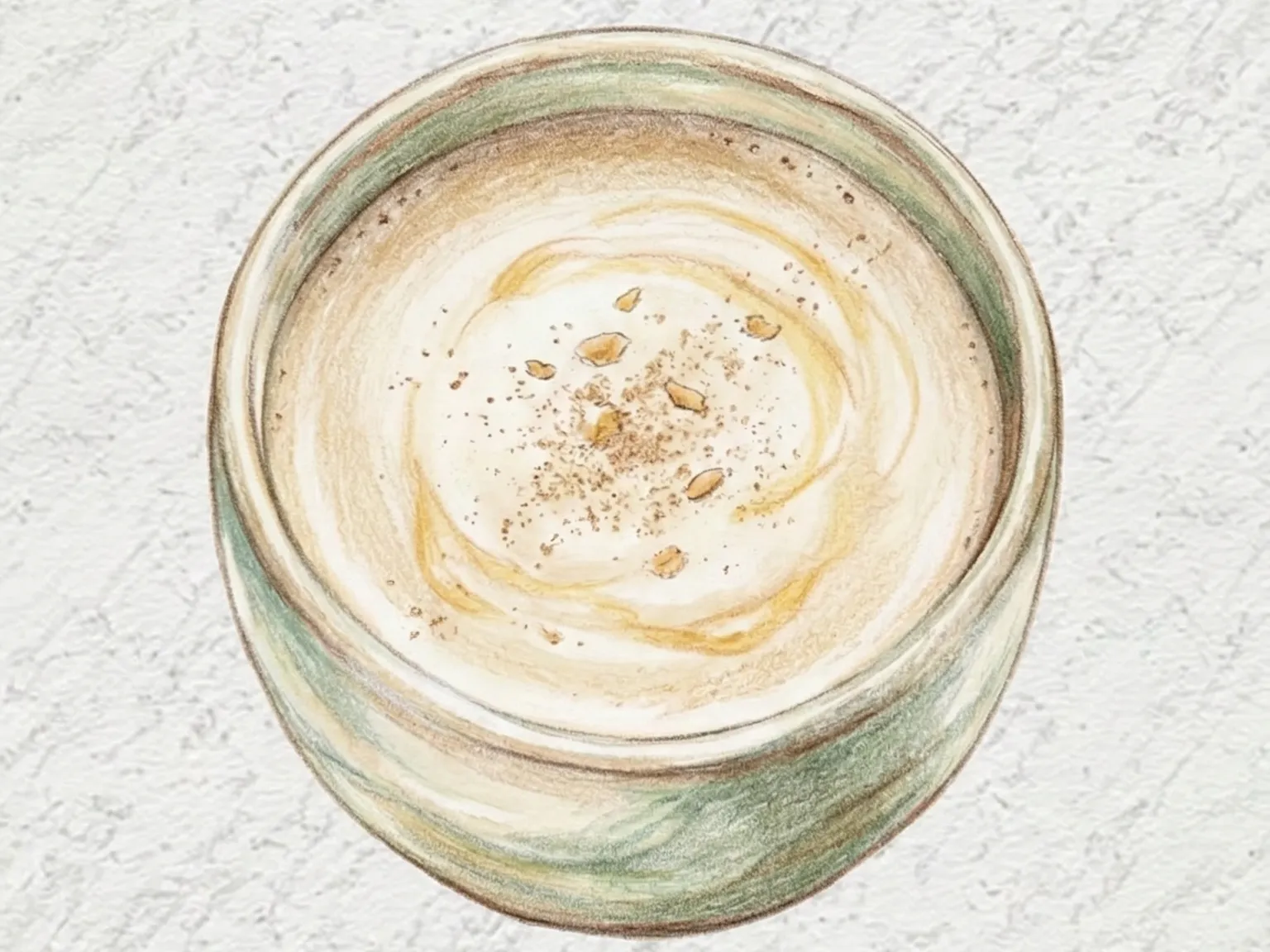
Pat-latte is a Korean red bean milk drink built around two simultaneous uses of the same cooked beans.
What makes this special
- Pat-latte balances creamy blended red bean puree with whole cooked beans for a textured milk drink.
- Two-way red bean prep: most blended smooth, remainder left whole for texture
- Condensed milk pulls the bean's mild sweetness toward caramel-dense richness
Key ingredients
Core cooking flow
- 1 Place 140 grams of tenderly cooked red beans and 120ml of water into a blend...
- 2 Carefully set aside forty grams of the remaining whole cooked red beans in a...
- 3 Combine the prepared red bean base and 420ml of fresh milk in a pot, stirrin...
Pat-latte is a Korean red bean milk drink built around two simultaneous uses of the same cooked beans. Most of the beans are blended smooth with water into a thick puree, while the remainder are left whole and stirred in afterward to provide soft, chewy pockets of texture throughout. That combined bean base goes into a saucepan with milk and warms over medium-low heat as sugar, sweetened condensed milk, a pinch of salt, and vanilla extract are added one by one. The condensed milk transforms the beans' mild natural sweetness into something denser and more complex, landing somewhere between caramel and roasted grain. Salt does not make the drink taste salty but instead sharpens the contrast that makes the sweetness register more clearly on the palate. Vanilla rounds off the earthy, slightly rustic edge of red bean aroma and brings the whole flavor profile together. Served hot, the drink takes on the gentle warmth of traditional red bean porridge. Poured over ice, the same flavors tighten and become more concentrated. Either way, stirring once before drinking keeps the whole beans evenly distributed rather than settled at the bottom.
Instructions
Read the steps as a cooking flow: prep, heat, seasoning, doneness control, and finish.
- 1Heat
Place 140 grams of tenderly cooked red beans and 120ml of water into a blender, processing until completely smooth and thick to create a rich and concentrated red bean paste base.
- 2Heat
Carefully set aside forty grams of the remaining whole cooked red beans in a separate bowl to maintain their shape, as they will be used later as a textured topping.
- 3Control
Combine the prepared red bean base and 420ml of fresh milk in a pot, stirring constantly over medium-low heat until the mixture is thoroughly heated and steaming gently without burning.
- 4Control
Stir in twenty-five grams of sugar, eighteen grams of condensed milk, and one gram of salt, then simmer for five minutes until all ingredients are perfectly integrated into a smooth consistency.
- 5Finish
Incorporate the reserved whole red beans and two milliliters of vanilla extract, heating for two additional minutes to infuse the deep flavors before turning off the heat and preparing to serve.
- 6Step
Pour the completed red bean latte into cups to enjoy immediately while warm, or allow it to cool completely before pouring over ice for a refreshing and chilled beverage option.
After the steps
Pick a recipe that fits this dish.
Continue with shared ingredients, meal pairings, or a similar method.
Recipes That Go Well With This
More Drinks →Based on shared ingredients and meal pairing
Korean Sweet Corn Latte (Butter Sauteed Corn Milk Drink)
Sweet corn latte begins by sauteing cooked corn kernels in butter until fragrant, then simmering them in milk to draw out the corn's natural sugars before blending everything smooth. The butter amplifies the starchy, roasted aroma during the initial saute, coating each kernel so that the fat-soluble flavor compounds dissolve fully into the milk during the five-minute simmer. Blending the mixture until completely smooth and then straining it through a fine sieve removes any remaining hull pieces, producing a texture as silky as a custard sauce. This straining step makes a noticeable difference in the final quality. Condensed milk adds a rounded sweetness, and a small amount of white pepper introduces a faint spiced warmth that gives the drink depth beneath the sweetness. It works equally well served hot in a ceramic mug or chilled and poured over ice; the corn aroma remains vivid in both versions.
Korean Dalgona Milk (Caramel Puffed Sugar Candy Milk)
Dalgona milk starts with melting sugar in a small pan over low heat until it reaches a deep amber color, then adding baking soda, which causes the hot caramel to foam and aerate instantly into a honeycomb-like structure. Once cooled, the puffed candy is crushed and dissolved into cold milk. The baking soda reaction is what gives dalgona its distinctive lightness: instead of a dense, hard caramel, the aerated structure makes it brittle and easy to break while also helping it dissolve quickly in the milk. The caramelized sugar delivers a deep, toasty sweetness with a slight bitterness at the edges, similar to butterscotch, that spreads through the milk as the pieces melt. A small amount of vanilla extract sharpens the flavor and a pinch of salt rounds it out. Keeping some crushed dalgona pieces separate and dropping them on top of the finished drink as a garnish adds a crunchy contrast to the creamy liquid beneath.
Korean Galbi Tteokbokki (Soy-Braised Pork Rib Rice Cake Stir-Fry)
Galbi tteokbokki marinates boneless pork ribs in soy sauce, sugar, mirin, garlic, and sesame oil for fifteen minutes before the dish comes together in a single pan. The ribs go in first over high heat, searing until the surface caramelizes and the rendered fat begins to collect in the pan. Water and rice cakes are added next, and the mixture simmers on medium until the sauce reduces into a concentrated glaze that coats each tteok thoroughly. No gochujang enters the recipe at any point - the flavor profile is entirely soy-and-sugar sweet-salty, made deeper by the pork's own fat and juices as they cook down. The finished dish shows a visible sheen on both the rice cakes and the meat, with green onion and sesame seeds scattered over the top.
Korean Injeolmi Latte (Roasted Soybean Powder Milk Drink)
This beverage uses the roasted soybean powder commonly found on Korean rice cakes to create a milk based dessert drink. Pre-roasting the powder is a mandatory step to eliminate the sharp, grassy scent inherent in raw soybeans. Toasting transforms these raw qualities into a nutty fragrance similar to roasted grains. To ensure a consistent texture without clumps, the powder must be passed through a fine sieve before it meets the milk. Brown sugar syrup provides a dark, caramel sweetness that grounds the toasted base, while a small amount of honey adds a subtle floral lingering. A pinch of salt sharpens the overall profile and prevents the sweetness from feeling flat. Because the oils in roasted soybean powder remain stable across different temperatures, this drink performs well whether served over ice or heated. A final dusting of powder on the surface mimics the appearance of a traditional injeolmi cake and increases the aromatic impact of the first sip. For a variation, adding a shot of espresso introduces a bitter edge to the nuttiness, while incorporating black sesame powder creates a darker color and a more concentrated grain scent.
Serve with this
Korean Honeycomb Candy (Caramel Sugar Disc with Baking Soda Puff)
Ppopgi dalgona is a Korean street candy made by melting white sugar in a small ladle over low heat, then stirring in baking soda to trigger a rapid foaming expansion. When the sugar reaches a pale amber stage, the heat is cut and baking soda with a pinch of salt is mixed in quickly: carbon dioxide releases immediately, puffing the molten sugar to two or three times its original volume within seconds. The expanded mixture is poured onto parchment and pressed flat to roughly 5 mm with an oiled plate or press, then stamped with a shape cutter before it sets. Once fully cool and rigid, the candy snaps crisply when tapped - the hallmark texture. The caramel's color at the moment the heat is removed determines the final flavor: pull it too early and the candy stays flat-sweet; let it darken a shade too far and bitterness overtakes the sweetness. The narrow window of pale amber is where the sweet-bitter balance lands correctly.
Korean Stir-Fried Sweet Potato Stems
Goguma julgi - sweet potato stems - are the above-ground vines of the sweet potato plant, a byproduct that Korean cooks transform into a summer namul rather than discarding. The most labor-intensive step is peeling each stem by hand, pinching the outer skin with a fingernail and pulling it away to reveal the tender core beneath. After blanching for two minutes and rinsing in cold water, the stems are stir-fried in perilla oil with garlic and seasoned with soup soy sauce. Perilla powder stirred in at the end thickens the remaining liquid into a nutty glaze. In season during summer, the stems are harvested from sweet potato fields before the tubers themselves are dug up.
Yuja Saenggang Scone (Yuja Ginger Scone)
Cold butter is rubbed into flour to form coarse crumbs, then yuja marmalade and ginger juice are mixed in to create a dough that bakes into scones with a crumbly, flaky exterior and a moist, tender center. The yuja contributes a bright citrus fragrance that is more aromatic and floral than lemon, pairing naturally with the buttery richness of the scone. Ginger adds a subtle warmth that tempers the sweetness and leaves a clean finish. Minimal handling of the dough preserves the cold butter pockets that generate flaky layers during baking - if the dough warms, it should be returned to the refrigerator immediately. Shaping into rounds and brushing the tops with egg wash produces a golden, glossy crust. These scones are at their best served warm with clotted cream or yuja curd, where the citrus notes in the spread echo those baked into the scone itself. The combination of Korean citrus and British baking tradition makes this a distinctive cross-cultural pastry.
Similar recipes
Korean Strawberry Latte
This strawberry latte layers a hand-crushed fresh strawberry base at the bottom of the glass, then builds a two-tone presentation by slowly pouring cold milk down the inside wall. The berries are crushed with a fork rather than blended smooth, leaving irregular pieces of fruit that provide texture in every sip. Mashing them with sugar and allowing five minutes for osmosis draws out enough juice to dissolve the sugar into a concentrated, syrupy base that sits dense at the bottom. One or two drops of vanilla extract smooth the sharp edge of the strawberry's acidity without masking the fruit. Honey, used in place of or alongside sugar, leaves a floral sweetness in the finish that plain sugar cannot replicate. Pouring the milk against the inside wall of the glass rather than directly over the fruit keeps the red base layer intact and the two-tone separation distinct. Stirring the drink collapses the layers into a uniform pale pink with flecks of fruit dispersed throughout. Made with fresh spring strawberries at peak ripeness, the latte delivers a real-fruit fragrance that processed strawberry syrups cannot match.
Mocha Red Bean Crumble Cake
Cocoa powder and instant coffee are folded into the batter together, producing a deep mocha character where the bitterness of coffee amplifies the chocolate's intensity rather than competing with it. Sweetened red bean paste - left in small, discernible pieces - is scattered through the crumb, providing pockets of earthy sweetness that interrupt the mocha richness with each bite. A buttery crumble topping bakes to a golden, crunchy cap that contrasts sharply with the moist cake below. The balance of red bean to batter matters: too much and the cake becomes dense and stodgy, too little and the Korean accent disappears. Resting the cake overnight allows the coffee and red bean flavors to meld into a more unified profile, making the second-day slice arguably better than the first.
Sweet Red Bean Porridge (Korean Adzuki Rice Dessert Soup)
Danpat-juk is a Korean sweet red bean porridge prepared by cooking dried red beans until fully tender, then straining two-thirds through a fine sieve for a smooth paste while keeping the remaining third whole to provide textural contrast throughout the bowl. The water from the initial boil is discarded to eliminate the raw astringency that fresh red beans carry before the flavor fully develops. Sugar, salt, and a small measure of cinnamon season the finished porridge, with the cinnamon adding a warm spiced note without overpowering the bean itself. Small glutinous rice dumplings called saealsim, hand-shaped from glutinous rice flour mixed with boiling water, are dropped into the simmering liquid and float to the surface once cooked through, introducing a chewy counterpoint to the smooth broth. Because the porridge thickens noticeably as it cools, pulling it from the heat while still slightly thinner than the intended final consistency ensures the bowl reaches the table at the right texture.