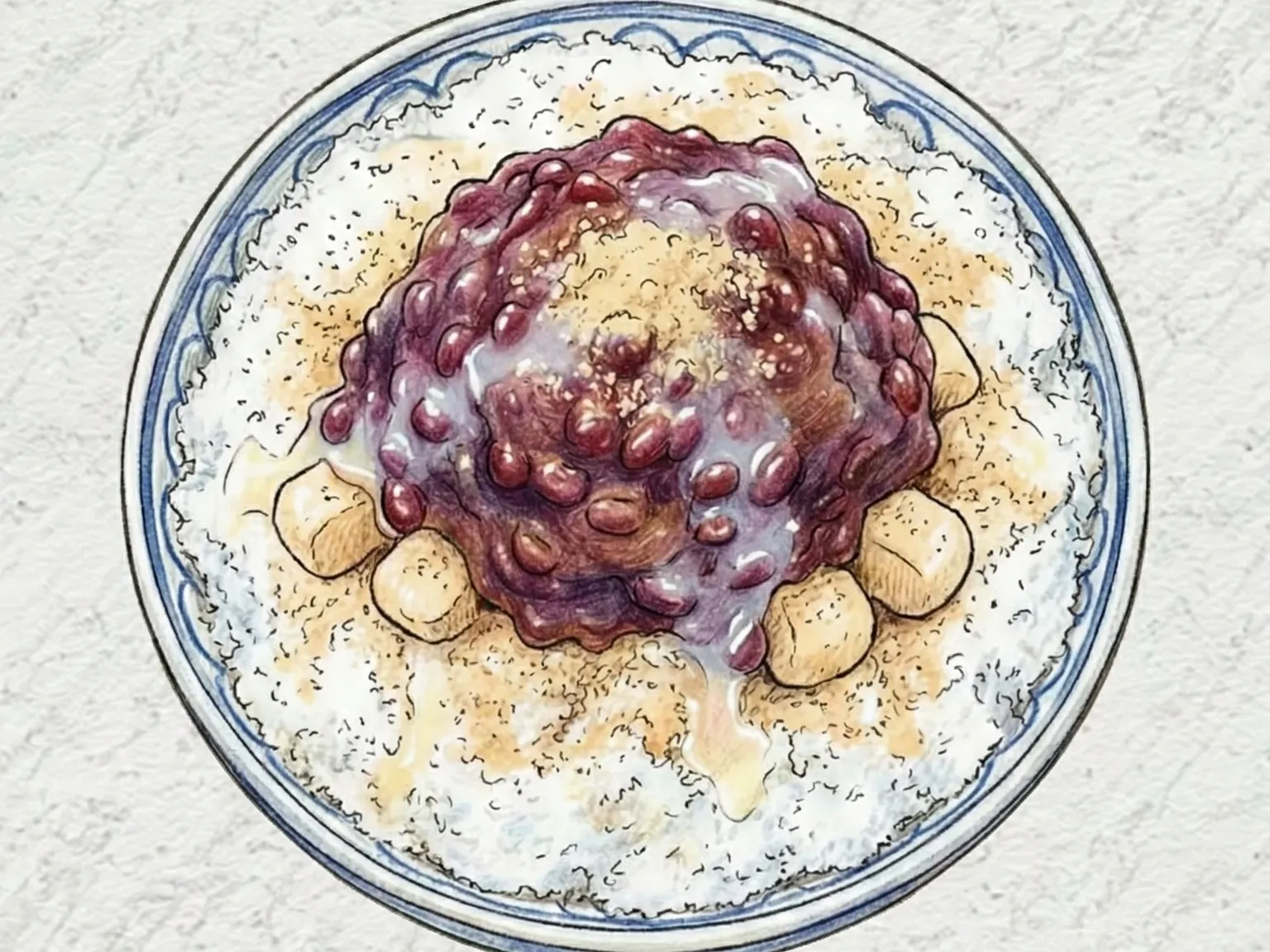
Milk Shaved Ice with Red Beans
Uyu patbingsu is a Korean shaved ice dessert made by finely shaving frozen milk into a fluffy, snow-like mound and layering it with sweetened red beans, chewy rice cake pieces, fruit, and grain powder. Milk ice produces a finer, creamier shave than water-based ice, melting smoothly on the tongue, and a drizzle of condensed milk intensifies the dairy richness. The sweet red beans fold into the ice as you eat, adding thick, starchy pockets of sweetness, while the bite-sized rice cakes provide a chewy counterpoint. Multigrain powder and roasted soybean powder lay down a toasty, nutty base, and sliced almonds with fresh strawberries contribute crunch and bright fruit acidity to round out the bowl.
Adjust Servings
Instructions
- 1
Freeze milk and shave it finely with a shaved-ice machine into a large bowl.
- 2
Drain sweet red beans slightly and keep them chilled.
- 3
Cut rice cakes into bite-size pieces and slice the strawberries.
- 4
Top the shaved milk ice evenly with beans, rice cakes, and strawberries.
- 5
Sprinkle multigrain powder and soybean powder, then add sliced almonds.
- 6
Drizzle condensed milk right before serving and enjoy immediately.
As an Amazon Associate, we may earn from qualifying purchases.
Tips
Nutrition (per serving)
More Recipes

Korean Sweet Red Bean Latte
Pat-latte is a Korean dessert drink made by blending most of the cooked red beans into a smooth puree with water, then warming it with milk to create a creamy, subtly sweet beverage with an earthy grain-like richness. A portion of whole beans is reserved and stirred in later, providing soft pops of texture that break up the otherwise silky consistency. Sugar, sweetened condensed milk, and a gram of salt are added during the warming stage: the condensed milk deepens the sweetness into something dense and caramel-adjacent, while the salt sharpens the contrast. A splash of vanilla extract tempers the rustic edge of the red bean flavor, and the latte holds up equally well served hot from the pot or poured over ice.

Cinnamon Persimmon Ice (Korean Spiced Punch Scraped Ice Dessert)
Sujeonggwa granita takes the traditional Korean cinnamon-ginger punch, sweetens it with dark brown sugar, and freezes it into a flaky ice dessert by scraping with a fork at regular intervals. The spiced liquid is poured into a shallow metal tray and scraped every hour three or four times to break the ice into coarse, sandy crystals; more rounds of scraping produce finer, more uniform texture. Cinnamon and ginger concentrate into every ice shard, so the granita tastes intensely spiced even at freezing temperature. Thin strips of dried persimmon and a scattering of pine nuts on top add chewy sweetness and mild richness that offset the granular crunch of the ice.

Sweet Red Bean Porridge (Korean Adzuki Rice Dessert Soup)
Danpat-juk is a Korean sweet red bean porridge made by boiling dried red beans until soft, then straining two-thirds into a smooth puree while keeping the remaining third whole for textural contrast. The first boiling water is discarded to remove the raw, astringent taste of the beans, and the final porridge is seasoned with sugar, salt, and a touch of cinnamon for warmth. Small glutinous rice dumplings called saealsim are shaped by hand and dropped into the simmering bean liquid, where they float to the surface once cooked through, adding chewy bites throughout. Because the porridge thickens considerably as it cools, it should be finished slightly thinner than the desired final consistency.

Red Bean Pastry (Korean Gyeongju Soft Bun with Anko)
Gyeongju-ppang is a baked Korean pastry made from a yeast-leavened dough enriched with milk and butter, wrapped around a generous filling of sweet red bean paste. The dough is rolled thin, sealed around the paste with the seam facing down, and baked at 180 degrees Celsius until the top puffs up with a smooth, light golden surface. Because the filling-to-dough ratio is high, the first flavor in each bite is the dense, sweet red bean, followed by the mild dairy aroma of the thin bread shell. Rooted in the baking traditions of Gyeongju and its famous hwangnam-ppang, this pastry stays moist even after cooling, making it suitable as a packaged gift or an everyday snack.

Walnut Cakes (Korean Bite-Sized Red Bean Walnut Pastries)
Hodu-gwaja are bite-sized Korean walnut cakes made from a batter of cake flour, baking powder, eggs, milk, and melted butter, cooked in a dedicated walnut-shaped iron mold. Each cavity is half-filled with batter, topped with sweet red bean paste and a toasted walnut half, then sealed with more batter and cooked over medium-low heat for six to eight minutes per side. Toasting the walnut halves at 160 degrees Celsius for five minutes beforehand deepens their fragrance noticeably in the finished cake. Resting the batter for ten minutes before pouring relaxes the gluten, reducing air pockets and yielding a smoother exterior crust.

Mocha Red Bean Crumble Cake
Cocoa powder and instant coffee are folded into the batter together, producing a deep mocha character where the bitterness of coffee amplifies the chocolate's intensity rather than competing with it. Sweetened red bean paste - left in small, discernible pieces - is scattered through the crumb, providing pockets of earthy sweetness that interrupt the mocha richness with each bite. A buttery crumble topping bakes to a golden, crunchy cap that contrasts sharply with the moist cake below. The balance of red bean to batter matters: too much and the cake becomes dense and stodgy, too little and the Korean accent disappears. Resting the cake overnight allows the coffee and red bean flavors to meld into a more unified profile, making the second-day slice arguably better than the first.