Pav Bhaji (Mumbai Street Food Spiced Mashed Vegetable Curry with Bread)
Asian Easy

Pav Bhaji (Mumbai Street Food Spiced Mashed Vegetable Curry with Bread)

Quick answer

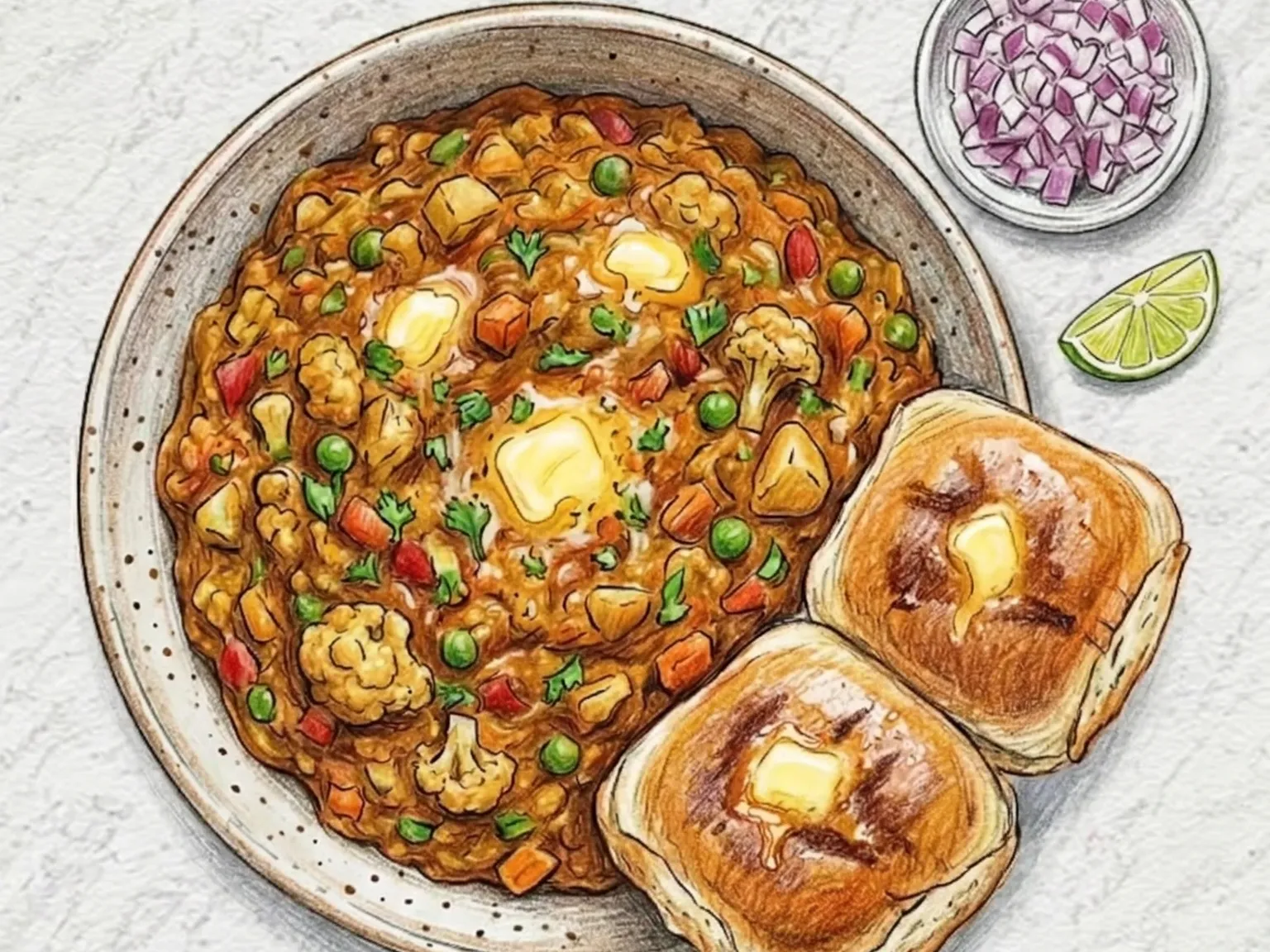
Pav bhaji is a street-food staple born on the pavements of Mumbai.

What makes this special

  • Pav Bhaji is a buttery Mumbai street food made of mashed vegetables served with soft toasted buns.
  • Thorough mashing of mixed vegetables creates the signature creamy body
  • Pav bhaji masala builds layered nutty heat unique to this spice blend
Total time
50 min
Level
Easy
Servings
4 servings
Ingredients
8
Calories
480 kcal
Protein
11 g

Key ingredients

potatocauliflowergreen peastomatoonion

Core cooking flow

  1. 1 Cut the 300 g potato and 150 g cauliflower into small pieces, then add them...
  2. 2 Melt part of the butter in a wide pan, then add the 120 g onion.
  3. 3 Add the 250 g tomato and 2 tablespoons pav bhaji masala to the onion base.

Pav bhaji is a street-food staple born on the pavements of Mumbai. A medley of boiled potatoes, cauliflower, peas, and carrots is mashed together on a hot griddle, then cooked down with generous amounts of butter and a proprietary spice blend called pav bhaji masala. Tomatoes and onions form the aromatic base, while the masala contributes warm, earthy heat that deepens with each pass of the spatula. The accompanying soft bread rolls are split and toasted on a buttered griddle until golden on the cut side. Raw onion rings, a wedge of lemon, and a knob of extra butter placed on top of the simmering bhaji are the traditional garnish. The dish is designed to be eaten fast and hot, scooped directly from the communal pan.

Prep 20min Cook 30min 4 servings
Recipes by ingredient → potatoes tomato onion butter

Instructions

Read the steps as a cooking flow: prep, heat, seasoning, doneness control, and finish.

6 steps
  1. 1
    Control

    Cut the 300 g potato and 150 g cauliflower into small pieces, then add them with 100 g green peas to a pot of water.

    Boil over medium heat for about 15 minutes, until the vegetables crush easily.

  2. 2
    Control

    Melt part of the butter in a wide pan, then add the 120 g onion.

    Cook over medium heat for about 5 minutes, stirring often, until the edges turn translucent and the onion smells sweet instead of sharp.

  3. 3
    Control

    Add the 250 g tomato and 2 tablespoons pav bhaji masala to the onion base.

    Cook over medium-low heat for about 6 minutes, scraping the pan, until the tomato thickens and a little butter separates at the edges.

  4. 4
    Heat

    Add the boiled vegetables to the pan and press them with a ladle or masher.

    Keep the heat medium-low and mix for about 5 minutes, breaking large pieces down until the bhaji turns creamy and thick.

  5. 5
    Control

    If the bhaji becomes too stiff, loosen it with small splashes of the vegetable cooking water.

    Simmer over low heat for 3 more minutes, stirring frequently so the thick mash does not catch on the bottom.

  6. 6
    Finish

    Split the 8 soft bread rolls and toast the cut sides in the remaining butter.

    Cook until golden and lightly crisp outside, then serve them immediately with the hot bhaji, onion slices, and a little lemon if available.

After the steps

Pick a recipe that fits this dish.

Continue with shared ingredients, meal pairings, or a similar method.

Recipes That Go Well With This

More Asian →

Based on shared ingredients and meal pairing

Goan Fish Curry (Tangy Coconut Fish Stew)
Shared ingredient: tomato Asian

Goan Fish Curry (Tangy Coconut Fish Stew)

Goan fish curry - known locally as xitt-kodi - is the daily centerpiece of fishing households along India's Goa coast, shaped over five centuries by the meeting of Konkani culinary tradition and Portuguese colonial influence. Freshly pressed coconut milk forms the foundation, into which a masala paste of tamarind, Kashmiri red chilies, coriander seeds, and cumin is stirred and brought to a simmer. Local fish - kingfish, pomfret, or mackerel - are added bone-in and cooked over gentle heat for no more than five minutes. That restraint is the defining technique: the flesh absorbs the sauce fully while still breaking apart in clean, moist flakes at the press of a spoon rather than turning dense and dry. Tamarind's sharp acidity slices through the coconut cream's weight, producing a broth that reads as fresh and light despite its deep orange color and creamy texture. The Kashmiri chili contributes vivid color with only moderate heat, so the sauce is bold-looking but not aggressively spicy. Goan fishermen have long followed the practice of cooking their morning catch into curry by midday and serving it over boiled parboiled rice called ukde tandull, a pairing so bound to local identity that it crosses every line of religion, caste, and neighborhood across the state.

Chole Bhature (Chickpea Curry with Puffed Bread)
Shared ingredient: tomato Asian

Chole Bhature (Chickpea Curry with Puffed Bread)

Chole bhature is the definitive breakfast combination of North India's Punjab and Delhi regions, bringing together a dark, intensely spiced chickpea curry and deep-fried puffed bread. The chole begins with dried chickpeas soaked overnight and pressure-cooked until tender, then folded into a base of slow-cooked onion and tomato seasoned with amchur, anardana, and garam masala, simmered until the gravy thickens to a deep, clinging brown. Whole spices - black cardamom, cinnamon, bay leaf - are often tied in muslin and simmered alongside the chickpeas, infusing the pot with fragrance without leaving stray solids in the finished dish. Bhature dough is made with refined flour enriched by yogurt and coarse semolina, rested at room temperature until slightly fermented, then rolled and lowered into hot oil where it balloons into a puffy, golden pillow within seconds. The ritual of tearing a piece of bhature and scooping up chole delivers salty, sour, and spiced-bread richness in a single motion. Raw onion rings and pickled green chilies cut through the heaviness with crunch and heat. In Old Delhi, the most storied shops have maintained their curry by never fully emptying the pot, topping it up over decades so the base carries years of accumulated flavor.

Kachumber Salad (Indian Kachumber salad)
Serve together Salads

Kachumber Salad (Indian Kachumber salad)

Kachumber salad finely dices cucumber, tomato, and red onion, then tosses them with chopped cilantro, lime juice, ground cumin, chaat masala, and salt in a quick Indian raw vegetable preparation. Removing some of the seeds from the cucumber and tomato limits excess moisture so the dressing stays concentrated rather than watery. Soaking the diced red onion in cold water for three minutes draws out its harsh sharpness, letting it blend more smoothly with the other ingredients. Ground cumin lays down a warm, earthy undertone, and chaat masala layers a tangy, salty complexity over the lime acidity, lifting a simple combination of vegetables into something distinctly Indian. Chopping cilantro stems together with the leaves releases more of the herb's aromatic oils than leaves alone provide. Letting the dressed salad rest for about fifteen minutes before serving allows the flavors to meld so the final result is noticeably more cohesive.

Rogan Josh (Kashmiri Slow-Braised Lamb Curry with Yogurt)
Similar recipe Asian

Rogan Josh (Kashmiri Slow-Braised Lamb Curry with Yogurt)

Rogan josh is a Kashmiri lamb curry whose name translates from Persian as 'heat in oil,' describing the way the fat separates and rises to the surface of the finished sauce. Bone-in lamb pieces are slow-braised with yogurt, fennel seeds, dry ginger powder, and Kashmiri red chilies - a variety that delivers vivid crimson color with moderate heat rather than scorching fire. Some traditional recipes use ratanjot, a tree bark that deepens the red hue without altering the flavor. The yogurt tenderizes the meat over the long cooking and lends a subtle tang to the gravy. When done properly, a layer of aromatic oil floats on top of the thick, rust-red sauce. The spice profile leans warm and fragrant rather than sharp, making rogan josh one of the more approachable Kashmiri dishes.

Serve with this

Masala Chai
Drinks Easy

Masala Chai

Masala chai is an Indian spiced milk tea made by simmering crushed ginger, cinnamon, and cardamom in water until the spices release their oils fully, then adding black tea leaves and whole milk and continuing to heat gently over low flame. The spices build aromatic depth that wraps around the tea's tannins, transforming them into warm, rounded complexity rather than raw astringency. Stirring in sugar during the final minutes of simmering softens the spice's sharpness and allows the milk's creaminess to come forward. Using whole spices rather than ground powders keeps the brew free of gritty residue and produces a cleaner, more transparent aroma in each cup.

🍺 Bar Snacks ⚡ Quick
Prep 8min Cook 15min 3 servings
Japanese Napolitan Spaghetti
Noodles Easy

Japanese Napolitan Spaghetti

Napolitan spaghetti is a Japanese yoshoku pasta stir-fried with ketchup, sausage, onion, and green bell pepper that traces its origins to postwar Japan, when imported ingredients were scarce and cooks adapted Western techniques with locally available pantry staples. Cooking the ketchup in the pan first drives off moisture and concentrates its tomato sweetness, transforming it from a condiment into a sauce base with genuine depth. Worcestershire sauce adds a layer of fermented complexity that ketchup alone cannot provide. The sausage goes in first to render its fat and build flavor, followed by onion and pepper stir-fried quickly over high heat to retain their texture. Spaghetti cooked al dente with a quarter cup of pasta water reserved helps the sauce cling to the noodles when tossed together in the pan. A knob of butter stirred in at the end rounds off the ketchup's acidity and gives the finished dish a glossy, sweet-savory character that has made napolitan a beloved nostalgic dish in Japanese home cooking.

🏠 Everyday 🧒 Kid-Friendly
Prep 15min Cook 15min 2 servings
Korean Red Bean Porridge (Velvety Adzuki Porridge with Rice Dumplings)
Rice Medium

Korean Red Bean Porridge (Velvety Adzuki Porridge with Rice Dumplings)

Pat-juk is a traditional Korean red bean porridge made by boiling dried red beans until very soft, straining them to extract a smooth, deeply colored paste, and simmering that paste with rice until it thickens into a velvety porridge. Small dumplings rolled from glutinous rice flour - called saeal-sim - are dropped in toward the end, giving each spoonful a chewy counterpoint to the creamy base. The porridge carries a gentle, natural sweetness from the red beans, which can be adjusted with a touch of sugar. A dusting of cinnamon on top complements the earthy bean flavor. Traditionally served on the winter solstice, pat-juk is equally satisfying as an everyday warm meal or a light late-night dish.

🏠 Everyday 🧒 Kid-Friendly
Prep 30min Cook 60min 4 servings

Similar recipes

Pani Puri (Indian Crispy Hollow Shells with Spiced Herb Water)
Asian Medium

Pani Puri (Indian Crispy Hollow Shells with Spiced Herb Water)

Pani puri is India's most iconic street snack - crisp, hollow shells filled with potato, chickpeas, and a spiced herb water, then consumed in a single bite before they soften. Each puri is cracked open at the top, stuffed with mashed potato and chickpeas seasoned with chaat masala, and flooded with chilled pani made from blended mint, cilantro, tamarind, and green chili. The moment it enters the mouth, the shell shatters and releases a cold, tangy-spicy rush of liquid followed by the starchy comfort of potato. The flavor is layered and immediate: mint's cooling bite, tamarind's sour sweetness, and chaat masala's sharp saltiness all arrive at once.

🧒 Kid-Friendly
Prep 30min Cook 10min 2 servings
Aloo Samosa (Indian Crispy Potato-Filled Fried Pastry)
Street food Medium

Aloo Samosa (Indian Crispy Potato-Filled Fried Pastry)

Samosa first appears in written form in a 10th-century Central Asian cookbook under the name sambosa, then follows trade routes westward into Persia and east into the Indian subcontinent, where it settled into street-food culture so thoroughly that chai stalls sell hundreds before noon each morning. The dough is stiff - flour, water, and oil kneaded until firm - and rolled thin. Too soft a dough absorbs oil during frying and turns greasy rather than crisp. The filling is boiled potato mixed with cumin, fresh green chili, and cilantro; the cumin's earthy fragrance permeates the potato during the mixing. The dough folds into a cone, filling goes in, air is pressed out carefully before sealing - trapped air expands in the hot oil and splits the crust. Fried at the correct temperature, the layered shell blisters outward, turns golden brown, and shatters audibly on first bite. Inside is a warm, lightly spiced potato that has absorbed all that cumin. Mint chutney and tamarind sauce are served alongside, their sourness and sweetness doing what the filling alone cannot.

🧒 Kid-Friendly 🍺 Bar Snacks
Prep 35min Cook 20min 4 servings
Butter Chicken
Western Medium

Butter Chicken

Butter chicken - murgh makhani - starts by marinating chicken thighs in yogurt, garam masala, and cumin, then roasting or grilling them at high heat to develop a slightly charred, smoky exterior. That surface char is a defining element; plain poaching cannot replicate it. The tomato sauce base requires long, patient reduction - the raw acidity must cook off and round into sweetness before any dairy is added. Butter and heavy cream then go in, wrapping the spice blend sharp heat in a velvety richness that carries through to the last bite. Cumin and garam masala provide the earthy, layered warmth that anchors this curry's identity, and together they produce the mild, creamy character that sets murgh makhani apart from hotter Indian preparations.

🎉 Special Occasion 🍺 Bar Snacks
Prep 30min Cook 40min 4 servings

Tips

Mash thoroughly for the signature creamy texture.
A squeeze of lemon at the end brightens the flavor.

Nutrition (per serving)

Calories
480
kcal
Protein
11
g
Carbs
68
g
Fat
18
g