Bae Saenggang Galette (Pear Ginger Galette)
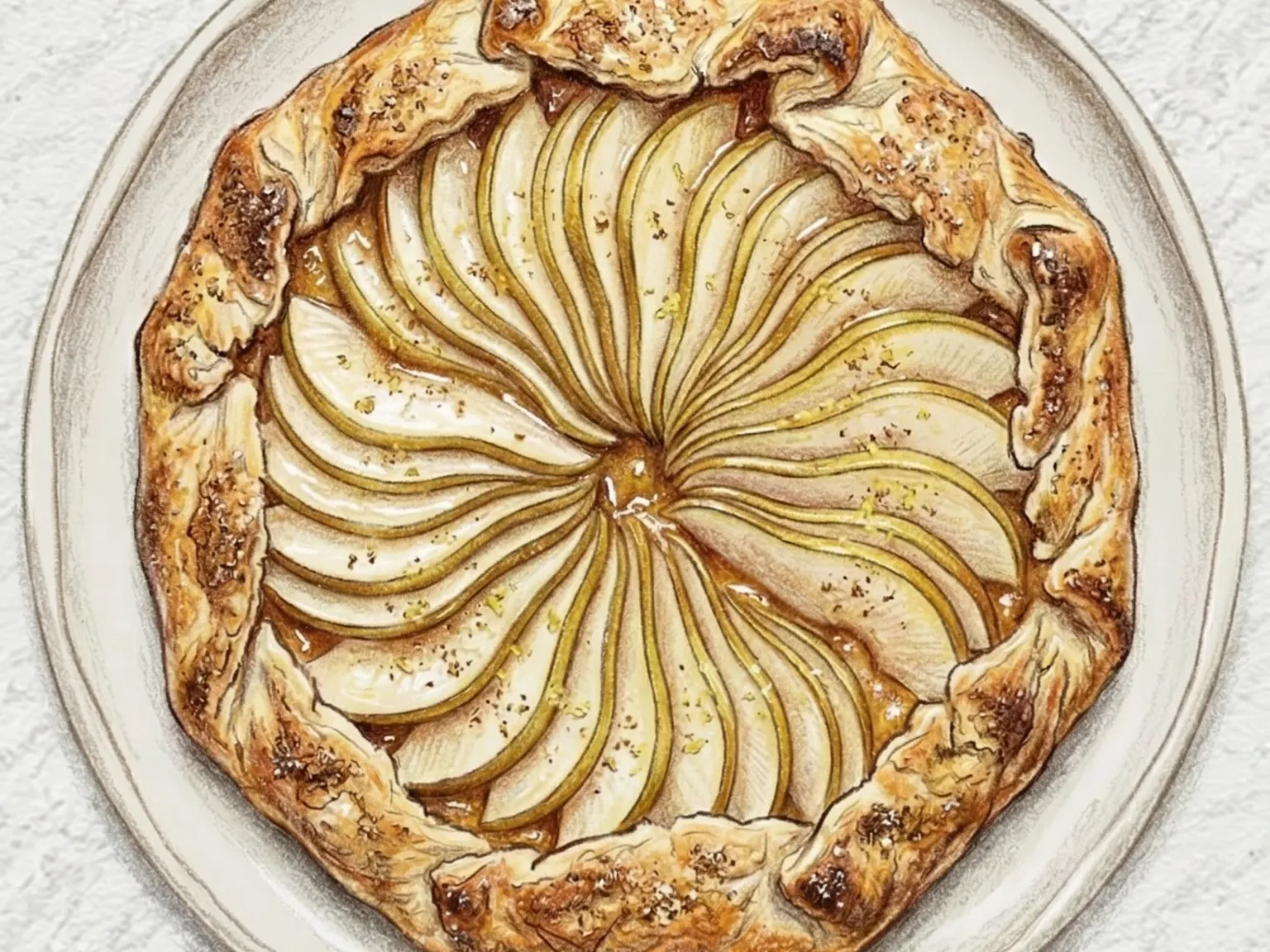
A rough circle of buttery pastry dough is spread with thinly sliced pears, then folded at the edges to form a rustic, free-form tart. Fresh ginger juice adds a warm, faintly spicy note that lifts the clean sweetness of the fruit without overpowering it. Brown sugar and a dusting of cinnamon deepen the filling, while cornstarch absorbs excess juice and prevents a soggy base. As the galette bakes, the exposed edges of the pastry darken to a deep golden brown and the pear slices soften into translucent, jammy layers. If the pears release too much liquid during preparation, patting them dry before arranging on the dough keeps the crust from going limp. Rechilling the dough whenever it softens maintains the cold butter pockets that create flakiness.
Adjust Servings
Instructions
- 1
Rub flour, salt, and butter to pea-size crumbs, then add ice water to form dough.
- 2
Flatten dough, wrap, and chill for 30 minutes.
- 3
Slice pears thinly and toss with brown sugar, ginger juice, cinnamon, and cornstarch.
- 4
Roll dough into a round, place on tray, and layer pears in the center.
- 5
Fold edges inward to enclose, then brush with egg wash.
- 6
Bake at 190C for 35-38 minutes until edges are deeply golden.
- 7
Cool 10 minutes, slice, and serve warm.
As an Amazon Associate, we may earn from qualifying purchases.
Tips
Nutrition (per serving)
More Recipes

Yuja Cream Cheese Tart (Korean Citron Cream Cheese No-Bake Tart)
A crushed biscuit base supports a smooth filling of cream cheese sweetened with yuja-cheong, a Korean preserved citron syrup that carries an intensely floral and tart character. Yuja has a fragrance more complex than lemon, combining grapefruit-like bitterness with mandarin sweetness, and it perfumes the entire tart. A small addition of lemon juice sharpens the edge of the acidity, preventing the filling from tasting flat. Once baked and chilled, the filling sets to a mousse-like consistency that holds its shape when sliced but melts on the tongue. The biscuit crust provides a sandy, buttery crunch at the base. This tart is especially practical in winter, when leftover yuja-cheong from tea-making season needs a purpose beyond stirring into hot water.

Fruit Clafoutis (Baked Custard with Fresh Fruit)
Clafoutis is a rustic French baked dessert that suspends fresh seasonal fruit in a thin custard batter and bakes it until the edges puff golden and the center sets to a silky cream. The batter, close to crepe batter in consistency, is made from eggs, milk, flour, and sugar whisked until smooth. Traditionally, unpitted cherries are used because the pits release a faint almond-like fragrance during baking that deepens the overall flavor. Strawberries, blueberries, and plums work equally well, their juices concentrating in the oven heat and creating pockets of intense sweetness against the mild custard. Because the method is little more than mixing and pouring, it requires no special technique. Served warm with a dusting of powdered sugar, the contrast between the crisp rim and the soft interior is what makes this dessert memorable.

Doenjang Caramel Apple Galette
This galette combines a rustic French free-form pastry with a Korean twist - a drizzle of doenjang-infused caramel over cinnamon-spiced apples. The crust is made by cutting cold butter into flour and shaping it by hand, folding the rough edges over the fruit without fussing over symmetry. Sliced apples tossed with brown sugar and cinnamon fill the center, softening in the oven until tender. The doenjang caramel, made by whisking a small amount of fermented soybean paste into a brown sugar and cream sauce, adds a salty, umami undercurrent that transforms the familiar apple-and-cinnamon combination into something more layered. The doenjang amount is kept deliberately small - enough to create an intriguing depth, not enough to taste overtly of soybean paste.

Sweet Potato Cream Cheese Galette
Cold butter is rubbed into flour to create a flaky pastry shell, which is rolled flat, spread with a blend of mashed sweet potato, cream cheese, honey, and cinnamon, and then folded at the edges into a free-form galette. The sweet potato contributes mellow sweetness while cream cheese adds a tangy counterpoint, and honey bridges the two into a cohesive filling. Cinnamon provides a warm spice note that suits the autumnal character of the galette. Keeping the butter cold throughout the process is essential for flaky layers - if the dough softens, it should return to the refrigerator immediately. Leaving a four-centimeter border of bare dough around the filling makes the folding step clean and prevents leaking. Drier sweet potato varieties, such as chestnut-type, absorb less moisture and keep the crust from turning soggy during baking. The galette is best served warm, when the pastry is at its crispest and the filling is still soft.

Chocolate Lava Cake
Chocolate lava cake bakes a batter of melted dark chocolate, butter, eggs, sugar, and a small amount of flour in ramekins at high heat for a brief window, producing a set exterior with a molten chocolate core. At 220 degrees Celsius for ten to twelve minutes, the edges firm into a soft cake while the center stays liquid - breaking the surface releases a stream of warm, concentrated chocolate. The bittersweet depth of dark chocolate combines with the butterfat to create a dense, velvety richness, while vanilla extract rounds out the flavor. Timing is critical: overbaking by even two minutes solidifies the center and eliminates the signature lava effect.

Clafoutis (French Baked Cherry Custard Dessert)
Clafoutis is a traditional French dessert from the Limousin region, made by pouring a thin batter of eggs, sugar, milk, and flour over fresh cherries arranged in a buttered baking dish. Baking at 180 degrees Celsius for thirty to thirty-five minutes puffs the batter into a texture between a pancake and a baked custard - golden and lightly set at the edges, moist and tender around the fruit. The cherries release their tart juice into the surrounding batter during baking, creating pockets of concentrated fruit flavor. Vanilla extract rounds out the egg-and-milk base. Serving the clafoutis slightly warm rather than fully cooled preserves its soft, custardy consistency.