Charim

2686 Korean & World Recipes

2686+ Korean recipes, clean and organized. Ingredients to instructions, all at a glance.

Peking Duck
Asian Hard

Peking Duck

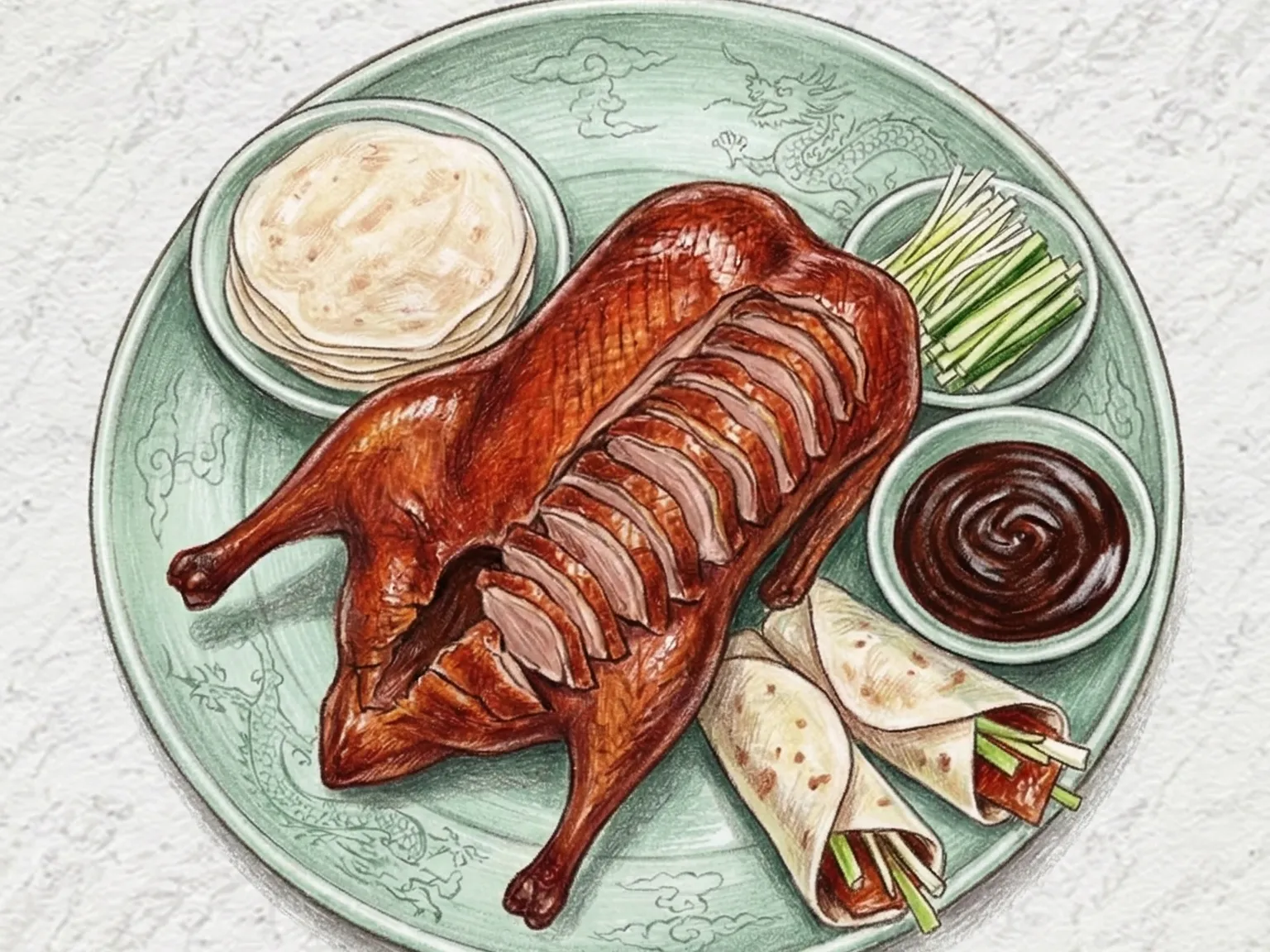
Peking duck is a centuries-old Chinese banquet dish refined in the imperial kitchens of Beijing. A whole duck is air-dried to tighten the skin, then roasted at high heat until the exterior shatters like glass while the fat beneath renders almost entirely away. The skin is the centerpiece: a lacquered sheet of crunch that carries a faint sweetness from the maltose glaze applied before roasting. Traditionally, a skilled carver slices the skin and meat tableside into thin pieces. Diners place a few slices onto a paper-thin wheat pancake, add julienned scallion and cucumber, streak on hoisin sauce, then roll everything into a tight parcel. Each bite layers crisp skin, supple meat, raw vegetable crunch, and the fermented sweetness of the sauce into a single mouthful.

Prep 90min Cook 70min 4 servings

Adjust Servings

2servings
servings

Instructions

  1. 1

    Clean and pat the duck dry thoroughly, then prick the skin lightly with a fork.

  2. 2

    Mix honey, soy sauce, black vinegar, and five-spice, brush over the duck, and air-dry in the fridge for at least 8 hours.

  3. 3

    Preheat oven to 200C, roast the duck on a rack for 20 minutes, then reduce to 180C and roast 45-50 minutes more.

  4. 4

    Drain rendered fat midway and turn once to brown the skin evenly.

  5. 5

    Rest the roasted duck for 10 minutes, then slice thinly.

  6. 6

    Spread hoisin on pancakes, add duck slices, scallion, and cucumber, then roll and serve.

🛒Shop Ingredients on Amazon

As an Amazon Associate, we may earn from qualifying purchases.

Tips

For crispier skin, remove as much surface moisture as possible before roasting.
Air-drying the duck on a rack improves both color and texture.

Nutrition (per serving)

Calories
620
kcal
Protein
31
g
Carbs
29
g
Fat
41
g

Goes Well With

Yu Sheng Prosperity Salad
SaladsHard

Yu Sheng Prosperity Salad

Yu sheng prosperity salad arranges thinly sliced sashimi-grade salmon and finely julienned daikon, carrot, and cucumber in a ring on a large platter, dressed with plum sauce, lemon juice, and sesame oil, then tossed vigorously just before eating. The salmon must be sashimi-grade for food safety, and patting it dry before slicing thin allows the sweet-tart plum sauce to cling more effectively to the fish surface. Cutting all vegetables as finely as possible maximizes the surface area in contact with the dressing, ensuring every chopstick-full carries the full spectrum of flavors. Keeping the prepared vegetables chilled maintains the freshness of the raw fish once assembled. Sesame seeds sprinkled on top add a nutty aroma that layers over the fruity plum sauce, completing the festive character of the dish.

🥗 Light & Healthy🎉 Special Occasion
Prep 30min4 servings
Guilin Rice Noodles (Silky Rice Noodles in Beef Brisket Broth)
NoodlesMedium

Guilin Rice Noodles (Silky Rice Noodles in Beef Brisket Broth)

Guilin rice noodles are the signature noodle dish of Guilin in Guangxi, China, built on a clear beef brisket broth that has been simmered until the collagen fully dissolves and the liquid turns deeply savory without becoming heavy. The slender rice noodle strands are smooth and slightly springy, and they absorb the broth as the bowl sits. Soy sauce seasons the soup with a salty, round undertone rather than any sharp edge. Pickled daikon radish is added as a topping for its crisp bite and vinegary tang, which cuts through the richness of the beef broth and resets the palate between mouthfuls. A drizzle of chili oil introduces a warm, slow-building heat that spreads through the soup. Fresh cilantro placed on top at the end adds a bright, citrus-forward herbal fragrance that ties the Southeast Asian-influenced profile of the bowl together. The combination of broth, noodles, and contrasting toppings is what makes Guilin rice noodles a dish people return to repeatedly.

🎉 Special Occasion
Prep 20minCook 35min2 servings
Tomato Egg Rice Bowl (Stir-fried Tomatoes with Soft Scrambled Eggs)
RiceEasy

Tomato Egg Rice Bowl (Stir-fried Tomatoes with Soft Scrambled Eggs)

Ripe tomatoes are cut into wedges and stir-fried over high heat until they release their juices and form a natural, tangy sauce. Beaten eggs are poured in and gently folded so they stay soft and barely set, mingling with the tomato pulp. A small amount of sugar and soy sauce brings the sweet-tart balance into focus. Spooned over hot rice, the sauce soaks into the grains and the whole bowl comes together in under ten minutes, drawing on the simplicity of Chinese home cooking.

🏠 Everyday
Prep 10minCook 12min2 servings
Korean Five-Grain Sweet Rice Punch
DrinksMedium

Korean Five-Grain Sweet Rice Punch

Ogok-sikhye is a traditional Korean grain punch made by saccharifying a mix of cooked sweet rice, barley, millet, and foxtail millet in barley malt extract at 60 to 65 degrees Celsius for one hour. The malt powder is soaked in lukewarm water for 20 minutes, kneaded by hand, and strained through a cloth to yield a clear, enzyme-rich liquid -- this is the working ingredient that converts the grain starches into natural sugars during the slow saccharification. Temperature control is central to the process: below 60 degrees the enzymes slow down, and above 70 degrees they denature and die, so maintaining the right range throughout the hour-long rest determines whether the conversion succeeds. As saccharification progresses, the rice grains hollow out and float to the surface; these are skimmed off, rinsed separately, and later floated back into the finished punch to add a soft, chewable element to each cup. After sweetening with sugar and chilling completely in the refrigerator, the drink is served cold with pine nuts floating on top. The combination of multiple grains produces a more layered, complex sweetness than single-grain sikhye, and the overnight rest in the refrigerator smooths the flavor into something more cohesive.

🍺 Bar Snacks🎉 Special Occasion
Prep 20minCook 70min2 servings

More Recipes

Guo Bao Rou (Sweet and Sour Crispy Pork)
AsianMedium

Guo Bao Rou (Sweet and Sour Crispy Pork)

Guo bao rou, literally pot-wrapped meat, is the flagship dish of Northeastern Chinese cuisine, developed in Harbin during the late Qing Dynasty to accommodate Russian diplomats who found traditional Chinese flavors unfamiliar. To suit their palate, the dish was built around a sharp vinegar-sugar balance, and that foundation has persisted to the present day. The technique centers on double-frying: pork tenderloin or loin is sliced thin, coated heavily in potato starch, fried once to set the exterior, then fried a second time at higher temperature to puff the starch into a glassy, shattering crust. The sauce of vinegar, sugar, and soy sauce is reduced in a screaming-hot wok until it caramelizes, and the fried pork must be tossed through in thirty seconds flat. Exceed that window and the starch drinks the sauce, collapsing the crunch entirely. The original Harbin version is pale in color with a pronounced acidic edge. As the dish traveled south through China and into Korean-Chinese restaurants, cooks began substituting ketchup, producing the sweeter and more vividly red version familiar today in Korean establishments. The finished piece delivers three distinct layers of texture simultaneously: a translucent caramelized sauce coating on the surface, a brittle expanded starch shell beneath it, and soft yielding meat at the center.

🎉 Special Occasion
Prep 20minCook 20min3 servings
Kung Pao Chicken
AsianMedium

Kung Pao Chicken

Kung pao chicken is one of the defining dishes of Sichuan cuisine, built around diced chicken, roasted peanuts, and dried chilies in a sauce that hits spicy, sweet, sour, and numbing at the same time. The chicken is cut into small cubes and given a brief marinade of soy sauce and cornstarch, which seals moisture in and creates a light coating that takes on color quickly in a screaming-hot wok. Dried red chilies and Sichuan peppercorns are fried in oil as the very first step, pulling their heat and the distinctive mala tingling sensation into the fat before anything else goes in. This flavored oil becomes the foundation the entire dish is built on. Soy sauce, black vinegar, and sugar are added at the end and reduced into a glossy glaze that coats every surface. Roasted peanuts go in last so they stay crunchy, and chopped scallion brings a clean, fresh finish. The interplay of sharp chili heat, tongue-numbing peppercorn, tangy vinegar, and toasty peanut in a single bite is what carries this dish beyond Sichuan into kitchens worldwide.

🍺 Bar Snacks🎉 Special Occasion
Prep 20minCook 10min2 servings
Bao Zai Fan (Cantonese Claypot Rice with Chinese Sausage)
AsianHard

Bao Zai Fan (Cantonese Claypot Rice with Chinese Sausage)

Bao zai fan - claypot rice - is a Cantonese winter dish served in Hong Kong dai pai dong stalls and Guangzhou old-quarter restaurants for well over a century. Raw rice cooks directly in a heated clay vessel with Chinese sausage, cured meats, or marinated chicken layered on top; their rendered fats drip down and season the grains as they absorb liquid. Clay retains heat well after leaving the flame, continuing to toast the bottom layer of rice into a golden, crackling crust called fan jiu - the most coveted part of the whole dish. A sauce of dark soy, light soy, sugar, and sesame oil is poured over at the table and stirred through, staining the white rice amber and releasing a rush of caramelized soy fragrance. Within a single pot, textures shift from sticky-soft grains on top through a chewy middle layer to a shattering crust at the bottom - a range that has kept claypot rice central to Cantonese comfort eating despite the patience it demands.

🎉 Special Occasion
Prep 20minCook 25min2 servings
Salt and Pepper Shrimp
AsianEasy

Salt and Pepper Shrimp

Salt and pepper shrimp is a Cantonese wok dish where shell-on shrimp are deep-fried twice - once to cook through and once at higher heat to crisp the shells until they shatter on the teeth. The fried shrimp are then tossed in a dry wok with minced garlic, sliced fresh chili, and a heavy dusting of sea salt and ground white pepper. The garlic chars slightly at the edges, releasing a nutty aroma that coats the shrimp. No sauce is involved; the seasoning sticks to the hot shells through residual oil alone. Eating the shrimp whole, shell and all, is the intended method - the shells provide a papery crunch that contrasts with the sweet, snappy meat inside. The dish lands on the table in minutes and disappears just as fast, especially when cold beer is within reach.

🍺 Bar Snacks
Prep 15minCook 15min2 servings
Crispy Chili Garlic Chicken
Stir-fryMedium

Crispy Chili Garlic Chicken

Kkanpunggi is a Korean-Chinese chicken dish where bone-in or boneless thigh pieces are coated in potato starch and deep-fried until the crust is completely shatter-crisp, then tossed quickly over high heat in a sauce built from garlic, dried red chilies, soy sauce, rice vinegar, and sugar. The sauce must go on while the chicken is still hot from the fryer: the heat helps the thin glaze bond to the surface without softening the coating, while allowing the seasoning to penetrate just enough. Leaving the chicken in the sauce any longer causes the starch shell to absorb moisture and go limp, which destroys the entire point of the dish. The balance of salty, sour, and sweet in the sauce coats each piece evenly, and the assertive garlic aroma combined with the slow heat of dried chilies forms the flavor signature that makes kkanpunggi instantly recognizable. Additional sliced fresh chilies, green or red, can be added at the end to control heat intensity to personal preference. Crisping the skin side of the thigh thoroughly during frying deepens both the textural contrast and the roasted savory aroma. This is one of the most popular anju dishes in Korea, routinely paired with beer or soju, and it must be eaten immediately while the crunch is intact.

🍺 Bar Snacks🏠 Everyday
Prep 20minCook 18min3 servings
Spicy Fried Chicken Stir-fry
Stir-fryMedium

Spicy Fried Chicken Stir-fry

Rajogi is a Korean-Chinese dish of chicken thigh pieces coated in potato starch and deep-fried at 170 degrees Celsius until golden, then tossed in a sauce built from gochujang, ketchup, and vinegar. Onion and bell pepper are stir-fried separately to form the sauce base before the crispy chicken is folded in. The coating absorbs just enough glaze to deliver sweetness, tanginess, and chili heat simultaneously while retaining crunch underneath. Timing is critical -- the chicken must be tossed in sauce moments before serving to preserve its texture.

🏠 Everyday
Prep 25minCook 20min3 servings
More Asian →