Penne alla Vodka
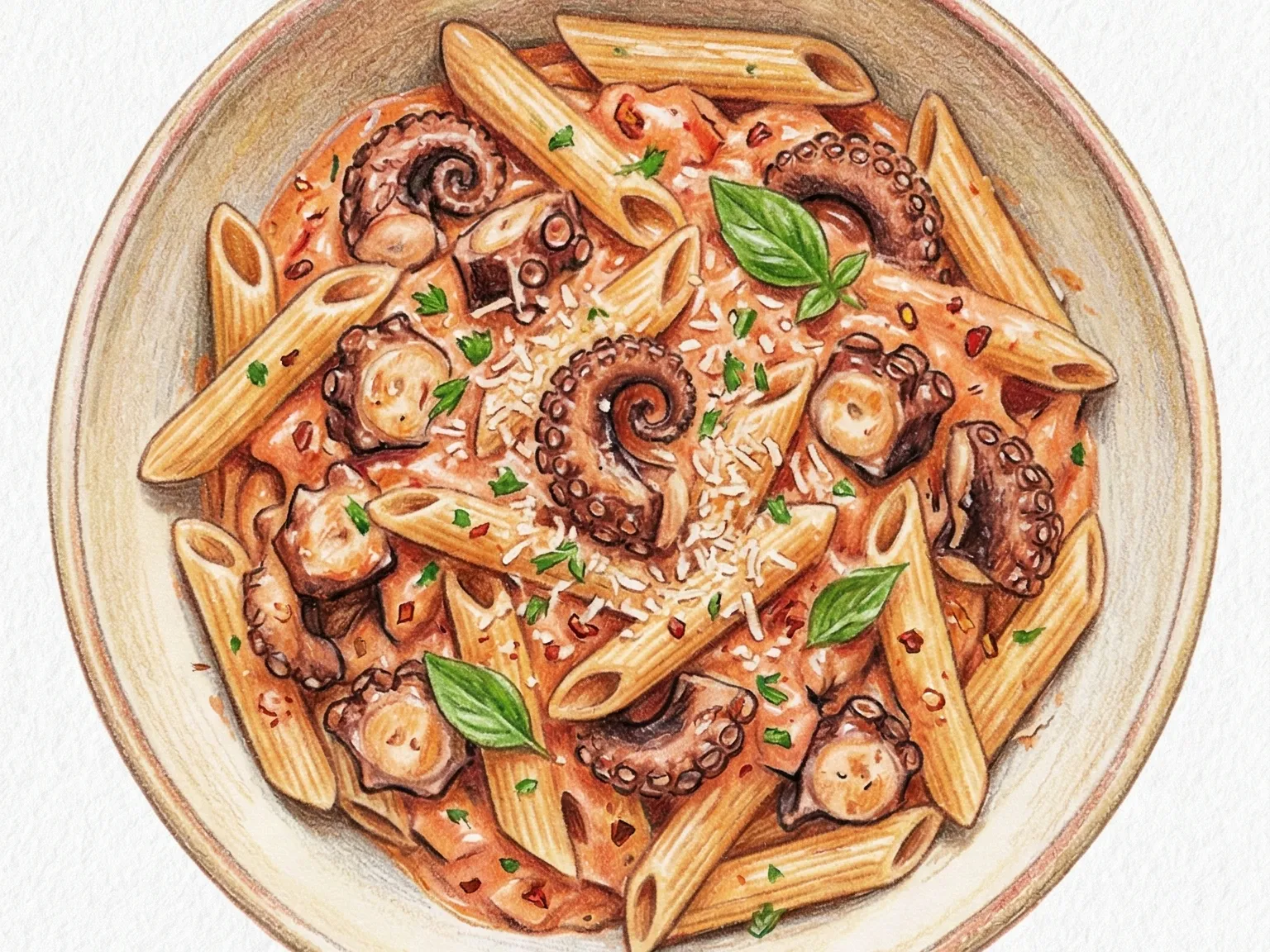
Penne alla vodka combines tomato puree, heavy cream, and a splash of vodka into a smooth, coral-colored sauce. The vodka helps release flavor compounds in the tomato that are not soluble in water or fat alone, then cooks off to leave only a subtle warmth. Butter-softened onions and a pinch of chili flakes round out the base before cream is stirred in on low heat. The tubular shape of penne catches the thick sauce inside each piece.
Adjust Servings
Instructions
- 1
Cook penne in salted water until al dente.
- 2
Melt butter and saute minced onion on low heat until translucent.
- 3
Add vodka and cook about 1 minute to reduce alcohol.
- 4
Add tomato puree and chili flakes, then simmer 5 minutes.
- 5
Stir in cream and parmesan, then add cooked pasta.
- 6
Adjust with pasta water and toss until glossy.
As an Amazon Associate, we may earn from qualifying purchases.
Tips
Nutrition (per serving)
More Recipes

Pasta alla Norma (Sicilian Fried Eggplant Tomato Pasta)
Pasta alla Norma originates from Catania in Sicily and combines fried eggplant cubes with a simple tomato passata sauce. Salting the eggplant beforehand draws out moisture and bitterness, resulting in firmer pieces that absorb less oil during cooking. Garlic provides aromatic depth, while fresh basil added off-heat preserves its fragrance. The dish is named after Vincenzo Bellini's opera Norma, a tribute to its status as a Sicilian culinary masterpiece.

Fettuccine Alfredo
Fettuccine Alfredo is an exercise in simplicity where technique matters more than a long ingredient list. Wide fettuccine noodles are tossed with unsalted butter and finely grated Parmigiano-Reggiano cheese, using starchy pasta water to create a smooth emulsion that clings to every strand. The original Roman recipe contains no cream at all - the silky texture comes from the marriage of melted butter fat, cheese protein, and the starch released by the pasta during cooking. The pan must stay off direct heat while tossing, as excessive temperature breaks the emulsion and turns the sauce grainy. Speed is essential: the dish should move from pan to plate in under a minute. Generous freshly cracked black pepper provides a sharp counterpoint to the rich, concentrated cheese flavor.

Pasta Bolognese
Pasta Bolognese is a slow-simmered meat ragu from Bologna, built on a soffritto of onion, carrot, and celery cooked with ground beef and pork. Red wine deglazes the browned meat, and whole milk is added to soften acidity and tenderize the proteins. The sauce requires at least one hour of low heat to meld the flavors into a cohesive, concentrated ragu. Tagliatelle is the traditional pairing in Emilia-Romagna, served with freshly grated Parmigiano-Reggiano.

Pasta alla Gricia (Roman Guanciale Pecorino Black Pepper Pasta)
Pasta alla Gricia is one of Rome's four classic pastas, made with only guanciale, Pecorino Romano, and black pepper. The cured pork jowl is rendered slowly until crisp, and its fat becomes the foundation of the sauce. Cooked pasta and a splash of starchy pasta water are tossed with finely grated Pecorino to form a creamy emulsion without any cream. It is considered the ancestor of both carbonara and amatriciana, predating the introduction of tomato and egg to those dishes.

Tomato Basil Soup
Tomato basil soup sautés onion and garlic in olive oil, adds canned whole tomatoes crushed by hand, simmers with vegetable stock for 15 minutes, then blends until smooth and finishes with cream and fresh basil. Crushing and cooking the tomatoes for the first five minutes before adding stock concentrates their natural sugars and reduces raw acidity, building a sweeter, deeper base. The 15-minute simmer lets the flavors merge without overcooking, and blending produces a velvety texture that cream enhances without masking the tomato. Basil is heat-sensitive - its volatile oils dissipate within minutes of cooking - so it goes in only after the heat is off, releasing its fragrance through residual warmth alone. A tablespoon of tomato paste can be stirred in during the sauté stage for a more intense tomato flavor if desired.

Cream Pasta
Cream pasta starts by crisping bacon in butter, then sauteing diced onion and garlic in the rendered fat before adding heavy cream and milk to simmer for five minutes into a smooth sauce. The heavy cream provides rich body while the milk lightens it so the sauce coats the pasta without feeling heavy. Tossing the cooked pasta directly in the sauce and stirring in grated Parmesan cheese adds umami depth and a salty edge. Adding two to three tablespoons of starchy pasta water helps the sauce emulsify and cling to each strand evenly. The finished dish layers the smoky salt of bacon, the mild richness of cream, and the aged sharpness of Parmesan.