Picadillo Cubano (Cuban Ground Beef with Olives and Raisins)
Quick answer
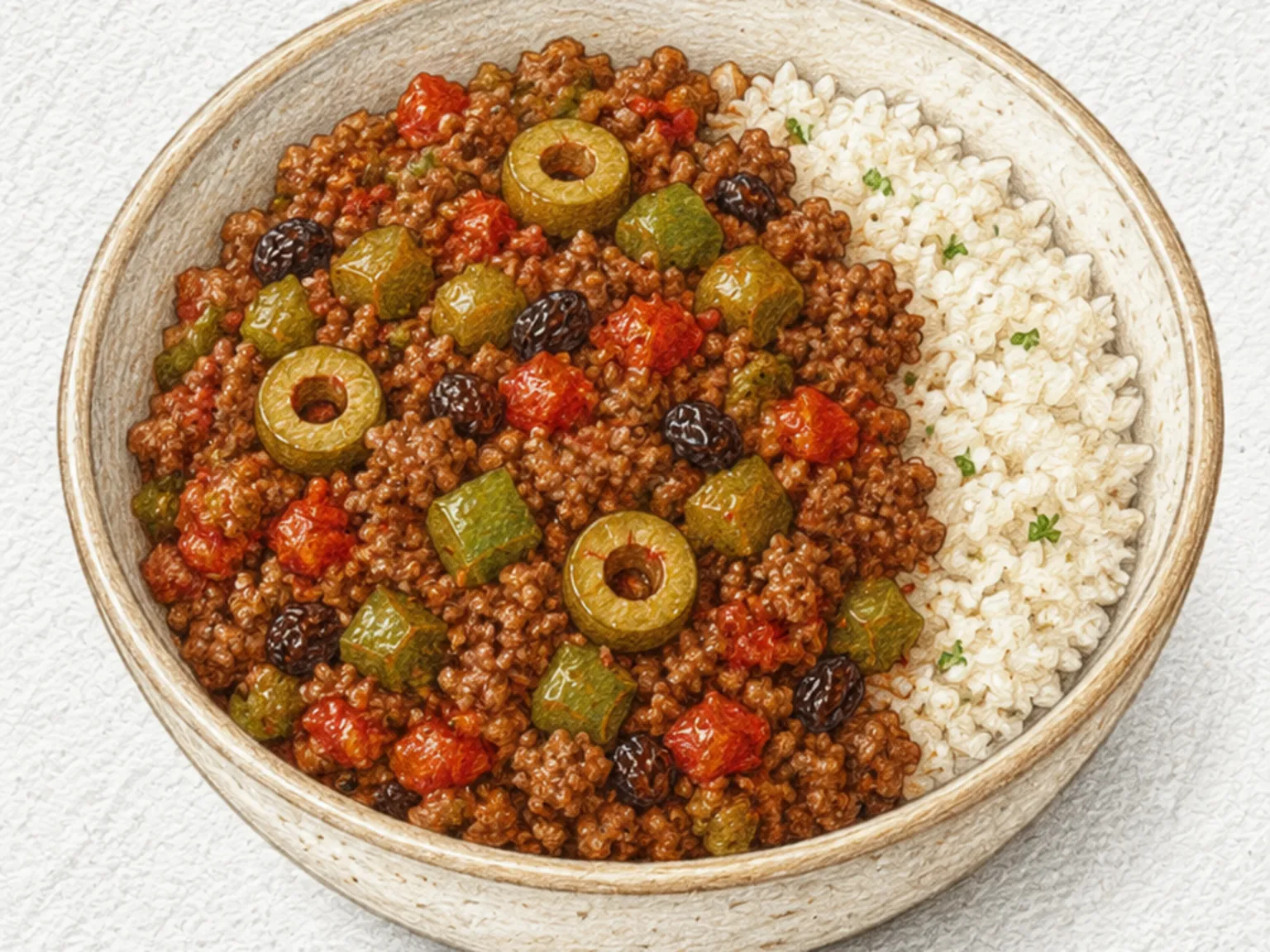
Picadillo Cubano is a cornerstone of Cuban home cooking, made by browning ground beef and simmering it with crushed tomatoes, green olives, and raisins.
What makes this special
- Briny olives and sweet raisins create a complex sweet-salty balance in this Cuban Picadillo Cubano.
- Briny olives and sweet raisins create a sweet-salty balance in one pan
- Beef spread in a single layer over high heat, browning quickly on all sides
Key ingredients
Core cooking flow
- 1 Dice the 150 g onion and 120 g bell pepper small so they soften evenly.
- 2 Heat a wide pan over medium heat and add 1 tablespoon olive oil.
- 3 Raise the heat to high and spread the 500 g ground beef in one even layer.
Picadillo Cubano is a cornerstone of Cuban home cooking, made by browning ground beef and simmering it with crushed tomatoes, green olives, and raisins. The identity of the dish lies in the interplay between the briny, savory olives and the subtle sweetness of the raisins, creating a sweet-salty balance within a single pan. The beef must be spread in a single layer over high heat so moisture evaporates quickly and the meat develops brown caramelization - crowding the pan causes it to steam and turn gray. Cumin and oregano contribute the earthy, warm spice profile characteristic of Latin cooking, while diced bell pepper adds a crisp freshness. Served over white rice in the most traditional fashion, it becomes a complete Cuban plate when accompanied by black beans and fried plantains.
Instructions
Read the steps as a cooking flow: prep, heat, seasoning, doneness control, and finish.
- 1Season
Dice the 150 g onion and 120 g bell pepper small so they soften evenly.
Roughly chop the 60 g green olives, and separate any clumped raisins so they scatter through the sauce.
- 2Control
Heat a wide pan over medium heat and add 1 tablespoon olive oil.
Add the onion and bell pepper, then cook for about 4 minutes until glossy, softened, and no longer raw smelling.
- 3Step
Raise the heat to high and spread the 500 g ground beef in one even layer.
Let it sear for 2 minutes before stirring, then break it up so it browns instead of steaming gray.
- 4Season
When the beef moisture has mostly evaporated, stir in 0.5 teaspoon ground cumin for 30 seconds.
Add the 300 g crushed tomatoes and scrape the browned bits from the pan bottom into the sauce.
- 5Control
Once the tomatoes bubble, reduce the heat to medium low and add the green olives and raisins.
Simmer for 10 minutes, stirring occasionally, until the sauce thickens and clings to the beef.
- 6Finish
If the sauce is too thick, loosen it with a small splash of water; if thin, simmer 1 minute longer.
Season with salt and pepper, then serve hot over rice, with bread, or in tacos.
After the steps
Pick a recipe that fits this dish.
Continue with shared ingredients, meal pairings, or a similar method.
Recipes That Go Well With This
More Western →Based on shared ingredients and meal pairing
Ropa Vieja (Cuban Shredded Beef in Tomato Sauce)
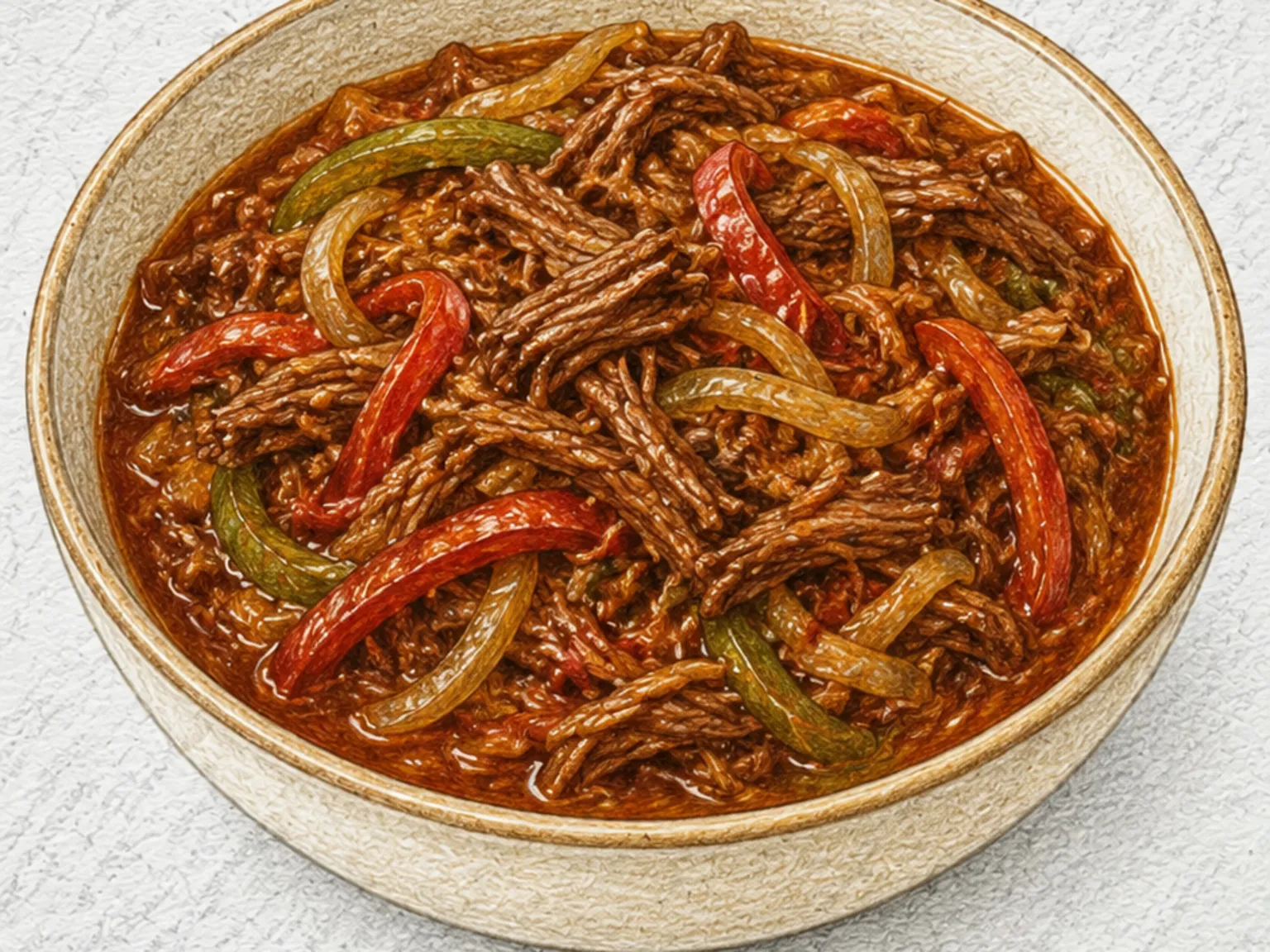
Ropa vieja is a traditional Cuban dish in which beef chuck is boiled whole until tender enough to shred with forks, then simmered in a sauce of sauteed onion, bell pepper, crushed tomatoes, and paprika powder. The name means 'old clothes' in Spanish, a reference to the shredded meat's resemblance to torn fabric. Cooking the beef long enough is essential - undercooked chuck resists shredding and turns out tough and stringy. Simmering the shredded meat in the tomato-pepper sauce for twenty-five minutes drives the savory, slightly smoky flavor deep between the fibers. Served over rice or alongside bread, the sauce absorbs into the starch for a satisfying, complete meal.
Sloppy Joe
Sloppy Joe is an American sandwich where ground beef is browned with diced onion until the moisture cooks off, then simmered in a sweet-savory sauce made from tomato paste, ketchup, Worcestershire sauce, and a small amount of sugar. Browning the beef thoroughly before adding the sauce ingredients is critical - residual moisture dilutes the sauce and prevents the meat from developing flavor. Tomato paste provides concentrated umami, ketchup adds sweetness and body, and Worcestershire contributes a fermented depth that ties the flavors together. The mixture is simmered on low heat for about eight minutes until thick enough that it holds its shape on a spoon rather than running off. Toasting the buns before assembly creates a barrier that slows the inevitable soaking, and pickles served alongside cut through the richness.
Virgin Mojito
Virgin mojito is a non-alcoholic cocktail built by gently muddling lime wedges and fresh mint leaves in a glass with simple syrup, then filling with sparkling water and ice. The muddling must be light enough to press the essential oils from the leaves without breaking the stems, since bruised stems release a bitter flavor that takes over the drink. One lime is cut into wedges for muddling while a second is juiced separately, which gives the drink both the textural element of pulp and the clean, sharp acidity of fresh juice. A pinch of salt added before muddling amplifies the lime's tartness in a way that simply adding more lime cannot replicate. The carbonation from the sparkling water carries mint aroma upward as it rises, so the first sip delivers fragrance before the liquid even reaches the palate. Larger ice cubes melt more slowly than crushed ice, preserving the balance of the drink for longer. A second option is to clap a few mint leaves between the palms to wake up the aroma before placing them in the glass, which extracts fragrance without any muddling at all.
Beef Fajitas Skillet
Skirt steak is marinated in lime juice, cumin, chili powder, and garlic, then placed onto a cast iron pan heated until it is smoking to develop a dark crust on the surface while the interior stays pink and retains its juices. The mass of the pan sustains the high heat even when the cold meat is added, which is what produces the crust rather than a steam. After the steak rests and is sliced, bell peppers and onion go into the same pan and are cooked quickly so they pick up the drippings without going limp. The earthy weight of cumin combines with the sharp citrus of lime to produce the specific, forceful aroma that defines fajitas, and chili powder adds a sustained heat alongside the deep red color. The components are loaded into warm tortillas with salsa, guacamole, and sour cream so each mouthful carries smokiness, acid, heat, and cool creaminess together.
Serve with this
Pork Bossam Apple Mustard Salad
Bossam apple mustard salad uses thinly sliced cold boiled pork belly as its main component, arranged over shredded cabbage, cucumber, and crisp apple slices, then finished with a sharp mustard-soy vinaigrette. Chilling the boiled pork completely before slicing is not optional: warm pork crumbles under the knife, while cold pork yields clean, even cuts that hold their shape on the plate. Cabbage and cucumber provide a firm, crunchy base whose texture directly contrasts with the soft, fatty pork, and the apple slices introduce a cool sweetness along with a welcome burst of moisture. Korean hot mustard, dissolved generously into a soy-vinegar dressing, releases a nasal, sinus-clearing heat with each bite that cuts through the richness of the pork fat without the acidity becoming the dominant note. Perilla leaves placed underneath the pork act as both a flavoring layer and a suppressor of any residual pork odor, their herbal intensity complementing the mustard without competing with it. The salad works equally well as a standalone meal and as a second-day use for leftover bossam from the previous night, which is one reason it appears in Korean home kitchens as often as it does.
Saenggang Jeonggwa (Candied Ginger)
Saenggang jeonggwa is a traditional Korean candied ginger prepared by slicing fresh ginger thin, blanching it twice to reduce the raw heat, then simmering the pieces slowly in a glaze of sugar and grain syrup. A ten-minute soak in cold water draws out the sharpest bite first, and two rounds of boiling soften the pungency further while leaving the clean, aromatic core intact. The slices are cooked on low heat until the syrup reduces to a thick, glossy coat on the surface, at which point lemon juice is added to introduce an acidity that keeps the sweetness from becoming cloying. Once dried on a rack and rolled in granulated sugar, the finished pieces carry a crisp, crystalline shell on the outside. On the first bite, the sugar crust shatters, and the chewy, syrup-saturated ginger beneath releases a slow, building warmth that lingers well after the piece is finished.
Yuja Shrimp Basil Linguine
Yuja shrimp basil linguine is a light oil-based pasta that keeps shrimp at the center of attention by handling them quickly and carefully. After deveining and thoroughly patting dry, the shrimp are seared in olive oil just until both sides turn pink, pulling them from the pan within three minutes total to preserve their springy, snapping bite. Prolonged heat is the enemy of shrimp texture, so they are removed and returned only when the pasta is nearly ready. The aromatic base begins with garlic and red pepper flakes sauteed over low heat in olive oil until fragrant but not colored, a process that infuses the fat with a gentle heat and a savory depth. A splash of white wine goes in next and cooks off quickly, adding a clean acidity and lifting the browned bits from the pan. Yuja marmalade contributes a distinct citrus sweetness, but the sugar content varies considerably between brands, so it is added incrementally and tasted as it goes. Three tablespoons of starchy pasta cooking water emulsify the oil and marmalade into a light sauce that clings to every strand of linguine without feeling heavy. Basil leaves are folded in off the heat to protect their volatile aromatic oils, so their fresh herbal fragrance layers over the yuja's bright citrus without any loss.
Similar recipes
Spaghetti alla Puttanesca
Spaghetti alla puttanesca melts anchovy fillets into olive oil with sliced garlic over low heat, creating a deeply savory base before any tomato is added. Hand-crushed whole tomatoes, halved black olives, capers, and red pepper flakes go in next and simmer for eight minutes, during which the sauce reduces and the briny, salty, and spicy elements fuse into a bold, cohesive flavor. The anchovies dissolve completely, leaving no trace of fish but contributing an intense umami backbone. Because capers and anchovies are already heavily salted, seasoning is adjusted only at the very end by taste. The spaghetti is pulled one minute short of al dente and finished in the sauce pan with a splash of pasta water, which allows the starch to bind the sauce tightly to each strand.
Korean Beef Fried Rice (Soy-Marinated Ground Beef Stir-fried Rice)
Sogogi bokkeumbap stir-fries soy-marinated ground beef with diced vegetables and day-old rice over high heat for a deeply savory fried rice. The beef goes in first, rendering its fat and leaving behind a flavorful fond that coats the pan. Onion, carrot, and zucchini follow, cooking just until their edges soften and their natural sugars begin to caramelize. Cold rice is added and tossed vigorously to break up clumps, picking up the soy seasoning and meat juices as it fries. A final drizzle of sesame oil right before plating adds a fragrant, nutty finish. The beef infuses the rice with a meaty depth while the vegetables keep the dish from feeling heavy, making it a quick, satisfying meal from everyday pantry ingredients.