Korean Pineapple Chicken Stir-Fry

Korean Pineapple Chicken Stir-Fry

Quick answer

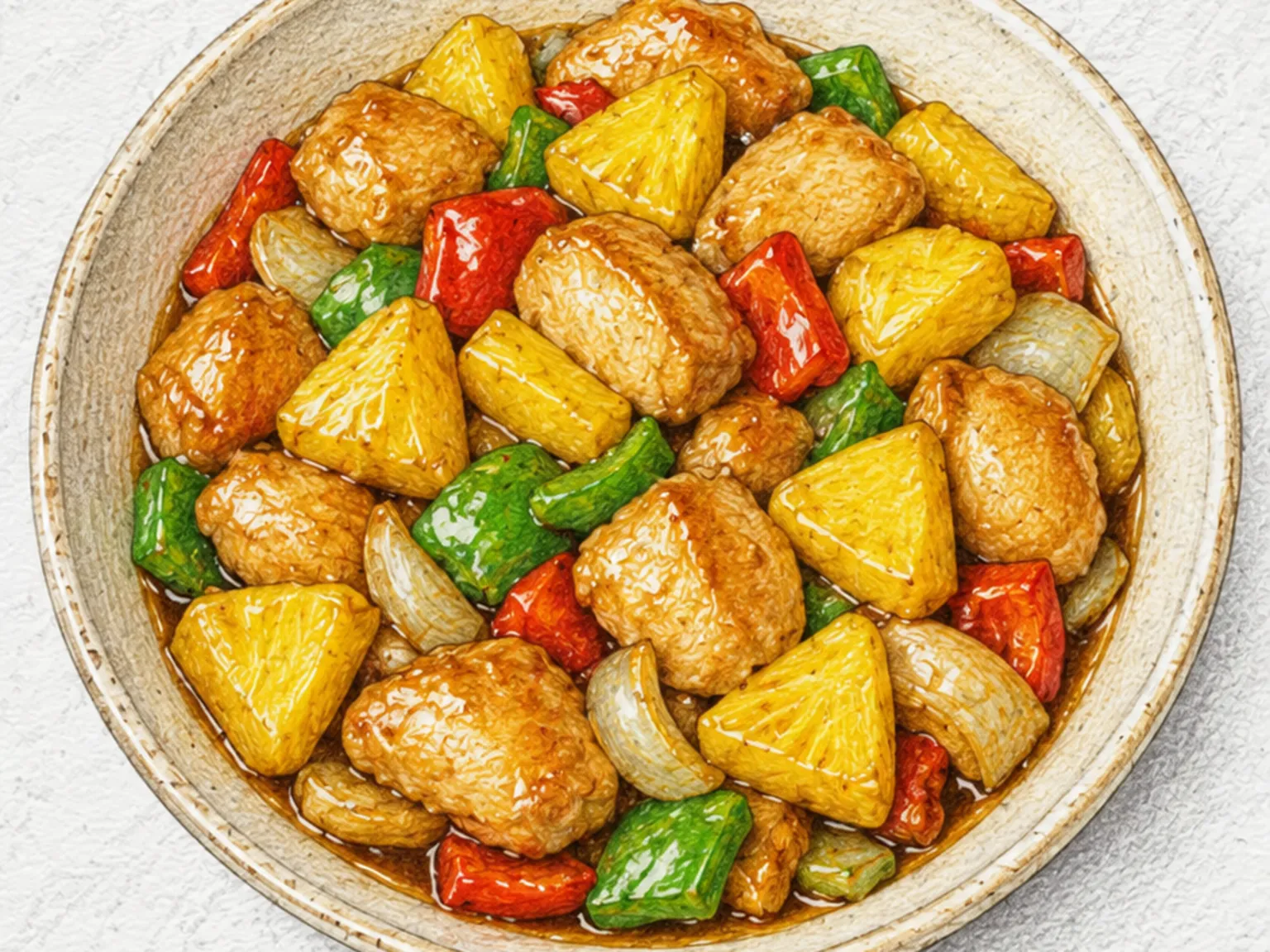
Pineapple dak-bokkeum stir-fries bite-sized chicken pieces with fresh pineapple chunks in a sauce of soy sauce, vinegar, and sugar.

What makes this special

  • Pineapple dak-bokkeum stir-fries chicken and fresh pineapple in a glossy, caramelized soy glaze.
  • Starch-coated chicken absorbs sauce and forms a glossy caramelized surface
  • Fresh pineapple acidity meets soy saltiness in a distinct sweet-salty cycle
Total time
25 min
Level
Easy
Servings
2 servings
Ingredients
6
Calories
300 kcal
Protein
26 g

Key ingredients

Chicken (bite-sized)PineappleSoy sauceVinegarSugar

Core cooking flow

  1. 1 Pat 300 g chicken dry, check that the pieces are bite-sized, then coat evenl...
  2. 2 Mix 2 tablespoons soy sauce, 1 tablespoon vinegar, and 1 tablespoon sugar until the sugar dissolves.
  3. 3 Heat a pan over medium heat, then spread the chicken in a single layer.

Pineapple dak-bokkeum stir-fries bite-sized chicken pieces with fresh pineapple chunks in a sauce of soy sauce, vinegar, and sugar. The chicken is dusted in cornstarch before cooking, which helps the glaze adhere and gives each piece a lightly thickened exterior. Pineapple's sharp acidity cuts through the soy-based sweetness, creating a pronounced sweet-sour cycle with every bite. The short cook time keeps the chicken moist inside while the fruit softens just enough to release its tropical fragrance.

Prep 15min Cook 10min 2 servings
Recipes by ingredient → soy sauce vinegar

Instructions

Read the steps as a cooking flow: prep, heat, seasoning, doneness control, and finish.

6 steps
  1. 1
    Heat

    Pat 300 g chicken dry, check that the pieces are bite-sized, then coat evenly with 1 tablespoon cornstarch.

    Shake off clumps so the coating stays thin and cooks without turning pasty.

  2. 2
    Season

    Mix 2 tablespoons soy sauce, 1 tablespoon vinegar, and 1 tablespoon sugar until the sugar dissolves.

    Drain the 200 g pineapple lightly, especially if using canned fruit, so the sauce will not become watery.

  3. 3
    Control

    Heat a pan over medium heat, then spread the chicken in a single layer.

    Stir-fry for about 3 minutes, turning as needed, until the coating sets white and the edges begin to turn light brown.

  4. 4
    Control

    Add the pineapple and stir-fry for about 1 minute, just until the edges look slightly translucent.

    Avoid high heat or long cooking here, because the fruit can collapse and release too much juice.

  5. 5
    Season

    Pour the prepared sauce around the edge of the pan and toss immediately.

    Keep the heat at medium and cook for 1 to 2 minutes, until the glaze turns glossy and coats the chicken evenly.

  6. 6
    Season

    Cut the thickest chicken piece to confirm it is cooked through.

    If the sauce thickens too much, turn off the heat and toss once more with the residual heat before serving warm.

After the steps

Pick a recipe that fits this dish.

Continue with shared ingredients, meal pairings, or a similar method.

Recipes That Go Well With This

More Stir-fry →

Based on shared ingredients and meal pairing

Korean Green Onion Kimchi
Serve together Side dishes

Korean Green Onion Kimchi

Pa-kimchi uses whole large green onions, salted for 30 minutes to soften their sharp bite and loosen the fibers so the seasoning can penetrate deeply. The paste - red pepper flakes, fish sauce, and minced garlic - coats each stalk in a layer of spicy, briny flavor. One day of room-temperature fermentation allows the lactic acid bacteria to develop, blending the onion pungency with the umami of the fish sauce into a more rounded profile. After transferring to the refrigerator, the kimchi continues to mature over two to three days, gaining a mild tanginess that intensifies with each passing day.

Korean Beef Doenjang Bibimbap
Serve together Rice

Korean Beef Doenjang Bibimbap

Chadol doenjang bibimbap stir-fries thinly sliced beef brisket in a doenjang-based sauce, then serves it over rice with seasoned vegetable namul and egg. The fatty brisket and fermented soybean paste together create a savory depth that is fundamentally different from gochujang-based bibimbap -- earthier, less spicy, and more complex in its umami structure. As the bowl is mixed, the doenjang dressing coats each grain of rice and pulls together the flavors of every component into a coherent, intensely savory bite. Namul vegetables provide a crisp contrast that cuts through the richness of the brisket fat. A fried egg placed on top adds a silky layer, and breaking the yolk releases it to act as an additional sauce that binds the bold flavors. Using doenjang instead of gochujang as the primary seasoning is a single substitution that produces an entirely different character of bibimbap -- one that leans into fermented, miso-adjacent depth rather than heat. Garnishing with sesame oil and toasted sesame seeds before mixing ties the whole bowl together.

Korean Radish and Salted Shrimp Stew
Serve together Stews

Korean Radish and Salted Shrimp Stew

Musaengchae-jjigae simmers julienned radish in a broth built on salted shrimp (saeujeot) and gochugaru, drawing a surprising depth of flavor from minimal ingredients. Saeujeot is fermented shrimp paste that concentrates months of salt-curing and enzymatic breakdown into a potent seasoning -- it supplies umami on the level of fish sauce but with a more rounded, fermented character that forms the backbone of this broth without requiring any stock. Cutting the radish into thin julienne strips, rather than chunks, is deliberate: thin pieces cook through quickly and release just enough starch into the broth to give it a faint natural body. Gochugaru provides color and heat, and its fruity spice complements the sweet, mild flavor that radish develops as it softens. Tofu adds body and protein, and the green onion and garlic round out the aromatics. What makes this jjigae worth repeating despite its simplicity is the fermented complexity from the saeujeot -- a single tablespoon transforms plain water into something that tastes long-cooked. Lighter in texture than doenjang or kimchi jjigae, it works well as an everyday soup that pairs with rice without overwhelming the meal.

Korean Tofu and Vegetable Stir-Fry
Similar recipe Stir-fry

Korean Tofu and Vegetable Stir-Fry

Dubu-yachae-bokkeum is a Korean stir-fry of pan-fried tofu with carrots, onions, and bell peppers in a light soy-based sauce. Before anything else, the tofu has to be pressed to expel excess moisture, then pan-fried on both sides until a firm golden crust develops, which keeps the pieces from breaking apart when they go back into the wok with the vegetables. Because the vegetables cook at different rates, they are added in sequence to preserve each one's texture. The seasoning of soy sauce, sesame oil, minced garlic, and a small amount of sugar sits on the lighter side, letting the natural sweetness and fragrance of the vegetables come through without being masked. Gochugaru or a spoonful of gochujang can be incorporated for a spicier variation. Sesame seeds and a final drizzle of sesame oil finish the dish with a nutty fragrance that ties all the elements together. The combination of plant protein from the tofu and dietary fiber from the vegetables makes it both nutritious and satisfying, and it is commonly packed into Korean lunch boxes.

Similar recipes

Korean Beef and Broccoli Stir-Fry
Stir-fry Easy

Korean Beef and Broccoli Stir-Fry

Sogogi broccoli-bokkeum stir-fries thinly sliced beef with broccoli florets in a glaze of oyster sauce and soy sauce. The beef is seared first over high heat to lock in its juices, then the broccoli -- blanched just enough to keep its bite -- joins the pan. Oyster sauce binds the two main ingredients with concentrated savory depth, and garlic plus a final drizzle of sesame oil layer on fragrance. The sauce coats every surface with a glossy sheen, making this a complete main dish that needs nothing beyond steamed rice.

🏠 Everyday 🌙 Late Night
Prep 15min Cook 10min 2 servings
Korean Beef and Paprika Stir-Fry
Stir-fry Easy

Korean Beef and Paprika Stir-Fry

Sogogi paprika-bokkeum stir-fries soy-and-sesame-marinated beef strips with julienned bell peppers of mixed colors. The peppers lose just enough moisture over heat to concentrate their natural sweetness, which balances the salty soy marinade on the beef. Two cloves of garlic provide background aroma, but the seasoning is intentionally spare so the ingredients themselves lead the flavor. The dish's vivid reds, yellows, and greens make it as visually striking on the plate as it is straightforward to cook.

🏠 Everyday 🌙 Late Night
Prep 15min Cook 10min 2 servings
Korean Soy-Glazed Chicken Stir-Fry
Stir-fry Easy

Korean Soy-Glazed Chicken Stir-Fry

This soy-glazed chicken stir-fry marinates thinly sliced chicken breast in soy sauce, garlic, and ginger before a quick pan-fry over high heat. Slicing the breast thin ensures each piece absorbs the marinade rapidly and cooks through without drying out, avoiding the rubbery texture that plagues overcooked white meat. The ginger cuts through any poultry aroma while the soy sauce provides a steady umami backbone throughout. A drizzle of sesame oil at the end ties together the flavors with a warm, nutty finish. A single cheongyang chili added during cooking gives the dish a clean heat, and it holds up well for meal prep or packed lunches. Practical for diet-conscious cooking or post-workout protein without sacrificing flavor.

🏠 Everyday 🌙 Late Night
Prep 10min Cook 10min 2 servings
Korean Spicy Chicken Soup
Soups Medium

Korean Spicy Chicken Soup

Dakgaejang is a spicy Korean chicken soup modeled directly on beef yukgaejang, using a whole chicken simmered, then shredded as the protein base with the same cooking liquid reserved as stock. The shredded meat, rehydrated bracken fern, and bean sprouts are tossed together in a seasoning of gochugaru, soy sauce, and sesame oil before being returned to the broth and simmered until the chili flakes dissolve fully into the fat. The result is a broth that is fiery and layered rather than flat-hot, with the depth that comes from cooking raw chili through an oil base. Bracken adds a chewy, almost meaty resistance to the texture, contrasting clearly with the snappy bean sprouts, and preparing a separate chili oil beforehand and stirring it into the pot deepens the heat with a roasted undertone that gochugaru alone cannot produce.

🏠 Everyday
Prep 20min Cook 60min 4 servings
Korean Injeolmi Toast (Buttery Toast Topped with Rice Cake and Soybean Powder)
Street food Easy

Korean Injeolmi Toast (Buttery Toast Topped with Rice Cake and Soybean Powder)

Injeolmi toast starts with bread pan-toasted in butter until golden and crisp, then topped with sliced injeolmi rice cake, a generous dusting of roasted soybean powder, and a drizzle of honey. The textural contrast between the brittle toast and the sticky, elastic rice cake is the defining feature of the dish, while the soybean powder adds a toasty, nutty flavor that unifies both components. Pan-frying the injeolmi briefly before placing it on the toast improves its elasticity and creates a light caramelization on the outer surface, changing the chew in a noticeable way. Jocheong or maple syrup can replace honey without altering the overall balance, and a spread of cream cheese beneath the rice cake adds a creamy tanginess that deepens the flavor profile. Store-bought soybean powder becomes considerably more aromatic after a minute in a dry pan over low heat, so a quick toast before dusting makes a real difference. The dish comes together in under ten minutes and has become a common menu item at Korean cafe-style snack bars.

🌙 Late Night ⚡ Quick
Prep 5min Cook 5min 1 servings

Tips

Canned pineapple works just as well as fresh.

Nutrition (per serving)

Calories
300
kcal
Protein
26
g
Carbs
28
g
Fat
8
g