Pineapple Upside-Down Cake
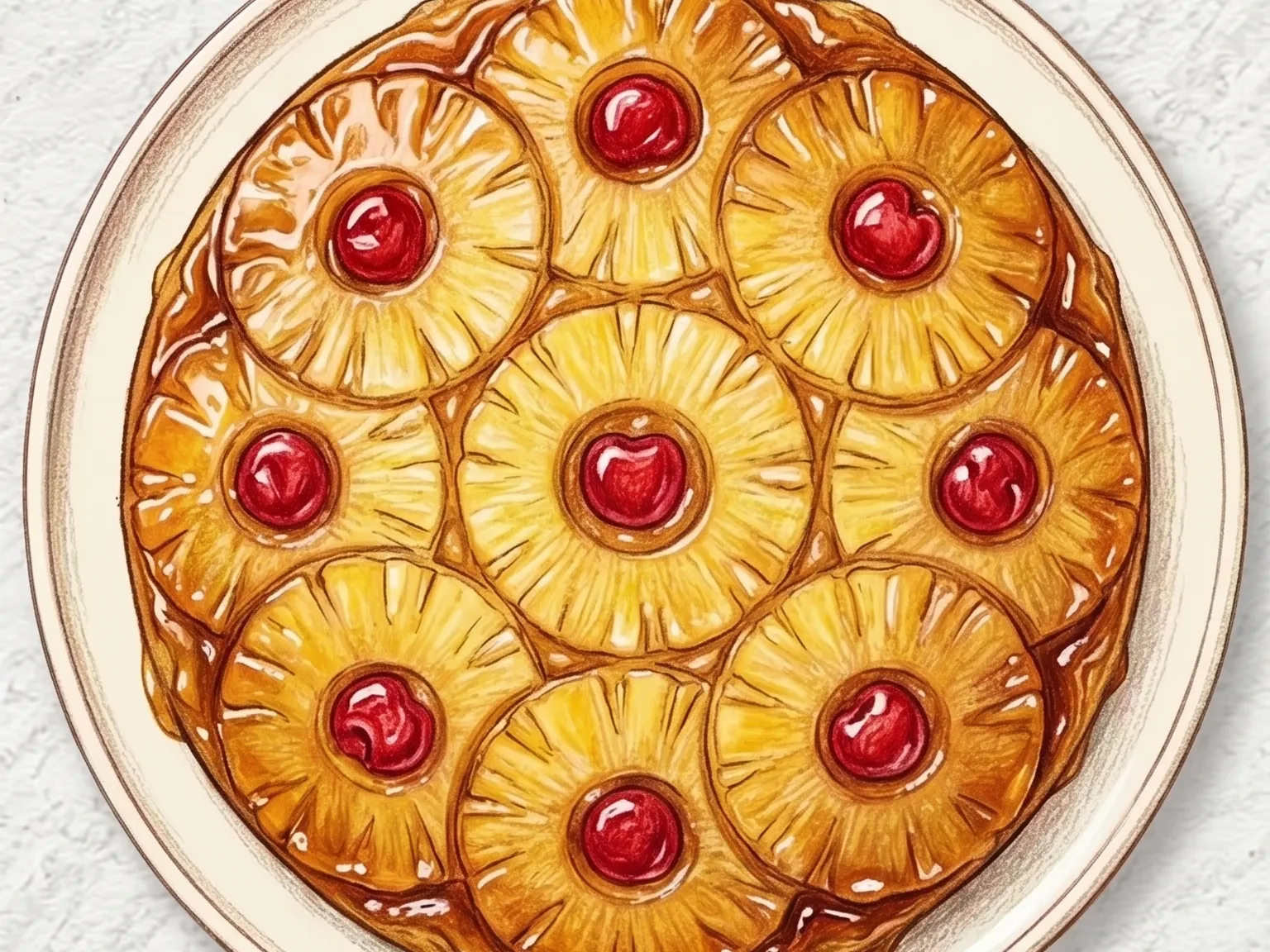
Brown sugar and butter line the bottom of a cake pan before pineapple rings are arranged in a tight pattern and covered with a vanilla sponge batter. During baking, the sugar and butter melt into a sticky caramel that coats each ring. When the warm cake is inverted onto a plate, the pineapple appears on top in a glossy, amber-glazed arrangement. The fruit's natural acidity cuts through the caramel's sweetness, while the buttery sponge beneath absorbs just enough juice to stay moist without becoming soggy. Running a knife around the edge before flipping ensures a clean release. Patting the pineapple rings dry before placing them in the pan prevents excess moisture from diluting the caramel layer.
Adjust Servings
Instructions
- 1
Preheat oven to 175C and grease the pan bottom with butter.
- 2
Sprinkle brown sugar and arrange pineapple rings tightly.
- 3
Cream butter and sugar, then beat in eggs.
- 4
Alternate flour and milk into the batter, then spread over pineapple.
- 5
Bake 35-40 minutes, cool 10 minutes, then invert onto a plate.
As an Amazon Associate, we may earn from qualifying purchases.
Tips
Nutrition (per serving)
More Recipes

Maple Pecan Pound Cake
Maple syrup and toasted pecans anchor this dense, buttery pound cake with woodsy sweetness and deep nuttiness. Brown sugar replaces white, contributing a caramel undertone that aligns naturally with the maple flavor. Creaming the room-temperature butter and sugar for several minutes introduces enough air to lighten the heavy crumb without losing the characteristic density of a pound cake. Eggs added one at a time keep the emulsion stable, and alternating the dry ingredients with milk and maple syrup prevents the batter from splitting. Toasting the pecans for five minutes before chopping and folding them in amplifies their flavor and ensures even distribution throughout each slice. At 170 degrees Celsius, the cake bakes for roughly 45 minutes; if the top darkens too quickly, a foil tent protects it while the center finishes setting. A skewer emerging mostly clean signals doneness. Resting the cake wrapped overnight allows the maple oils to permeate every layer of crumb, producing a deeper, more unified flavor the next day.

Blueberry Banana Bread
Ripe bananas and fresh blueberries share the spotlight in this quick bread that balances fruit sweetness with berry acidity. The bananas provide moisture and natural sugar, keeping the crumb soft for days, while the blueberries burst during baking and streak the interior with purple juice. Melted butter enriches the batter without making it heavy, and baking soda lifts the texture to a light, tender crumb. Because the fruit carries most of the sweetness, the added sugar remains minimal, making this a reasonable choice for a healthier snack. Warm slices spread with butter or cream cheese turn the bread into a satisfying brunch dish. The contrast between the soft banana crumb and the occasional pop of a whole blueberry keeps each bite interesting.

Fudgy Brownies
A fudgy brownie delivers dense, moist chocolate intensity in every bite, distinguishing itself from cake-style brownies through a higher ratio of butter and chocolate to flour. Melting chocolate and butter together before folding in sugar and eggs produces a glossy, pourable batter that bakes into a thin crust on top while the interior stays rich and slightly underdone. Pulling the pan from the oven just before the center fully sets is critical: as the brownie cools, that center sinks into a chewy, truffle-like layer. Using dark chocolate with a high cacao percentage shifts the flavor toward bittersweet depth rather than simple sweetness. A scattering of flaky sea salt on top before baking creates a sweet-salty contrast that amplifies the chocolate. Walnuts or pecans folded into the batter introduce crunch amid the dense crumb. Cutting clean squares requires patience, as the texture firms only after the brownie has cooled completely.

Chestnut Sweet Potato Muffins
Chestnut sweet potato muffins combine two staple Korean autumn ingredients into a baked format. Steamed and mashed sweet potato mixed directly into the batter lends natural sweetness and moisture that keeps the crumb soft for days. Diced roasted chestnuts folded throughout provide a starchy, crumbly contrast to the tender muffin around them. A touch of cinnamon amplifies the sweet potato's warmth without masking it, and a streusel topping adds a crunchy layer that breaks under the teeth before giving way to the soft interior. The sweet potato acts as a built-in moisturizer, preventing the common muffin problem of drying out after cooling. When made with freshly harvested ingredients in autumn, the natural sugars are concentrated enough to reduce added sweetener.

Black Sesame Brownies
Ultra-fudgy dark chocolate brownies with a nutty roasted black sesame twist that adds earthy depth to every bite. The bitter edge of the chocolate meets the toasted, grain-like aroma of the sesame, producing a depth of flavor absent from standard brownies. The recipe keeps the cake flour ratio low so the center stays fudgy and dense after baking at 175 degrees Celsius for twenty to twenty-five minutes. Because black sesame powder is naturally oily and prone to clumping, it must be sifted together with the flour and salt before folding into the batter to ensure even distribution throughout the crumb.

Chocolate Lava Cake
Chocolate lava cake bakes a batter of melted dark chocolate, butter, eggs, sugar, and a small amount of flour in ramekins at high heat for a brief window, producing a set exterior with a molten chocolate core. At 220 degrees Celsius for ten to twelve minutes, the edges firm into a soft cake while the center stays liquid - breaking the surface releases a stream of warm, concentrated chocolate. The bittersweet depth of dark chocolate combines with the butterfat to create a dense, velvety richness, while vanilla extract rounds out the flavor. Timing is critical: overbaking by even two minutes solidifies the center and eliminates the signature lava effect.