Pissaladiere (Provencal Caramelized Onion Anchovy Tart)
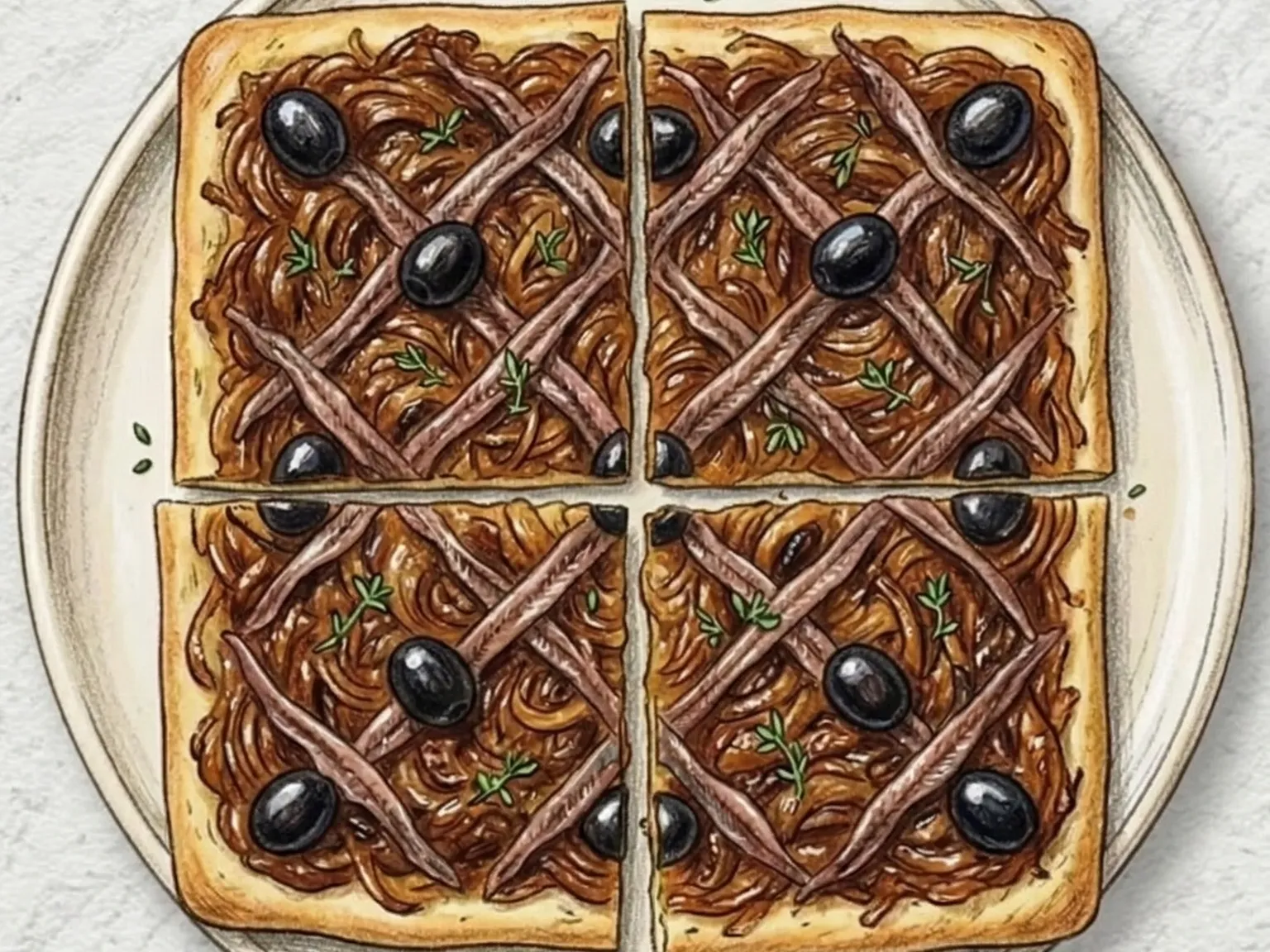
Pissaladiere is a traditional tart from Provence in southern France, built on a thin bread dough blanketed with slowly cooked onions and adorned with anchovy fillets and black olives arranged in a lattice pattern. The onions must cook in olive oil over low heat for at least forty minutes until their moisture evaporates completely and their natural sugars caramelize into a dark, jam-like sweetness. This thick layer of onion jam makes the tart resemble a pizza visually, but the absence of tomato sauce and the primacy of onion sweetness make it an entirely different dish. The anchovies contribute sea-salt brininess and umami, while the olives add a bitter, savory counterpoint that balances the onion's sweetness. Fresh thyme leaves scattered on top before baking introduce an herbal brightness that lifts the dense, concentrated flavors.
Adjust Servings
Instructions
- 1
Slice onions very thinly.
- 2
Cook onions with olive oil, thyme, and sugar over low heat for 20 minutes.
- 3
Roll dough thin, place on tray, and slightly raise the rim.
- 4
Spread onions evenly and arrange anchovies and olives in a lattice pattern.
- 5
Bake at 220C for 12-15 minutes until edges are crisp.
As an Amazon Associate, we may earn from qualifying purchases.
Tips
Nutrition (per serving)
More Recipes

French Onion Tart
French onion tart starts with onions cooked low and slow in butter for over twenty minutes until they collapse into a deep amber mass with concentrated sweetness and no trace of their raw sharpness. The caramelized onions are spread over a blind-baked tart shell, covered with a custard of egg, heavy cream, and thyme, then topped with grated Gruyere cheese before baking at 190 degrees until the filling sets and the cheese browns into a salty crust. The onion flavor dominates every bite, and thyme provides an herbal note that keeps the sweetness from becoming heavy. This tart holds up well at room temperature, making it practical for brunch spreads or outdoor meals alongside wine.

Quiche Lorraine
Quiche Lorraine is a French savory tart that fills a buttery pastry shell with crisp-cooked bacon, grated Gruyere cheese, and a smooth custard made from eggs, heavy cream, and milk. Blind-baking the crust for ten minutes before adding the filling is essential to prevent a soggy base. The bacon must be drained well so excess fat does not make the custard greasy. Whisking the egg mixture gently avoids incorporating too many air bubbles, which would create an uneven surface after baking. The quiche is done when the center still has a slight jiggle - removing it at this point and resting for ten minutes allows residual heat to set the custard fully, producing a clean slice with a creamy interior.

French Onion Soup
French onion soup is an exercise in patience. Thinly sliced onions are cooked slowly in butter over low heat for forty minutes or more, losing their sharp bite as their natural sugars caramelize into a deep, golden-brown mass with an intensity of sweetness and umami that raw onions cannot hint at. Beef stock and dry white wine are added, and the pot simmers until the broth absorbs every layer of onion flavor. The soup is then ladled into oven-safe crocks, topped with thick slices of toasted baguette and a generous blanket of grated Gruyere cheese. Under the broiler, the cheese melts, bubbles, and browns into a golden crust that stretches in long strings when broken with a spoon. Beneath that crust lies the reward - a rich, dark broth steeped in caramelized onion flavor, with bread that has softened into the soup and cheese that drapes over every spoonful.

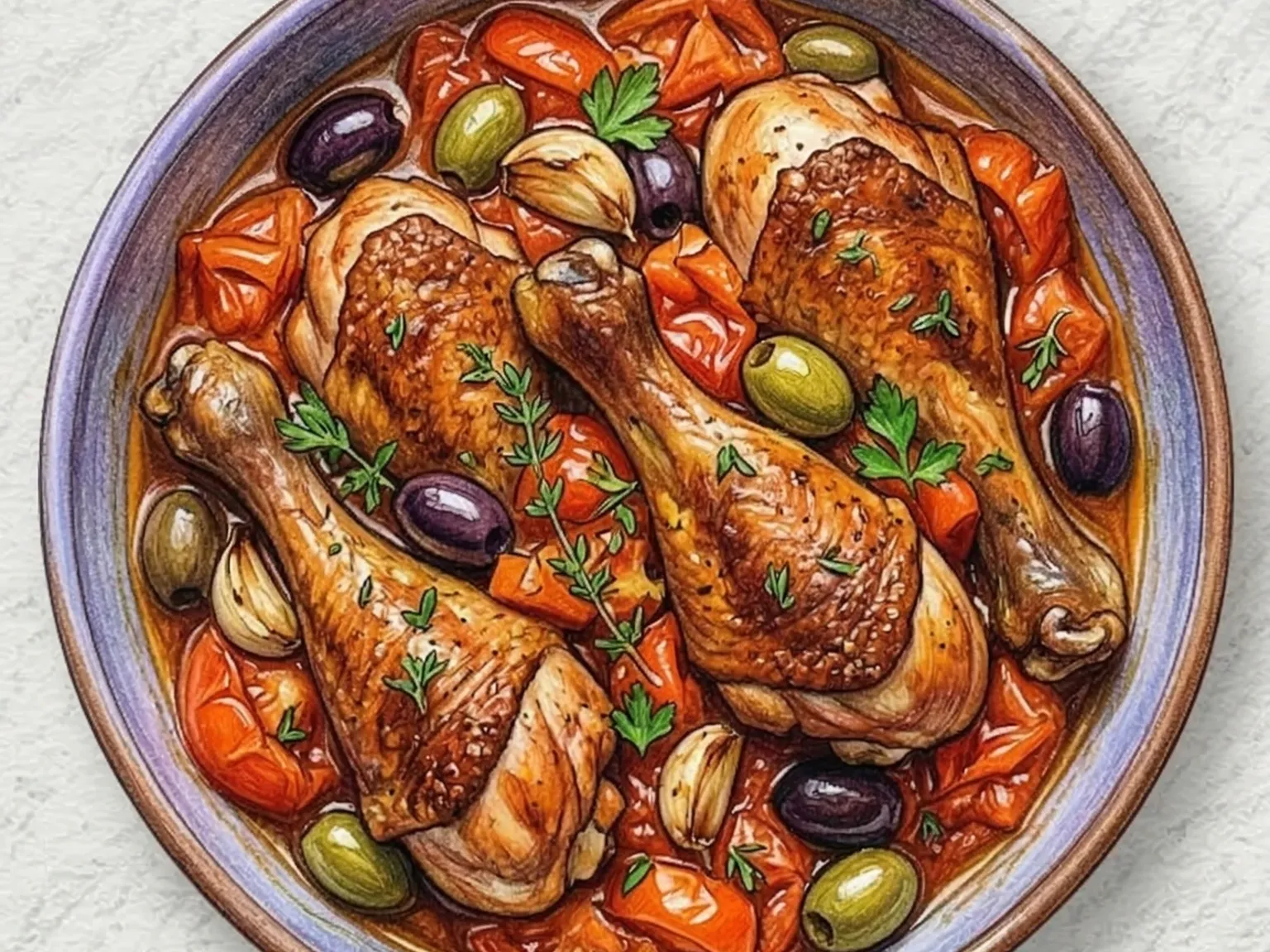
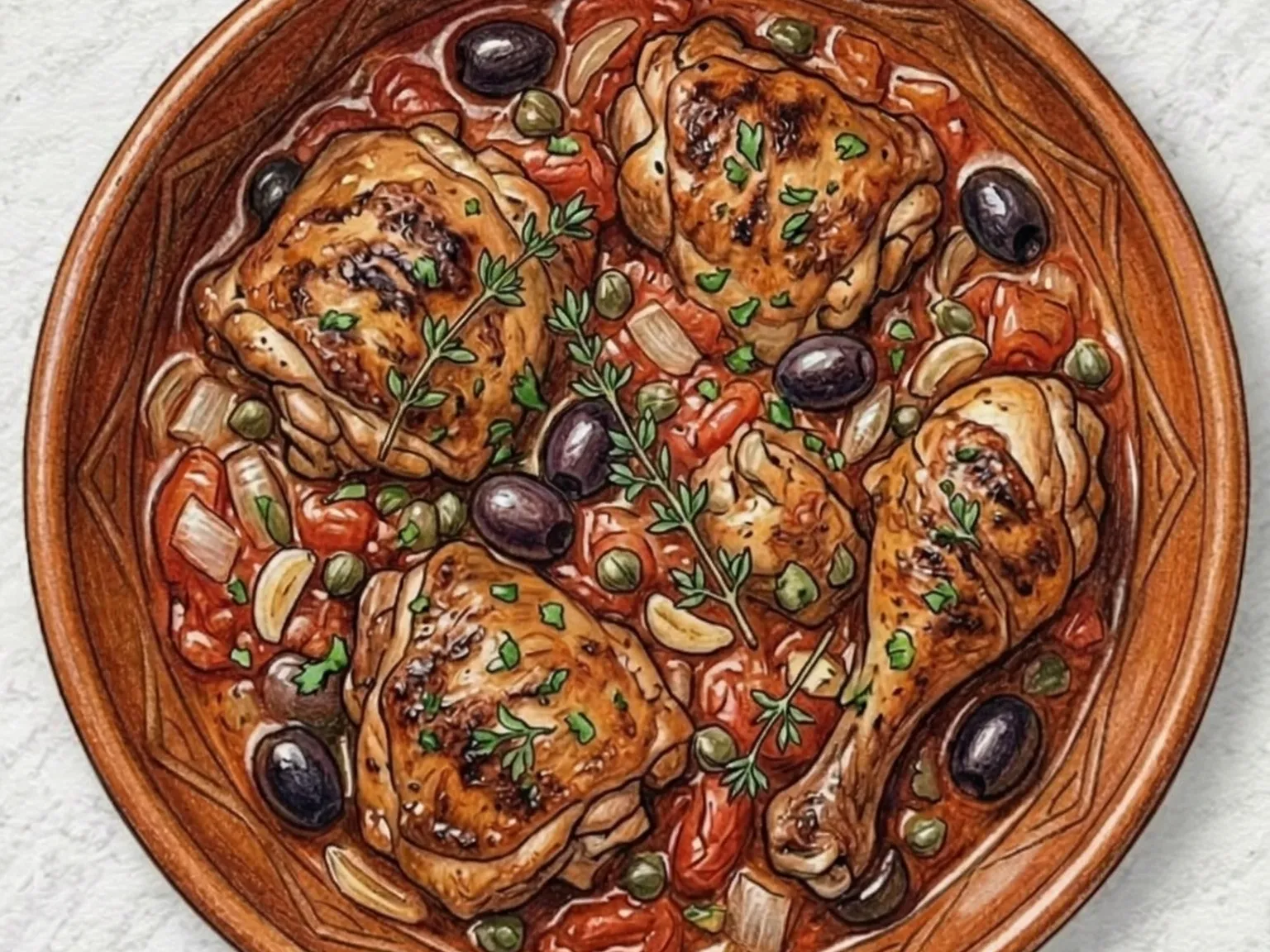
Chicken Provençal (South French Tomato Olive Herb Chicken)
Chicken Provencal sears chicken thighs until the skin is deeply golden, then simmers them with cherry tomatoes, black olives, capers, garlic, and thyme in white wine for a southern French home-style dish. A hard sear on the chicken skin builds both crispness and a layer of fond on the pan bottom, which the wine dissolves into the sauce during deglazing. As the cherry tomatoes burst during cooking, their juice combines with the salty olives and tangy capers to form a bright, layered Mediterranean sauce. Twenty minutes of covered simmering followed by eight to ten minutes uncovered concentrates the sauce and lets it cling to the chicken. A small amount of lemon zest added at the end sharpens the aromatics of the finished dish.

French Crepes
French crepes are thin pancakes made from a pourable batter of flour, eggs, milk, and melted butter, cooked on a hot surface until golden and lacy. The batter must rest for at least an hour so the gluten relaxes and the flour hydrates, producing a supple rather than rubbery crepe. A small amount of batter is swirled onto a hot pan, covering the surface in a thin, even layer that cooks in under a minute per side. The flavor is neutral and buttery, making crepes versatile for both sweet and savory fillings. In Parisian street stalls, crepes are made to order on large griddles, filled, folded, and handed over in paper for eating while walking.

Tarte Bourdaloue (French Pear Almond Frangipane Tart)
A crisp tart shell is lined with frangipane - a mixture of almond flour, butter, egg, and sugar - then topped with halved or sliced pears and baked until the almond cream rises around the fruit and turns golden. The frangipane puffs gently in the oven, enveloping the pear in a dense, moist almond layer, while juice from the fruit seeps into the cream and lightens its richness. Poached pears produce the most tender result and cook evenly, but raw pears work if sliced thin enough to soften during baking. Overmixing the frangipane compacts the crumb and eliminates the delicate rise, so the batter should be combined only until the ingredients are incorporated. Scattered sliced almonds on top before baking add visual appeal and an extra layer of nutty crunch. This tart originated on Rue Bourdaloue in Paris and remains one of the essential recipes in French patisserie.