Pizza Dough
Quick answer
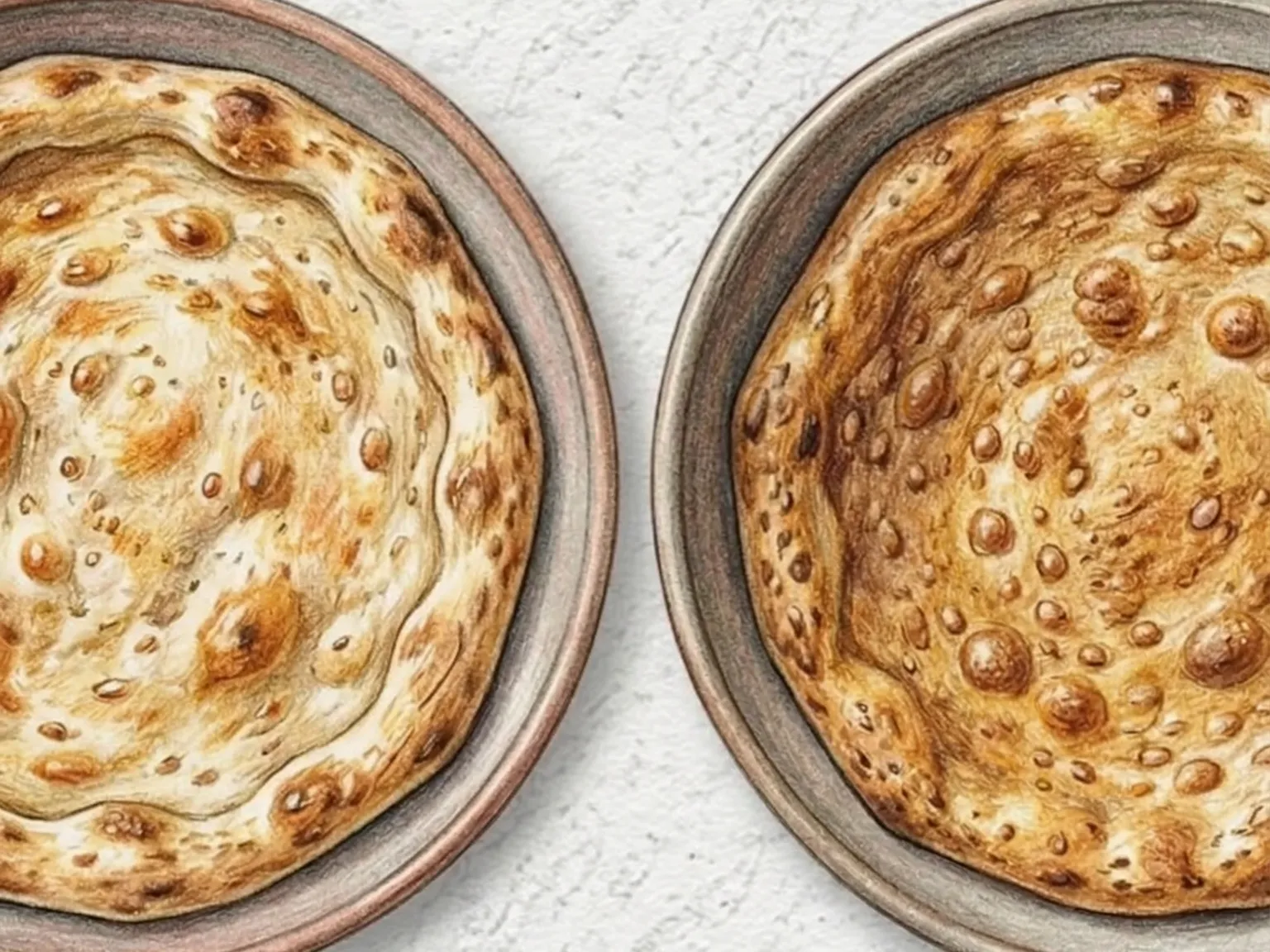
Bread flour, instant yeast, olive oil, and water come together into a simple Italian pizza dough that is the foundation for any topping combination.
What makes this special
- Pizza Dough relies on thorough kneading to build a chewy rim and a crisp, yeast-leavened base.
- 5-8 minutes of kneading builds the gluten network for a crisp base and chewy rim
- Maximum oven temperature preheating is essential for a truly crisp crust
Key ingredients
Core cooking flow
- 1 Mix 300 g bread flour, 5 g sugar, 6 g salt, and 4 g instant yeast evenly before adding liquids.
- 2 Move the dough to the counter and knead for 5-8 minutes.
- 3 Lightly coat a bowl with olive oil and place the dough inside.
Bread flour, instant yeast, olive oil, and water come together into a simple Italian pizza dough that is the foundation for any topping combination. Five to eight minutes of kneading develops enough gluten for a chewy, elastic crust that stretches easily without tearing. After a one-hour room-temperature rise, the dough is divided and shaped by hand into rounds. The highest possible oven temperature is the single most important factor for a crisp bottom, as intense heat sets the crust before moisture from the toppings can soften it. Preparing the dough a day ahead and cold-fermenting it in the refrigerator allows the yeast to work slowly, developing complex flavors that a quick rise cannot match. Each batch yields two pizzas roughly thirty centimeters in diameter.
Instructions
Read the steps as a cooking flow: prep, heat, seasoning, doneness control, and finish.
- 1Season
Mix 300 g bread flour, 5 g sugar, 6 g salt, and 4 g instant yeast evenly before adding liquids.
Pour in 195 ml water and 15 ml olive oil, then gather until no dry flour remains.
- 2Step
Move the dough to the counter and knead for 5-8 minutes.
Stop when the surface is smooth and springs back slowly when pressed; if it feels too sticky, dust with only a little bread flour.
- 3Control
Lightly coat a bowl with olive oil and place the dough inside.
Turn it once so the top is lightly coated too, cover it, and proof at room temperature for about 1 hour.
- 4Step
The dough is ready when it is almost doubled and an indentation from a finger slowly relaxes.
For deeper flavor, refrigerate it at this point and cold-ferment until the next day.
- 5Step
Preheat the oven thoroughly to 250°C or the highest available setting.
Divide the dough in two, then stretch each piece to about 30 cm, avoiding heavy pressure on the rim.
- 6Heat
Add the desired toppings and bake in the fully preheated oven for 10-12 minutes.
Remove when the bottom feels firm and the rim is puffed and browned, then rest briefly before slicing.
After the steps
Pick a recipe that fits this dish.
Continue with shared ingredients, meal pairings, or a similar method.
Recipes That Go Well With This
More Baking →Based on shared ingredients and meal pairing
Focaccia Bread
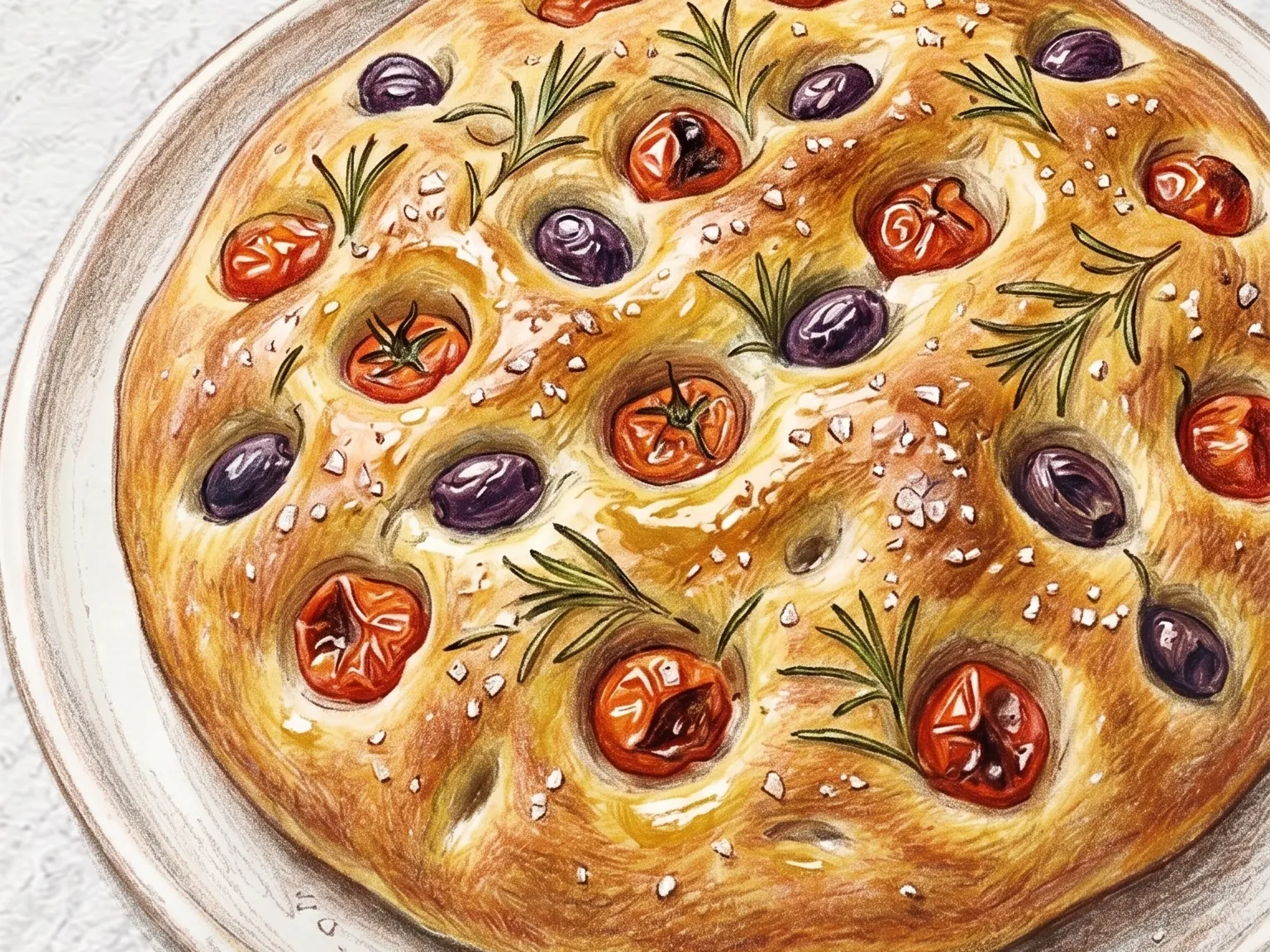
Focaccia is an Italian flatbread distinguished by its generous use of olive oil and a high-hydration dough that produces a distinctly open, irregular crumb. The simple mixture of flour, water, yeast, and salt is mixed with plenty of olive oil and given a long fermentation during which large air pockets develop throughout the dough, producing a texture that is simultaneously chewy, airy, and moist. The dough is spread into a well-oiled pan and dimpled deeply across the surface with fingertips, a step that gives focaccia its characteristic pitted appearance. These depressions collect pools of olive oil that effectively fry both the underside and the surface during baking, creating a golden, crisp crust all around while the interior stays tender. Flaky sea salt and fresh rosemary scattered over the top before baking add a fragrant, savory finish. The bread adapts to a wide range of toppings: olives, cherry tomatoes, red onion, thinly sliced potato, or sun-dried tomatoes all work well pressed into the surface before baking. Focaccia is at its absolute best in the minutes immediately after leaving the oven, when the crust is still crackling and the interior is warm and pillowy. Torn by hand into rough pieces, it is built for sharing at the table.
Bomboloni (Italian Cream-Filled Deep-Fried Yeast Doughnuts)
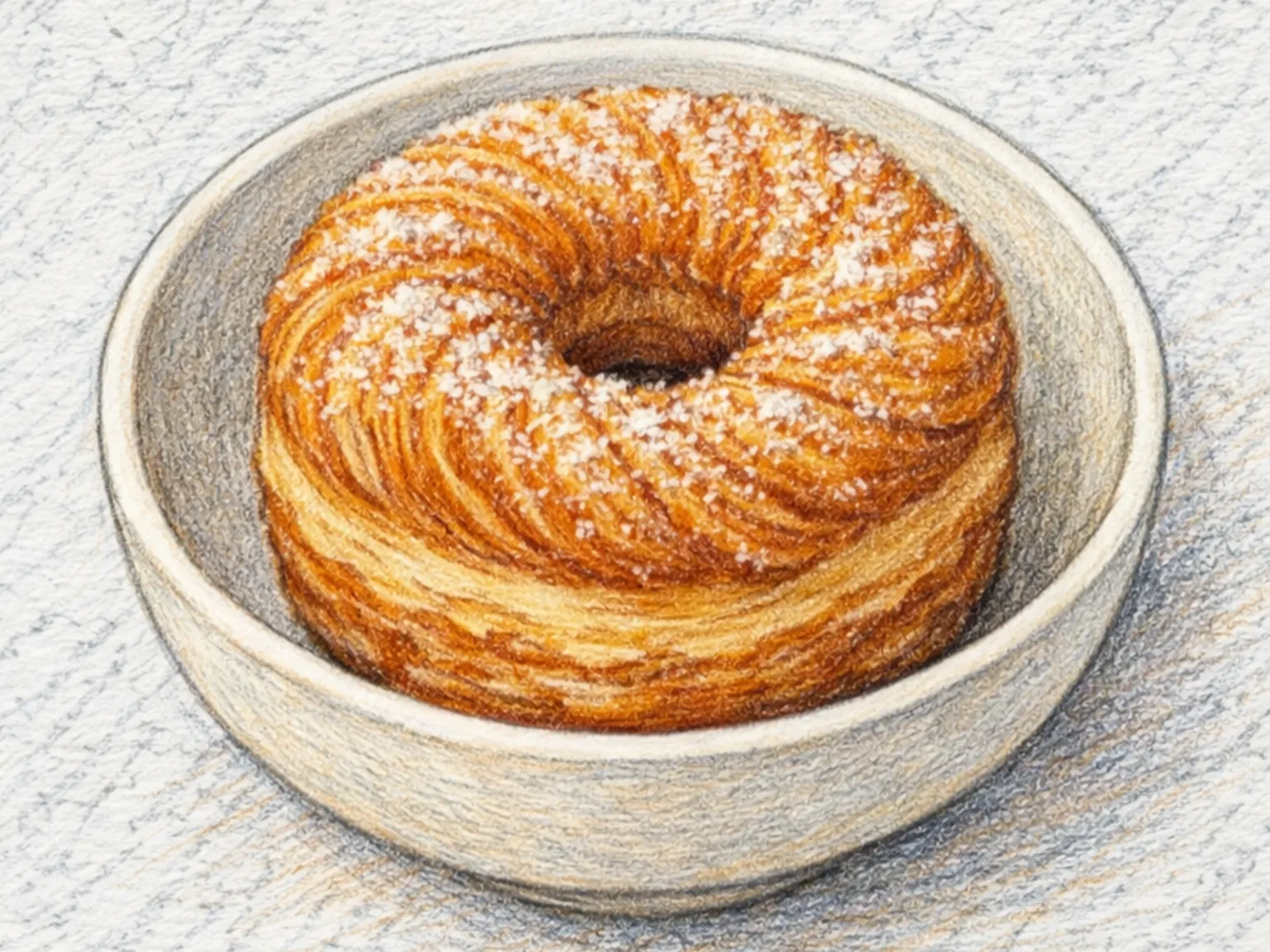
Bomboloni are Italian filled doughnuts made from an enriched yeasted dough that is shaped into balls, deep-fried, and piped full of cream or jam while still warm. The dough - built on bread flour, eggs, butter, and milk - develops strong gluten during proofing, which gives the fried result a thin, crisp outer shell enclosing a pillowy soft interior. Rolling the hot doughnuts in granulated sugar immediately after frying coats them in a crunchy, sweet layer that crackles on the first bite. Vanilla custard is the classic filling, its smooth richness contrasting with the airy bread, though strawberry jam and chocolate cream are equally popular variations. Bomboloni are best eaten within minutes of frying.
Bam Tiramisu (Chestnut Tiramisu)
Chestnut tiramisu is a variation of the traditional Italian dessert that incorporates chestnut puree into the mascarpone cheese filling. This modification transforms a standard cafe dessert into a preparation specifically associated with the autumn season in Korea. The fundamental elements of the recipe remain consistent with the classic version. It utilizes ladyfinger biscuits that have been soaked in espresso, a filling made of whipped mascarpone and cream, and a final layer of cocoa powder. However, the introduction of chestnut puree alters the profile of the cream. Instead of a simple dairy richness, the mixture takes on an earthy quality. Using a puree made from chestnuts boiled at home, rather than a store-bought paste, helps maintain the natural grain of the nut. This provides the cream with a specific texture that is noticeable in every spoonful. When preparing the ladyfingers, the espresso soak requires a high level of precision. Each biscuit should be dipped for approximately one to two seconds. If the ladyfingers are submerged for a longer duration, they absorb an excessive amount of liquid. This leads to a waterlogged consistency which can cause the structural layers of the dessert to collapse while it sits in the refrigerator. The assembly process follows a predictable sequence. A layer of soaked ladyfingers is placed at the bottom, followed by a layer of the chestnut cream. This pattern is repeated once more before the entire dish is placed in the refrigerator to rest for at least four hours. This period of refrigeration is essential to the final outcome. During these hours, the ladyfingers absorb moisture from both the espresso and the cream layer above them. This process changes the biscuits from a crunchy state to a soft texture similar to cake, which allows for clean slices. Just before the dessert is served, a thin layer of cocoa powder is applied to the top. This adds a bitter element that balances the sweetness of the chestnuts. Preparing the tiramisu in individual glass containers or cups ensures that the portions are easy to manage and allows the different layers of the dessert to be clearly visible from the side.
Margherita Pizza
Margherita pizza uses just three core toppings - tomato sauce, mozzarella, and fresh basil - making ingredient quality the deciding factor. The dough is stretched to a 25-centimeter round with a thicker rim that puffs up into an airy crust during baking. The sauce must be spread thinly and evenly; too much makes the base soggy. Tearing the mozzarella by hand rather than slicing it creates uneven thickness, so some spots brown and crisp while others stay soft and melted - draining the cheese beforehand is essential for proper browning. The pizza bakes at 250 degrees Celsius for 10 to 12 minutes until the edges are golden and blistered. Basil, grated Parmesan, and a drizzle of olive oil are added only after the pizza comes out of the oven to preserve their fresh aroma.
Serve with this
Tomato Basil Juice
Tomato basil juice is a cold savory drink made by blending ripe tomatoes with fresh basil leaves and straining the result through a fine sieve to remove seeds and skins. The ripeness of the tomato determines much of the flavor: fully ripe tomatoes carry free glutamates that produce a natural umami depth, whereas underripe fruit tastes predominantly sour without the sweetness and savory body that makes the juice satisfying. Basil should be added to the blender immediately before blending rather than sitting cut or torn, because the volatile oils that produce its aroma begin oxidizing quickly once the leaves are damaged. After blending to a smooth consistency, passing the juice through a fine-mesh strainer or cheesecloth removes the solids and produces a texture smooth enough to drink without resistance. Salt and black pepper season the juice, and fresh lemon juice raises the acidity in a way that brightens the overall flavor rather than making it sour. A small addition of olive oil emulsifies into the juice and activates fat-soluble aromatic compounds in both the tomato and the basil, producing a fuller, rounder flavor than the unstrained version. The juice must be thoroughly chilled before serving, as warmth mutes the herbal freshness. It works well as a brunch drink, a light non-alcoholic aperitif, or a base for savory cocktails.
Grilled Peach Burrata Basil Salad
The peaches are sliced into wedges and brushed with a thin layer of olive oil before they are placed into a grill pan. Each side requires between one and two minutes of contact with the heat to develop a charred surface. This method draws out a caramelized sweetness and a subtle smoky quality that is not present in raw fruit. The application of direct heat to the cut surfaces of the peaches concentrates their natural sugars, which results in a deeper flavor profile and a savory quality that supports the other ingredients. Preparation of the burrata involves removing it from the refrigerator ten minutes prior to assembly. This pause allows the cheese to lose its chill so that the creamy interior can soften. When the cheese is eventually torn apart and placed over the peaches, the center should be loose enough to flow freely, which ensures the full milky richness is distributed throughout the salad. The assembly includes a base of warm grilled peaches topped with the torn burrata, fresh arugula, and basil leaves. Arugula is chosen for its peppery bitterness, which provides a functional balance to the sweet peaches and the heavy cream of the cheese, preventing the dish from becoming one-dimensional. Lightly toasted walnuts are added to provide a specific textural contrast and a roasted nuttiness that complements the softer components. Finally, a thick balsamic glaze with a sweet and tart profile is drizzled over the top to bring the different elements together into a single cohesive dish. This salad is best prepared during the summer when peaches are at their peak ripeness and sweetness.
Similar recipes
Calzone
Calzone rolls pizza dough into a circle, fills one half with ricotta, mozzarella, diced ham, and fresh basil, then folds into a half-moon shape, seals the edges with a fork, and bakes until golden at 220 degrees Celsius. Leaving a two-centimeter border free of filling is critical -- overstuffing causes steam pressure to burst the seam during baking. Brushing a thin line of water along the edge before pressing firmly with a fork creates a tighter seal that holds through the full bake. Fifteen to twenty minutes in a well-preheated oven produces a crisp, burnished exterior while the interior heats the ricotta into a soft cream and melts the mozzarella into long, stretchy strings. Brushing olive oil on the surface before baking adds a richer color and a slight nuttiness to the crust. Tomato sauce served on the side for dipping provides an acidic counterpoint that cuts through the dense cheese filling and keeps each bite feeling balanced.
Rosemary Focaccia
Rosemary focaccia is an Italian olive-oil bread made from a high-hydration dough that is proofed twice, dimpled with fingertips, topped with rosemary, minced garlic, and flaky salt, and baked at 220 degrees Celsius. The wetter the dough, the better the signature open crumb and chewy interior develop, so resisting the urge to add extra flour during handling is important. A sixty-minute first proof followed by a thirty-minute second proof gives the yeast enough time to produce the gas that creates a light, airy structure. Generous olive oil pooled in the dimples essentially fries the surface during baking, creating crisp pockets across the top. Cooling for ten minutes after baking lets steam escape and sharpens the contrast between the crunchy crust and the moist, pillowy crumb inside.
Cannoli
Cannoli are Sicilian pastries built around a crisp, tube-shaped shell and a sweetened ricotta filling. The shell dough is enriched with lard, rolled very thin, and wrapped tightly around narrow metal tubes before being lowered into hot oil, where the fat in the dough creates multiple flaky layers that shatter with a clear snap on first bite. The ricotta filling is sweetened but left slightly grainy rather than smooth, a deliberate texture that gives the pastry a lighter, less dense quality than a conventional cream filling. Chopped pistachios, candied orange peel, or chocolate chips are pressed into the exposed ends to provide color and a contrasting flavor note. Filling the shells more than a few minutes before serving is a mistake, because moisture migrates from the ricotta into the fried dough and turns the crisp shell soft. In Sicily, cannoli were historically associated with Carnival celebrations, though today they appear year-round in pasticcerie across the island and throughout the Sicilian diaspora.