Thai Steamed Lime Fish (Whole Fish Chili Fish Sauce)
Steamed Medium

Thai Steamed Lime Fish (Whole Fish Chili Fish Sauce)

Quick answer

Pla neung manao is a Thai steamed fish dish where a whole white fish is steamed until just cooked through, then drenched in a raw sauce of fresh lime juice, fish sauce, c...

What makes this special

  • Pla neung manao drenches whole steamed white fish in a sharp, raw sauce of fresh lime juice, fish sauce, and Thai chilis.
  • Lime juice and fish sauce collide directly in a sharp sour-salty sauce
  • Whole white fish steamed intact keeps the protein moist throughout
Total time
38 min
Level
Medium
Servings
2 servings
Ingredients
8
Calories
280 kcal
Protein
33 g

Key ingredients

white fishlime juicefish sauceminced garlicminced Thai chili

Core cooking flow

  1. 1 Pat the 600 g whole white fish dry, then score both sides on a diagonal.
  2. 2 Pour 400 ml water into the steamer and bring it to a strong boil over high heat.
  3. 3 Keep the heat high and steam for 10-12 minutes, adjusting slightly for the fish thickness.

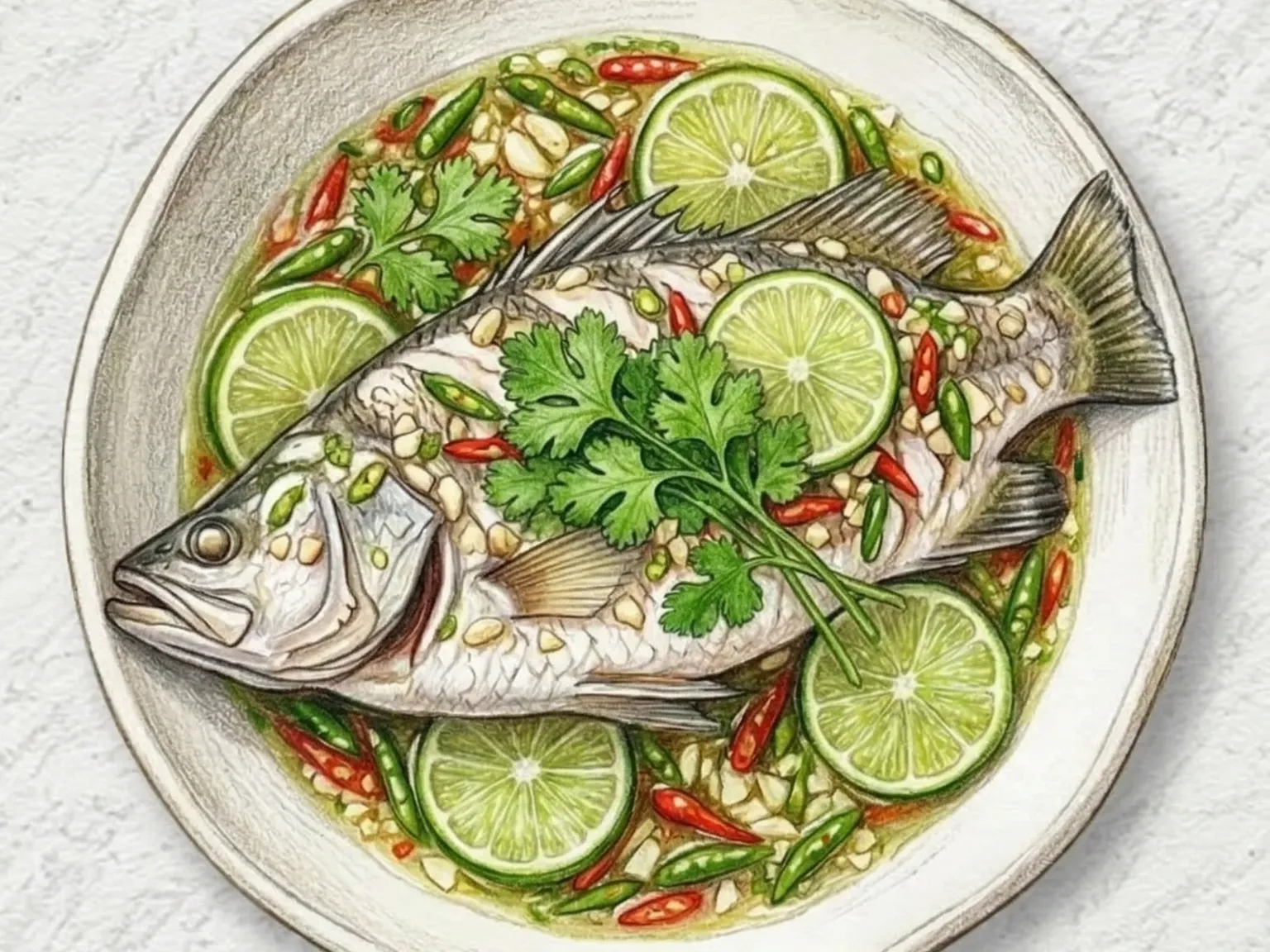
Pla neung manao is a Thai steamed fish dish where a whole white fish is steamed until just cooked through, then drenched in a raw sauce of fresh lime juice, fish sauce, crushed garlic, and minced Thai chili. The sharp acidity of the lime and the salty depth of fish sauce meet directly, producing a dressing that is simultaneously bright and savory without either element overwhelming the other. The minced chili brings a direct, stinging heat that cuts through the mild fish flesh. Because the sauce is poured over raw rather than cooked, the lime and garlic aromas remain fully intact and undiminished by heat. Steaming the fish for a couple of minutes after the sauce is added allows the flavors to penetrate through the scored skin and into the flesh. A generous heap of fresh cilantro on top delivers the final aromatic layer that defines the dish. Served alongside jasmine rice or glutinous rice, the sauce soaks into the grains and ties everything together into a cohesive plate.

Prep 20min Cook 18min 2 servings
Recipes by ingredient → fish sauce garlic

Instructions

Read the steps as a cooking flow: prep, heat, seasoning, doneness control, and finish.

6 steps
  1. 1
    Season

    Pat the 600 g whole white fish dry, then score both sides on a diagonal.

    Cut only almost to the bone, not through it, so the flesh opens for the sauce without falling apart.

  2. 2
    Finish

    Pour 400 ml water into the steamer and bring it to a strong boil over high heat.

    When steady steam fills the pot, set the fish on a steaming plate and cover tightly.

  3. 3
    Prep

    Keep the heat high and steam for 10-12 minutes, adjusting slightly for the fish thickness.

    It is ready when the thickest flesh turns opaque and a chopstick slides in without resistance.

  4. 4
    Season

    While the fish steams, mix 4 tbsp lime juice, 2 tbsp fish sauce, minced garlic, Thai chili, and sugar.

    Stir until the sugar dissolves, keeping some lime juice for the end if desired.

  5. 5
    Control

    Pour the sauce evenly over the cooked fish, aiming it into the scored cuts.

    Cover again and steam over high heat for 2 more minutes so the raw lime, garlic, and chili aromas enter the flesh.

  6. 6
    Finish

    Turn off the heat and add any reserved lime juice for a fresher finish.

    Scatter 1/2 cup cilantro over the fish and serve hot with jasmine rice or sticky rice to catch the sauce.

After the steps

Pick a recipe that fits this dish.

Continue with shared ingredients, meal pairings, or a similar method.

Recipes That Go Well With This

More Steamed →

Based on shared ingredients and meal pairing

Som Tam (Thai Green Papaya Salad with Lime Fish Sauce Dressing)
Shared ingredient: lime juice Asian

Som Tam (Thai Green Papaya Salad with Lime Fish Sauce Dressing)

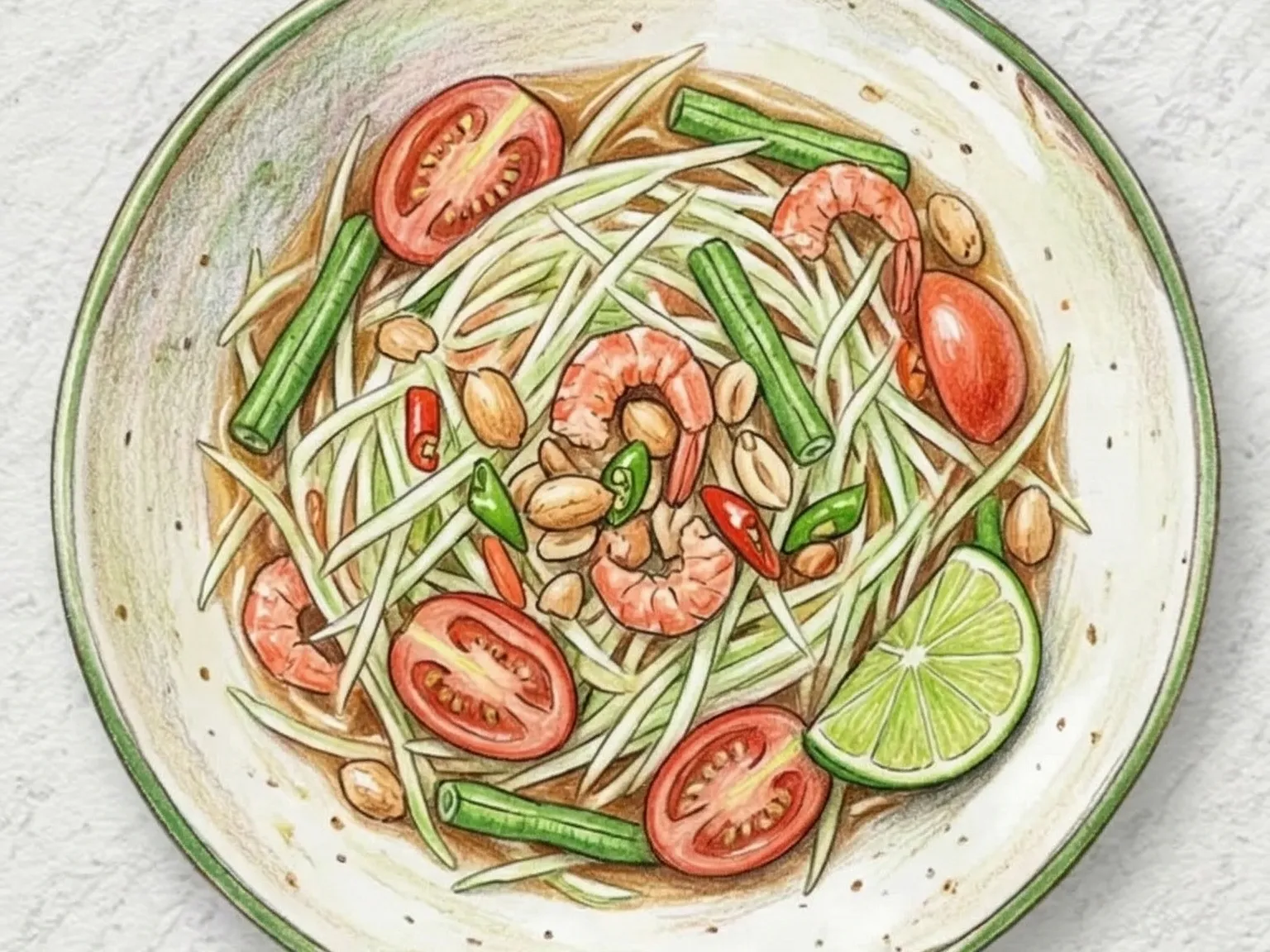
Som tam is a Thai salad made by pounding shredded green papaya with a handful of bold seasonings in a clay mortar. The dressing comes together right in the mortar: bird's eye chilies and palm sugar are crushed first, then lime juice and fish sauce are added to create a sauce that is simultaneously sour, salty, sweet, and spicy. Cherry tomatoes are bruised just enough to release their juices into the mix, and roasted peanuts contribute a nutty crunch that contrasts with the crisp, watery strands of papaya. The pounding is deliberately gentle-too much force turns the papaya limp and loses the texture that defines the dish. Som tam is Thailand's most widely eaten salad, appearing everywhere from pushcart vendors to upscale restaurants, and it is often served alongside sticky rice and grilled chicken as a complete meal.

Larb Gai (Thai Isan Minced Chicken Herb Salad with Lime)
Shared ingredient: lime juice Asian

Larb Gai (Thai Isan Minced Chicken Herb Salad with Lime)

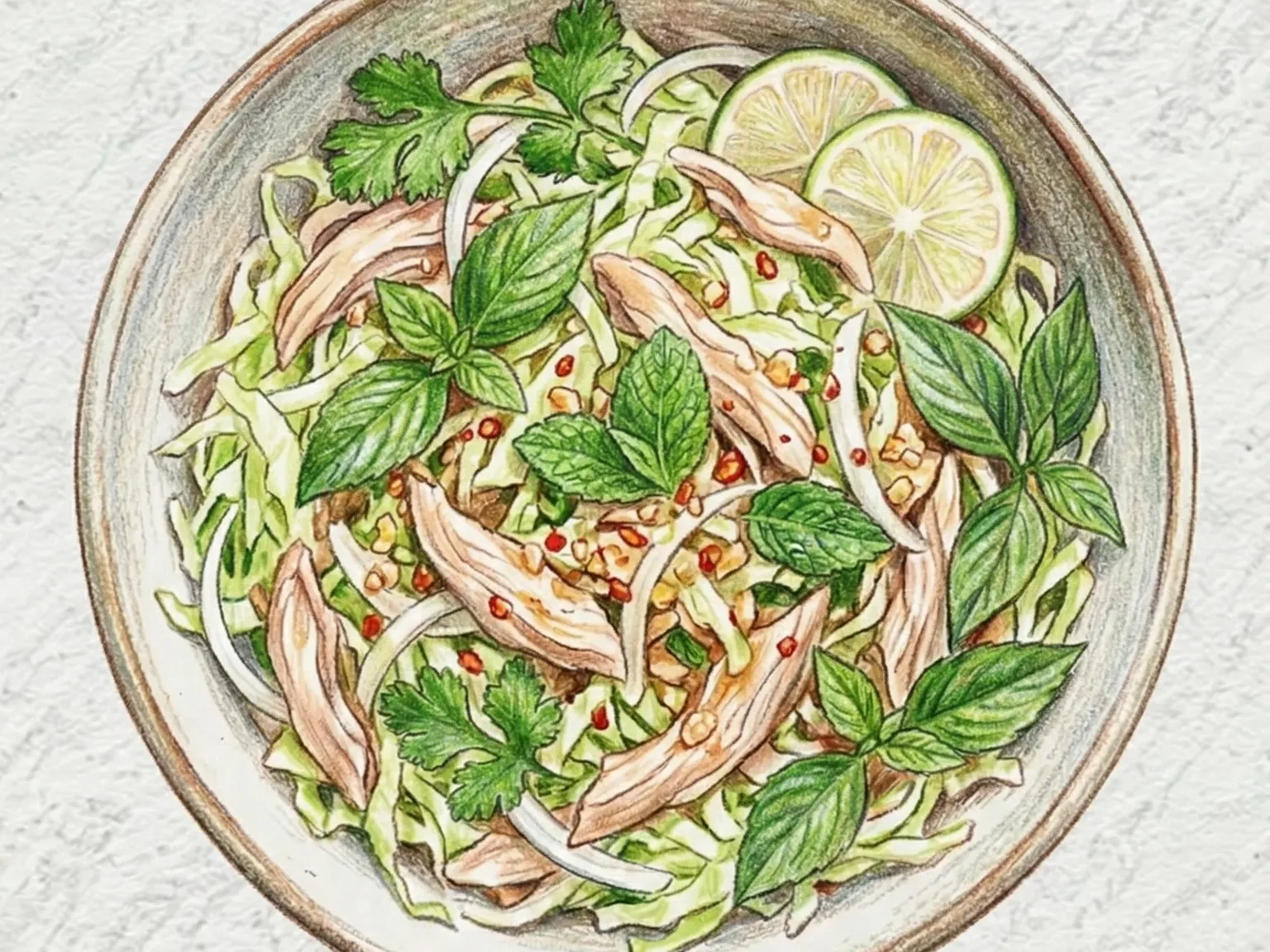
Larb Gai is a traditional herb salad from the Isan region of northeastern Thailand, featuring minced chicken as its base. The preparation starts by cooking ground chicken with a small amount of water until it is no longer pink, ensuring the meat remains tender and crumbly. Once removed from the heat, the warm chicken is seasoned with lime juice, fish sauce, sugar, and chili flakes. Adding the lime juice off the heat preserves its natural acidity and bright aroma. Thinly sliced shallots and toasted rice powder are then folded into the mixture. The toasted rice powder acts as a binding agent that absorbs the juices while providing a distinct nutty crunch. Fresh mint leaves are tossed in at the very end to prevent them from darkening. The salad is served alongside sticky rice, lettuce, or cabbage cups.

Jesa Tangguk (Ancestral Clear Beef Soup)
Serve together Soups

Jesa Tangguk (Ancestral Clear Beef Soup)

Jesa-tangguk is a traditional Korean clear soup prepared for ancestral rites and formal family gatherings. Beef brisket is first soaked in cold water for at least an hour to draw out the blood, then simmered over medium heat for an extended time to produce a clear, deeply flavored stock that forms the foundation of the entire bowl. Skimming the surface regularly during cooking keeps the broth transparent and clean-tasting. Radish cooks until nearly translucent, releasing a gentle natural sweetness into the stock, while blocks of tofu and sliced shiitake mushrooms add contrasting textures. Seasoning is limited to soup soy sauce and garlic, preserving the purity of the broth and allowing each ingredient's flavor to come through undisguised. Fat is skimmed away before serving, producing the spotless, refined finish expected of ritual food. The aesthetic matters as much as the flavor: ingredients are cut into tidy, uniform shapes and arranged with deliberate care, reflecting the reverence that is central to the jesa ritual. Beyond ceremonial occasions, jesa-tangguk is a comforting home-style soup enjoyed at holidays and family meals for its clean, balanced warmth.

Korean Steamed Pomfret (Whole Fish with Soy Ginger Sauce)
Similar recipe Steamed

Korean Steamed Pomfret (Whole Fish with Soy Ginger Sauce)

Korean steamed pomfret is a mild fish dish made by steaming a whole scored pomfret with ginger and green onions, then seasoning it with a warm soy sauce mixture. The thin, delicate flesh of the pomfret becomes tender after steaming, allowing the meat to separate easily from the bone. To manage the fish odor and build layers of aroma, sliced ginger and cut green onions are added in two separate stages: first during the main steaming process and again at the end. A heated sauce of soy sauce, rice wine, and water is poured over the cooked fish to ensure the seasoning penetrates evenly. A final touch of sesame oil adds a toasted scent to the non-spicy, low-fat preparation. This clean and mild dish is suitable for various diners.

Serve with this

Korean Stuffed Eggplant Seon
Side dishes Medium

Korean Stuffed Eggplant Seon

Gaji-seon is a Joseon-era royal court banchan belonging to the seon category, a class of preparations in which vegetables are stuffed with a seasoned filling and steamed. The eggplant is scored at regular intervals with deep cuts that stop short of the bottom, creating accordion-like pockets along the length of the vegetable. A filling of minced pork or beef combined with crumbled tofu, scallion, and sesame oil is pressed firmly into each slit, then the stuffed eggplant is steamed for fifteen minutes. During steaming, the juices from the filling soak into the softening eggplant flesh, and the two components merge into a single flavor. The labor of stuffing each eggplant individually made this a dish historically reserved for guests and formal occasions rather than everyday meals. After steaming, a light soy-based sauce is spooned over the top. The sharp textural contrast between the near-dissolving eggplant skin and the firm, savory filling produces a refinement that clearly separates seon from ordinary stir-fried or braised eggplant preparations.

🏠 Everyday 🎉 Special Occasion
Prep 25min Cook 20min 4 servings
Korean Clam Pot Rice (Savory Clam Broth Cooked Rice Bowl)
Rice Medium

Korean Clam Pot Rice (Savory Clam Broth Cooked Rice Bowl)

Bajirak sotbap is a Korean pot rice where every grain is cooked in clam broth and topped with shucked clam meat just before serving. Purged clams are simmered with a piece of dried kelp until they open, then removed and shucked while the broth is strained through a fine sieve. The kelp contributes glutamic acid that reinforces the clam's natural umami, producing a cooking liquid with a depth that plain water cannot provide. This clam stock infuses every grain of rice as it cooks, embedding a marine character throughout. The rice, soaked for at least thirty minutes to ensure even absorption, goes into the pot with the measured clam broth and cooks over a sequence of high, medium, and low heat. Holding on low heat for an extra five minutes forms a thin nurungji - a lightly caramelized crust at the bottom - whose toasted aroma rises through the lid. During the resting phase, the shucked clam meat is placed on top of the rice so residual heat warms it through without further cooking; since the clams were already cooked once, additional heat would toughen them. A soy sauce and sesame oil dipping sauce is mixed into the rice at the table. The most memorable moment of the dish is lifting the lid, when the concentrated clam fragrance escapes in a sudden rush. After the rice is eaten, adding hot water to the pot dissolves the nurungji layer into a light, smoky scorched-rice tea that serves as a natural closer to the meal.

🎉 Special Occasion 🏠 Everyday
Prep 20min Cook 25min 2 servings
Korean Pepper Leaf Kimchi
Kimchi Medium

Korean Pepper Leaf Kimchi

Gochuip kimchi is a seasonal Korean kimchi made from pepper leaves, prepared during late spring to summer when the leaves are available. Blanching is the essential first step. Fresh pepper leaves contain compounds that produce a raw bitterness, and simply seasoning them without pre-cooking leaves an unpleasant edge. A brief blanch of about 30 seconds collapses the cell structure, removing bitterness while dramatically reducing the volume of the leaves. The softened leaves also accept the seasoning more evenly across their surfaces. Glutinous rice paste added to the gochugaru, anchovy fish sauce, and garlic mixture thickens the coating so it adheres uniformly to each leaf and supports lactic acid fermentation even within the short one-day curing window. The herbaceous quality in pepper leaves survives fermentation, remaining as an undercurrent beneath the spicy coating and producing a green, herb-like character that distinguishes this kimchi from napa cabbage or young radish varieties.

🍱 Lunchbox 🏠 Everyday
Prep 25min Cook 8min 4 servings

Similar recipes

Korean Steamed Rockfish (Spicy Gochugaru Radish Braise)
Steamed Medium

Korean Steamed Rockfish (Spicy Gochugaru Radish Braise)

Ureok-jjim is a Korean spicy steamed rockfish cooked with Korean radish, onion, and green onion in a gochugaru and soy sauce broth. Rockfish has firm, well-defined flesh that holds its shape through the cooking process, and scoring the skin lets the bold seasoning reach deep into the meat. Radish softens in the braising liquid and absorbs the chili heat while contributing natural sweetness, and ginger keeps the fish tasting clean. The remaining sauce is concentrated enough to spoon over rice, delivering a hit of spicy, salty flavor with every bite.

🏠 Everyday 🎉 Special Occasion
Prep 20min Cook 28min 4 servings
Korean Steamed Flounder (Whole Flatfish with Soy Garlic Sauce)
Steamed Easy

Korean Steamed Flounder (Whole Flatfish with Soy Garlic Sauce)

Korean steamed flounder, called gajami-jjim, is a fish dish prepared by cooking whole flatfish over a bed of vegetables with a light soy garlic sauce. The process starts by layering sliced onions at the bottom of the steamer to prevent the delicate white flesh from sticking or breaking apart during cooking. A seasoning mixture of soy sauce, minced garlic, and rice wine is spooned over the cleaned fish. The rice wine and garlic neutralize fishy notes while keeping the flounder moist. Steaming takes about twelve minutes over medium-high heat, followed by an additional two minutes after scattering sliced green onions on top. The cooking time must be monitored closely to prevent the tender fish from drying out. The resulting dish features a clean, savory taste highlighting the natural flavor of the flounder. The light sauce left in the dish can be mixed with cooked rice.

🏠 Everyday 🍱 Lunchbox
Prep 15min Cook 20min 2 servings
Korean Steamed Scallops
Steamed Easy

Korean Steamed Scallops

Garibi-jjim is a Korean steamed scallop dish that depends as much on timing as on seasoning. The scallops are placed in their shells, covered, and steamed with rice wine, garlic, and butter. Rice wine vapor penetrates the flesh as it cooks, stripping away the oceanic sharpness while the shells trap the released juices underneath. Pulling the scallops off heat before they contract fully is the key move - left too long, they turn rubbery and lose their natural sweetness. Butter melts into the pooled juices inside each shell, forming a warm, savory sauce without any extra work. A small pour of soy sauce sharpens the umami, and thinly sliced green onion laid over the top cuts through the richness with a fresh note. The entire preparation takes under fifteen minutes, which makes this a practical choice for an impromptu drinking spread or as a starter when a more elaborate main follows.

🍺 Bar Snacks 🏠 Everyday
Prep 15min Cook 10min 2 servings

Tips

Add some lime juice at the end for fresher citrus aroma.
Adjust steaming time based on fish thickness.

Nutrition (per serving)

Calories
280
kcal
Protein
33
g
Carbs
7
g
Fat
13
g