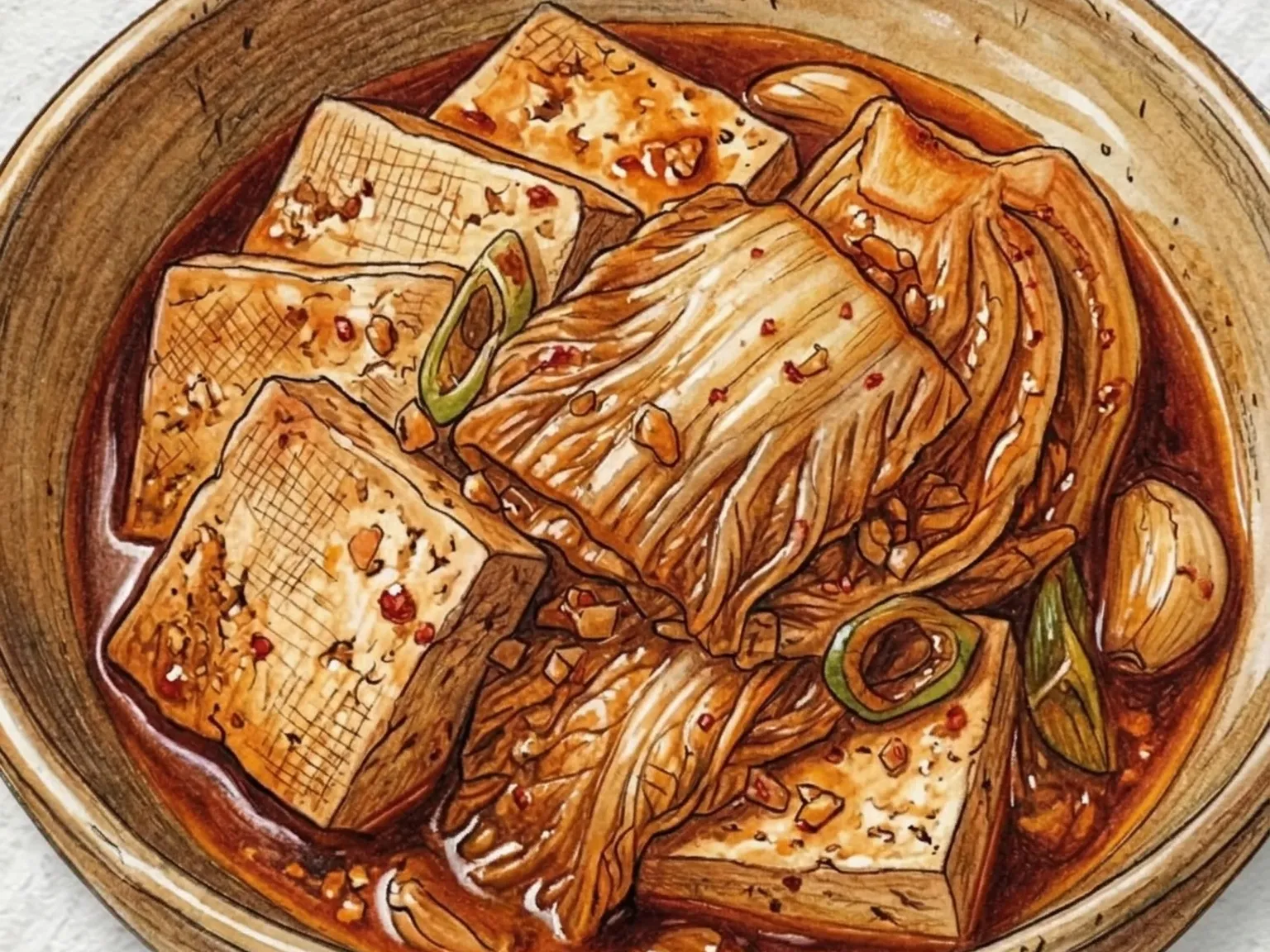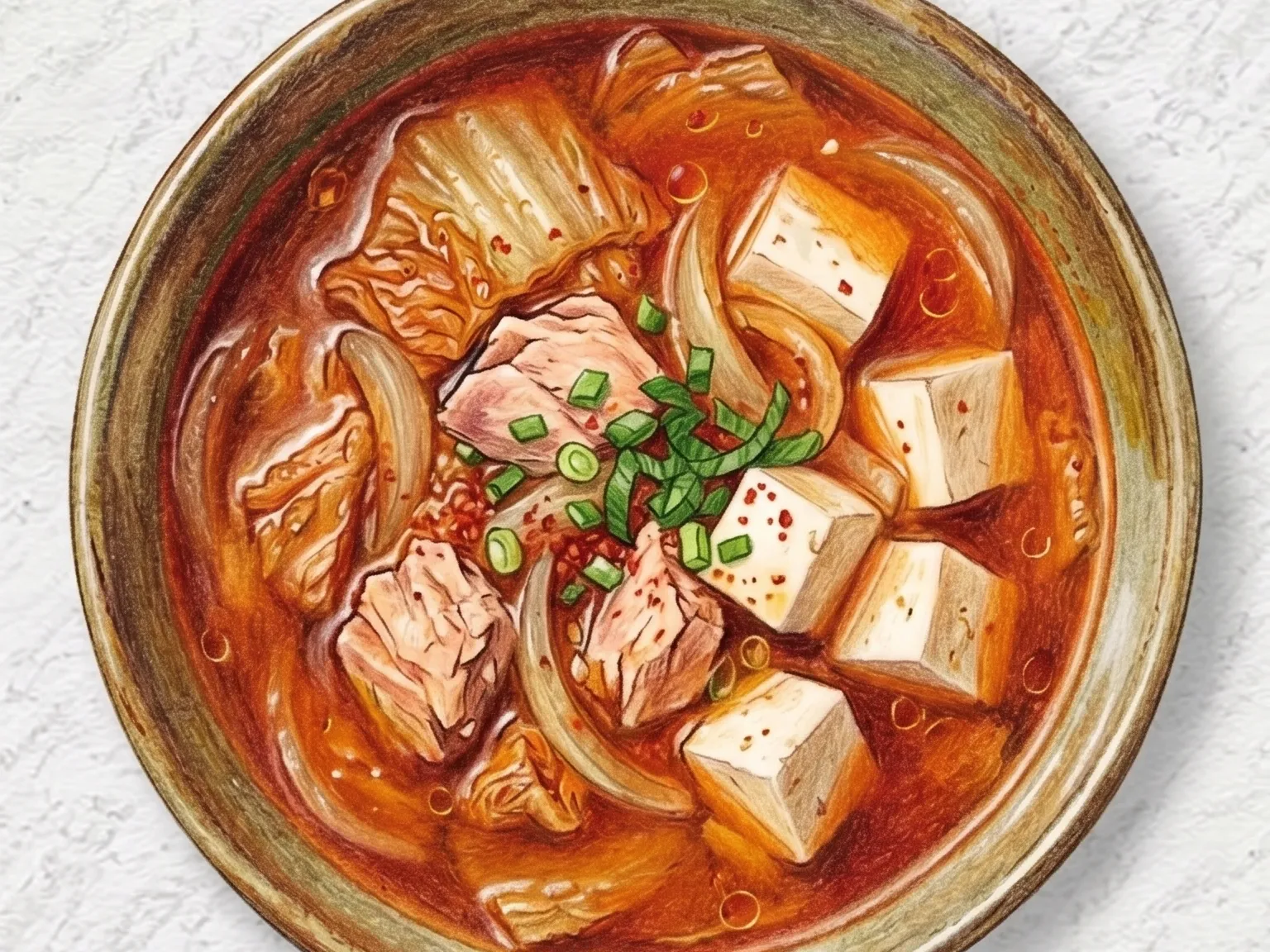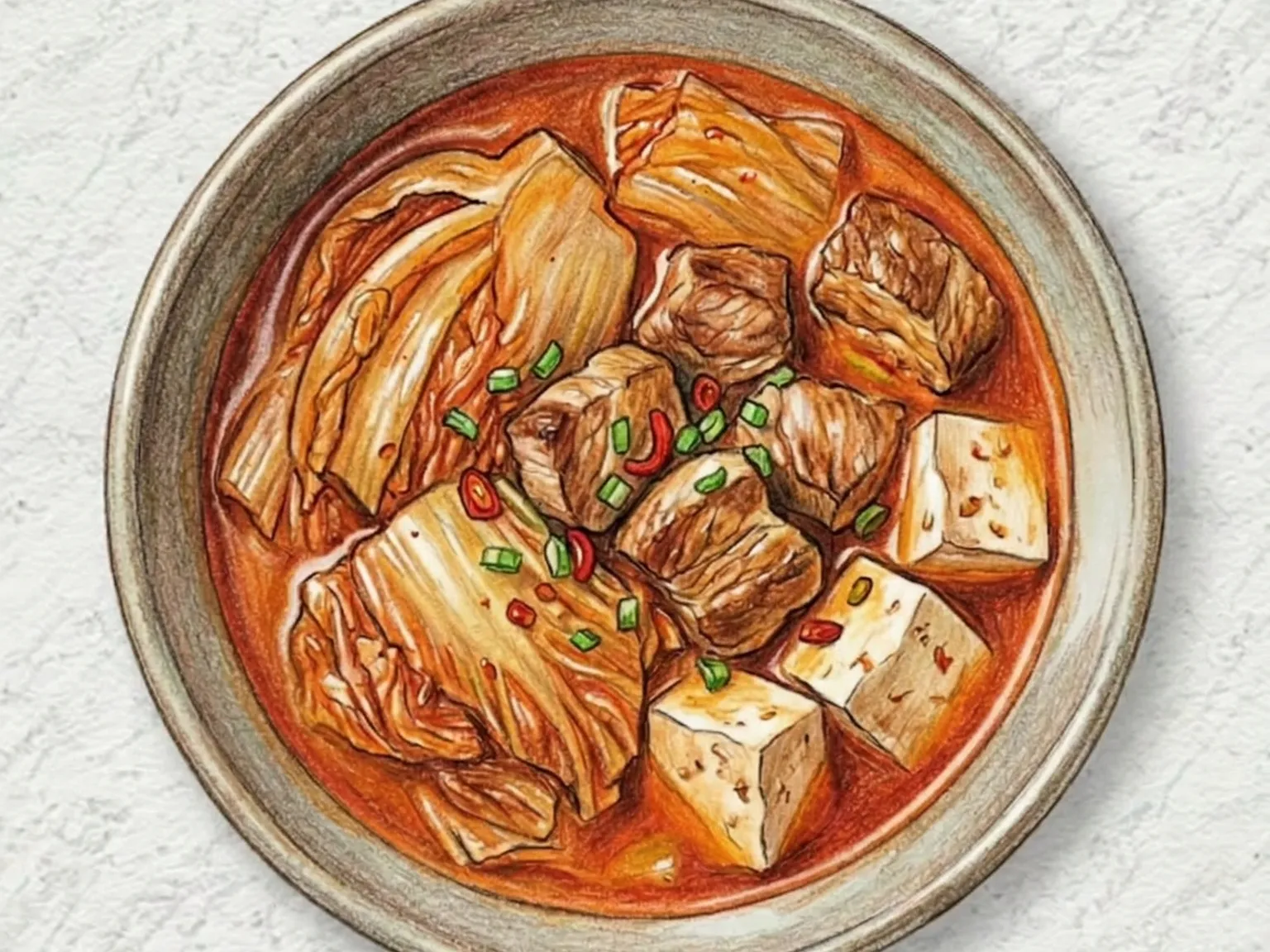
Korean Pork Kimchi Stew (Fermented Kimchi & Pork Shoulder)
Stews Easy

Korean Pork Kimchi Stew (Fermented Kimchi & Pork Shoulder)

Quick answer

This traditional Korean stew is prepared by simmering aged kimchi and pork shoulder to create a rich and savory broth.

What makes this special

  • Aged kimchi and marbled pork shoulder create a rich, acidic broth in pork kimchi jjigae.
  • Pork shoulder fat melds with sour kimchi to build rich broth
  • Kimchi and pork stir-fried 3 minutes first to mellow acidity
Total time
37 min
Level
Easy
Servings
2 servings
Ingredients
9
Calories
480 kcal
Protein
30 g

Key ingredients

Aged kimchiPork shoulderTofuOnionGreen onion

Core cooking flow

  1. 1 Cut 220 g pork shoulder into bite-size pieces, and cut 250 g aged kimchi int...
  2. 2 Heat the pot over medium heat, then add the pork and kimchi and stir-fry for about 3 minutes.
  3. 3 Add 1 tablespoon gochugaru, 1 tablespoon minced garlic, and 1 tablespoon sou...

This traditional Korean stew is prepared by simmering aged kimchi and pork shoulder to create a rich and savory broth. The marbled fat from the pork shoulder balances the sharp acidity of the fermented kimchi, producing a deep umami flavor. The cooking begins by stir-frying the pork and kimchi for three minutes to mellow the sour notes. Next, chili flakes, minced garlic, and soup soy sauce are incorporated briefly, followed by water and sliced onions. Simmering the stew for fifteen minutes softens the pork and allows the flavors to meld. Adding a small amount of kimchi brine during this process enhances the fermented depth of the broth. The dish is finished by layering thick slices of tofu and chopped green onions on top, simmering until they are heated through. It is served hot, typically alongside a bowl of steamed rice.

Prep 12min Cook 25min 2 servings

Instructions

Read the steps as a cooking flow: prep, heat, seasoning, doneness control, and finish.

6 steps
  1. 1
    Prep

    Cut 220 g pork shoulder into bite-size pieces, and cut 250 g aged kimchi into 2 cm strips without shaking off the filling.

    Slice the tofu, onion, and green onion so they can go into the pot without delay.

  2. 2
    Control

    Heat the pot over medium heat, then add the pork and kimchi and stir-fry for about 3 minutes.

    Move on when the pork surface turns pale and the kimchi looks glossy from the rendered pork fat.

  3. 3
    Season

    Add 1 tablespoon gochugaru, 1 tablespoon minced garlic, and 1 tablespoon soup soy sauce, then stir-fry for only 30 seconds.

    Keep scraping the bottom of the pot so the chili flakes bloom without scorching.

  4. 4
    Control

    Pour in 800 ml water and add 90 g onion, then bring the pot to a boil over high heat.

    Once it bubbles strongly, reduce to medium and simmer for 15 minutes, skimming foam as the pork softens.

  5. 5
    Control

    If available, add 2 tablespoons kimchi juice to deepen the savoriness.

    If the liquid reduces too much, add a little water, then keep simmering until the kimchi acidity spreads evenly through the broth.

  6. 6
    Control

    Add 180 g tofu sliced about 2 cm thick, then scatter in 1 diagonally sliced green onion.

    Simmer 5 more minutes, just until the tofu is hot through and lightly seasoned by the broth.

After the steps

Pick a recipe that fits this dish.

Continue with shared ingredients, meal pairings, or a similar method.

Recipes That Go Well With This

More Stews →

Based on shared ingredients and meal pairing

Korean Tuna Kimchi Stew
Shared ingredient: well-fermented kimchi Stews

Korean Tuna Kimchi Stew

Aged kimchi and canned tuna are cooked together in this streamlined version of kimchi jjigae that skips the traditional pork. The tuna's oil enriches the broth quickly without a long simmer, while the well-fermented kimchi provides a deep sourness that anchors the stew's flavor. Firm tofu, onion, and green onion fill out the pot, and a spoonful of chili flakes keeps the heat assertive. Draining most of the oil from the canned tuna before adding it prevents the broth from becoming too greasy. Using thoroughly aged kimchi with a pronounced sour tang is what gives the broth its depth, and simmering uncovered over high heat for two to three minutes at the end thickens the liquid to a consistency that coats rice well.

Korean Tuna Kimchi Soup (Spicy Fermented Kimchi and Canned Tuna Soup)
Shared ingredient: firm tofu Soups

Korean Tuna Kimchi Soup (Spicy Fermented Kimchi and Canned Tuna Soup)

Kimchi goes into the pot first to be stir-fried until its sharp acidity mellows and its aroma deepens, then canned tuna, tofu, onion, and gochugaru are added with water and brought to a simmer. The oil from the tuna disperses through the broth, adding savory depth without any heaviness. Soup soy sauce provides the base seasoning, keeping the stock clean rather than muddy. Tofu is added only after the liquid reaches a full boil so the cubes hold their shape, and a pour of reserved kimchi brine at the end brings both salinity and a second hit of fermented tang that defines the finished broth.

Korean Spicy Stir-Fried Squid Rice Bowl
Serve together Rice

Korean Spicy Stir-Fried Squid Rice Bowl

Scored squid, onion, cabbage, and scallion are stir-fried together in a gochujang-based sauce over high heat and served on a bowl of steamed rice. Cutting a crosshatch pattern into the squid before cooking causes each piece to curl into a compact cylinder as it hits the heat, producing a thick, bouncy texture while giving the sauce more surface area to cling to. Because squid turns rubbery in a matter of minutes if left on the heat too long, the vegetables go into the pan first to drive off their moisture, and the squid is added only for the final three to four minutes over maximum heat. The sauce, built from gochujang, gochugaru, soy sauce, sugar, and sesame oil, caramelizes quickly against the hot pan and coats both the vegetables and the squid in a glossy, deep-red glaze. The natural sweetness of the onion and cabbage tempers the chili heat and keeps the dish balanced rather than one-dimensionally spicy. Leaving a small pool of sauce in the pan when plating allows it to soak into the rice, making the whole bowl worth mixing together before eating.

Korean Galchi Kimchi Jjigae (Hairtail Kimchi Stew)
Similar recipe Stews

Korean Galchi Kimchi Jjigae (Hairtail Kimchi Stew)

Galchi kimchi jjigae is a Korean stew that pairs hairtail fish with deeply fermented aged kimchi, simmered together in a base of anchovy and dried kelp stock. The richness of hairtail - an oily, full-flavored white fish - works in counterpoint to the sharp, acidic punch of well-aged kimchi, and as the two cook together their flavors blur into something more complex than either ingredient alone. Korean radish and onion go into the pot first, their natural sweetness dissolving into the broth to form a mild, rounded base before the fish is added. The hairtail is laid in gently and cooked covered to preserve the flesh, which would fall apart if stirred. Gochugaru and soup soy sauce season the broth with spice and salt, while the fish releases its own deep umami gradually, enriching every spoonful of liquid. Pouring the stew over a bowl of rice is one of the most common ways to eat it - the broth soaks into the grains and pulls every element of the dish together. It is particularly well-suited to cold-weather cooking, when a hot, assertive broth is exactly what is needed.

Serve with this

Korean Seasoned Butterbur Stems
Side dishes Easy

Korean Seasoned Butterbur Stems

Meoui-namul-muchim is a seasonal spring namul made by blanching butterbur stems and dressing them with doenjang and ground perilla seeds. Butterbur grows wild along hillsides and stream banks throughout Korea. The stems are the edible part; the leaves contain pyrrolizidine alkaloids and are generally not consumed. Peeling the tough outer skin from each stem before cooking is a required preparation step, since unpeeled stems leave unchewable fibers in the mouth even after blanching. The blanching process drives off about half of the plant's inherent bitterness, leaving a subtle astringent quality that creates a layered interplay between the earthy savoriness of doenjang and the nutty richness of perilla seed powder. Adding perilla generously softens the bitter edge and makes the dish more approachable. March through April is peak season, when fresh butterbur appears briefly at Korean markets. Dried butterbur rehydrated in water is available year-round as a substitute but cannot replicate the fragrance and texture of the fresh spring harvest. The faint bitterness and herbal aroma typical of spring greens make this namul a classic palate-awakening side dish.

🏠 Everyday 🍱 Lunchbox
Prep 15min Cook 5min 4 servings
Korean Fresh Eggplant Kimchi
Kimchi Easy

Korean Fresh Eggplant Kimchi

Gaji kimchi is a fresh eggplant kimchi that requires no fermentation and can be eaten immediately after preparation. Eggplant is steamed until it becomes pliable and soft throughout, then torn by hand along the grain rather than cut with a knife. Tearing along the natural fibers creates a rough, open surface that allows the seasoning of gochugaru, fish sauce, garlic, and sesame oil to penetrate deep into the flesh rather than merely coating the outside. The result is an even distribution of spicy, salty flavor throughout every bite rather than concentrated only at the surface. Scallions folded in at the end add a fresh, sharp lift, and toasted sesame seeds provide a nutty, fragrant finish. Because no fermentation is involved, this kimchi is best suited to seasons when eggplant is at its peak, particularly summer, when the vegetable is widely available and a quick, no-cook banchan is most welcome. Piled over a bowl of cold leftover rice and mixed together, the seasoning soaks into the grains while the soft steamed eggplant adds body, making it a satisfying one-bowl meal without needing additional soup or side dishes.

🍱 Lunchbox 🏠 Everyday
Prep 20min Cook 10min 2 servings
Korean Dried Radish Greens Pancake
Pancakes Easy

Korean Dried Radish Greens Pancake

Boiled dried radish greens are combined with doenjang and pan-fried into a dense, rustic jeon with deep fermented character. The fibrous texture of the radish greens gives the pancake a satisfying chew, and the soybean paste saturates the batter so thoroughly that no dipping sauce is necessary. Buckwheat flour adds an earthy coarseness that suits the greens well. Cheongyang chili provides a spicy accent throughout. Minced garlic benefits from a brief saute in oil before being mixed into the batter-the raw edge cooks off and the garlic's savory depth integrates fully into the finished pancake. Cooking over low heat lets the inside set without burning the outside, producing a crisp surface and a tender, flavorful center.

🍺 Bar Snacks ⚡ Quick
Prep 18min Cook 10min 2 servings

Similar recipes

Korean Kimchi Jjigae (Kimchi Stew)
Stews Easy

Korean Kimchi Jjigae (Kimchi Stew)

Kimchi jjigae is a staple Korean stew made by simmering well-fermented kimchi with pork belly and tofu. The preparation starts by stir-frying pork belly in a pot with sesame oil to render the fat, then adding the kimchi and cooking it until translucent to mellow the sharp acidity. A spoonful of doenjang and gochugaru are stirred into the mixture to enhance the umami base before pouring in water and kimchi brine. Simmering the stew on medium heat allows the rich pork fat and fermented kimchi to combine, creating a deeply savory and spicy broth. Slices of tofu are added to absorb the flavored broth, providing a soft texture that contrasts with the other ingredients. The dish is finished with green onions for a fresh crunch and is served warm with steamed rice.

🏠 Everyday
Prep 10min Cook 30min 4 servings
Korean Zucchini Pork Stew
Stews Easy

Korean Zucchini Pork Stew

Aehobak-jjigae makes a convincing case that modest ingredients and correct technique outperform a long shopping list. The base is pork, zucchini, gochujang, and gochugaru - nothing more - but the order of operations matters. Stir-frying the pork with garlic until the fat renders creates a savory base on the bottom of the pot; then gochujang goes in and toasts in that rendered fat before any liquid is added. Pouring anchovy broth into this spiced oil produces a broth with body and cohesion that simply boiling everything together cannot replicate. Zucchini cut into half-moons enters the simmering broth and cooks for six minutes, just long enough to absorb the seasoning without losing structure. Timing here is important - overcooking collapses the zucchini into mush. The finished broth reads as spicy upfront, but pork fat and vegetable sugars sustain a low sweetness underneath that keeps the heat from feeling one-dimensional. The broth is dense enough to spoon over rice, and the dish comes together entirely from a standard Korean pantry with no special shopping required.

🏠 Everyday
Prep 15min Cook 20min 2 servings
Korean Pork Belly Kimchi Fried Rice
Rice Easy

Korean Pork Belly Kimchi Fried Rice

Pork belly is diced small and rendered in a hot pan until golden, producing enough fat to cook the entire dish without additional oil. Aged kimchi and onion go into that rendered fat, where the kimchi's sharp tang softens into the pork's richness. Gochujang and soy sauce season the rice as it joins the pan, and aggressive high-heat stir-frying keeps each grain distinct rather than clumpy. Day-old cold rice works best because its lower moisture content yields a drier, crispier result, and a fried egg on top provides a creamy counterpoint when the yolk breaks.

🏠 Everyday 🍱 Lunchbox
Prep 15min Cook 12min 2 servings

Tips

Add 2 tbsp kimchi juice for deeper umami.
Using pork shoulder gives a richer broth.

Nutrition (per serving)

Calories
480
kcal
Protein
30
g
Carbs
14
g
Fat
33
g