Pork Schnitzel
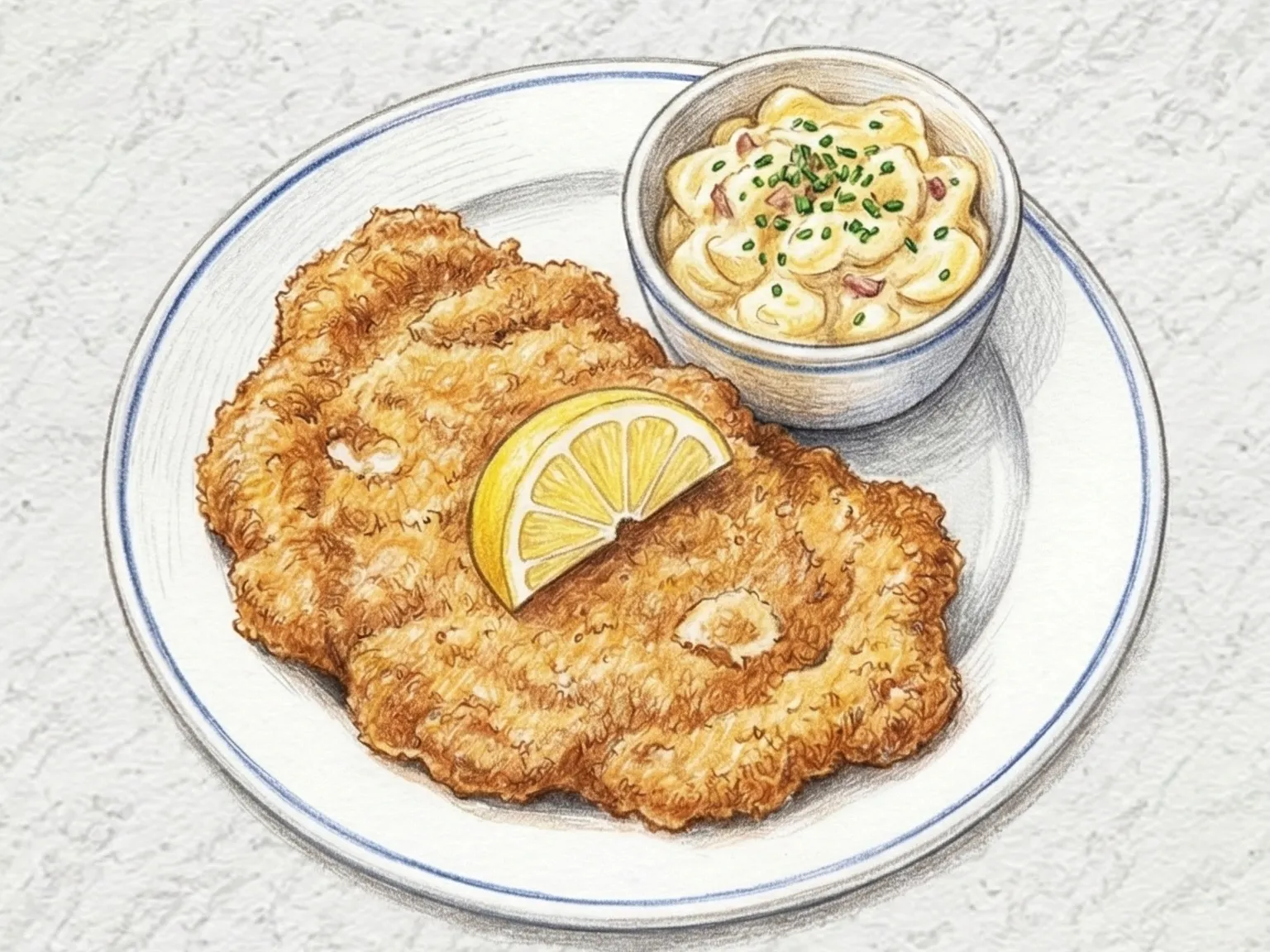
Pork Schnitzel is a definitive cutlet dish from Germany and Austria, made by pounding pork loin thin and even with a mallet, then coating it in flour, beaten egg, and breadcrumbs before frying in oil. The meat must be pounded to five millimeters or thinner so it cooks through quickly without the breading burning, and the hallmark of a proper schnitzel is a crust that puffs away from the meat rather than clinging flat. Achieving this requires generous oil - enough to submerge the cutlet halfway - and gently shaking the pan so oil flows beneath the breading to lift it. Fine breadcrumbs produce a delicate, even crust, and they should be pressed on lightly rather than compacted to maintain crispness over time. Paprika mixed into the flour adds a faint smoky warmth, and a fresh squeeze of lemon over the finished schnitzel cuts through the richness with bright acidity.
Adjust Servings
Instructions
- 1
Slice pork to 1.5 cm, place between plastic wrap, and pound to about 7 mm thickness.
- 2
Season both sides with salt, pepper, and paprika.
- 3
Coat each cutlet in flour, then beaten egg, then breadcrumbs.
- 4
Heat a generous layer of oil in a pan to 170-175C.
- 5
Fry 1-2 cutlets at a time for 2-3 minutes per side until golden.
- 6
Drain on paper towels and serve with lemon wedges.
As an Amazon Associate, we may earn from qualifying purchases.
Tips
Nutrition (per serving)
More Recipes

Wiener Schnitzel
Classic Viennese dish of veal cutlet pounded thin, breaded in flour, egg, and breadcrumbs, pan-fried golden in butter.

Guo Bao Rou (Sweet and Sour Crispy Pork)
Guo bao rou - literally 'pot-wrapped meat' - is the signature dish of Northeastern Chinese cuisine, created in late Qing Dynasty Harbin to entertain Russian diplomats who found traditional Chinese flavors too unfamiliar. Pork tenderloin or loin is sliced thin and coated heavily in potato starch, fried once to set the crust, then fried a second time at higher temperature to puff the starch into a shatteringly crisp shell - this double-frying technique is non-negotiable. A sauce of vinegar, sugar, and soy sauce is reduced rapidly in a hot wok until it caramelizes, then the crispy pork is tossed through in a motion that must take no more than thirty seconds - any longer and the starch absorbs the liquid, destroying the crunch. The original Harbin version leans heavily on vinegar's sharp tang with a pale color, while versions that migrated south or into Korean-Chinese kitchens often substitute ketchup for a sweeter, redder result. Each piece delivers a triple texture: a glassy sauce coating on the outside, a shattering starch layer beneath, and soft, yielding pork at the center.

Currywurst (Sliced Sausage in Curry Ketchup)
Currywurst is a German street food built around a homemade curry-tomato sauce ladled over sliced bratwurst. Finely chopped onion is sautéed until translucent, then tomato paste is cooked for one minute to mellow its raw acidity. Ketchup, curry powder, paprika, sugar, Worcestershire sauce, and apple cider vinegar are stirred in and simmered for eight minutes until the sauce thickens and the spices meld. Bratwurst is browned separately in a pan, rolled to crisp all sides, then sliced into bite-size rounds. A final dusting of curry powder over the sauced sausage intensifies the spice aroma, and the sauce improves noticeably after resting overnight.

Kasespatzle (German Alpine Cheese Dumpling Noodles)
Kasespatzle is an Alpine comfort dish from southern Germany and Austria, made by boiling a thick batter of flour, eggs, and milk into small dumplings, then tossing them with melted Emmental cheese and caramelized onions. The batter must maintain a thick consistency rather than being runny - this is what gives the spaetzle their characteristic chew when boiled and drained. Sliced onion is slowly cooked in butter over low heat until deeply browned, transforming the raw sharpness into a concentrated sweetness. The cooked spaetzle and grated cheese are combined in a hot pan so the cheese melts and coats every dumpling. Topped with the caramelized onions and black pepper, the dish is served immediately while the cheese is still molten and stretchy.

Korean Kimchi Pork Crispy Dumplings
Kimchi pork gunmandu are pan-fried dumplings with a filling of ground pork, well-drained kimchi, garlic chives, firm tofu, soy sauce, garlic, and sesame oil. The near-equal ratio of 180g pork to 150g kimchi puts the kimchi's fermented tang front and center. Garlic chives add a sharp, onion-like depth, and the tofu absorbs excess moisture from the filling to prevent wrapper breakage. The dumplings are first pan-fried to crisp the bottoms, then steamed with a splash of water, and finished uncovered to evaporate remaining liquid.

Katsu Sando (Japanese Crispy Pork Cutlet Sandwich)
Katsu sando is a Japanese sandwich built around a thick, crispy pork cutlet pressed between slices of soft milk bread. The pork loin is pounded thin, seasoned, then coated in flour, egg, and panko breadcrumbs before being deep-fried to a deep golden crust. Tonkatsu sauce - a thick, fruity condiment similar to Worcestershire - is spread on one side of the bread, while the other gets a thin layer of mayonnaise. Finely shredded cabbage sits beneath the cutlet, adding a fresh crunch that offsets the richness of the fried meat. The crusts are trimmed and the sandwich is pressed gently before being sliced in half, revealing the clean cross-section of bread, cabbage, and cutlet that defines the dish. Katsu sando works equally well as a quick lunch, a picnic item, or late-night comfort food.