Portuguese Egg Tart (Flaky Pastry with Caramelized Custard)
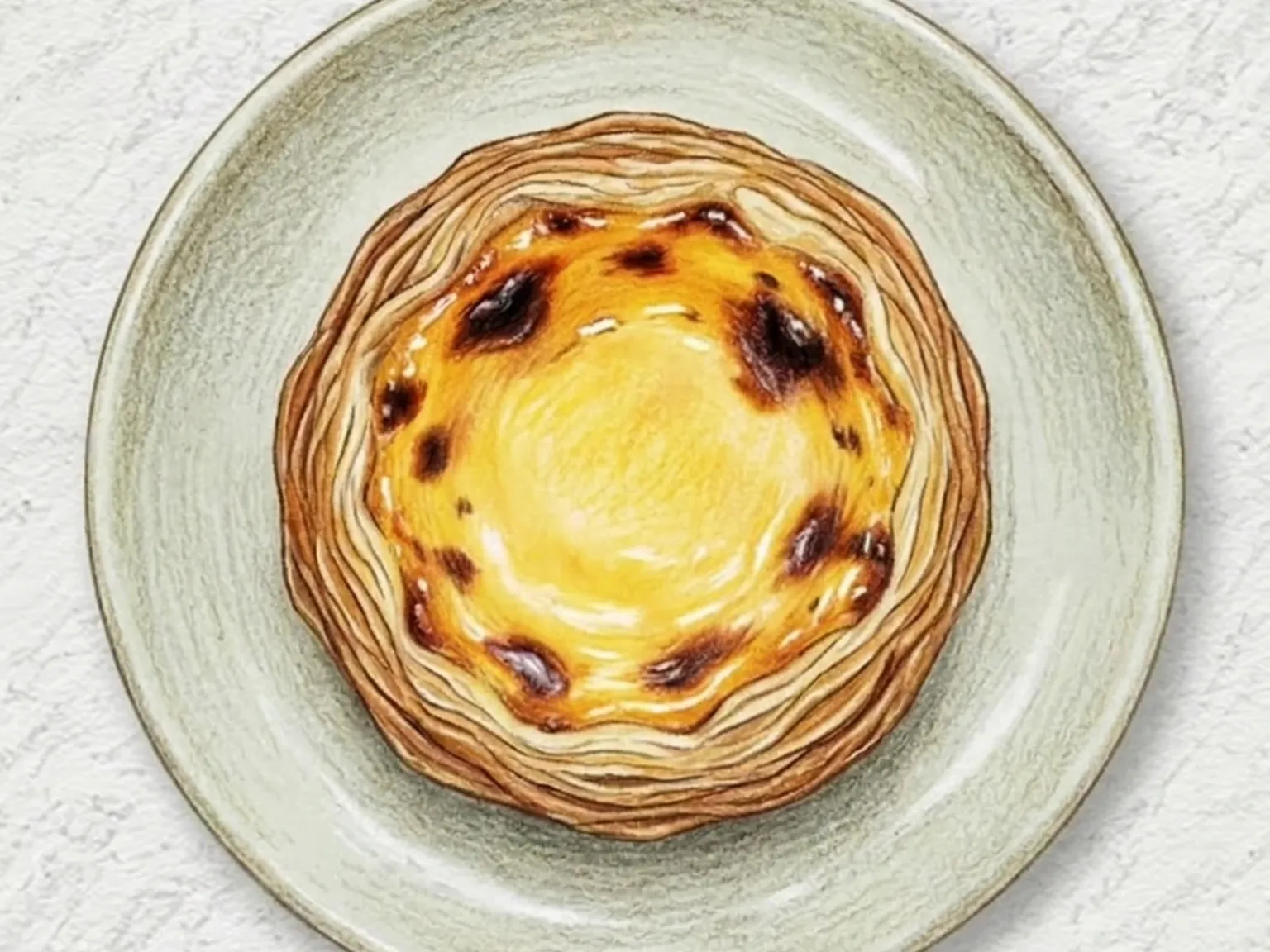
Flaky puff pastry shells are pressed into muffin tins and filled with a rich egg yolk custard, then baked at very high heat until the tops blister with dark caramelized spots. Those charred patches are not a mistake but the defining feature of the tart, contributing a bittersweet complexity that balances the sweet, creamy filling below. The custard sets to a trembling consistency that is firm enough to hold when the tart is lifted but soft enough to melt on the tongue. Vanilla extract added to the custard rounds out the egg richness with a floral note. Straining the custard through a fine sieve before filling ensures a perfectly smooth texture. The extreme oven temperature is what separates these from ordinary custard tarts, as it caramelizes the surface in minutes while keeping the interior silky.
Adjust Servings
Instructions
- 1
Preheat the oven to 230C and lightly grease a muffin tin.
- 2
Roll out puff pastry, cut circles, and press into muffin cups, then chill.
- 3
Heat milk, cream, and sugar, then whisk in cornstarch slurry until slightly thickened.
- 4
Off heat, whisk in yolks and vanilla, then strain for a smooth custard.
- 5
Fill pastry cups and bake 15-18 minutes until tops are lightly blistered, then cool before serving.
As an Amazon Associate, we may earn from qualifying purchases.
Tips
Nutrition (per serving)
More Recipes

Danish Pastry
Danish pastry is a laminated dough enriched with eggs and butter, folded in successive turns to create flaky layers, then shaped and filled before baking. The process resembles croissant-making, but the dough is softer and sweeter, and the shaping is more varied - diamonds, pinwheels, and envelopes are all common forms. In the oven, the butter between the layers melts and creates steam, pushing apart each fold into crisp, golden leaves. The interior stays pillowy and brioche-like, carrying a pronounced butter flavor throughout. Custard cream or fruit placed in the center bakes alongside the pastry, the custard firming into a smooth, glossy pool. A drizzle of sugar glaze after baking adds a thin, sweet sheen.

Flan Parisien (Parisian Vanilla Custard Tart)
Flan Parisien is a Parisian bakery staple found in nearly every boulangerie in the city. A buttery shortcrust pastry shell holds a thick, firm vanilla custard that bakes slowly until the top develops caramelized brown spots. The custard is made from milk, eggs, sugar, and cornstarch, which gives it a denser, sliceable consistency that distinguishes it from softer baked custards like creme brulee. When properly cooled, the filling holds its shape when cut yet melts smoothly on the tongue with a clean vanilla flavor. Vanilla bean seeds speckled throughout the custard signal that the real ingredient was used rather than extract. The pastry shell must be blind-baked first to prevent sogginess, then filled and baked again until set. It is served cold, and the contrast between the crisp, buttery shell and the cool, trembling custard makes each bite satisfying.

Apple Turnover
Apple turnovers evolved from the medieval European tradition of enclosing fruit in pastry dough - a portable format that made them market-day staples in France and England by the 17th century. Puff pastry is rolled thin and cut into squares, then filled with apples that have been cooked briefly with cinnamon, sugar, and a squeeze of lemon to concentrate their juice. Folding the pastry into a half-moon and crimping the edges traps steam during baking, which puffs the layers apart into a shattering, golden shell. The filling inside turns jammy and soft, with the cinnamon deepening the apple's natural sweetness while lemon keeps it from becoming one-note. A light egg wash before baking produces the glossy, caramelized surface. Eaten warm from the oven, the contrast between the brittle, flaking crust and the hot, syrupy interior is at its sharpest.

Caramel Flan
Caramel flan is a baked custard dessert built on the interplay between smooth egg custard and bittersweet caramel. Sugar is cooked in a dry pan until it reaches a deep amber, then poured into the bottom of a mold where it hardens into a glassy layer. The custard - eggs, milk, sugar, and vanilla - is poured on top and the whole assembly bakes in a water bath at gentle heat to prevent curdling. The slow, even cooking produces a texture that is perfectly smooth, without bubbles or grainy patches. Once chilled and unmolded, the caramel reliquefies into a flowing sauce that coats the pale custard in amber streaks. The flavor is a study in contrasts: the custard is milky and gently sweet, while the caramel adds a roasted, slightly bitter edge that prevents the dish from becoming cloying. It is served cold, and the clean wobble of a well-set flan is a point of pride.

Quiche Lorraine
Quiche Lorraine is a French savory tart that fills a buttery pastry shell with crisp-cooked bacon, grated Gruyere cheese, and a smooth custard made from eggs, heavy cream, and milk. Blind-baking the crust for ten minutes before adding the filling is essential to prevent a soggy base. The bacon must be drained well so excess fat does not make the custard greasy. Whisking the egg mixture gently avoids incorporating too many air bubbles, which would create an uneven surface after baking. The quiche is done when the center still has a slight jiggle - removing it at this point and resting for ten minutes allows residual heat to set the custard fully, producing a clean slice with a creamy interior.

Bacalhau a Bras Recipe - Classic Portuguese Salt Cod with Eggs and Crispy Potatoes
Make classic bacalhau à brás at home - hand-shredded salt cod tangled with crispy straw potatoes and silky scrambled eggs in olive oil. Soak the cod 24-48 hours, sauté with onion, then stir in beaten eggs off the heat until they form creamy curds binding everything into a golden mound. Black olives and parsley finish this iconic Portuguese tavern dish.