Pot Roast
Quick answer
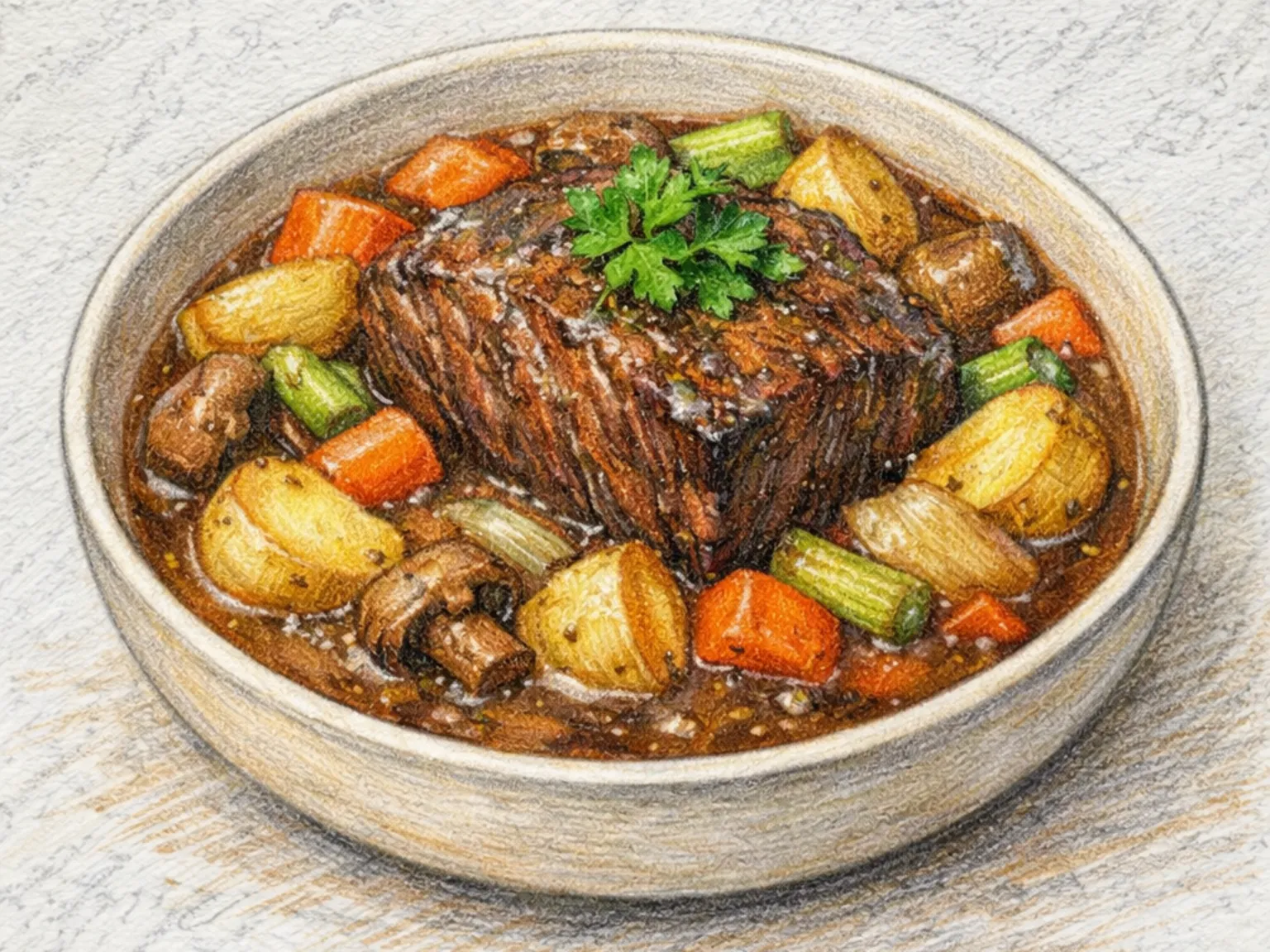
Pot Roast is a cornerstone of American home cooking, where a tough cut of beef is braised low and slow with vegetables and stock until it can be pulled apart with a fork.
What makes this special
- Chuck roast collagen converts to silky gelatin during the three-hour braise for this Pot Roast.
- Chuck's collagen converts to gelatin over 3 hours braising for moist pull-apart texture
- Tomato paste sautéed first builds umami before the beef stock reduces
Key ingredients
Core cooking flow
- 1 Pat the 900 g chuck roast dry, then season it evenly with 1 teaspoon salt.
- 2 Heat 2 tablespoons olive oil in a heavy pot over medium-high heat.
- 3 Remove the beef briefly, then cook the onion and garlic in the same pot over medium heat.
Pot Roast is a cornerstone of American home cooking, where a tough cut of beef is braised low and slow with vegetables and stock until it can be pulled apart with a fork. Chuck roast is the ideal choice - its abundant connective tissue and intramuscular fat break down over hours of gentle heat, converting collagen into gelatin that makes the meat moist and rich. Searing the beef on all sides builds a brown crust that contributes deep flavor, and adding tomato paste to the pan before deglazing creates an umami-rich foundation. Beef stock is poured to about two-thirds up the side of the meat, and the covered pot goes into a 160-degree oven for at least three hours, during which the liquid reduces and concentrates into a natural gravy. Carrots and potatoes are added in the final hour so they hold their shape while absorbing the braising liquid's flavor.
Instructions
Read the steps as a cooking flow: prep, heat, seasoning, doneness control, and finish.
- 1Season
Pat the 900 g chuck roast dry, then season it evenly with 1 teaspoon salt.
Cut the carrots, potatoes, onion, and garlic into sturdy pieces so they can braise without falling apart.
- 2Control
Heat 2 tablespoons olive oil in a heavy pot over medium-high heat.
Sear the beef for 3-4 minutes per side until a deep brown crust forms, avoiding constant movement so the sauce gains depth.
- 3Control
Remove the beef briefly, then cook the onion and garlic in the same pot over medium heat.
When fragrant and lightly softened, stir in 1 tablespoon tomato paste and cook until it darkens slightly without scorching.
- 4Step
Pour in 700 ml beef stock and scrape the browned bits from the bottom until they dissolve into the liquid.
Return the beef, making sure the stock reaches about two-thirds up the side of the roast.
- 5Control
Cover the pot and braise in a 160 degree oven for about 2 hours before adding the firmer vegetables.
The liquid should bubble gently, not boil hard, because harsh heat can tighten the meat.
- 6Finish
Add the carrots and potatoes, cover again, and braise for about 1 more hour.
When the beef pulls apart easily with a fork, slice or shred it and serve with the vegetables and reduced sauce.
After the steps
Pick a recipe that fits this dish.
Continue with shared ingredients, meal pairings, or a similar method.
Recipes That Go Well With This
More Western →Based on shared ingredients and meal pairing
French Beef Stew
French beef stew transforms inexpensive, collagen-rich cuts like chuck or brisket into something deeply tender through unhurried heat. The process begins by cutting the beef into large chunks, dusting them with flour, and searing in a hot pan until every surface is properly browned. That browning step is not optional: the Maillard crust formed at high heat becomes the flavor foundation of the entire pot. Red wine and beef stock are then added, and the pot cooks at a low, gentle temperature for at least two hours. During that time the tough connective tissue in the shank breaks down completely, and the meat becomes soft enough to fall apart with a fork. Root vegetables including carrots, potatoes, celery, and onion braise alongside the beef, gradually releasing natural sugars and body into the liquid. The red wine reduces throughout the cook, its sharp acidity mellowing away while the fruit depth and tannic structure remain, giving the sauce a rounded, full-bodied backbone. Thyme and bay leaf infuse the broth with herbal warmth from the first moment and continue building throughout the long cook. The stew improves overnight, when the flavors continue to develop in the refrigerator and the seasoning penetrates every part of the meat.
Nikujaga (Japanese Beef Potato Onion Soy-Sweet Stew)
Nikujaga is a Japanese home-cooked stew often described as the dish that defines a mother's cooking in Japan. Thinly sliced beef, potatoes, onion, carrot, and shirataki noodles are simmered in a broth of dashi, soy sauce, mirin, and sugar. The dish traces its origins to the Meiji era, when a Japanese naval officer attempted to recreate British beef stew using local ingredients -- resulting in a clear, soy-based braise rather than a thick, flour-bound stew. The potatoes absorb the seasoned liquid until soft at the edges but still holding shape, while shirataki noodles soak up flavor and add a springy contrast.
Seven Layer Salad
Seven layer salad stacks romaine lettuce, sliced cucumber, halved cherry tomatoes, cooked green peas, chopped boiled egg, and thinly sliced red onion in a clear glass bowl, then seals the top with a smooth layer of Greek yogurt mixed with lemon juice. The yogurt cap acts as a moisture barrier, preventing the lower layers from turning soggy and making the salad suitable for advance preparation. Boiled eggs contribute a mild richness and peas add a starchy sweetness that rounds out the crisp vegetable layers, while red onion's sharp bite creates a contrast against the creamy, tangy dressing. Serving requires scooping deep to the bottom so every portion captures all seven layers at once.
Chicken and Dumplings
Chicken and dumplings is a Southern American comfort dish built on simplicity and patience. Bone-in or boneless chicken thighs simmer with carrot, onion, and celery in chicken stock for about fifteen minutes, after which the meat is lifted out, shredded along the grain, and returned to the pot. Shredding rather than cubing matters because the torn fibers absorb broth more deeply, carrying more flavor into every bite. The vegetables release natural sugars as they cook, and those sugars combine with the chicken stock to create a layered, savory-sweet base. Once a simple batter of flour, baking powder, butter, and milk is spooned in spoonfuls onto the simmering surface, the lid goes on and must stay closed for a full twelve minutes. Steam trapped inside puffs the dumplings into light, pillow-like rounds, and lifting the lid even briefly lets the steam escape, resulting in flat, doughy discs instead. The finished dumplings are soft on the outside and tender and bread-like inside, and eating them together with the rich broth in a single spoonful is the point of the whole dish.
Serve with this
Citrus Espresso Tonic with Orange
Espresso tonic is a carbonated coffee drink built by slowly pouring espresso over chilled tonic water to form two distinct layers. The tonic must be thoroughly cold to maintain stable carbonation throughout; cooling the espresso for about thirty seconds before pouring it over a spoon produces a clean separation between the two liquids. The quinine bitterness in the tonic water meets the espresso's roast bitterness, creating a balanced interplay rather than one-note sharpness. Orange slices and lemon peel garnish the glass, releasing citrus oils that rise with the bubbles. Specialty espresso with pronounced fruit acidity works particularly well here, harmonizing with the tonic's effervescence and lending natural sweetness without added sugar. Pre-chilling the glass with ice before adding the tonic helps preserve carbonation. The drink gained popularity in Scandinavian coffee culture during the 2010s before spreading worldwide.
Real Pineapple Sherbet
This refreshing fruit dessert is prepared by scooping out the flesh of a mini pineapple and using its hollowed shell as a serving vessel. The fruit pulp is blended until smooth to prevent icy lumps, then mixed with sugar, lemon juice, and oligosaccharide syrup to achieve a sweet and tangy flavor. After pouring the mixture back into the shell and covering it with the top lid, it is frozen for at least four hours. Stirring the mixture occasionally during freezing breaks up ice crystals, resulting in a smoother texture. The active bromelain enzyme present in the fresh fruit provides a subtle tingly sensation on the tongue. Serving the sherbet directly inside the pineapple skin minimizes juice loss and keeps the dessert cold. Letting it stand for five minutes before scraping and topping with fresh apple mint leaves makes it ready to serve.
Kimchi Bacon Mac and Cheese
Kimchi bacon mac and cheese layers aged kimchi's lactic tang and smoky bacon into a classic American cheddar cheese sauce over elbow macaroni. A butter-flour roux forms the base, with milk whisked in to build a béchamel before cheddar is melted into a thick, clinging sauce. Crisp bacon pieces add salt and crunch throughout, while chopped ripe kimchi introduces fermented acidity that counteracts the richness of the cheese. A pinch of gochugaru runs underneath with mild, warming heat. The tubular macaroni shape traps sauce inside and out, ensuring each forkful carries the full spectrum of creamy, tangy, and smoky flavors.
Similar recipes
Chili con Carne
Chili con carne is a Mexican-influenced American dish that simmers ground beef, kidney beans, and diced tomatoes together with chili powder, cumin, and other spices in a single pot. Onion and garlic are cooked first to build an aromatic foundation, and the meat is browned thoroughly over high heat so the Maillard reaction develops a savory depth that simmering alone cannot produce. Adding the spices and cooking them in the fat for one minute before the liquid goes in blooms the heat and earthy character of the blend throughout the oil. Simmering on low heat for thirty minutes or more mellows the acidity of the tomatoes and allows the beans and meat to absorb the seasoning fully, producing a thick, concentrated richness. Resting the chili overnight and reheating it the following day deepens the flavor further as the spices continue to meld. Sour cream or cheese on top introduces a creamy, tangy layer that balances the bold spice profile. The heat level adjusts easily by varying the chili powder quantity, and cayenne pepper added to taste produces a sharper, more intense warmth. Soaking and cooking dried beans rather than using canned ones yields a firmer texture with more presence. The finished chili works equally well over rice, alongside tortilla chips, or as a taco filling the next day.
Pulled Pork Sandwich
Pulled pork sandwich starts with pork shoulder rubbed in salt and paprika, then slow-cooked for two and a half to three hours with onion and garlic until the connective tissue converts to gelatin and the meat shreds effortlessly with two forks. The low-and-slow method delivers a tenderness that faster cooking cannot replicate. Tossing the shredded meat in barbecue sauce layers smoky sweetness and tang over the deep pork flavor, while lightly toasted buns provide a crisp contrast to the moist filling. Making the pork a day ahead and refrigerating it lets the sauce penetrate deeper into the fibers, intensifying the overall taste.
Cheese Arepa (Venezuelan Griddled Cornmeal Cheese Pocket)
The arepa is the daily bread of Venezuela and Colombia, with origins reaching back to pre-Columbian indigenous peoples who ground maize on stone metates and cooked the patties over fire. The dough has no leavening, no fat, no yeast - only pre-cooked cornmeal (masarepa), water, and salt, worked by hand into thick discs and cooked on a budare, a flat cast-iron griddle, until a golden-brown crust forms on both sides. Inside, the arepa stays soft with a faintly undercooked texture that contrasts the crust. For cheese arepas, queso blanco or mozzarella is either folded into the dough before cooking, creating pockets of molten cheese throughout, or stuffed inside a freshly grilled arepa split open while hot. Either way, the warm corn shell traps stretchy, salty melted cheese in every bite. The corn flavor reads toasty and cleanly sweet, and the fat from the cheese provides the counterpoint. Street vendors across Caracas and Bogota sell them around the clock, filled with everything from black beans to slow-cooked shredded beef.