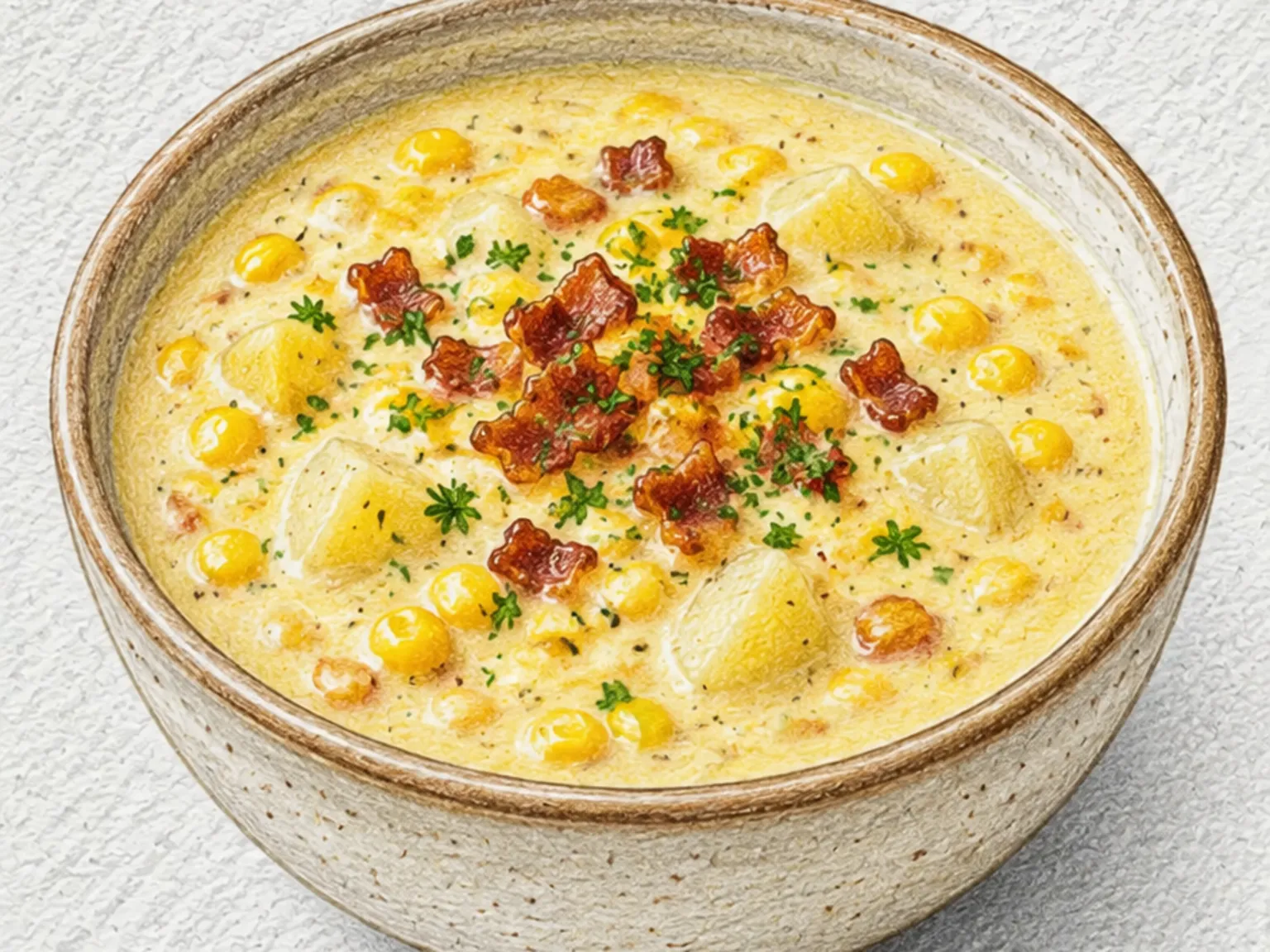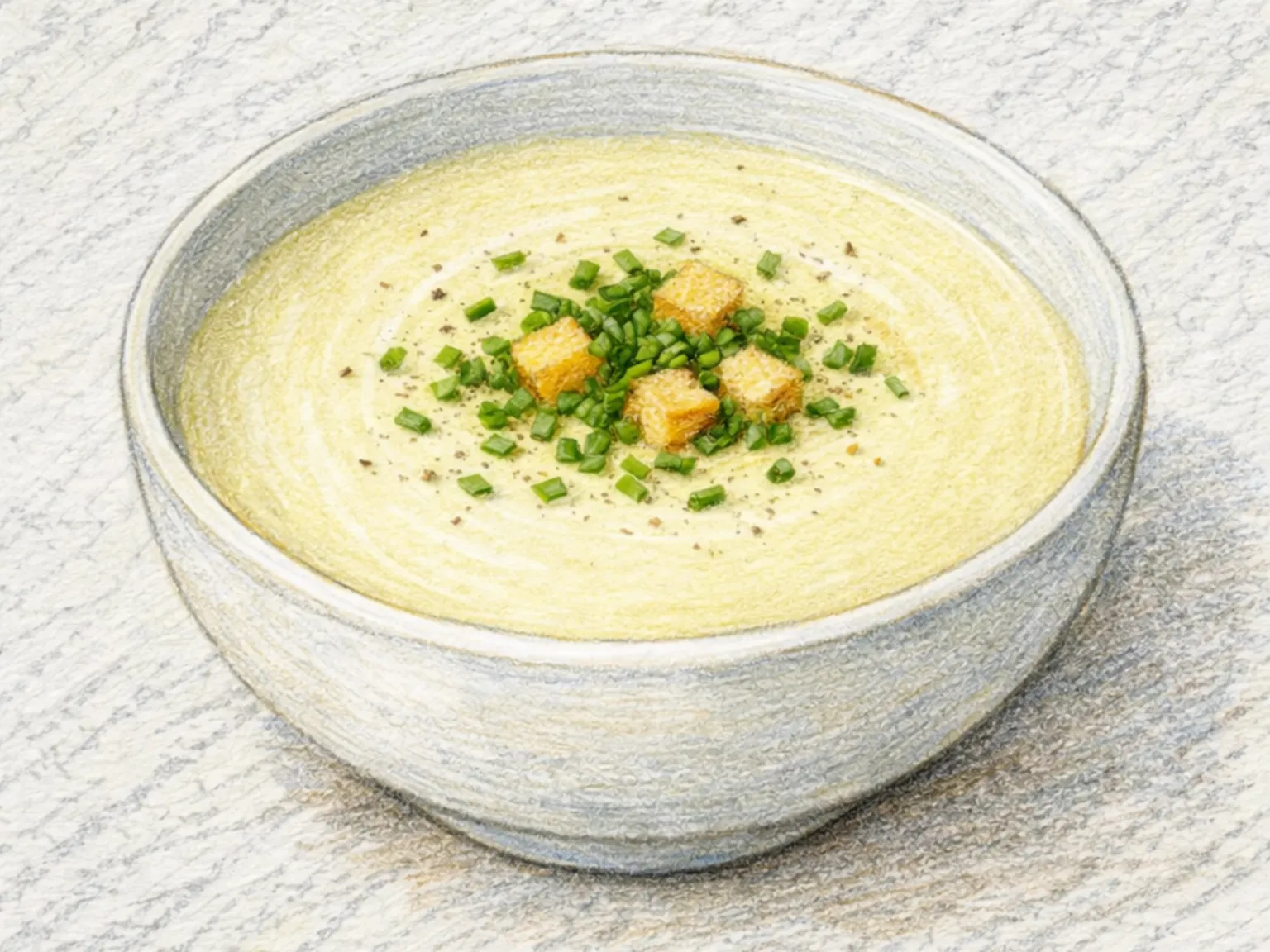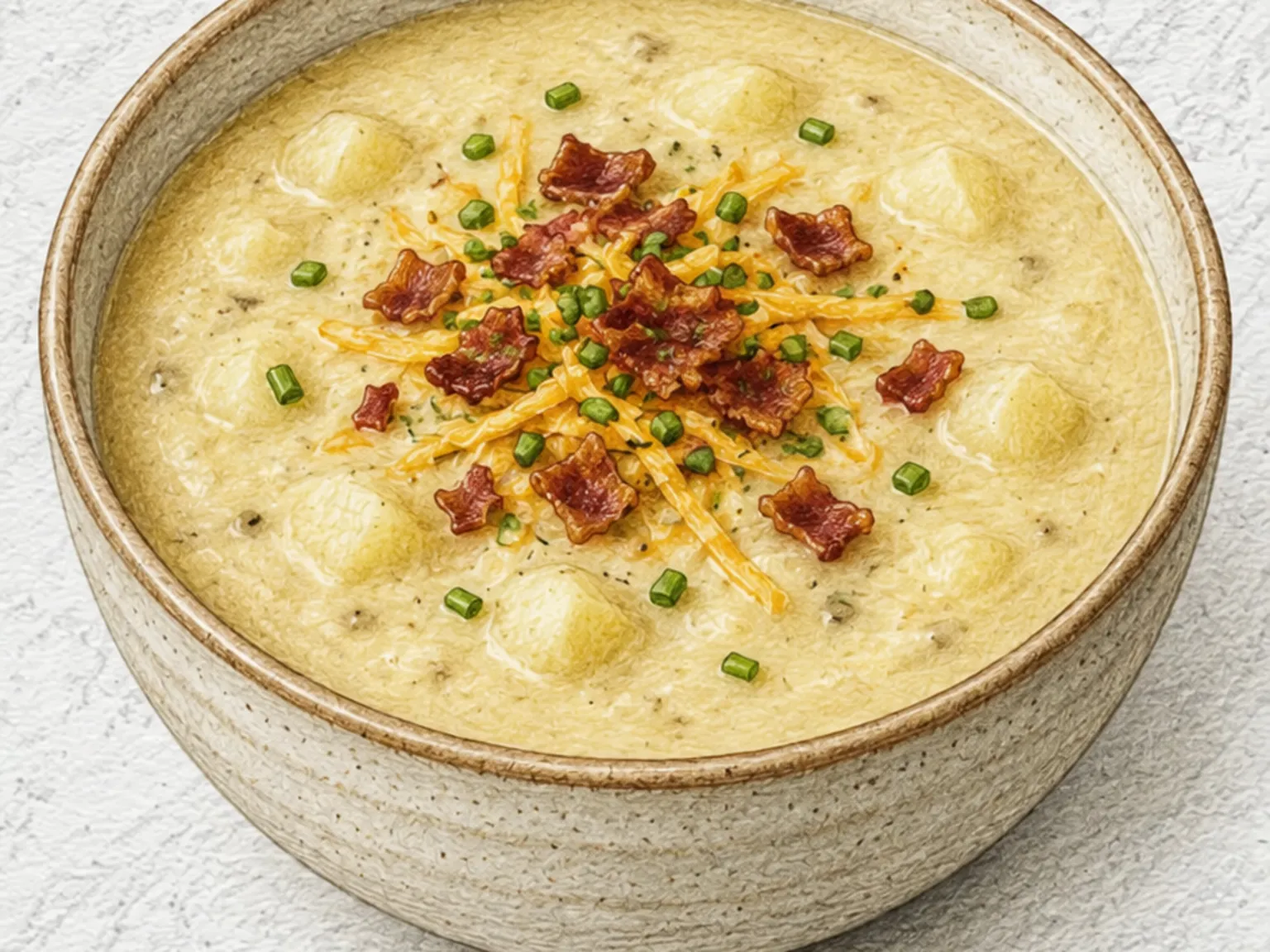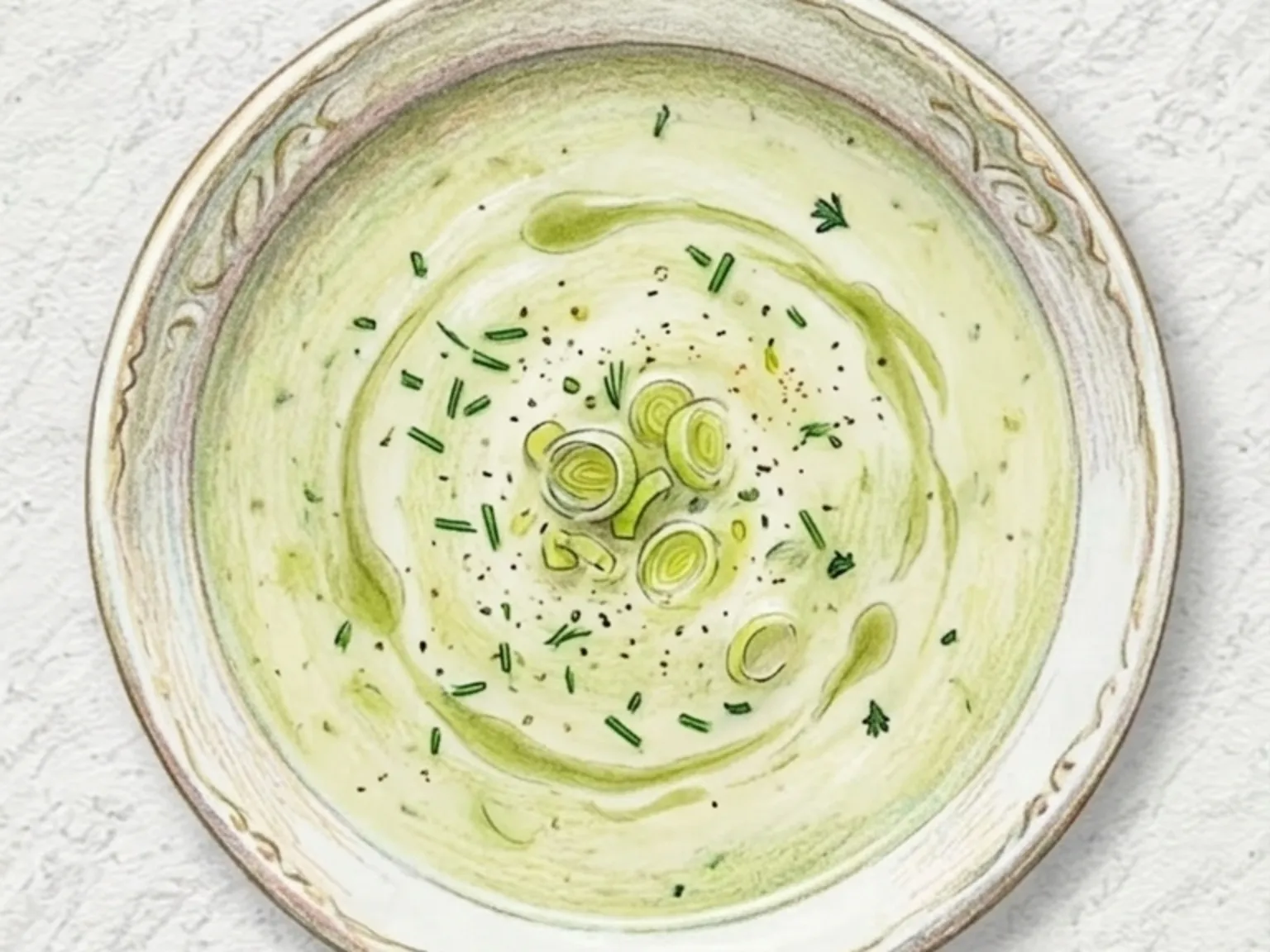
Potato Leek Soup
Quick answer
Potato leek soup is a French home-style cream soup made by sweating leeks and onion in butter over low heat, simmering with diced potatoes in chicken stock, and blending...
What makes this special
- Leeks sweated in butter build a sweet, mild base for this velvety blended Potato Leek Soup.
- Leeks sweated 6 minutes on low heat shed sharpness and build a sweet base
- Potato starch creates velvet-thick texture without any roux or cream starch
Key ingredients
Core cooking flow
- 1 Split the leek lengthwise and rinse between the layers to remove trapped dir...
- 2 Thinly slice 250 g leek and 100 g onion, keeping the pieces similar in thickness.
- 3 Melt 30 g butter in a pot over low heat, then add the leek and onion.
Potato leek soup is a French home-style cream soup made by sweating leeks and onion in butter over low heat, simmering with diced potatoes in chicken stock, and blending until velvety smooth. Cooking the leeks slowly is essential - it dissolves their raw sharpness into a sweet, mellow base that carries the entire soup. The potato starch provides natural body without any added thickener, and an immersion blender produces a seamless, silky texture. Heavy cream stirred in at the end adds a layer of richness and rounds out the flavor. The soup can be served hot for a comforting meal or chilled as vichyssoise for a refined summer starter.
Instructions
Read the steps as a cooking flow: prep, heat, seasoning, doneness control, and finish.
- 1Prep
Split the leek lengthwise and rinse between the layers to remove trapped dirt, then shake off excess water.
Peel 500 g potatoes and cut them into small, even cubes so they soften at the same pace.
- 2Finish
Thinly slice 250 g leek and 100 g onion, keeping the pieces similar in thickness.
If the slices are too thick, they take longer to sweat and can stay sharp in the finished soup.
- 3Control
Melt 30 g butter in a pot over low heat, then add the leek and onion.
Sweat for about 6 minutes, stirring often, until glossy and softened without browning.
- 4Control
Add the diced potatoes and 900 ml chicken stock, then bring to a boil over medium heat.
Reduce to low and simmer about 20 minutes, until the potatoes crush easily against the pot.
- 5Step
Turn off the heat briefly and blend with an immersion blender, reaching the bottom and edges of the pot.
Continue until no potato lumps remain and the soup looks smooth and even.
- 6Finish
Stir in 120 ml heavy cream and warm over low heat for 3 minutes without a hard boil.
Season with 1 tsp salt, then serve hot or chill thoroughly for a cold vichyssoise style.
After the steps
Pick a recipe that fits this dish.
Continue with shared ingredients, meal pairings, or a similar method.
Recipes That Go Well With This
More Western →Based on shared ingredients and meal pairing
Vichyssoise (French and potato soup)
Vichyssoise is a chilled French leek and potato soup blended smooth with cream.
Lobster Bisque
Lobster bisque serves as a foundational dish within the French culinary tradition, specifically categorized as a smooth cream soup based on crustacean shells. The preparation begins by roasting the lobster shells in butter until they reach a dark, saturated color, a step that develops the base flavors of the dish. This is followed by a flambe process using cognac, which serves to eliminate any lingering bitterness from the shells while introducing a layer of smoky depth to the mixture. Once the shells are prepared, they are placed in a pot with fish stock, whole tomatoes, and a selection of aromatic vegetables to simmer for a minimum of thirty minutes. This extended simmering time allows for the maximum extraction of flavor from the lobster shells into the surrounding liquid. After the simmering process is complete, the mixture is passed through a fine sieve to remove all solid fragments and ensure a uniform consistency. The resulting broth is then combined with heavy cream, which provides a thick and velvety texture that characterizes the final soup. Fresh tarragon is incorporated to provide an herbal element that balances the concentrated richness of the cream and seafood. The lobster meat, which was set aside earlier in the process, is stirred into the hot liquid at the final stage of preparation to ensure that its texture remains tender and does not become tough. The final result is a soup that features a concentrated essence of the ocean and represents one of the most technical and polished preparations found in French cooking.
Apple Fennel Walnut Salad
This salad pairs three ingredients whose textures and flavors run in different directions - crisp apple, anise-scented fennel, and bitter walnuts - and unifies them with a honey-lemon dressing. Thinly sliced fennel bulb contributes a licorice-like fragrance that is more aromatic than sweet, while its celery-crisp texture holds a firm contrast against the apple's softer flesh. Toasted walnuts add a crunchy, tannic bitterness that anchors the lighter elements and keeps the salad from reading as merely sweet. The dressing is deliberately minimal - fresh lemon juice, honey, a small amount of olive oil, and a pinch of salt - so the ingredients carry the flavor rather than the sauce. Assembling just before serving prevents the apple from browning. Salads of this type appear on autumn and winter tables in France and Italy when local apples and fennel come into season together, and can be served as a standalone starter or alongside roasted poultry, where the anise note in the fennel cuts through the meat's richness. Fennel has a long association with digestive support in Mediterranean cooking, which is partly why it has traditionally been served alongside fatty meats, and this salad draws on the same pairing logic.
French Onion Soup
French onion soup is built entirely on patience and heat. Thinly sliced onions are cooked in butter over low heat for forty minutes or more, slowly shedding moisture as their natural sugars transform into a deep, golden-brown mass with an intensity of sweetness and umami that raw onions cannot approach. Rushing this step causes the onions to scorch and turn bitter, so controlled, unhurried heat is the most critical variable in the recipe. Dry white wine and beef stock are then added to the caramelized onions and simmered together until the broth absorbs every layer of the onion's concentrated flavor, building complexity through a long, slow reduction. The finished soup is ladled into oven-safe crocks, topped with thick slices of toasted baguette, and blanketed with a generous layer of grated Gruyere. Under the broiler, the cheese melts, bubbles, and browns into a golden crust with long, elastic strings that stretch when broken with a spoon. Beneath that crust lies the reward: a dark, concentrated broth steeped in caramelized onion depth, with bread softened into the soup and cheese draped across every spoonful. A bowl where simple ingredients, time, and heat produce something far greater than the sum of their parts.
Serve with this
Candied Sweet Potato
Goguma mattang is a Korean candied sweet potato snack made by cutting peeled sweet potatoes into large chunks and deep-frying them at 170 degrees Celsius until the interior turns floury and soft. A syrup of sugar, corn syrup, water, and a measured splash of soy sauce is cooked separately until large, foamy bubbles form - the visual cue for adding the fried sweet potatoes. Everything must be coated within thirty seconds to lock in a thin, glass-like caramel shell that crisps and turns translucent as it cools. The soy sauce shifts the flavor from purely sweet to a rounded, slightly savory depth. Pre-draining surface moisture from the cut sweet potatoes reduces oil splatter during frying and helps the syrup grip the pieces evenly. Black sesame seeds are scattered over the finished pieces for a toasted, nutty note, and each piece is spread individually on parchment paper while still warm so they cool without sticking together.
Gochu Oil Tuna Puttanesca Spaghetti
The foundation of this Gochu oil tuna puttanesca spaghetti is established by integrating the olive oil reserved from a can of tuna with a secondary portion of chili oil. This combined oil serves as the medium for sautéing sliced garlic and whole anchovy fillets over a consistently low heat. The process continues until the anchovies have fully dissolved into the warm fat, a step that allows their natural saltiness to permeate the base while eliminating any lingering traces of fishiness. Crushed tomatoes are then introduced to the pan and left to simmer for six minutes over medium heat. This period of simmering reduces the liquid content, which in turn concentrates the flavors and makes the natural acidity of the tomatoes more prominent. After this reduction, capers and black olives are added to provide distinct layers of brine and a characteristic hint of bitterness to the mixture. The solid pieces of tuna are folded in during the final two minutes of cooking. This short duration ensures that the tuna maintains its structure and provides a firm texture instead of disintegrating into the liquid. The cooked spaghetti and a small quantity of starchy pasta water are then combined with the sauce over high heat. This rapid tossing emulsifies the fats and liquids into a glossy coating that adheres uniformly to every surface of the pasta. To finish the dish, a handful of chopped parsley is scattered on top to introduce a fresh herbal quality that lightens the dense and salty profile of the sauce. Red chili flakes can be included at any stage of the process to allow for the precise adjustment of heat levels.
Korean Misutgaru Latte (Roasted Multigrain Milk Drink)
Misutgaru latte is a Korean multigrain drink made by whisking roasted grain powder into cold milk and sweetening with honey. The misutgaru powder -- roasted barley, rice, and other grains ground together -- brings a deep, toasty nuttiness that milk carries into a smooth, substantial beverage. A tiny pinch of salt sharpens the grain flavors, and a dusting of roasted soybean powder on top adds another aromatic layer. Substituting part of the milk with soy milk intensifies the nutty profile for a richer, more complex grain latte, and serving it over ice makes it a satisfying cool drink through summer.
Similar recipes
Cream of Mushroom Soup
The preparation of cream of mushroom soup begins by sautéing chopped onion and minced garlic to establish a fragrant aromatic foundation for the dish. Once these aromatics have softened, sliced button mushrooms are added to a mixture of butter and olive oil. These mushrooms are cooked for a duration of eight to ten minutes, a process that continues until their internal moisture has fully evaporated and the slices have taken on a deep brown color. Dried thyme is incorporated during the cooking process to provide an earthy herb quality that works in conjunction with the savory profile of the mushrooms. To build the body of the soup, flour is stirred into the fat and cooked for approximately one minute. This step is essential for creating a roux that will thicken the liquid effectively while ensuring the base remains smooth. Chicken stock is then introduced by whisking it in gradually, which prevents the formation of lumps. Heavy cream is added at the final stage of cooking, followed by a brief period of simmering to allow the flavors to combine and the texture to gain its characteristic richness. To achieve the final consistency, only half of the soup is processed in a blender. This technique produces a result that is simultaneously velvety and full of chunky mushroom pieces.
Sweet Potato Cream Cheese Galette
The success of a rustic galette depends on maintaining cold temperatures during the pastry preparation. By rubbing cold butter into flour to create coarse crumbs, the dough bakes into a crisp, laminated shell with distinct layers. This flat pastry base holds a filling of mashed sweet potato combined with cream cheese, honey, and ground cinnamon. The sweet potato offers a mellow sweetness, while the cream cheese introduces a sharp acidity that balances the overall profile. Honey serves as the binding agent that pulls these components into a unified mixture. Cinnamon provides a warm aromatic element that enhances the autumnal quality of the bake. It is essential to handle the dough quickly; if the butter begins to soften, returning the pastry to the refrigerator immediately preserves the flaky texture. When assembling, leaving a clear four-centimeter border around the filling ensures a clean folding process and prevents leakage in the oven. Using a drier variety of sweet potato, such as the chestnut-type, is effective in preventing a soggy bottom as it contains less moisture. For the best experience, the galette should be served while still warm to enjoy the contrast between the brittle crust and the soft, creamy center. Small amounts of ginger or cardamom can be substituted for cinnamon to create different aromatic profiles.
French Baguette
A baguette is a traditional French bread made from only four ingredients: bread flour, water, yeast, and salt. Because the formula strips away every variable beyond technique, the final quality is determined almost entirely by the precision of fermentation management and the confidence of the baker at each stage. A hydration level of seventy percent or higher is required to develop the open, irregular crumb structure that defines the interior; dough that is too dry will close up in the oven and produce a dense, uniform crumb with none of the characteristic airy pockets. A long first fermentation builds layers of acidity and deep wheat flavor that a short rise simply cannot provide, and during shaping the dough should be handled with restraint, using only gentle folds that preserve the large gas bubbles rather than pressing them out. Scoring lines, known as coupes, cut along the top surface control the direction of oven spring; the blade must be sharp enough and the movement decisive enough that the dough does not drag and tear beneath it. Introducing steam into the oven during the first ten to fifteen minutes of baking prevents the crust from setting prematurely, giving the loaf room to expand fully before the surface dries and crisps into its signature crackling shell. A well-made baguette crackles audibly when squeezed and, when sliced, reveals an interior cross-section showing holes of varied sizes scattered unevenly through the crumb. The day it is baked is the day it should be eaten; once the crust begins to soften as it cools, something irreplaceable is lost.