Korean Pork Bone Hangover Soup
Quick answer
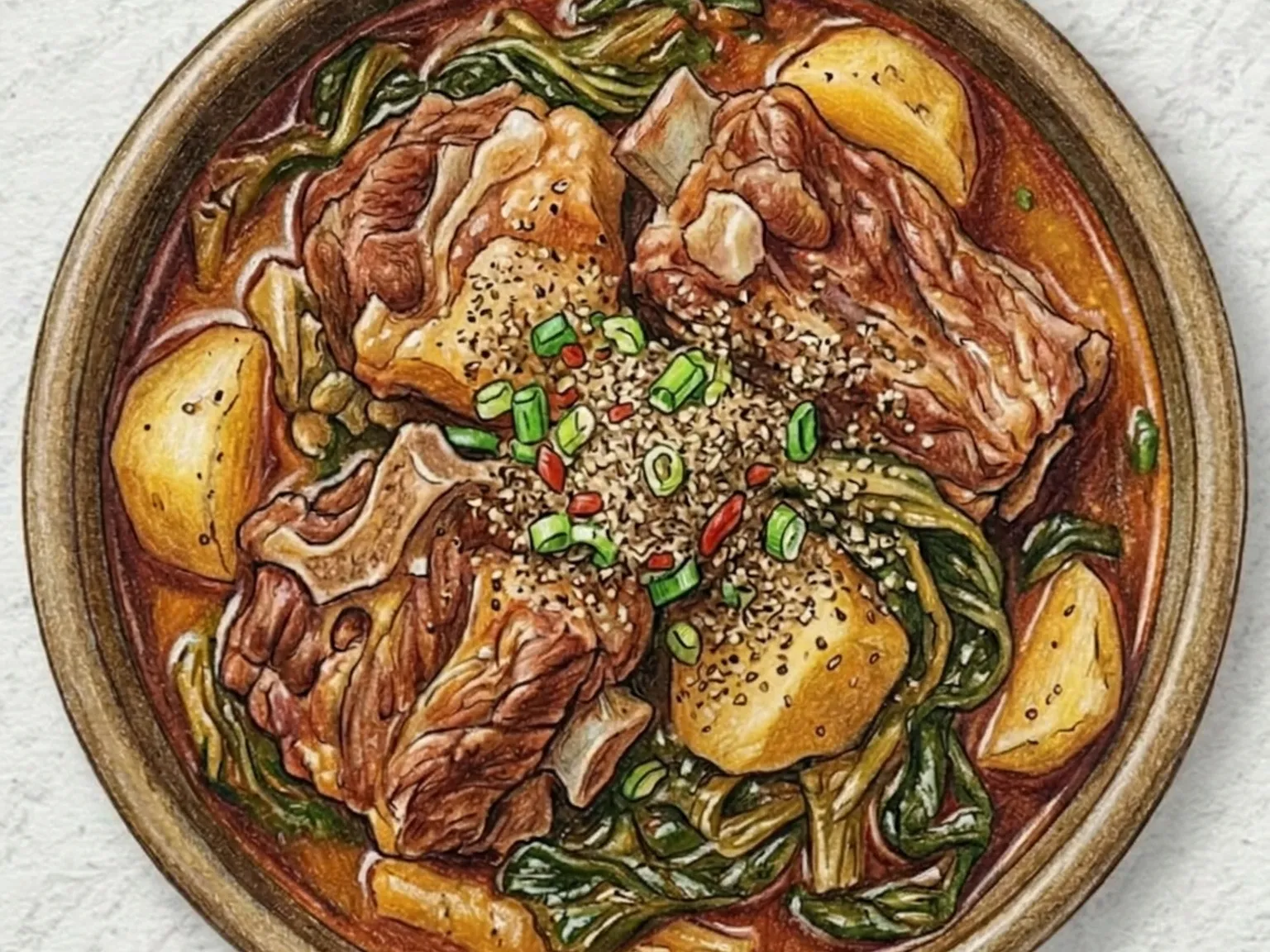
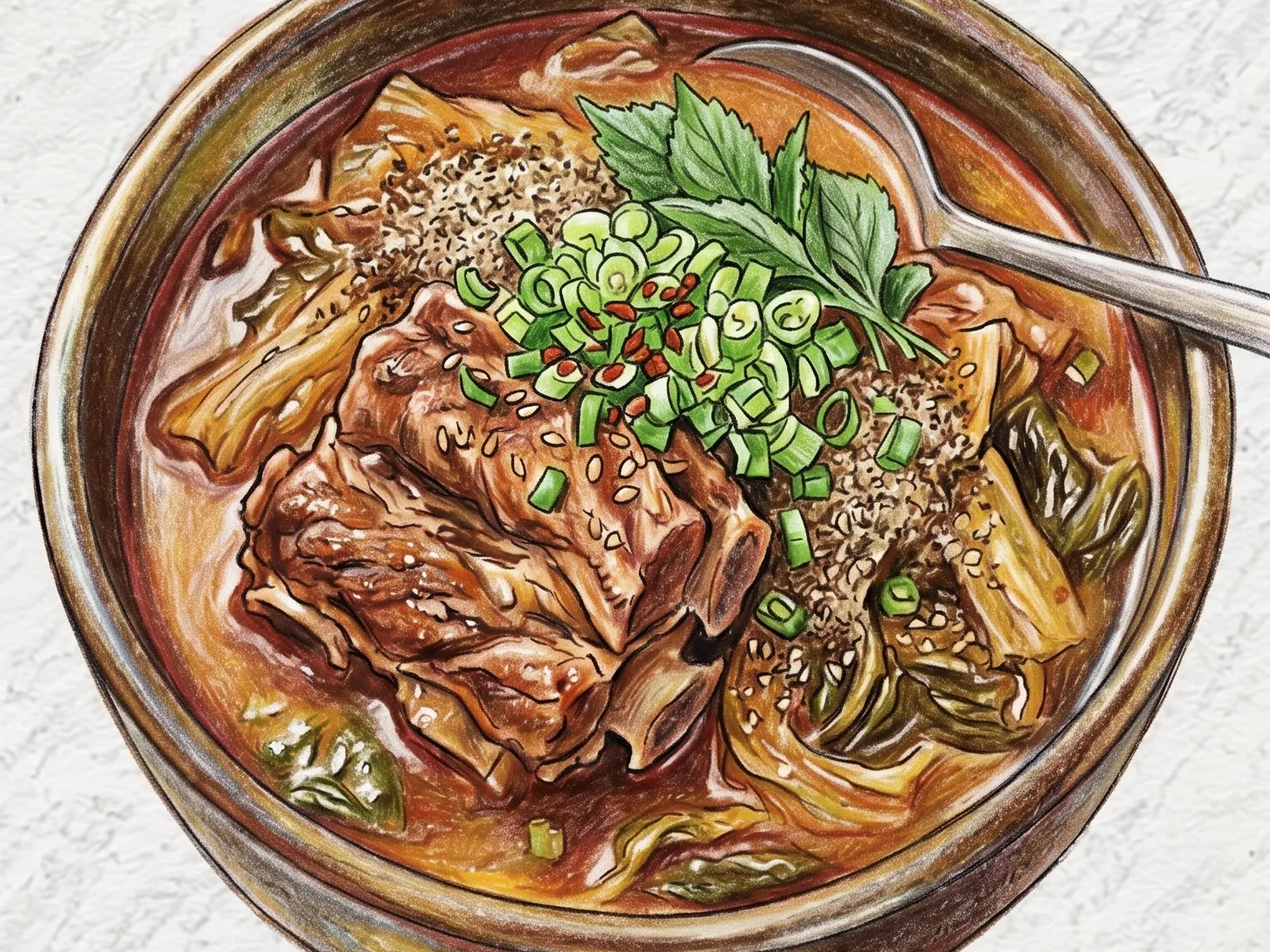
Ppyeo-haejang-guk is a Korean hangover soup built on a foundation of pork neck bones simmered for well over an hour until their collagen dissolves into a heavy, full-bodied stock.
What makes this special
- Pre-seasoned cabbage stems absorb doenjang flavor throughout the soup.
- Pork spine simmered 80+ minutes yields collagen-dense broth
- Pre-seasoned baechu stems absorb doenjang throughout the soup
Key ingredients
Core cooking flow
- 1 Soak 1400 g pork neck bones in cold water for 1 hour to draw out blood.
- 2 Put the bones into boiling water and blanch over high heat for 7 minutes.
- 3 Return the rinsed bones to the pot with 2800 ml water and simmer over medium heat for 80 minutes.
Ppyeo-haejang-guk is a Korean hangover soup built on a foundation of pork neck bones simmered for well over an hour until their collagen dissolves into a heavy, full-bodied stock. The bones are soaked and blanched beforehand to eliminate any off-flavors, and the resulting broth is clean despite its richness. Blanched napa cabbage outer leaves are pre-seasoned with doenjang, gochugaru, garlic, and soup soy sauce before being added to the pot, where they absorb the meaty broth and release their own earthy flavors in return. Perilla seed powder is stirred in at the end, thickening the liquid to a creamy consistency and adding a nutty finish. The completed soup is spicy, deeply savory, and thick enough to feel restorative after a long night. In Korea, this style of haejang-guk is a morning-after institution, served steaming in dedicated restaurants that open before dawn.
Instructions
Read the steps as a cooking flow: prep, heat, seasoning, doneness control, and finish.
- 1Finish
Soak 1400 g pork neck bones in cold water for 1 hour to draw out blood.
If the water turns cloudy, replace it once so the finished broth tastes clean rather than heavy or gamey.
- 2Control
Put the bones into boiling water and blanch over high heat for 7 minutes.
When foam and gray impurities rise, discard that water and rinse the bones so the second simmer starts clean.
- 3Control
Return the rinsed bones to the pot with 2800 ml water and simmer over medium heat for 80 minutes.
Keep the bones mostly covered with liquid, adding a little water if the broth reduces too far.
- 4Season
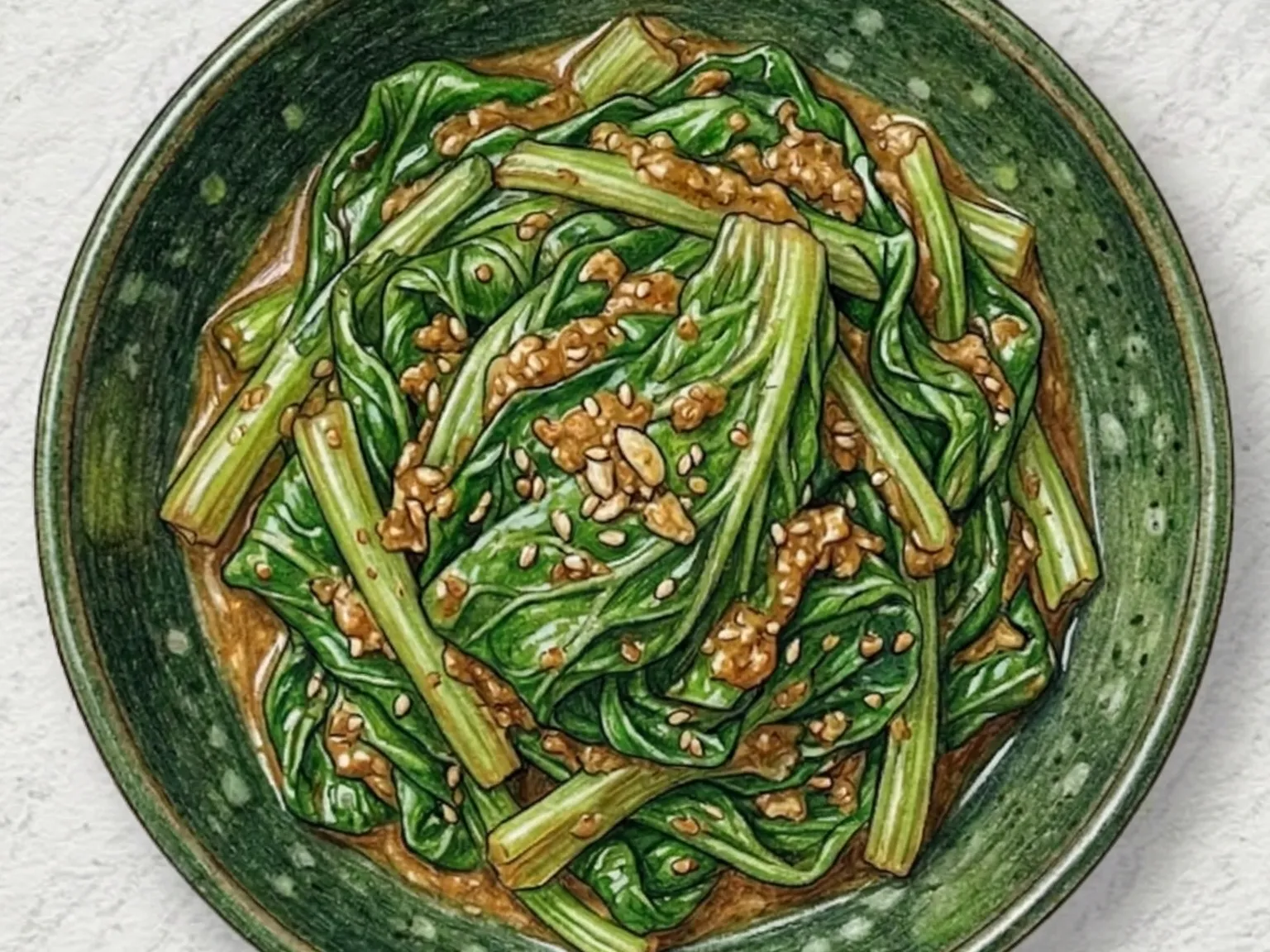
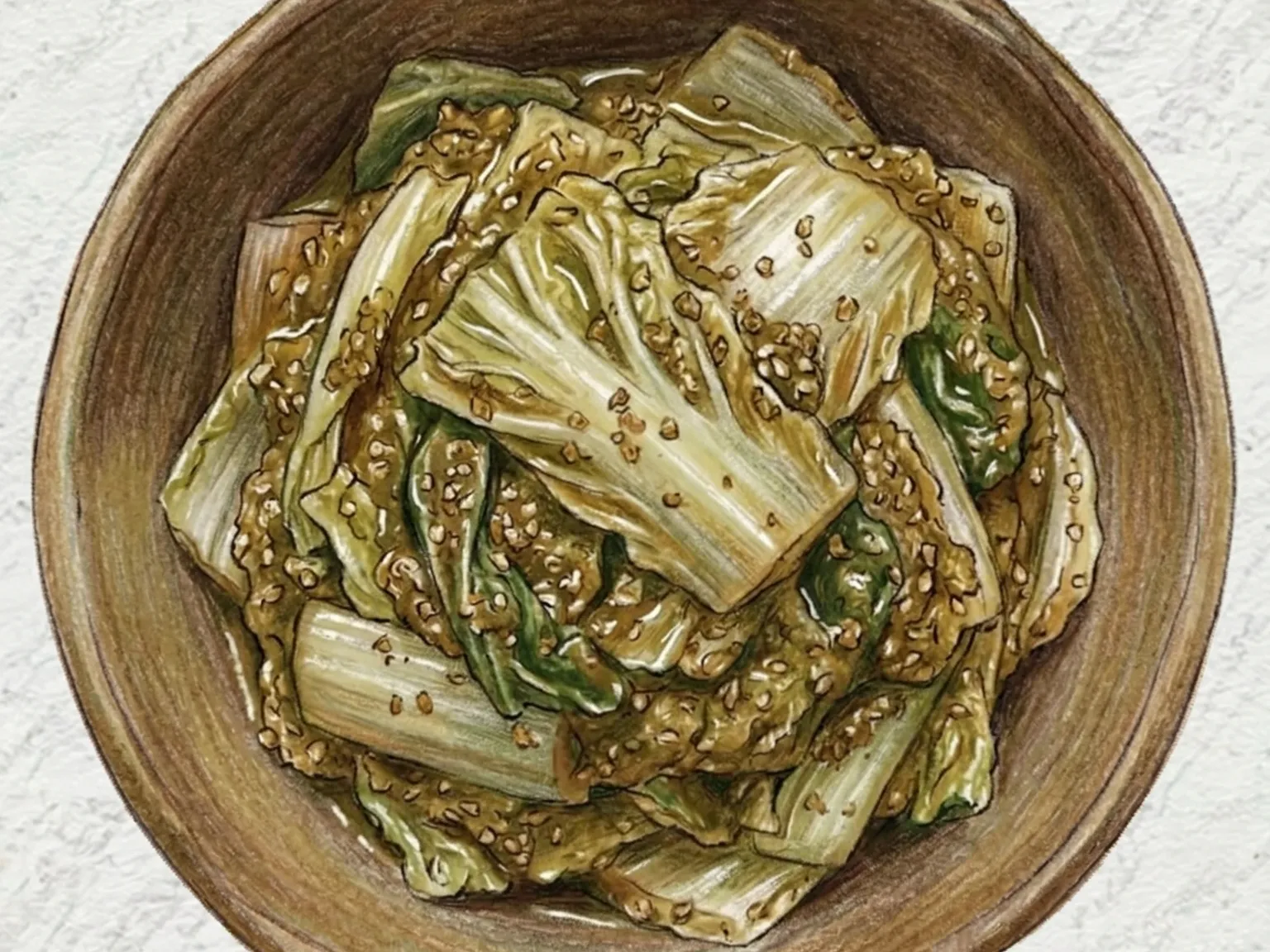
Season 300 g napa outer leaves with 1.5 tablespoons doenjang, 2 tablespoons gochugaru, 1.5 tablespoons minced garlic, and 1 tablespoon soup soy sauce. Massage lightly so the thick leaves absorb the paste before they enter the broth.
- 5Control
When the broth looks cloudy and full-bodied, add the seasoned leaves and lower the heat to medium low.
Simmer for 25 minutes, until the leaves soften and the seasoning spreads through the broth.
- 6Control
Stir in 2 tablespoons perilla powder and the sliced green onion, then simmer only 5 more minutes.
Stop when the broth thickens slightly, because long boiling after the perilla can make the soup feel heavy.
After the steps
Pick a recipe that fits this dish.
Continue with shared ingredients, meal pairings, or a similar method.
Recipes That Go Well With This
More Soups →Based on shared ingredients and meal pairing
Haejangguk (Korean Pork Bone Hangover Soup)
Haejangguk is Korea's iconic hangover soup, a thick and fiery bowl built to restore the body after a long night of drinking. The base is a pork spine broth simmered for several hours until it turns milky, opaque, and deeply savory, carrying a weight that sits in the stomach rather than passing through it. Outer napa cabbage leaves called ugeoji are seasoned with doenjang and garlic before being added to the broth, contributing fibrous, chewy texture alongside the soup's fermented depth. Congealed blood, known as seonji, is a traditional inclusion cut into thick blocks: iron-dense and high in protein, it provides serious nutritional restoration and a visually striking dark contrast in the stone pot. Gochugaru delivers heat strong enough to draw sweat to the forehead, and Koreans have long held that this intensity helps flush toxins from the body and clear the mind after a night of drinking. The finished soup arrives still bubbling in its dolsot, and the first few spoonfuls tend to produce an involuntary exhale of relief. Dedicated haejangguk restaurants open before dawn to serve construction workers and late-night revelers, and the dish has occupied a fixed position in Korean culinary and drinking culture for centuries.
Korean Pork Bone Stew (Slow-Simmered Pork Spine & Potato)
Gamjatang is one of Korea's most recognized bone soups, made by simmering pork spine for a long time until the broth turns milky white and rich with collagen. Doenjang and gochugaru form the seasoning foundation, while perilla seed powder -- a signature addition -- gives the broth a nutty, slightly creamy depth that is hard to replicate with any substitute. Potatoes simmer until they absorb the broth and soften to the core, and the dried napa cabbage leaves add a chewy, vegetal contrast to the thick liquid. A handful of perilla leaves stirred in near the end brings a fresh herbal note, and the ritual of picking tender pork off the bones with chopsticks is part of what makes eating gamjatang a hands-on, satisfying experience. It is traditionally sought out as a late-night meal or a hangover cure.
Korean Octopus Pot Rice (Chewy Octopus Ocean-Scented Grain Pot)
Muneo sotbap is a seafood pot rice dish in which chewy octopus tentacles are placed on top of uncooked rice and steamed together in a heavy pot so that the briny, oceanic aroma penetrates every grain as it cooks. Thin radish slices lining the bottom of the pot serve two purposes: they prevent the rice from sticking and transfer their natural sweetness into the grains during cooking. Simmering the octopus alongside radish also helps tenderize the meat. The pot starts over high heat to bring it to a boil, then the flame drops to low for a slow, gentle cook that keeps the octopus from turning rubbery. Resting the pot undisturbed after cooking allows the heat to distribute evenly throughout the rice. A dipping sauce of soy sauce, sesame oil, cheongyang chili, and sliced green onion is mixed in at the table, adding a spicy, clean finish. Scraping the crisp nurungji crust from the bottom of the pot is one of the distinct pleasures of this dish.
Korean Perilla Gamjatang (Nutty Perilla Pork Bone & Potato Stew)
This perilla-forward version of gamjatang places nutty richness at the center of the dish by adding a generous four tablespoons of ground perilla seed to the broth. Pork backbone weighing around 1.2 kilograms is soaked in cold water to draw out the blood, blanched once to clean the surface, then simmered into a heavy, collagen-rich stock that forms the base for everything else. Potatoes and salted napa outer leaves go in partway through cooking, absorbing the deeply savory liquid as they soften. The perilla powder added toward the end turns the broth noticeably pale and creamy, coating it in a smooth, roasted nuttiness that distinguishes this variation from the sharper, more aggressively spiced standard recipe. Twelve perilla leaves are added with the lid on during the final minutes, allowing their herbal fragrance to steep gently into the pot rather than cook off. A spoonful of doenjang strengthens the underlying umami. Gochugaru and gochujang are used to build heat, but the perilla softens and rounds the spice so the overall effect is warmer and less sharp than a conventional gamjatang. Frying leftover rice in the remaining broth at the end is a natural conclusion to the meal.
Serve with this
Korean Seasoned Bracken Fern
Gosari, the Korean name for bracken fern, is one of the oldest foraged vegetables in Korean cooking, with consumption records tracing back to the Three Kingdoms period. It is a mandatory component of bibimbap and a required dish on jesa, the ancestral rite table set for ceremonies honoring the dead. Dried gosari must soak overnight in cold water and then boil until the tough, wiry fibers relax into a distinctively springy, almost elastic chew that no fresh vegetable can replicate. The rehydrated fern is stir-fried in perilla oil with minced garlic until fragrant, then a small amount of soup soy sauce and water goes in and the pan is covered to let the liquid absorb and the fern braise briefly. This short braising step is what rounds the flavor and ensures the seasoning penetrates the fibrous strands rather than sitting only on the surface. Perilla oil is the traditional fat of choice rather than sesame oil because its green, herbal quality pairs more naturally with the woodsy, forest-floor flavor of gosari, amplifying rather than competing with it. Large batches are typically made during Chuseok or Seollal and eaten over several days, as the flavor improves and deepens as the dish sits.
Korean Stuffed Perilla Leaf Pancakes
Kkae-ip-jeon are pan-fried perilla leaf parcels stuffed with a filling of ground pork and firm tofu, coated in flour and egg. The tofu must be squeezed dry in a cloth before mixing; excess moisture causes the filling to spread and stick to the pan. Garlic chives and onion add crunch and fragrance to the mix, and the filling seasoned with soy sauce and black pepper pairs cleanly with the perilla's strong herbal character. Dusting with flour first, then dipping in egg, produces an even coating, and frying covered over medium-low heat for two minutes per side ensures the filling is cooked through to the center. The bite-sized pieces work well as a packed lunch side or as bar food.
Korean Cheonggak Kimchi (Seaweed Kimchi)
Cheonggak kimchi uses cheonggak, a branching green seaweed, mixed with julienned radish and scallions in a paste of gochugaru, anchovy fish sauce, and sweet rice starch. The seaweed brings a firm, almost crunchy chew and a concentrated marine aroma absent from land-vegetable kimchi. Seasoning the radish first lets it absorb the brine, then the seaweed is tossed in briefly - prolonged handling toughens the strands. After one day of refrigeration, the seaweed's salinity merges with the fermented seasoning paste to produce a briny, sharp kimchi that sits naturally alongside seafood dishes and mild rice soups. Coastal households traditionally make this in autumn when fresh cheonggak comes into season.
Similar recipes
Korean Blood Sausage Soup
Sundae-guk is a hearty soup built on a long-simmered pork bone broth that turns milky white from hours of boiling. Thick slices of Korean blood sausage - pork intestine casing stuffed with glass noodles, barley, and pig's blood - sit in the center of the bowl, their chewy casing absorbing the hot broth while the dense filling inside stays warm and soft. Alongside the sundae, slices of boiled pork shoulder and, in more traditional versions, offal like liver or lung add variety in texture and a faint mineral note. The broth itself is rich yet surprisingly clean, seasoned at the table with either salted shrimp paste or coarse salt depending on the diner's preference. Stirring in a spoonful of dadaegi, a thick chili paste condiment, transforms the bowl entirely, cutting through the richness with a sharp heat. Some shops finish the soup with ground perilla seeds for added nuttiness. Rice is spooned directly into the bowl and eaten together with the broth, making sundae-guk one of the most satisfying cold-weather meals in the Korean street-food tradition.
Korean Loach Soup (Blended Loach and Dried Radish Greens Tonic)
Chueo-tang is a southern Korean tonic soup made by blending blanched loach into a smooth puree, straining out bones and skin, then simmering the liquid with doenjang and gochujang for depth. The straining step is what separates a clean, richly flavored broth from a gritty one; every bit of bone and skin must be removed before the long simmer begins. Dried radish greens, siraegi, are added midway and cooked for twenty-five minutes, contributing a fibrous chew that contrasts the velvety broth. Perilla seed powder stirred in near the end thickens the soup to a creamy, pale consistency and layers in a pronounced nutty fragrance that carries through each spoonful. A final pinch of ground sansho pepper leaves a tingling numbness on the tongue that clears any lingering earthiness from the freshwater fish. Loach is high in protein and calcium, and the soup has long been eaten as a summer restorative; a broth that is thick and deeply concentrated is the standard by which a well-made chueo-tang is judged.
Korean Perilla Radish Soup
Deulkkae mu-guk is a Korean radish and perilla seed soup that belongs firmly to the cool-weather calendar. Sliced daikon simmers in anchovy stock for ten minutes first, releasing its clean sweetness into the broth before anything else goes in. Perilla seed powder, stirred in toward the end, thickens the liquid noticeably - its heavier, earthier fat behaves differently from sesame and coats the palate in a way plain radish broth cannot. Garlic simmers alongside the radish to build the underlying savory base. The powder must go in just before the heat is cut; leave it in too long and the toasted fragrance dissolves into the broth and disappears.