Pulpo a la Gallega (Galician Boiled Octopus with Smoked Paprika)
Western Medium

Pulpo a la Gallega (Galician Boiled Octopus with Smoked Paprika)

Quick answer

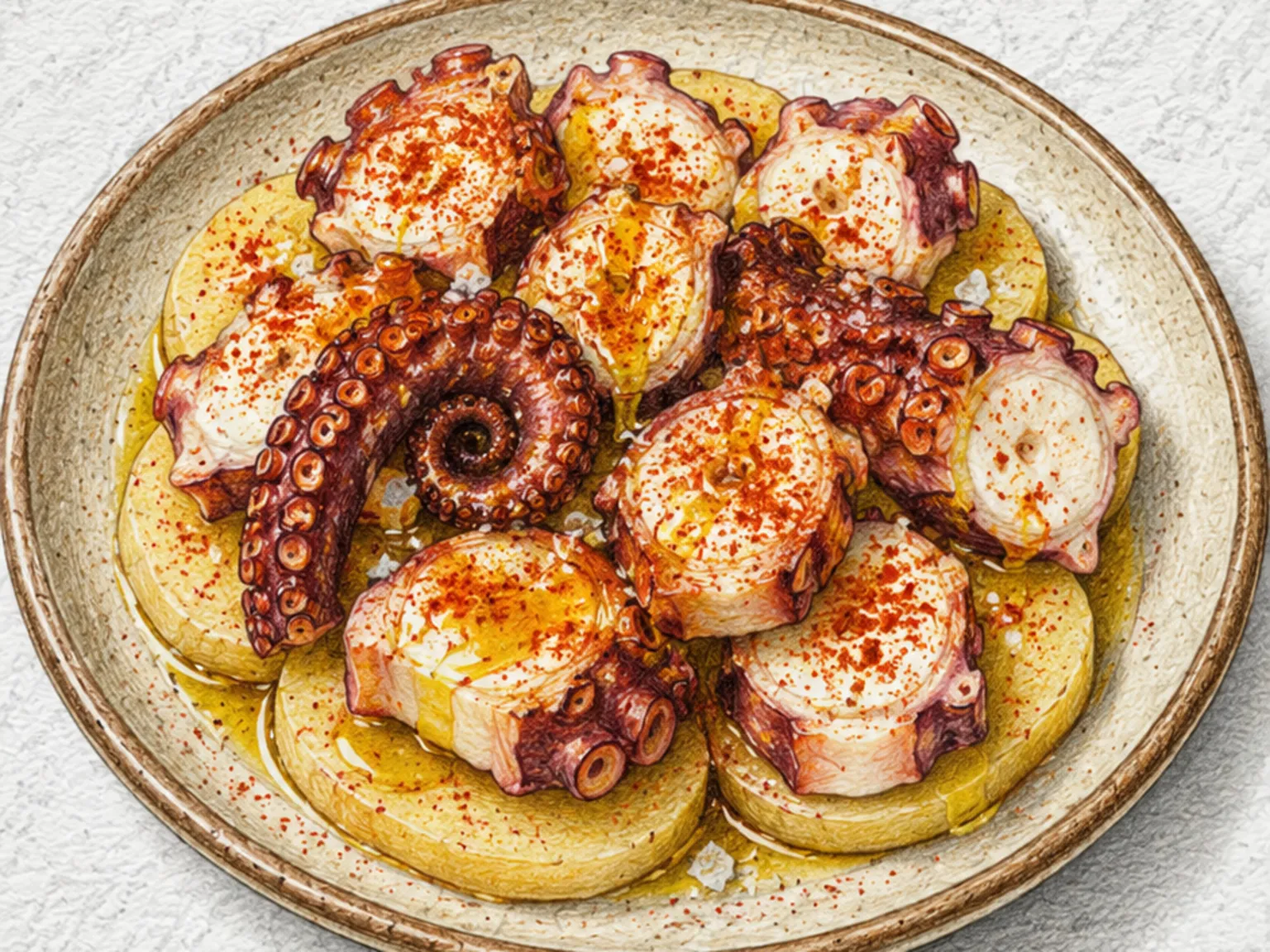
Pulpo a la Gallega is a signature dish from Spain's Galicia region in which whole octopus is gently simmered, sliced into thick rounds, and served over boiled potatoes wi...

What makes this special

  • Boiled octopus tentacles curled by dipping are finished with smoked paprika for Pulpo a la Gallega.
  • Dipping octopus in boiling water 2 to 3 times curls the tentacles before full cooking
  • Smoked paprika lays a subtle smoke note over the octopus's mild sweetness
Total time
65 min
Level
Medium
Servings
2 servings
Ingredients
6
Calories
360 kcal
Protein
32 g

Key ingredients

octopuspotatoesolive oilsmoked paprikacoarse salt

Core cooking flow

  1. 1 Fill a pot with enough water to cover the 500 g octopus and bring it to a full boil over high heat.
  2. 2 When the water returns to a boil, hold the octopus by the head and dip it in and out 2-3 times.
  3. 3 Reduce the heat to low so the water only trembles gently, then cook for 35-40 minutes.

Pulpo a la Gallega is a signature dish from Spain's Galicia region in which whole octopus is gently simmered, sliced into thick rounds, and served over boiled potatoes with a finish of olive oil, smoked paprika, and coarse sea salt. Dipping the octopus in and out of boiling water two to three times before simmering curls the tentacles into shape and helps achieve an even cook. After thirty-five to forty minutes at a low simmer followed by a ten-minute rest in the hot water, the octopus reaches a texture that is tender yet retains a satisfying bite. Smoked paprika lays a subtle smokiness over the clean marine flavor, and high-quality finishing olive oil ties every element together. The ingredient list is minimal, which means the quality of each component directly determines the result.

Prep 15min Cook 50min 2 servings
Recipes by ingredient → potatoes olive oil coarse salt

Instructions

Read the steps as a cooking flow: prep, heat, seasoning, doneness control, and finish.

6 steps
  1. 1
    Control

    Fill a pot with enough water to cover the 500 g octopus and bring it to a full boil over high heat.

    Add 1 bay leaf once the water is boiling so the cooking liquid has a light aroma.

  2. 2
    Heat

    When the water returns to a boil, hold the octopus by the head and dip it in and out 2-3 times.

    Once the tentacles curl naturally, lower it into the pot slowly for an even shape.

  3. 3
    Control

    Reduce the heat to low so the water only trembles gently, then cook for 35-40 minutes.

    Avoid a hard boil, because aggressive bubbling can tighten the octopus and make it rubbery.

  4. 4
    Prep

    Turn off the heat and leave the octopus in the hot water for 10 minutes to rest.

    Lift it out when a chopstick or skewer slides into the thickest part with gentle resistance.

  5. 5
    Finish

    Boil the 250 g potatoes separately until tender, then tidy the skins if needed and cut them into thick slices.

    Arrange them on a plate without too much overlap so they can hold the octopus evenly.

  6. 6
    Finish

    Cut the octopus into thick bite-size pieces and place them over the potatoes.

    Finish with 2 tbsp olive oil, 1 tsp smoked paprika, and 0.5 tsp coarse salt, serving while the potatoes are still warm.

After the steps

Pick a recipe that fits this dish.

Continue with shared ingredients, meal pairings, or a similar method.

Recipes That Go Well With This

More Western →

Based on shared ingredients and meal pairing

Patatas Bravas (Spanish Crispy Potatoes with Spicy Tomato Sauce)
Shared ingredient: potatoes Western

Patatas Bravas (Spanish Crispy Potatoes with Spicy Tomato Sauce)

Patatas Bravas is one of Spain's most iconic tapas, served in nearly every bar alongside beer or wine. Potatoes are cut into rough chunks, parboiled in salted water to activate surface starch, then fried twice at high temperature to achieve a crispy shell encasing a fluffy interior. The bravas sauce is built by blooming garlic and smoked paprika in olive oil before adding tomato puree and simmering until reduced - the smokiness of the paprika and the direct heat of chili flakes create a layered spiciness. Some regions serve a garlic aioli alongside the bravas sauce, allowing diners to alternate between the sharp tomato heat and the cooling richness of the emulsified garlic cream.

Fabada Asturiana (White Bean and Chorizo Stew)
Shared ingredient: olive oil Western

Fabada Asturiana (White Bean and Chorizo Stew)

Fabada Asturiana is the bean stew of the Asturias region in northern Spain, a dish with deep roots in the mountain agriculture and difficult winters that shaped the region's food culture. Large, creamy faba beans are soaked overnight, then placed in a single pot with chorizo, morcilla (blood sausage), and smoked pork shoulder and simmered over the lowest possible heat for at least two hours. The rendered paprika fat from the chorizo bleeds slowly into the cooking liquid, turning the broth a deep reddish-orange while fat and protein dissolve in to create a naturally thick consistency without flour or cream. The goal is beans that are intact but fully saturated with the broth, each one soft at the center but not burst. Morcilla contributes an earthy, iron-rich depth that tempers the sharpness of the smoked paprika, and the combination of two cured meats produces a layered savoriness that plain pork stock alone cannot achieve. The starch released from the beans as they cook binds the fat and liquid into a coherent body rather than a greasy soup. Served in a wide, deep bowl with thick slices of crusty bread, a full portion constitutes an entire meal. The dish is associated with cold weather and is traditionally cooked in quantity, as the flavor deepens considerably on the second day.

Spanish Orange Cod Salad (Spanish Salt Cod Salad)
Serve together Salads

Spanish Orange Cod Salad (Spanish Salt Cod Salad)

Remojon is a traditional spring festival salad from Andalusia in southern Spain, built around salt cod that has been soaked in cold water for at least twenty-four hours to draw out the preserved brine before the fish is shredded along the grain into chewy, light flakes. Thick-cut orange segments provide a burst of sweet, juicy acidity that stands in direct contrast to the residual saltiness of the fish, creating the tension at the center of the dish. Thinly sliced red onion and whole black olives add layers of pungent sharpness and deep brininess that widen the overall flavor profile without competing with each other. Good-quality extra virgin olive oil draws every element together into a cohesive whole, coating each piece with a smooth, fruity richness. A measured splash of white wine vinegar tightens the entire salad and gives it a clean definition, while flat-leaf parsley scattered over the top provides a final note of fresh, green fragrance. The salad is well suited to being served tapas-style alongside wine or dry sherry, and because all the components can be prepared in advance, it assembles quickly at the table and makes a composed, elegant starter for guests.

Croquetas de Jamon (Crispy Ham Béchamel Bites)
Similar recipe Western

Croquetas de Jamon (Crispy Ham Béchamel Bites)

Croquetas de jamon begin with a roux of butter and flour cooked together for two minutes, followed by milk added in stages while whisking continuously to build a thick, smooth bechamel. Finely chopped jamon serrano is folded into the sauce along with seasoning, and the mixture is spread into a shallow dish and refrigerated until firm enough to shape without collapsing. Thorough chilling is the most critical step because soft filling cannot hold its oval form during breading and frying. Each croqueta is coated in beaten egg and rolled in fine breadcrumbs, then coated a second time to reduce the risk of splitting in hot oil. Fried at medium heat until deeply golden on all sides, the exterior shatters crisply while the interior releases a stream of hot, creamy, ham-laced bechamel. The salt and smoke of the jamon permeate the filling completely, making every bite rich and savory. These croquetas are one of the most beloved items in Spanish tapas culture, typically served two or three to a plate alongside a cold drink.

Serve with this

Korean Fish Cake Soup (Clear Anchovy Radish Broth)
Drinks Easy

Korean Fish Cake Soup (Clear Anchovy Radish Broth)

Eomuk-tang is a Korean fish cake soup in which skewered fish cakes and thick radish slices simmer in a clear broth built from dried anchovies and kelp. The kelp must be removed the moment the water begins to boil, otherwise it releases a slimy texture that clouds the broth. Cutting the radish thick allows it to slowly release natural sweetness over the long simmer. Rinsing the fish cakes in hot water before adding them washes away surface oil and keeps the broth clear and clean. Soup soy sauce adjusts the seasoning, and green onion and black pepper finish the pot. Adding the radish before the fish cakes ensures it has enough time to fully soften and sweeten the broth, since it takes longer than the eomuk to cook through.

🍺 Bar Snacks 🥗 Light & Healthy
Prep 15min Cook 25min 4 servings
Gotgam Cream Cheese Roll (Dried Persimmon Rolls)
Desserts Easy

Gotgam Cream Cheese Roll (Dried Persimmon Rolls)

Gotgam cream cheese roll is a no-cook Korean dessert that requires nothing more than a knife, a bowl, and a refrigerator. Dried persimmons are slit open and flattened into thin sheets, each one acting as the outer wrapper. The filling is cream cheese mixed with honey and fresh lemon juice to balance its natural richness with acidity, and finely chopped walnuts are folded in throughout to add a crunchy, nutty element to every bite. The filling is spread across the opened persimmon, which is then rolled tightly and wrapped in plastic wrap. Twenty minutes in the refrigerator firms the roll enough to slice cleanly. Dipping the knife in warm water and wiping it dry before each cut produces the smoothest cross-sections. The finished slices reveal clearly defined layers: the chewy, caramel-sweet dried persimmon on the outside, the tangy cream cheese in the middle, and flecks of walnut distributed throughout. The combination makes it a natural pairing with wine or a polished addition to a traditional holiday table.

🍺 Bar Snacks 🎉 Special Occasion
Prep 20min 2 servings
Soy Butter Steak Garlic Spaghetti
Pasta Medium

Soy Butter Steak Garlic Spaghetti

Thick-cut sirloin seared at high heat, then glazed in soy sauce and butter, forms the base of this steak pasta. The fond left in the pan gets deglazed with soy sauce and butter, then emulsified with pasta water into a thin, shiny coating that clings to each strand without turning greasy. Generous garlic browned in olive oil beforehand builds a deep, roasted-garlic base that runs through the entire sauce, and tsuyu -- a Japanese seasoning concentrate made from kombu and bonito -- adds the round umami depth of dashi without any extra steps. The steak is best cooked to medium-rare and sliced against the grain before laying over the pasta; resting the meat first keeps the juices from running out when cut. Black pepper and sliced scallions cut through the richness at the end. The full cook time is about 20 minutes, and pasta water volume controls the final sauce consistency.

🍺 Bar Snacks 🎉 Special Occasion
Prep 15min Cook 20min 2 servings

Similar recipes

Gambas al Ajillo (Garlic Shrimp)
Western Easy

Gambas al Ajillo (Garlic Shrimp)

Gambas al ajillo cooks peeled shrimp in a generous pool of olive oil infused with thinly sliced garlic and dried red chili over low heat, a method that turns the oil itself into the flavor foundation of the dish. The garlic must be coaxed slowly to release its sweetness into the oil without crossing into bitterness - the moment it turns golden, the shrimp go in and cook for two to three minutes until pink and just cooked through. A seasoning of salt, black pepper, and a scatter of chopped parsley finishes the pan. The dried chili adds a gentle warmth that sharpens both the garlic-scented oil and the natural sweetness of the shrimp, while the olive oil absorbs and carries all these flavors together. Sliced baguette served alongside is not optional - it exists to soak up the deeply flavored oil, and mopping the pan completely clean is the traditional way to end the dish. Keeping the heat consistently low throughout is the one non-negotiable rule: high heat burns the garlic in seconds and toughens the shrimp.

🍺 Bar Snacks ⚡ Quick
Prep 10min Cook 10min 2 servings
Basque Burnt Cheesecake
Baking Medium

Basque Burnt Cheesecake

Basque burnt cheesecake originates from La Vina bar in San Sebastian, Spain, and is defined by a deliberately scorched top and an intentionally underset center. Cream cheese, sugar, eggs, heavy cream, and a small amount of flour are blended smooth, poured into a parchment-lined pan, and baked at above 220 degrees Celsius until the surface reaches a deep, near-black caramelization. That blackened layer contributes a pronounced bittersweet edge that cuts through the richness underneath. The interior remains loose and custardy - closer in texture to a very dense panna cotta than to a conventional baked cheesecake. Served at room temperature, the contrast between the firm, caramelized shell and the barely-set, creamy core is at its sharpest and most satisfying.

🎉 Special Occasion 🧒 Kid-Friendly
Prep 20min Cook 35min 8 servings
Churros
Baking Medium

Churros

Churros are fried dough sticks made from a simple paste of water, flour, salt, and sometimes a touch of sugar. The dough is piped through a star-shaped tip, which creates ridges along the length. These ridges increase the surface area exposed to hot oil, producing maximum crunch across every inch while the interior stays soft and pillowy. Straight from the fryer, they are rolled in cinnamon sugar, which clings to the warm, oily surface and creates a sweet, spiced crust. The traditional pairing is thick Spanish hot chocolate -- closer to a warm ganache than a drink -- into which the churros are dipped. The bitterness of the chocolate and the sweetness of the cinnamon sugar play off each other, and the contrast between the crisp dough and the dense liquid makes each dip satisfying. Churros wait for no one: they are at their best within ten minutes of frying, after which the crispness fades as residual oil migrates inward.

🧒 Kid-Friendly
Prep 15min Cook 20min 4 servings

Tips

Overcooking can make octopus rubbery.
Good finishing olive oil makes a big difference.

Nutrition (per serving)

Calories
360
kcal
Protein
32
g
Carbs
24
g
Fat
14
g