Korean Pressed Boiled Pork Slices
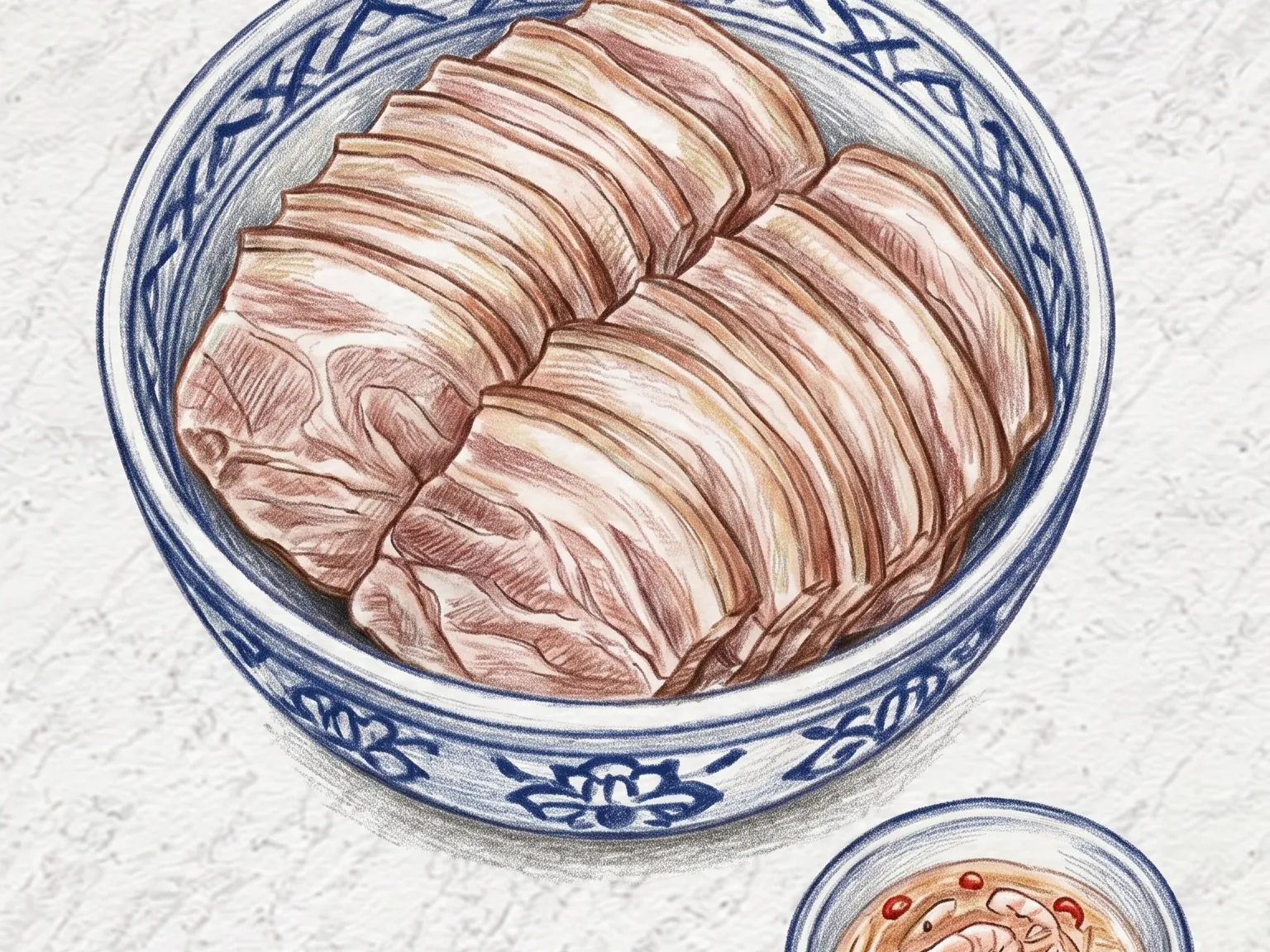
Pyeonyuk is a Korean chilled pork dish made by boiling pork shank with garlic, ginger, green onion, whole peppercorns, and salt for nearly an hour, then wrapping the meat tightly and refrigerating it until firm. The aromatics in the cooking water neutralize any off-flavors from the pork, and the salt seasons the meat evenly throughout during the long boil. Slicing after thorough chilling produces neat, thin pieces with a uniform grain, and the cold temperature sharpens the meat's clean, lean flavor. Traditionally served with salted shrimp or anchovy paste for dipping, pyeonyuk is a staple on Korean holiday tables and a common appetizer when hosting guests.
Adjust Servings
Instructions
- 1
Rinse pork shank and blanch for 3 minutes in boiling water.
- 2
Boil water with salt, garlic, ginger, green onion, onion, and peppercorn.
- 3
Add pork and simmer for 55 minutes until fully cooked.
- 4
Remove, cool slightly, wrap tightly, and chill until firm.
- 5
Slice thinly just before serving.
As an Amazon Associate, we may earn from qualifying purchases.
Tips
Nutrition (per serving)
More Recipes

Korean Jeju Style Pork Suyuk
Dombae-suyuk is a Jeju-style boiled pork dish made by simmering skin-on pork belly with doenjang, green onion, garlic, and ginger. The doenjang in the cooking water absorbs the pork's gaminess, leaving the meat clean-tasting. A long boil renders the skin translucent and chewy with a gelatinous bite, while the inner layers stay soft and fatty. Sliced thick and served at room temperature, each piece offers a contrast between the springy rind and the tender flesh. It is traditionally dipped in salted anchovy or shrimp sauce and remains a staple at Jeju feasts and celebrations.

Korean Steamed Octopus (Whole Salted Radish Broth)
Muneo-jjim is a Korean steamed whole octopus prepared by rubbing the octopus with coarse salt, then cooking it in water flavored with radish and green onion. Dipping the head end in and out of the boiling water two or three times curls the tentacles into an attractive shape before the full cook. Simmering for about fifteen minutes followed by a brief rest off the heat yields a texture that is springy and chewy without being tough. Sliced and served with a simple sesame oil and salt dipping sauce, the dish highlights the octopus's clean ocean flavor and works well as both a banchan and a drinking accompaniment.

Korean Steamed Stuffed Chili Peppers
Gochu-jjim is a Korean stuffed pepper dish where mild green chili peppers are filled with a mixture of ground pork, crumbled tofu, garlic, and green onion, then steamed. A light dusting of flour on the inside of each pepper helps the filling stay in place during cooking. The soy sauce and sesame oil seasoning permeates the filling, and the pepper's thin skin provides a gentle crunch around the soft, savory stuffing. This dish appears regularly as a banchan and is also a common feature on Korean holiday tables.

Korean Steamed Mussels
Honghap-jjim is Korean steamed mussels cooked in rice wine and garlic, with green onion and cheongyang chili added near the end. The mussels steam open in under five minutes over high heat, releasing their briny juices into the wine-garlic broth at the bottom of the pot. The cheongyang chili gives a gentle kick without overwhelming the mussels' clean ocean flavor. With total cooking time under ten minutes and almost no preparation beyond debearding, this is one of the quickest and most satisfying seafood dishes to pair with drinks.

Korean Poached Octopus Slices
Muneo-sukhoe is a Korean poached octopus dish prepared by simmering whole raw octopus in water with radish, green onion, and ginger for about 20 minutes, then slicing it thin and serving with vinegared gochujang. Before cooking, the octopus is rubbed thoroughly with salt to strip away its slippery mucus, which is the critical step for eliminating any off-putting ocean smell. Turning off the heat and letting the octopus rest in the pot for five minutes relaxes the muscle fibers, yielding a texture that is chewy without being tough. The radish in the poaching liquid absorbs impurities, while ginger suppresses fishiness, leaving the sliced octopus clean-tasting and ready for the tangy-spicy dipping sauce.

Korean Poached Squid Slices
Ojingeo-sukhoe is a Korean poached squid dish where cleaned whole squid is blanched for just two to three minutes in boiling water seasoned with salt, cooking wine, and green onion, then sliced and served with vinegared gochujang. Removing the innards thoroughly and rinsing well is the key step for a clean taste, and the cooking wine in the poaching liquid neutralizes any remaining fishiness. Pulling the squid out promptly and letting it cool briefly prevents carryover cooking from toughening the flesh, preserving smooth, clean-cut slices. The tangy, spicy dipping sauce provides a sharp contrast against the mild squid, turning a minimalist preparation into a dish with genuine depth of flavor.